Finding a show-stopping dessert for Easter brunch that actually lives up to the hype can feel like an impossible task. Between juggling dyed eggs, hiding baskets, and getting everyone dressed in their Sunday best, the last thing you need is a complicated recipe that falls flat after all that effort.
That’s exactly why this Easter carrot cake has become my go-to celebration dessert. It’s incredibly moist thanks to a secret combination of oil and applesauce, packed with warm spices that make your kitchen smell amazing, and topped with a cream cheese frosting that’s perfectly sweet without being too heavy. Plus, it actually tastes even better the next day, which means you can bake it ahead and spend Easter morning with your family instead of stuck in the kitchen.

Why You’ll Love This Carrot Cake
- Perfectly moist texture – The combination of oil and applesauce keeps this cake incredibly tender and moist, so it stays fresh for days without drying out.
- Warm spice blend – Cinnamon, nutmeg, ginger, and cloves create a cozy flavor that makes every bite feel like a special occasion.
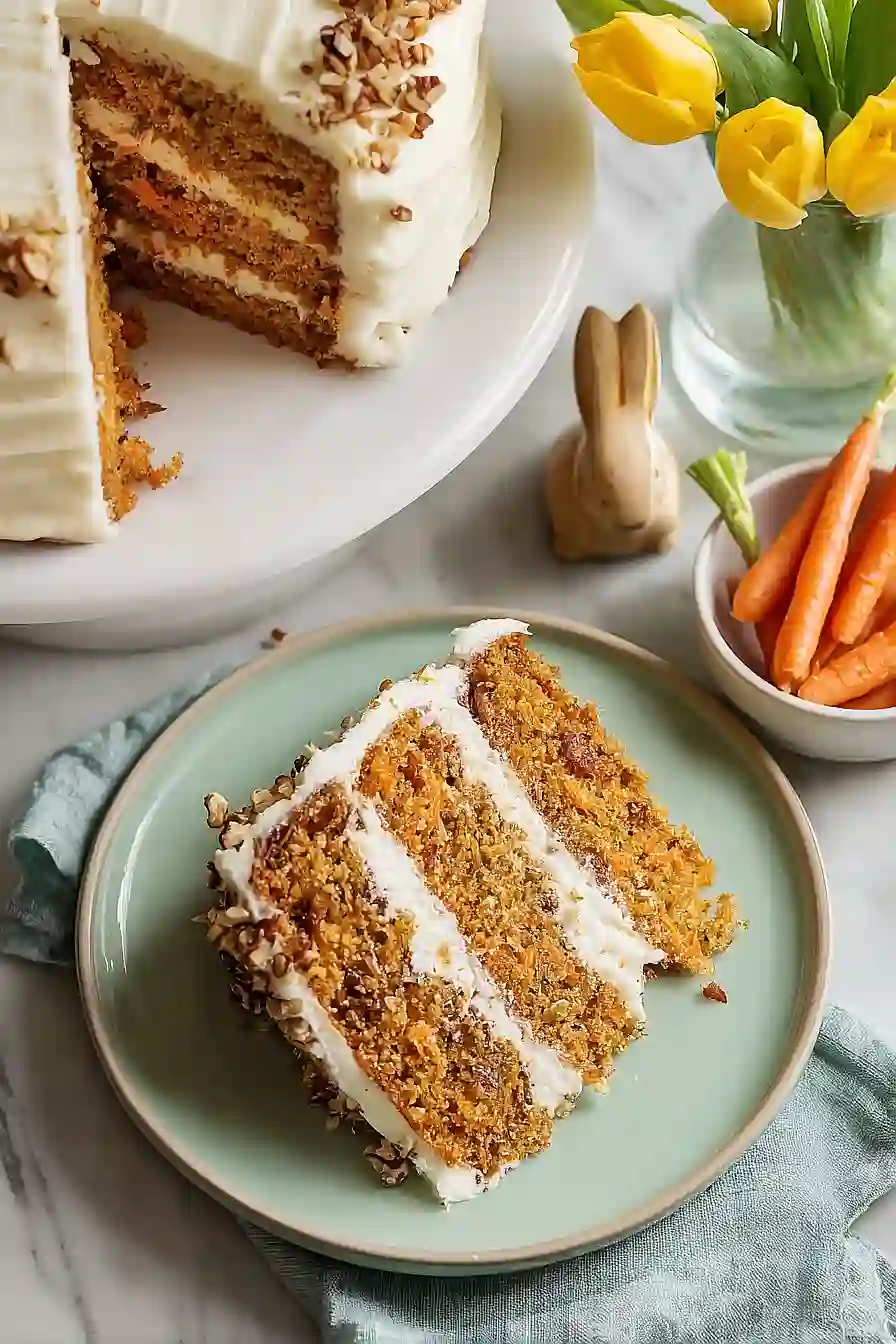
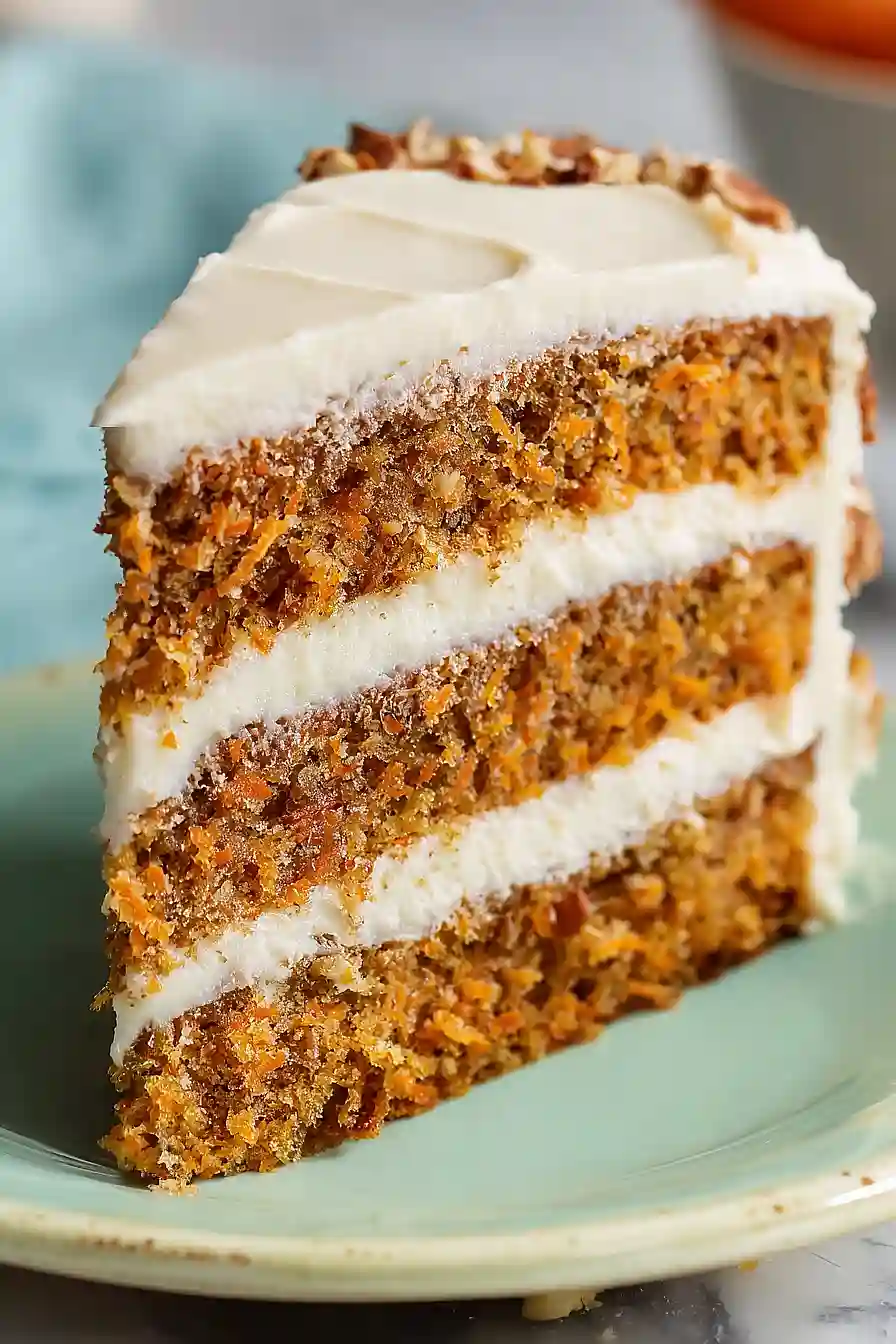
- Impressive presentation – This cake looks bakery-quality with its creamy frosting, making it perfect for Easter gatherings or any spring celebration.
- Crowd-pleaser – Even people who say they don’t like carrot cake end up asking for seconds because the flavors are so well-balanced and delicious.
What Kind of Carrots Should I Use?
Fresh carrots are definitely the way to go for carrot cake – skip the pre-shredded bags from the store since they tend to be dry and won’t give you that moist texture you’re looking for. Regular orange carrots work perfectly fine, but if you want to get fancy for Easter, you could mix in some rainbow carrots for a fun twist (though the color won’t show through in the final cake). When you’re grating them, a medium-fine shred is ideal – too chunky and they won’t distribute evenly, too fine and they’ll turn mushy. Make sure to peel your carrots first unless they’re super fresh from the farmer’s market, and if they seem a bit dry, give them a quick rinse before grating to add a touch of moisture.
Options for Substitutions
This carrot cake recipe is pretty forgiving when it comes to swaps:
- Vegetable oil: You can use canola oil, melted coconut oil, or even melted butter instead. Just keep in mind that butter will make the cake slightly denser but add a nice buttery flavor.
- Applesauce: If you’re out of applesauce, try using crushed pineapple (drained) or mashed banana. Both add moisture and a subtle sweetness that works great in carrot cake.
- Brown sugar: Regular white sugar works fine if that’s all you have. You’ll lose a bit of the molasses flavor, but the cake will still turn out delicious.
- Spices: Don’t have all the spices? You can use 1 tablespoon of pumpkin pie spice instead of the cinnamon, nutmeg, ginger, and cloves combo.
- Cream cheese frosting ingredients: For the frosting, make sure to use full-fat cream cheese – low-fat versions won’t give you the right consistency. If you need to thin it out more, add milk instead of cream.
- Carrots: This is one ingredient you shouldn’t substitute – fresh grated carrots are essential for carrot cake and give it that signature texture and moisture.
Watch Out for These Mistakes While Baking
The biggest mistake when making carrot cake is overmixing the batter once you add the flour mixture, which can lead to a dense, tough cake instead of a moist, tender crumb – mix just until the flour disappears and no white streaks remain.
Another common error is using pre-shredded carrots from the store, which are often too dry and thick, so grate your own carrots using the medium holes on a box grater for the best texture and moisture.
Don’t skip the cooling step before frosting, as warm cake layers will cause your cream cheese frosting to melt and slide right off – make sure each layer is completely cool to the touch.
Finally, softened cream cheese and butter should be at true room temperature (not cold or melted) for frosting that’s smooth and spreadable rather than lumpy or runny.
What to Serve With Easter Carrot Cake?
Carrot cake is pretty rich and sweet on its own, so I like to keep things simple when serving it. A hot cup of coffee or tea is always a good choice since the warmth balances out the cold cream cheese frosting nicely. If you’re serving this for an Easter brunch or gathering, fresh fruit like strawberries or a light fruit salad makes a nice side that cuts through the sweetness. You could also serve it with a scoop of vanilla ice cream if you’re feeling extra indulgent, though honestly, this cake is so moist and creamy that it doesn’t need much else.
Storage Instructions
Store: Keep your carrot cake covered in the fridge since it has cream cheese frosting. It’ll stay moist and delicious for up to 5 days in an airtight container or cake dome. The flavors actually get better after a day or two as everything settles together.
Freeze: You can freeze this cake for up to 3 months, either frosted or unfrosted. If it’s already frosted, freeze it uncovered for about an hour until the frosting is firm, then wrap it well in plastic wrap and foil. Unfrosted layers are easier to work with and can be wrapped individually.
Serve: Let frozen cake thaw in the fridge overnight, still wrapped to prevent condensation. Bring it to room temperature about 30 minutes before serving for the best flavor and texture. The cake tastes great cold too if you’re impatient like me!
| Preparation Time | 90-120 minutes |
| Cooking Time | 25-30 minutes |
| Total Time | 120-150 minutes |
| Level of Difficulty | Medium |
| Servings | 16 slices |
Estimated Nutrition
Estimated nutrition for the whole recipe (without optional ingredients):
- Calories: 6300-7000
- Protein: 45-55 g
- Fat: 330-370 g
- Carbohydrates: 860-950 g
Ingredients
For the cake:
- 1.25 cups vegetable oil (or any neutral oil like Crisco for a consistent crumb)
- 0.75 cup applesauce (makes the cake extra moist and tender)
- 1.25 cups brown sugar
- 1 cup white sugar
- 6 large eggs (room temperature, about 70°F for better emulsion)
- 2.25 tsp vanilla essence
- 3 cups all-purpose flour (I always use King Arthur all-purpose flour)
- 2.5 tsp ground cinnamon
- 0.75 tsp ground nutmeg
- 0.5 tsp ground ginger
- 0.25 tsp ground cloves
- 1.5 tbsp baking powder
- 1 tsp baking soda
- 1.25 tsp salt
- 4.5 cups carrots (finely grated for a better distribution throughout the cake)
- 1 tablespoon orange zest (for a bright note)
For the buttercream:
- 1.75 cups unsalted butter (I like Kerrygold for this to get a richer flavor)
- 7 oz cream cheese (straight from the fridge for a more stable frosting)
- 6 cups powdered sugar (sifted to remove lumps before mixing)
- 3.5 tbsp heavy cream
- 1.25 tsp vanilla essence
- 0.25 tsp salt
Step 1: Prepare Your Equipment and Make the Dry Mixture
- 3 cups all-purpose flour
- 2.5 tsp ground cinnamon
- 0.75 tsp ground nutmeg
- 0.5 tsp ground ginger
- 0.25 tsp ground cloves
- 1.5 tbsp baking powder
- 1 tsp baking soda
- 1.25 tsp salt
Preheat your oven to 350°F and grease three 8-inch round cake pans thoroughly, then line the bottoms with parchment paper for easy release.
While the oven heats, whisk together the flour, cinnamon, nutmeg, ginger, cloves, baking powder, baking soda, and salt in a medium bowl.
This early mixing ensures your leavening agents are evenly distributed throughout the cake for consistent rise and texture.
Step 2: Create the Wet Base and Incorporate Eggs
- 1.25 cups vegetable oil
- 1.25 cups brown sugar
- 1 cup white sugar
- 0.75 cup applesauce
- 2.25 tsp vanilla essence
- 6 large eggs
In a large mixing bowl, beat together the vegetable oil and both sugars for 2 minutes until the mixture is light and slightly fluffy.
This creaming process helps incorporate air and create a tender crumb.
Add the applesauce and vanilla essence, stirring well to combine.
Then add the room-temperature eggs one at a time, beating for about 1 minute total until the mixture is well emulsified and pale.
I find that room-temperature eggs create a much smoother, more stable batter that bakes more evenly.
Step 3: Combine Dry Ingredients with Wet Base and Add Carrots
- dry ingredient mixture from Step 1
- wet ingredient mixture from Step 2
- 4.5 cups carrots
- 1 tablespoon orange zest
Fold the dry ingredient mixture from Step 1 into the wet base from Step 2 using a spatula or wooden spoon, stirring gently until just combined—do not overmix, as this can lead to a dense, tough cake.
Gently fold in the finely grated carrots and orange zest, distributing them evenly throughout the batter.
The fine grating ensures the carrots cook through and distribute their moisture and sweetness uniformly rather than creating chunks.
Step 4: Bake the Cake Layers
- batter from Step 3
Divide the batter equally among the three prepared pans, smoothing the tops slightly with a spatula.
Bake for 25-27 minutes until a toothpick inserted into the center comes out with just a few moist crumbs.
The cakes should spring back when lightly touched and the edges should pull away from the pan sides.
Allow the cakes to cool in their pans for 10-15 minutes, then turn them out onto cooling racks to cool completely to room temperature before frosting.
Step 5: Prepare the Cream Cheese Frosting
- 1.75 cups unsalted butter
- 7 oz cream cheese
- 6 cups powdered sugar
- 3.5 tbsp heavy cream
- 1.25 tsp vanilla essence
- 0.25 tsp salt
While the cakes cool, beat the cold cream cheese and unsalted butter together for 2 minutes until creamy and light.
Add the sifted powdered sugar, heavy cream, vanilla essence, and salt, then beat on medium-high speed for 3-5 minutes until the frosting is fluffy and spreadable.
I use cold cream cheese straight from the fridge because it prevents the frosting from becoming too soft and ensures a more stable, sturdy frosting that won’t slide off the cake layers.
Step 6: Assemble and Frost the Cake
- cooled cake layers from Step 4
- cream cheese frosting from Step 5
Place the first cooled cake layer on your serving plate and spread about 1 cup of frosting from Step 5 evenly over the top.
Stack the second layer on top and repeat with another cup of frosting.
Add the final cake layer and apply a thin crumb coat of frosting over the entire cake, covering all sides.
Freeze this crumb coat for 15 minutes to seal in any loose crumbs, then finish with the remaining frosting, creating smooth sides and decorative swirls on top as desired.
Tasty Easter Carrot Cake
Ingredients
For the cake
- 1.25 cups vegetable oil (or any neutral oil like Crisco for a consistent crumb)
- 0.75 cup applesauce (makes the cake extra moist and tender)
- 1.25 cups brown sugar
- 1 cup white sugar
- 6 large eggs (room temperature, about 70°F for better emulsion)
- 2.25 tsp vanilla essence
- 3 cups all-purpose flour (I always use King Arthur all-purpose flour)
- 2.5 tsp ground cinnamon
- 0.75 tsp ground nutmeg
- 0.5 tsp ground ginger
- 0.25 tsp ground cloves
- 1.5 tbsp baking powder
- 1 tsp baking soda
- 1.25 tsp salt
- 4.5 cups carrots (finely grated for a better distribution throughout the cake)
- 1 tablespoon orange zest (for a bright note)
For the buttercream
- 1.75 cups unsalted butter (I like Kerrygold for this to get a richer flavor)
- 7 oz cream cheese (straight from the fridge for a more stable frosting)
- 6 cups powdered sugar (sifted to remove lumps before mixing)
- 3.5 tbsp heavy cream
- 1.25 tsp vanilla essence
- 0.25 tsp salt
Instructions
- Preheat your oven to 350°F and grease three 8-inch round cake pans thoroughly, then line the bottoms with parchment paper for easy release. While the oven heats, whisk together the flour, cinnamon, nutmeg, ginger, cloves, baking powder, baking soda, and salt in a medium bowl. This early mixing ensures your leavening agents are evenly distributed throughout the cake for consistent rise and texture.
- In a large mixing bowl, beat together the vegetable oil and both sugars for 2 minutes until the mixture is light and slightly fluffy. This creaming process helps incorporate air and create a tender crumb. Add the applesauce and vanilla essence, stirring well to combine. Then add the room-temperature eggs one at a time, beating for about 1 minute total until the mixture is well emulsified and pale. I find that room-temperature eggs create a much smoother, more stable batter that bakes more evenly.
- Fold the dry ingredient mixture from Step 1 into the wet base from Step 2 using a spatula or wooden spoon, stirring gently until just combined—do not overmix, as this can lead to a dense, tough cake. Gently fold in the finely grated carrots and orange zest, distributing them evenly throughout the batter. The fine grating ensures the carrots cook through and distribute their moisture and sweetness uniformly rather than creating chunks.
- Divide the batter equally among the three prepared pans, smoothing the tops slightly with a spatula. Bake for 25-27 minutes until a toothpick inserted into the center comes out with just a few moist crumbs. The cakes should spring back when lightly touched and the edges should pull away from the pan sides. Allow the cakes to cool in their pans for 10-15 minutes, then turn them out onto cooling racks to cool completely to room temperature before frosting.
- While the cakes cool, beat the cold cream cheese and unsalted butter together for 2 minutes until creamy and light. Add the sifted powdered sugar, heavy cream, vanilla essence, and salt, then beat on medium-high speed for 3-5 minutes until the frosting is fluffy and spreadable. I use cold cream cheese straight from the fridge because it prevents the frosting from becoming too soft and ensures a more stable, sturdy frosting that won't slide off the cake layers.
- Place the first cooled cake layer on your serving plate and spread about 1 cup of frosting from Step 5 evenly over the top. Stack the second layer on top and repeat with another cup of frosting. Add the final cake layer and apply a thin crumb coat of frosting over the entire cake, covering all sides. Freeze this crumb coat for 15 minutes to seal in any loose crumbs, then finish with the remaining frosting, creating smooth sides and decorative swirls on top as desired.


This sounds amazing! Can I make it in a 9×13 or sheet pan?
Can i bake it in a 9×13 cake pan