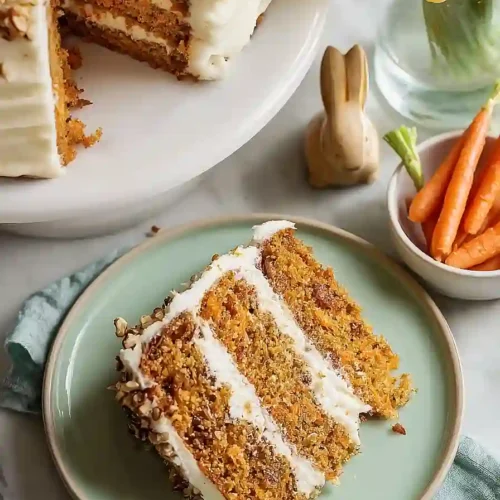
Tasty Easter Carrot Cake
Delicious Tasty Easter Carrot Cake recipe with step-by-step instructions.
Ingredients
For the cake
- 1.25 cups vegetable oil (or any neutral oil like Crisco for a consistent crumb)
- 0.75 cup applesauce (makes the cake extra moist and tender)
- 1.25 cups brown sugar
- 1 cup white sugar
- 6 large eggs (room temperature, about 70°F for better emulsion)
- 2.25 tsp vanilla essence
- 3 cups all-purpose flour (I always use King Arthur all-purpose flour)
- 2.5 tsp ground cinnamon
- 0.75 tsp ground nutmeg
- 0.5 tsp ground ginger
- 0.25 tsp ground cloves
- 1.5 tbsp baking powder
- 1 tsp baking soda
- 1.25 tsp salt
- 4.5 cups carrots (finely grated for a better distribution throughout the cake)
- 1 tablespoon orange zest (for a bright note)
For the buttercream
- 1.75 cups unsalted butter (I like Kerrygold for this to get a richer flavor)
- 7 oz cream cheese (straight from the fridge for a more stable frosting)
- 6 cups powdered sugar (sifted to remove lumps before mixing)
- 3.5 tbsp heavy cream
- 1.25 tsp vanilla essence
- 0.25 tsp salt
Instructions
- Preheat your oven to 350°F and grease three 8-inch round cake pans thoroughly, then line the bottoms with parchment paper for easy release. While the oven heats, whisk together the flour, cinnamon, nutmeg, ginger, cloves, baking powder, baking soda, and salt in a medium bowl. This early mixing ensures your leavening agents are evenly distributed throughout the cake for consistent rise and texture.
- In a large mixing bowl, beat together the vegetable oil and both sugars for 2 minutes until the mixture is light and slightly fluffy. This creaming process helps incorporate air and create a tender crumb. Add the applesauce and vanilla essence, stirring well to combine. Then add the room-temperature eggs one at a time, beating for about 1 minute total until the mixture is well emulsified and pale. I find that room-temperature eggs create a much smoother, more stable batter that bakes more evenly.
- Fold the dry ingredient mixture from Step 1 into the wet base from Step 2 using a spatula or wooden spoon, stirring gently until just combined—do not overmix, as this can lead to a dense, tough cake. Gently fold in the finely grated carrots and orange zest, distributing them evenly throughout the batter. The fine grating ensures the carrots cook through and distribute their moisture and sweetness uniformly rather than creating chunks.
- Divide the batter equally among the three prepared pans, smoothing the tops slightly with a spatula. Bake for 25-27 minutes until a toothpick inserted into the center comes out with just a few moist crumbs. The cakes should spring back when lightly touched and the edges should pull away from the pan sides. Allow the cakes to cool in their pans for 10-15 minutes, then turn them out onto cooling racks to cool completely to room temperature before frosting.
- While the cakes cool, beat the cold cream cheese and unsalted butter together for 2 minutes until creamy and light. Add the sifted powdered sugar, heavy cream, vanilla essence, and salt, then beat on medium-high speed for 3-5 minutes until the frosting is fluffy and spreadable. I use cold cream cheese straight from the fridge because it prevents the frosting from becoming too soft and ensures a more stable, sturdy frosting that won't slide off the cake layers.
- Place the first cooled cake layer on your serving plate and spread about 1 cup of frosting from Step 5 evenly over the top. Stack the second layer on top and repeat with another cup of frosting. Add the final cake layer and apply a thin crumb coat of frosting over the entire cake, covering all sides. Freeze this crumb coat for 15 minutes to seal in any loose crumbs, then finish with the remaining frosting, creating smooth sides and decorative swirls on top as desired.