I’ll be honest—Beef Wellington always seemed like one of those fancy restaurant dishes that was way out of my league. You know, the kind of thing you order on a special anniversary dinner, not something you actually make at home on a Tuesday night.
But here’s the thing I learned: it’s really just steak wrapped in mushrooms and puff pastry. Sure, there are a few steps involved, and yes, it takes some time. But if you can follow directions and not rush through it, you can totally pull this off. It’s not about being a professional chef—it’s about taking it one step at a time and not panicking when things don’t look perfect right away.
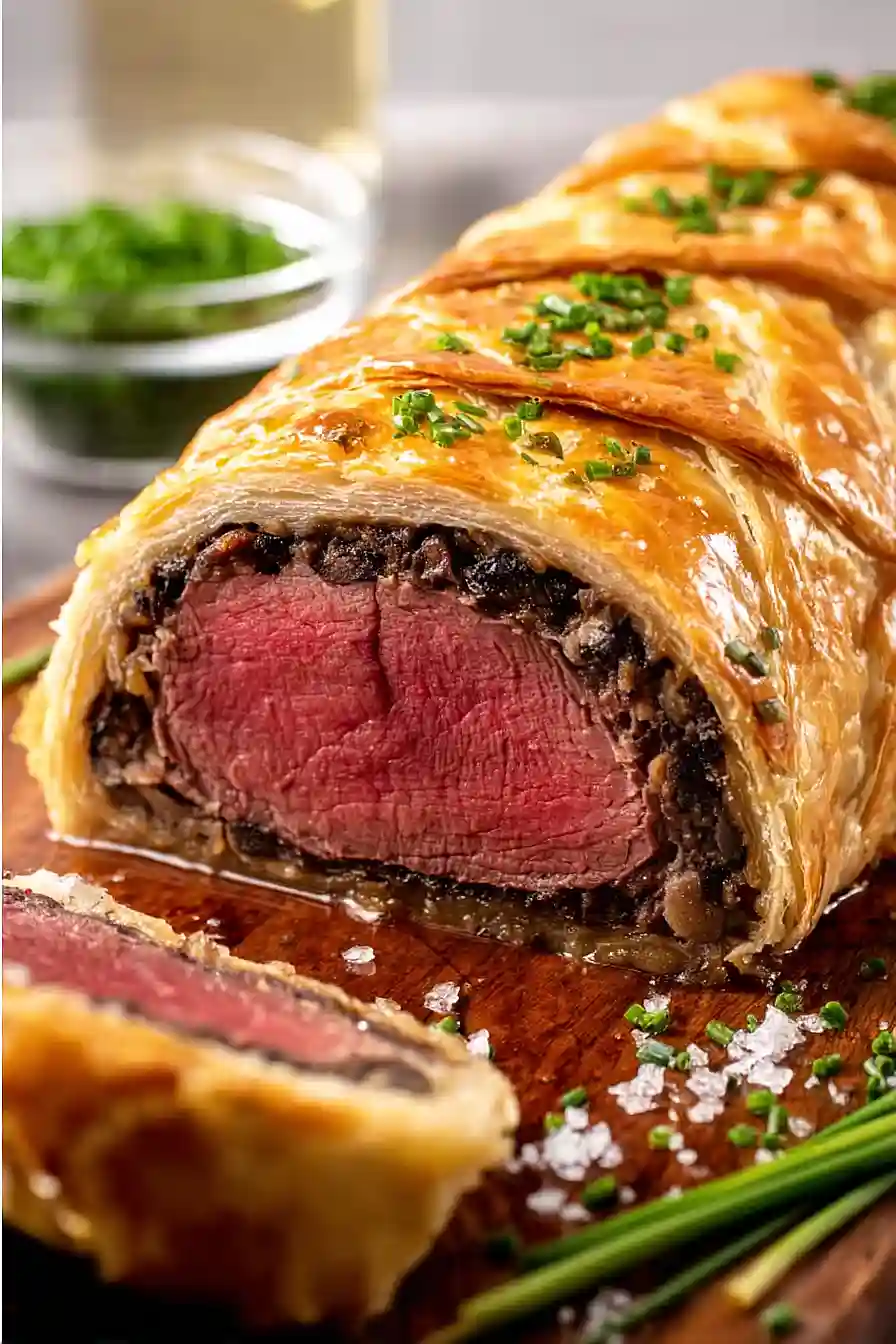
Why You’ll Love This Beef Wellington
- Restaurant-quality dish at home – This classic recipe lets you create an impressive main course that rivals anything you’d order at a fancy steakhouse, without leaving your kitchen.
- Perfect for special occasions – Whether it’s a holiday dinner, anniversary, or dinner party, this show-stopping centerpiece will have everyone talking about your cooking skills.
- Surprisingly doable – While it looks fancy, the steps are straightforward and manageable, even if you’ve never made it before. Just follow along and you’ll nail it.
- Tender, flavorful beef – The beef tenderloin stays juicy and perfectly cooked inside its golden puff pastry shell, with the mushroom layer adding incredible depth of flavor.
- Make-ahead friendly – You can prep most of the components in advance, making it easier to pull off when you’re entertaining guests.
What Kind of Beef Should I Use?
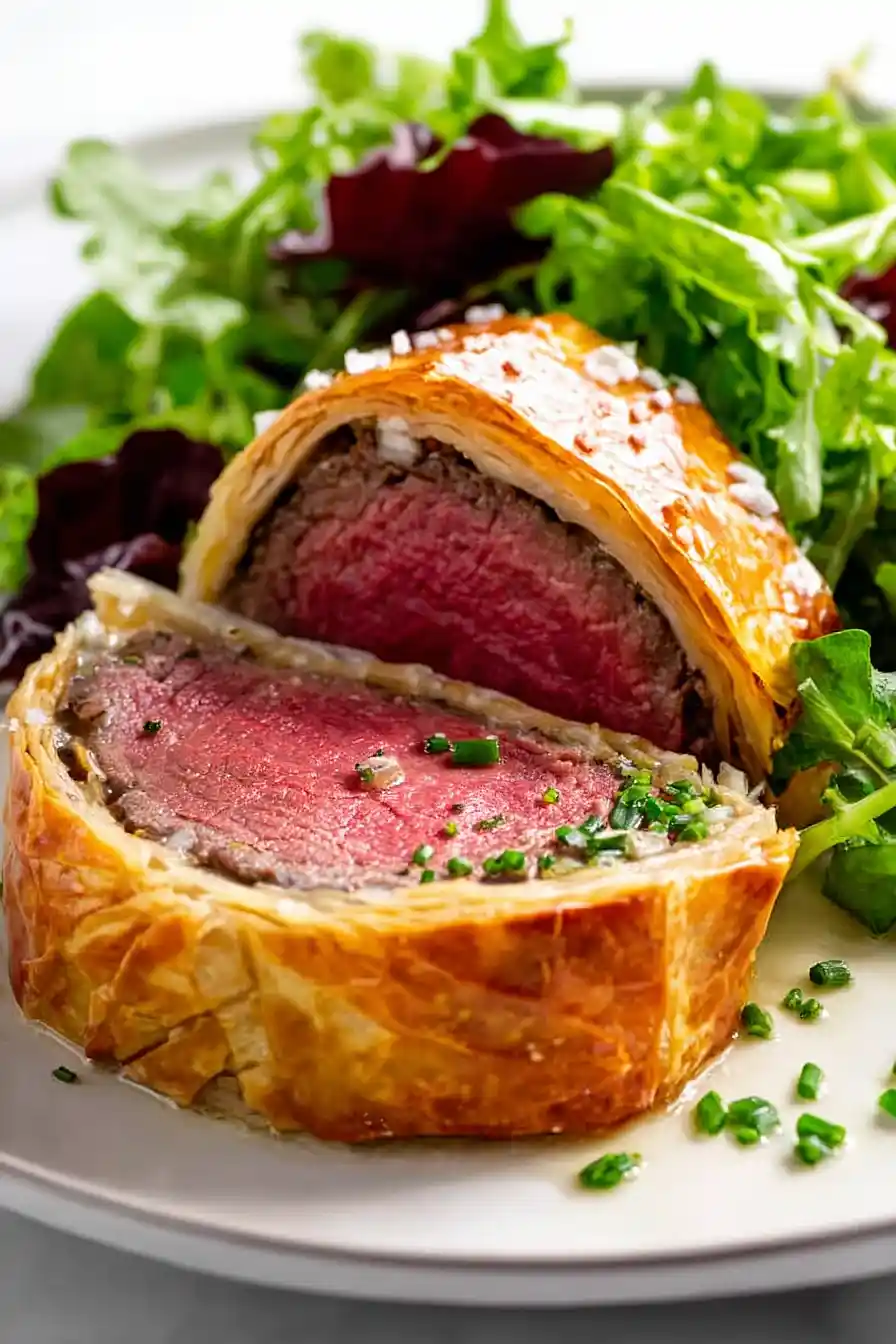
For Beef Wellington, you’ll want to use a center-cut beef tenderloin, which is the most tender and lean cut of beef available. This cut is sometimes called a filet mignon when it’s sliced into steaks, but for Wellington, you’re looking for a whole piece that’s about 2-3 pounds. When shopping, ask your butcher for a center-cut piece with the silver skin removed to save yourself some prep work. The tenderloin is definitely on the pricier side, but it’s worth it for this special occasion dish since the tender texture holds up beautifully to the pastry wrapping and won’t get tough during cooking.
Options for Substitutions
Beef Wellington is a classic dish where some ingredients really can’t be swapped, but there’s still room for a few adjustments:
- Beef tenderloin: This is one ingredient you really shouldn’t substitute. The tenderloin’s tender texture and even shape are what make Wellington work. Other cuts just won’t give you the same results.
- Puff pastry: Store-bought puff pastry works great and saves time. If you want to make it from scratch, go for it, but frozen is totally acceptable and what most people use.
- Mushrooms: Feel free to use whatever mushrooms you can find or prefer. A mix of button and cremini works well, but if you want something fancier, shiitake or portobello add nice flavor. Just make sure to cook them down completely to remove all moisture.
- Prosciutto: You can swap prosciutto with thinly sliced serrano ham or even pancetta. The key is using something that’s thinly sliced and salty to create that protective layer.
- Dijon mustard: Whole grain mustard or even regular yellow mustard can work in a pinch, though dijon gives the best flavor balance.
- Shallots: If you don’t have shallots, use half a medium yellow onion instead. It’ll give you a similar mild onion flavor.
Watch Out for These Mistakes While Cooking
The biggest mistake when making Beef Wellington is skipping the searing step or not getting a proper crust on the tenderloin, which locks in juices and adds flavor – make sure your pan is smoking hot before the beef touches it.
Excess moisture is your enemy here, so after cooking your mushroom duxelles, continue cooking until all the liquid has evaporated and it looks almost paste-like, otherwise you’ll end up with soggy puff pastry.
Don’t forget to let your seared beef cool completely before wrapping it in prosciutto and puff pastry, as any residual heat will melt the butter in the pastry and make it difficult to work with.
Finally, use an instant-read thermometer to check for doneness – aim for 120-125°F for medium-rare before removing from the oven, since the beef will continue cooking as it rests.
What to Serve With Beef Wellington?
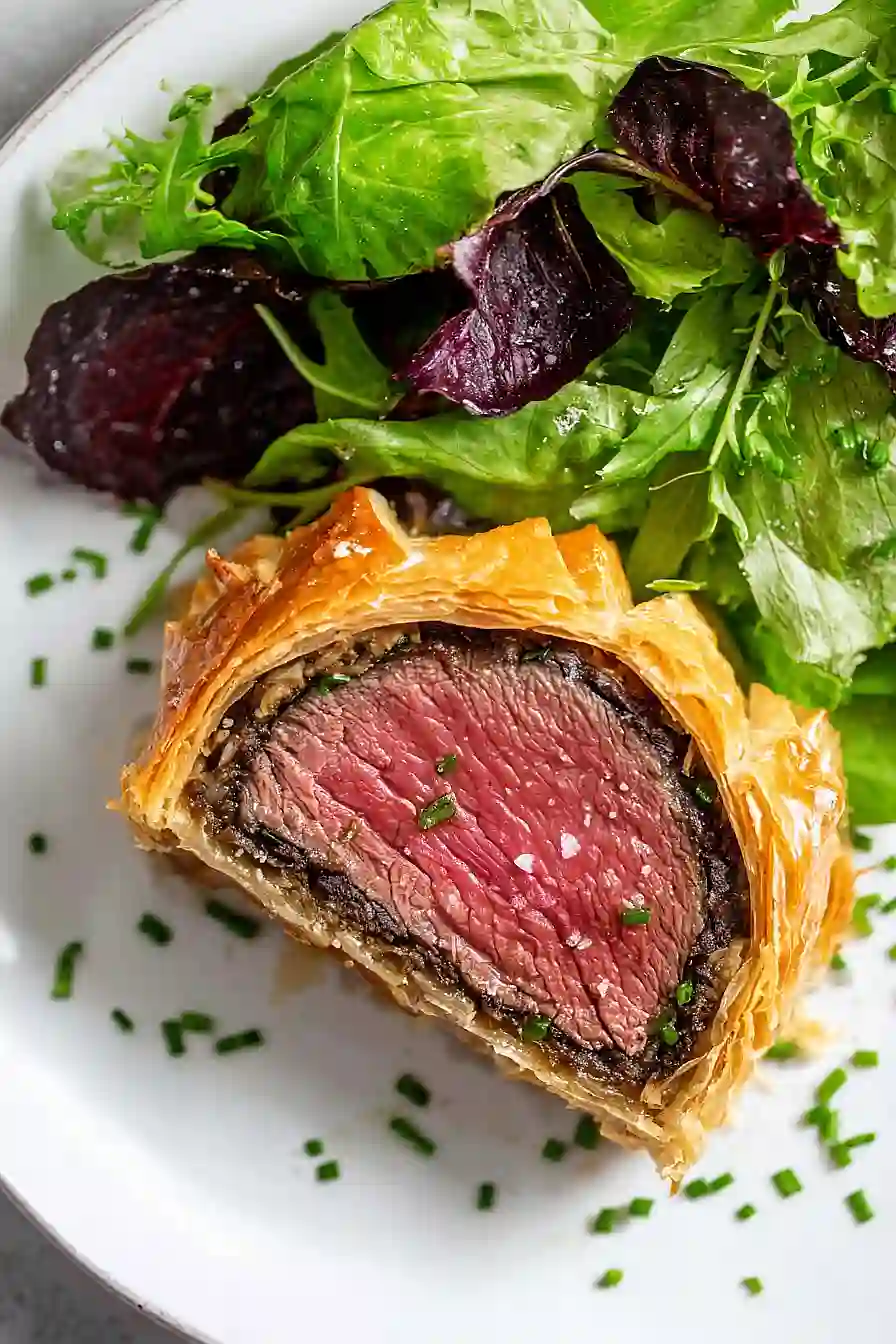
Since beef wellington is such a rich and special dish, I like to keep the sides simple but elegant. Roasted or mashed potatoes are always a great choice – they soak up any extra sauce and balance out the buttery puff pastry. A side of roasted asparagus, green beans, or broccolini adds a nice fresh crunch and helps cut through the richness of the beef and mushrooms. For something a bit heartier, you could also serve it with roasted carrots or a simple arugula salad dressed with lemon and olive oil.
Storage Instructions
Store: Beef Wellington is best enjoyed fresh from the oven, but leftovers can be stored in an airtight container in the fridge for up to 3 days. The pastry won’t be quite as crispy after storing, but the flavors will still be delicious.
Make Ahead: You can assemble the entire Wellington up to 24 hours before baking. Just wrap it tightly in plastic wrap and keep it in the fridge, then brush with egg wash right before baking. This actually helps the pastry stay extra crispy since everything gets nice and cold. You can also prepare the mushroom mixture up to 2 days ahead and store it separately.
Reheat: Warm leftover slices in a 350°F oven for about 10-15 minutes until heated through. Skip the microwave if you can, as it’ll make the pastry soggy. The oven helps keep some of that nice texture on the outside while warming the beef inside.
| Preparation Time | 30-45 minutes |
| Cooking Time | 50-60 minutes |
| Total Time | 80-105 minutes |
| Level of Difficulty | Medium |
Estimated Nutrition
Estimated nutrition for the whole recipe (without optional ingredients):
- Calories: 3500-4200
- Protein: 185-225 g
- Fat: 240-285 g
- Carbohydrates: 170-200 g
Ingredients
For the beef preparation:
- 2 to 3 lb center-cut beef tenderloin
- Kosher salt
- Freshly ground black pepper
- 2 tbsp olive oil
- 2 tbsp dijon mustard
For the mushroom mixture:
- 1 1/2 lb assorted mushrooms (button, cremini, shiitake, or portabello), roughly chopped
- 2 medium shallots, chopped
- 2 tsp fresh thyme leaves (about 6 sprigs)
- 4 garlic cloves
- 2 tbsp salted butter
- 2 tbsp olive oil
- Kosher salt
- Freshly ground black pepper
For assembly and baking:
- 12 thin slices prosciutto (about 1/4 lb)
- Flour, for dusting
- 14 oz puff pastry (thawed, frozen or homemade)
- 1 large egg, beaten
- 1/2 tsp flaky or coarse sea salt (such as maldon or fleur de sel)
- 1 bunch chives, finely minced
Step 1: Prepare and Sear the Beef Tenderloin
- 2 to 3 lb center-cut beef tenderloin
- kosher salt
- freshly ground black pepper
- 2 tbsp olive oil
- 2 tbsp dijon mustard
Trim the beef tenderloin by removing any silverskin and excess fat, and tie it with butcher’s twine at 1-inch intervals for even cooking.
Season generously all over with kosher salt and freshly ground black pepper, using about 1 teaspoon of salt per pound of meat.
Heat a large skillet over high heat until very hot, then add 2 tablespoons of olive oil.
Sear the tenderloin on all sides, including the ends, for about 2 minutes per side until well-browned.
Remove from the pan, cut off the twine, and brush all over with Dijon mustard while still warm.
Set the tenderloin aside.
Step 2: Prepare the Mushroom Duxelles
- 1 1/2 lb assorted mushrooms (button, cremini, shiitake, or portabello), roughly chopped
- 2 medium shallots, chopped
- 2 tsp fresh thyme leaves (about 6 sprigs)
- 4 garlic cloves
- 2 tbsp salted butter
- 2 tbsp olive oil
- kosher salt
- freshly ground black pepper
Combine half of the assorted mushrooms, chopped shallots, thyme leaves, and garlic cloves in a large food processor and pulse until finely chopped, about 10-15 pulses.
Repeat with the remaining mushrooms, shallots, thyme, and garlic so everything is evenly processed.
In the same skillet used to sear the tenderloin, heat 2 tablespoons of salted butter and 2 tablespoons of olive oil over medium-high heat until melted.
Add the chopped mushroom mixture, season with kosher salt and freshly ground black pepper, and cook, stirring occasionally, until the mushrooms release most of their liquid, about 8-10 minutes.
Continue cooking for another 4-5 minutes to let the mushrooms brown, then remove from heat and cool completely before proceeding.
I like to cook the mushrooms until they’re really dry—this prevents a soggy Wellington later!
Step 3: Wrap Tenderloin in Prosciutto and Mushrooms
- 12 thin slices prosciutto (about 1/4 lb)
- mushroom mixture (from Step 2)
- beef tenderloin brushed with dijon (from Step 1)
Lay a large piece of plastic wrap on your work surface (I recommend using a double layer for extra strength).
Arrange the prosciutto slices in slightly overlapping layers to form a square that’s large enough to wrap around the tenderloin.
Spread the cooled mushroom duxelles (from Step 2) evenly over the prosciutto.
Place the dijon-brushed tenderloin (from Step 1) on one end, then use the plastic wrap to help roll it up tightly into a log shape, tucking in the ends of the prosciutto.
Twist the ends of the plastic wrap to secure and chill in the fridge for 30 minutes to help it hold its shape.
Step 4: Encase the Tenderloin in Puff Pastry
- flour, for dusting
- 14 oz puff pastry (thawed, frozen or homemade)
- 1 large egg, beaten
- 1/2 tsp flaky or coarse sea salt (such as Maldon or fleur de sel)
- wrapped beef tenderloin (from Step 3)
Preheat your oven to 425°F (218°C).
Lightly dust a clean surface with flour.
Roll out the thawed puff pastry to create a rectangle large enough to enclose the wrapped tenderloin, pressing edges together if using two sheets.
Remove the wrapped tenderloin from the plastic and place on the puff pastry.
Roll up the pastry around the tenderloin, tucking the ends under, and brush a little beaten egg along the seam to seal.
Trim away excess pastry if needed.
Place seam-side down on a parchment-lined baking sheet.
Brush the top with more egg wash, and score diagonal slashes across the pastry about every inch to allow steam to escape.
Sprinkle the top with flaky or coarse sea salt.
Step 5: Bake and Serve the Beef Wellington
- 1 bunch chives, finely minced
- 1/2 tsp flaky or coarse sea salt (such as Maldon or fleur de sel)
Bake the wrapped beef wellington at 425°F (218°C) for 40 to 45 minutes, or until the pastry is golden brown and the internal temperature of the tenderloin reaches 120-125°F (49-51°C) for medium-rare.
Remove from the oven and allow to rest for 10 minutes before slicing into thick pieces.
Serve each slice garnished with a generous sprinkle of minced chives and extra flaky salt if desired.
For an extra flourish, I like to add a little fresh chive right at the end for color and a mild oniony zing.
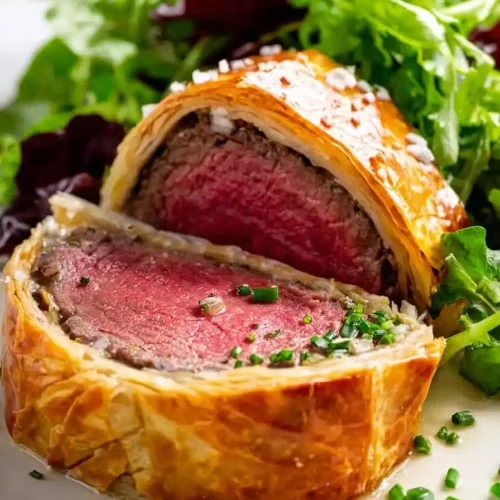
Perfect Beef Wellington
Ingredients
For the beef preparation:
- 2 to 3 lb center-cut beef tenderloin
- kosher salt
- freshly ground black pepper
- 2 tbsp olive oil
- 2 tbsp dijon mustard
For the mushroom mixture:
- 1 1/2 lb assorted mushrooms (button, cremini, shiitake, or portabello), roughly chopped
- 2 medium shallots, chopped
- 2 tsp fresh thyme leaves (about 6 sprigs)
- 4 garlic cloves
- 2 tbsp salted butter
- 2 tbsp olive oil
- kosher salt
- freshly ground black pepper
For assembly and baking:
- 12 thin slices prosciutto (about 1/4 lb)
- flour, for dusting
- 14 oz puff pastry (thawed, frozen or homemade)
- 1 large egg, beaten
- 1/2 tsp flaky or coarse sea salt (such as Maldon or fleur de sel)
- 1 bunch chives, finely minced
Instructions
- Trim the beef tenderloin by removing any silverskin and excess fat, and tie it with butcher's twine at 1-inch intervals for even cooking. Season generously all over with kosher salt and freshly ground black pepper, using about 1 teaspoon of salt per pound of meat. Heat a large skillet over high heat until very hot, then add 2 tablespoons of olive oil. Sear the tenderloin on all sides, including the ends, for about 2 minutes per side until well-browned. Remove from the pan, cut off the twine, and brush all over with Dijon mustard while still warm. Set the tenderloin aside.
- Combine half of the assorted mushrooms, chopped shallots, thyme leaves, and garlic cloves in a large food processor and pulse until finely chopped, about 10-15 pulses. Repeat with the remaining mushrooms, shallots, thyme, and garlic so everything is evenly processed. In the same skillet used to sear the tenderloin, heat 2 tablespoons of salted butter and 2 tablespoons of olive oil over medium-high heat until melted. Add the chopped mushroom mixture, season with kosher salt and freshly ground black pepper, and cook, stirring occasionally, until the mushrooms release most of their liquid, about 8-10 minutes. Continue cooking for another 4-5 minutes to let the mushrooms brown, then remove from heat and cool completely before proceeding. I like to cook the mushrooms until they're really dry—this prevents a soggy Wellington later!
- Lay a large piece of plastic wrap on your work surface (I recommend using a double layer for extra strength). Arrange the prosciutto slices in slightly overlapping layers to form a square that’s large enough to wrap around the tenderloin. Spread the cooled mushroom duxelles (from Step 2) evenly over the prosciutto. Place the dijon-brushed tenderloin (from Step 1) on one end, then use the plastic wrap to help roll it up tightly into a log shape, tucking in the ends of the prosciutto. Twist the ends of the plastic wrap to secure and chill in the fridge for 30 minutes to help it hold its shape.
- Preheat your oven to 425°F (218°C). Lightly dust a clean surface with flour. Roll out the thawed puff pastry to create a rectangle large enough to enclose the wrapped tenderloin, pressing edges together if using two sheets. Remove the wrapped tenderloin from the plastic and place on the puff pastry. Roll up the pastry around the tenderloin, tucking the ends under, and brush a little beaten egg along the seam to seal. Trim away excess pastry if needed. Place seam-side down on a parchment-lined baking sheet. Brush the top with more egg wash, and score diagonal slashes across the pastry about every inch to allow steam to escape. Sprinkle the top with flaky or coarse sea salt.
- Bake the wrapped beef wellington at 425°F (218°C) for 40 to 45 minutes, or until the pastry is golden brown and the internal temperature of the tenderloin reaches 120-125°F (49-51°C) for medium-rare. Remove from the oven and allow to rest for 10 minutes before slicing into thick pieces. Serve each slice garnished with a generous sprinkle of minced chives and extra flaky salt if desired. For an extra flourish, I like to add a little fresh chive right at the end for color and a mild oniony zing.

