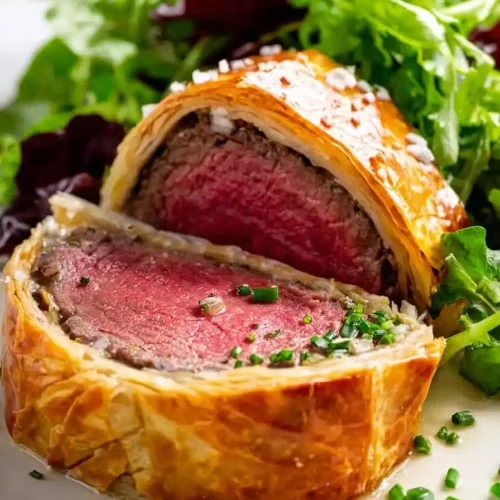
Perfect Beef Wellington
Delicious Perfect Beef Wellington recipe with step-by-step instructions.
Ingredients
For the beef preparation:
- 2 to 3 lb center-cut beef tenderloin
- kosher salt
- freshly ground black pepper
- 2 tbsp olive oil
- 2 tbsp dijon mustard
For the mushroom mixture:
- 1 1/2 lb assorted mushrooms (button, cremini, shiitake, or portabello), roughly chopped
- 2 medium shallots, chopped
- 2 tsp fresh thyme leaves (about 6 sprigs)
- 4 garlic cloves
- 2 tbsp salted butter
- 2 tbsp olive oil
- kosher salt
- freshly ground black pepper
For assembly and baking:
- 12 thin slices prosciutto (about 1/4 lb)
- flour, for dusting
- 14 oz puff pastry (thawed, frozen or homemade)
- 1 large egg, beaten
- 1/2 tsp flaky or coarse sea salt (such as Maldon or fleur de sel)
- 1 bunch chives, finely minced
Instructions
- Trim the beef tenderloin by removing any silverskin and excess fat, and tie it with butcher's twine at 1-inch intervals for even cooking. Season generously all over with kosher salt and freshly ground black pepper, using about 1 teaspoon of salt per pound of meat. Heat a large skillet over high heat until very hot, then add 2 tablespoons of olive oil. Sear the tenderloin on all sides, including the ends, for about 2 minutes per side until well-browned. Remove from the pan, cut off the twine, and brush all over with Dijon mustard while still warm. Set the tenderloin aside.
- Combine half of the assorted mushrooms, chopped shallots, thyme leaves, and garlic cloves in a large food processor and pulse until finely chopped, about 10-15 pulses. Repeat with the remaining mushrooms, shallots, thyme, and garlic so everything is evenly processed. In the same skillet used to sear the tenderloin, heat 2 tablespoons of salted butter and 2 tablespoons of olive oil over medium-high heat until melted. Add the chopped mushroom mixture, season with kosher salt and freshly ground black pepper, and cook, stirring occasionally, until the mushrooms release most of their liquid, about 8-10 minutes. Continue cooking for another 4-5 minutes to let the mushrooms brown, then remove from heat and cool completely before proceeding. I like to cook the mushrooms until they're really dry—this prevents a soggy Wellington later!
- Lay a large piece of plastic wrap on your work surface (I recommend using a double layer for extra strength). Arrange the prosciutto slices in slightly overlapping layers to form a square that’s large enough to wrap around the tenderloin. Spread the cooled mushroom duxelles (from Step 2) evenly over the prosciutto. Place the dijon-brushed tenderloin (from Step 1) on one end, then use the plastic wrap to help roll it up tightly into a log shape, tucking in the ends of the prosciutto. Twist the ends of the plastic wrap to secure and chill in the fridge for 30 minutes to help it hold its shape.
- Preheat your oven to 425°F (218°C). Lightly dust a clean surface with flour. Roll out the thawed puff pastry to create a rectangle large enough to enclose the wrapped tenderloin, pressing edges together if using two sheets. Remove the wrapped tenderloin from the plastic and place on the puff pastry. Roll up the pastry around the tenderloin, tucking the ends under, and brush a little beaten egg along the seam to seal. Trim away excess pastry if needed. Place seam-side down on a parchment-lined baking sheet. Brush the top with more egg wash, and score diagonal slashes across the pastry about every inch to allow steam to escape. Sprinkle the top with flaky or coarse sea salt.
- Bake the wrapped beef wellington at 425°F (218°C) for 40 to 45 minutes, or until the pastry is golden brown and the internal temperature of the tenderloin reaches 120-125°F (49-51°C) for medium-rare. Remove from the oven and allow to rest for 10 minutes before slicing into thick pieces. Serve each slice garnished with a generous sprinkle of minced chives and extra flaky salt if desired. For an extra flourish, I like to add a little fresh chive right at the end for color and a mild oniony zing.