If you ask me, rhubarb is one of those ingredients that doesn’t get enough attention.
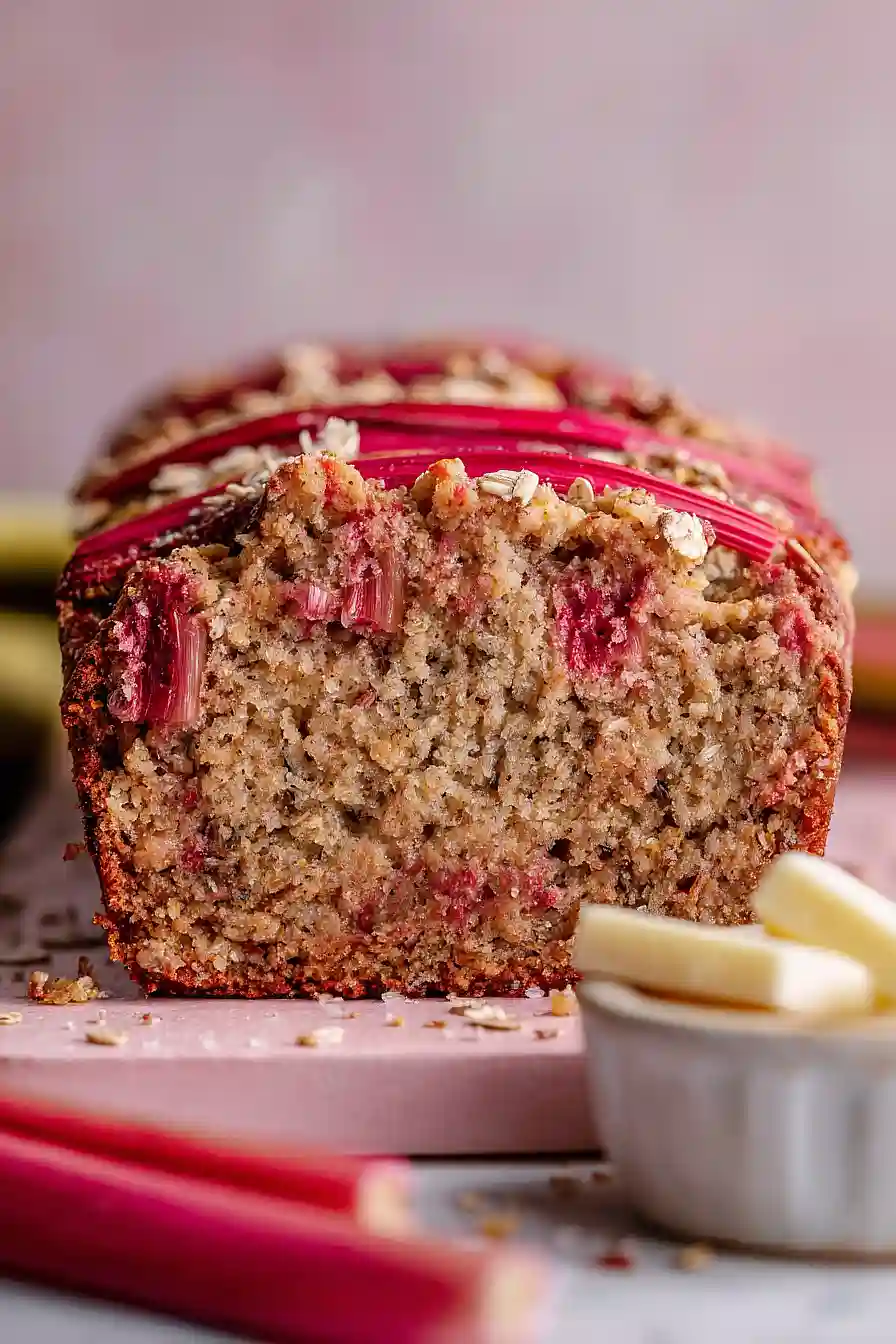
This vegan quick bread makes great use of spring’s tangy rhubarb stalks, turning them into a moist loaf that’s perfect for breakfast or an afternoon snack. The pink-red pieces soften as they bake, creating pockets of tart flavor throughout.
It’s sweetened with regular sugar and spiced with cinnamon, while chopped walnuts add a nice crunch. Flax eggs and avocado oil keep the whole thing plant-based without sacrificing texture.
It’s a straightforward recipe that comes together in one bowl, ideal for using up rhubarb when it’s in season.

Why You’ll Love This Vegan Rhubarb Bread
- Plant-based and vegan-friendly – Using flax eggs instead of regular eggs makes this bread perfect for anyone following a vegan diet or dealing with egg allergies.
- Simple pantry ingredients – You probably have most of these basic baking staples on hand already, making it easy to whip up whenever you have fresh rhubarb.
- Quick and easy – This bread comes together in just over an hour, so you can enjoy homemade baked goods without spending all day in the kitchen.
- Great way to use rhubarb – If you’re looking for something different to do with rhubarb besides pie, this moist, tangy bread is a nice change of pace for breakfast or snack time.
What Kind of Rhubarb Should I Use?
Fresh rhubarb is your best bet for this bread, and you’ll find it at most grocery stores during spring and early summer when it’s in season. The color of the stalks doesn’t really matter – both red and green rhubarb work equally well, though the red variety will give your bread a slightly prettier pink tint. Make sure to trim off and discard any leaves, as they’re toxic, and only use the stalks for baking. If fresh rhubarb isn’t available, you can use frozen rhubarb instead – just thaw it first and drain off any excess liquid before chopping and adding it to your batter.
Options for Substitutions
This vegan rhubarb bread is pretty forgiving when it comes to swaps:
- Rhubarb: Fresh rhubarb is best here, but if you only have frozen, that works too. Just thaw it completely and drain any excess liquid before adding it to the batter. You can also mix in some diced strawberries with the rhubarb for a classic combo.
- Flax eggs: If you don’t have flaxseed, you can use chia eggs instead (2 tablespoons chia seeds mixed with 6 tablespoons water, let sit for 5 minutes). Regular eggs work if you’re not keeping it vegan.
- Avocado oil: Any neutral oil works here – try vegetable oil, canola oil, or melted coconut oil. You could even use melted vegan butter if that’s what you have on hand.
- Walnuts: Pecans make a great swap, or you can use chopped almonds. Not a fan of nuts? Just leave them out or replace with the same amount of rolled oats for texture.
- All-purpose flour: You can use whole wheat flour for half the amount to add some heartiness, but I wouldn’t recommend replacing all of it as the bread might turn out too dense.
Watch Out for These Mistakes While Baking
The biggest mistake when making rhubarb bread is skipping the step of cooking the rhubarb first, which releases excess moisture that would otherwise make your bread dense and soggy – those 15 minutes on the stovetop are worth it.
Another common error is overmixing the batter once you combine the wet and dry ingredients, so stir just until everything is incorporated to keep your bread tender instead of tough.
To avoid a raw center, check for doneness by inserting a toothpick into the middle of the loaf – it should come out with just a few moist crumbs, not wet batter.
Finally, resist the urge to slice into your bread right away, as letting it cool for the full 30 minutes helps it set properly and prevents it from crumbling apart when you cut it.

What to Serve With Rhubarb Bread?
This rhubarb bread is perfect for breakfast or an afternoon snack with a hot cup of coffee or tea. I love slicing it up and spreading a little vegan butter or coconut oil on top while it’s still warm – the slight tartness from the rhubarb pairs really nicely with something creamy. You could also serve it alongside fresh berries and a dollop of coconut yogurt for a light brunch spread. If you want to make it feel more dessert-like, try warming a slice and topping it with a scoop of vanilla non-dairy ice cream.
Storage Instructions
Store: Keep your rhubarb bread wrapped tightly in plastic wrap or in an airtight container at room temperature for up to 3 days. If you want it to last longer, pop it in the fridge where it’ll stay fresh for about a week.
Freeze: This bread freezes really well for up to 3 months. Wrap it tightly in plastic wrap, then again in foil, or slice it first and freeze individual pieces with parchment paper between them. That way you can grab just a slice or two whenever you want.
Thaw: Let frozen slices sit at room temperature for about 30 minutes, or thaw the whole loaf overnight on the counter. You can also warm individual slices in the microwave for 15-20 seconds or toast them straight from frozen for a quick treat.
| Preparation Time | 20-25 minutes |
| Cooking Time | 50-60 minutes |
| Total Time | 70-85 minutes |
| Level of Difficulty | Medium |
| Servings | 8 slices |
Estimated Nutrition
Estimated nutrition for the whole recipe (without optional ingredients):
- Calories: 1800-2000
- Protein: 20-24 g
- Fat: 78-86 g
- Carbohydrates: 270-290 g
Ingredients
For the dry ingredients:
- 1.75 cups flour (I always use King Arthur all-purpose flour)
- 1/2 tsp baking soda
- 3/4 tsp baking powder
- 1/4 tsp salt
- 1 cup sugar
- 1/2 cup walnuts (roughly chopped into 1/4-inch pieces for even distribution)
- 1/2 tsp ground cinnamon
For the wet ingredients:
- 2.5 cups rhubarb (sliced into 1/2-inch thick pieces)
- 1/2 cup avocado oil (I prefer Chosen Foods for its neutral flavor)
- 2 flax eggs
Step 1: Prepare Mise en Place and Preheat
- 1/2 cup walnuts
- 2.5 cups rhubarb
Preheat your oven to 350°F and position a rack in the middle.
While the oven heats, prepare your loaf pan by greasing it generously with oil or cooking spray, then dust it lightly with flour, tapping out any excess.
Roughly chop the walnuts into 1/4-inch pieces and slice the rhubarb into 1/2-inch thick pieces, keeping a few nicer slices aside for topping.
Prepare your two flax eggs by mixing 1 tablespoon ground flaxseed with 3 tablespoons water per egg and let them sit for 5 minutes to thicken—this gives them binding power similar to regular eggs.
Step 2: Cook the Rhubarb to Release Moisture
- 2.5 cups rhubarb
In a pot over medium heat, add the sliced rhubarb with just a splash of water (about 1/4 cup).
Cook for 12-15 minutes, stirring occasionally, until the rhubarb breaks down and releases its juice—you want some pieces to lose their shape while maintaining some texture.
This cooking step is crucial because it releases moisture and concentrates the rhubarb flavor while preventing the bread from becoming too wet.
Set the cooked rhubarb aside to cool slightly while you prepare the dry ingredients.
Step 3: Combine Dry Ingredients
- 1.75 cups flour
- 1/2 tsp baking soda
- 3/4 tsp baking powder
- 1/4 tsp salt
- 1 cup sugar
- 1/2 cup walnuts
- 1/2 tsp ground cinnamon
In a large mixing bowl, whisk together the flour, baking powder, baking soda, salt, sugar, cinnamon, and chopped walnuts.
Make sure the baking soda and baking powder are evenly distributed throughout the flour—this prevents any concentrated pockets of bitter flavor or uneven rise.
I like to whisk these dry ingredients thoroughly because it aerates the flour and ensures the leavening agents are well-distributed, which gives you a more even crumb structure.
Step 4: Build the Wet Mixture
- 1/2 cup avocado oil
- 2 flax eggs
- cooked rhubarb from Step 2
In a second bowl, combine the avocado oil, prepared flax eggs, and the cooked rhubarb from Step 2.
Stir until the mixture is well combined and relatively smooth, though some rhubarb pieces breaking apart is fine.
The flax eggs will help bind everything together and provide structure to the bread, while the oil adds moisture and richness.
Step 5: Combine and Pour Into Pan
- dry ingredient mixture from Step 3
- wet ingredient mixture from Step 4
Pour the wet mixture from Step 4 into the bowl with the dry ingredients from Step 3.
Using a spatula or wooden spoon, gently fold everything together until just combined—don’t overmix, as this can develop gluten and make the bread tough.
The batter should look slightly lumpy, which is perfect.
Pour the batter into your prepared loaf pan and smooth the top with a spatula.
Step 6: Bake Until Golden and Set
Place the loaf pan in the preheated 350°F oven and bake for 50-60 minutes.
The bread is done when a toothpick inserted into the center comes out with just a few moist crumbs (not wet batter).
I typically check at the 48-minute mark to avoid overbaking, since every oven varies slightly.
The top should be golden brown and the edges should pull slightly away from the sides of the pan.
Step 7: Cool and Release from Pan
Remove the bread from the oven and let it cool in the pan for 30 minutes—this resting time allows the crumb structure to set properly so it doesn’t fall apart when you turn it out.
After 30 minutes, run a thin knife around the edges to loosen it, then turn the pan upside down onto a wire rack to release the bread completely.
Let it cool to room temperature on the rack before slicing.

Walnut Vegan Rhubarb Bread
Ingredients
For the dry ingredients::
- 1.75 cups flour (I always use King Arthur all-purpose flour)
- 1/2 tsp baking soda
- 3/4 tsp baking powder
- 1/4 tsp salt
- 1 cup sugar
- 1/2 cup walnuts (roughly chopped into 1/4-inch pieces for even distribution)
- 1/2 tsp ground cinnamon
For the wet ingredients::
- 2.5 cups rhubarb (sliced into 1/2-inch thick pieces)
- 1/2 cup avocado oil (I prefer Chosen Foods for its neutral flavor)
- 2 flax eggs
Instructions
- Preheat your oven to 350°F and position a rack in the middle. While the oven heats, prepare your loaf pan by greasing it generously with oil or cooking spray, then dust it lightly with flour, tapping out any excess. Roughly chop the walnuts into 1/4-inch pieces and slice the rhubarb into 1/2-inch thick pieces, keeping a few nicer slices aside for topping. Prepare your two flax eggs by mixing 1 tablespoon ground flaxseed with 3 tablespoons water per egg and let them sit for 5 minutes to thicken—this gives them binding power similar to regular eggs.
- In a pot over medium heat, add the sliced rhubarb with just a splash of water (about 1/4 cup). Cook for 12-15 minutes, stirring occasionally, until the rhubarb breaks down and releases its juice—you want some pieces to lose their shape while maintaining some texture. This cooking step is crucial because it releases moisture and concentrates the rhubarb flavor while preventing the bread from becoming too wet. Set the cooked rhubarb aside to cool slightly while you prepare the dry ingredients.
- In a large mixing bowl, whisk together the flour, baking powder, baking soda, salt, sugar, cinnamon, and chopped walnuts. Make sure the baking soda and baking powder are evenly distributed throughout the flour—this prevents any concentrated pockets of bitter flavor or uneven rise. I like to whisk these dry ingredients thoroughly because it aerates the flour and ensures the leavening agents are well-distributed, which gives you a more even crumb structure.
- In a second bowl, combine the avocado oil, prepared flax eggs, and the cooked rhubarb from Step 2. Stir until the mixture is well combined and relatively smooth, though some rhubarb pieces breaking apart is fine. The flax eggs will help bind everything together and provide structure to the bread, while the oil adds moisture and richness.
- Pour the wet mixture from Step 4 into the bowl with the dry ingredients from Step 3. Using a spatula or wooden spoon, gently fold everything together until just combined—don't overmix, as this can develop gluten and make the bread tough. The batter should look slightly lumpy, which is perfect. Pour the batter into your prepared loaf pan and smooth the top with a spatula.
- Place the loaf pan in the preheated 350°F oven and bake for 50-60 minutes. The bread is done when a toothpick inserted into the center comes out with just a few moist crumbs (not wet batter). I typically check at the 48-minute mark to avoid overbaking, since every oven varies slightly. The top should be golden brown and the edges should pull slightly away from the sides of the pan.
- Remove the bread from the oven and let it cool in the pan for 30 minutes—this resting time allows the crumb structure to set properly so it doesn't fall apart when you turn it out. After 30 minutes, run a thin knife around the edges to loosen it, then turn the pan upside down onto a wire rack to release the bread completely. Let it cool to room temperature on the rack before slicing.

