Here is my favorite pork and sauerkraut recipe, slow-cooked with dark beer, tender chunks of pork shoulder, and plenty of tangy sauerkraut that soaks up all those rich flavors.
This pork and sauerkraut dish is what I make whenever the weather turns cold and we need something hearty and comforting. My family loves how the beer and spices make the pork so tender, and leftovers taste even better the next day.
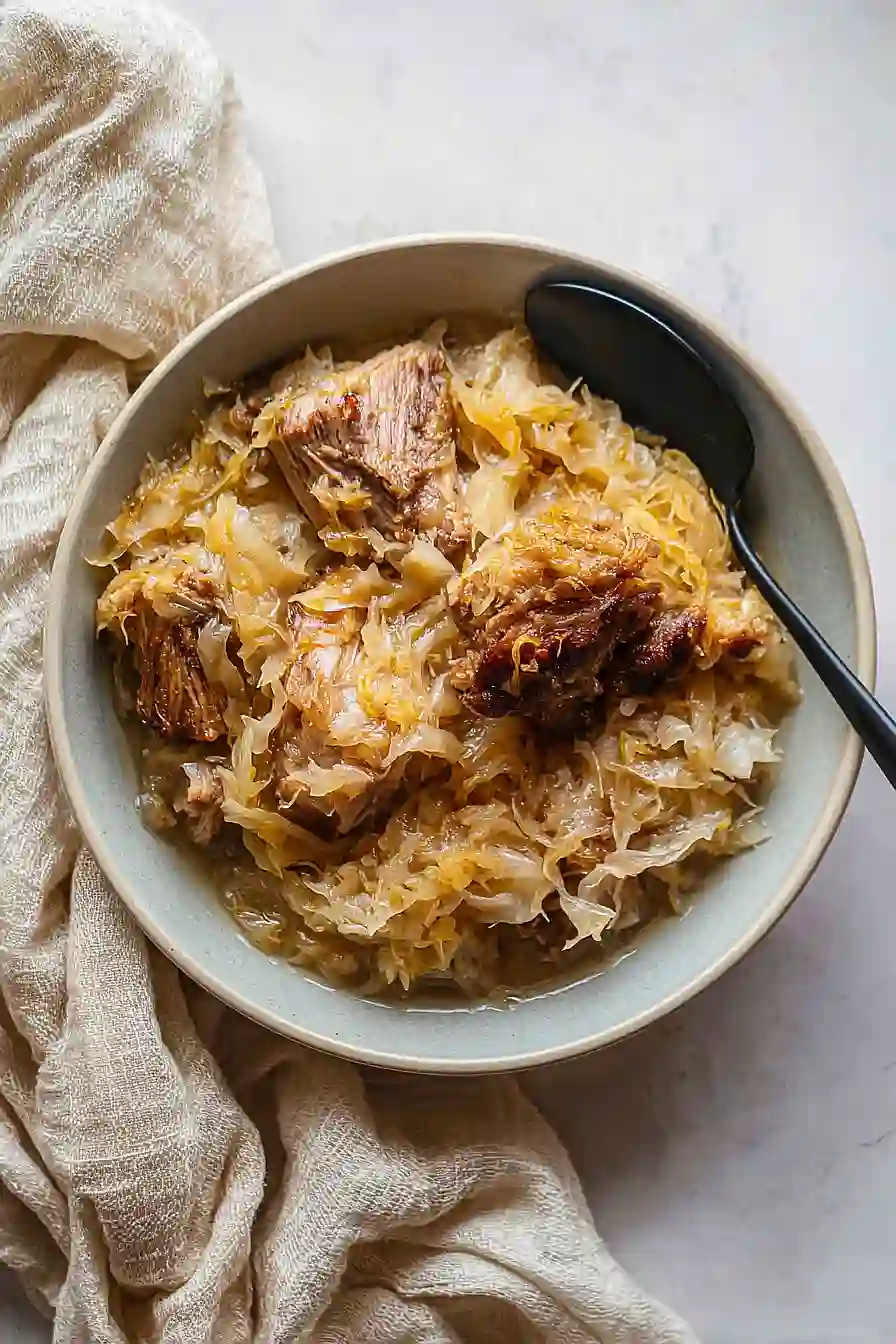
Why You’ll Love This Pork and Sauerkraut
- Simple ingredients – You only need a handful of basic ingredients to create this hearty, flavorful dish that tastes like you spent hours perfecting it.
- Rich, deep flavors – The dark beer and paprika add a malty sweetness that balances perfectly with the tangy sauerkraut, making every bite interesting.
- Tender, fall-apart pork – The pork shoulder becomes incredibly tender as it braises, practically melting in your mouth with minimal effort on your part.
- Perfect for feeding a crowd – This recipe makes plenty of food, so it’s great for family dinners or meal prep for the week ahead.
- Comforting one-pot meal – Everything cooks together in one pot, which means less cleanup and more time to relax while dinner simmers away.
What Kind of Pork Should I Use?
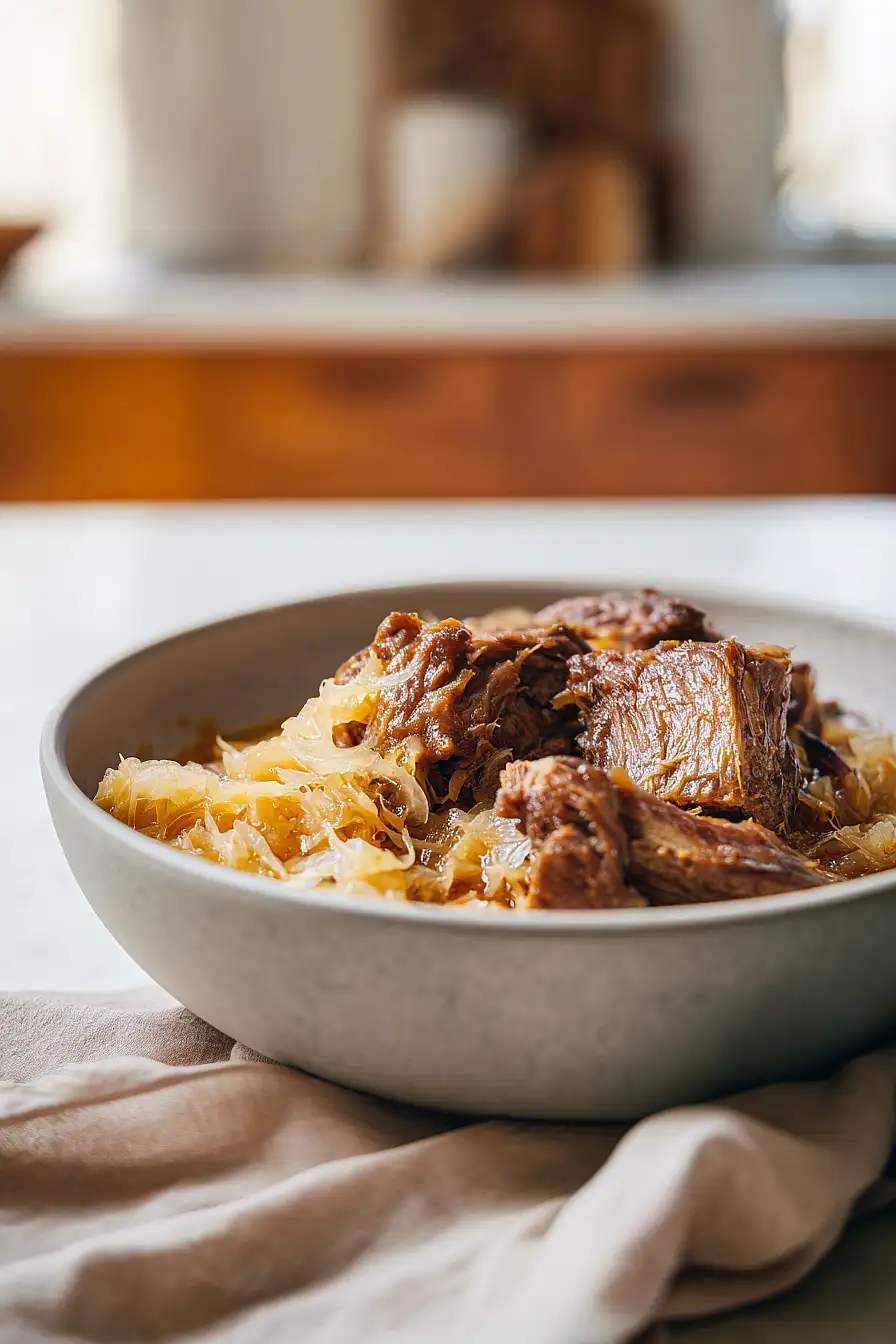
Both boneless pork shoulder and country-style ribs work great for this recipe, so feel free to use whichever you can find or prefer. Pork shoulder is a bit fattier and will give you super tender, fall-apart meat after the long cooking time, while country-style ribs are a little leaner but still have enough marbling to stay juicy. If you’re buying pork shoulder, look for a piece with good fat distribution throughout rather than one big fatty section – this helps keep the meat moist as it cooks. You can also cut the pork into large chunks before cooking if you want it to cook a bit faster or prefer smaller pieces in your final dish.
Options for Substitutions
This recipe is pretty forgiving, so here are some swaps you can make if needed:
- Pork shoulder or country style ribs: Both cuts work great because they have enough fat to stay tender during long cooking. If you can’t find these, pork butt is basically the same as pork shoulder. In a pinch, you could use thick-cut pork chops, but reduce the cooking time since they’re leaner and can dry out.
- Dark beer: If you don’t have dark beer, a lighter beer will work fine, or try apple cider for a slightly sweeter flavor. You can also use chicken or beef broth with a splash of apple cider vinegar to mimic that tangy depth.
- Sauerkraut: Fresh sauerkraut from the refrigerated section tastes best, but jarred or canned works too. Just make sure to drain it well before adding. If it’s too sour for your taste, rinse it under cold water first.
- Paprika: Regular paprika is fine, but smoked paprika adds a nice extra layer of flavor if you have it. You could also use a bit of caraway seeds instead for a more traditional Eastern European taste.
- Onion: Yellow onion is standard, but white or sweet onions work just as well. You could even use a couple of shallots if that’s what you have on hand.
Watch Out for These Mistakes While Cooking
The biggest mistake when making pork and sauerkraut is not browning the pork properly – you want a deep golden crust on all sides, which means resisting the urge to move the meat around too much and letting it sit in the hot oil for a few minutes per side.
Skipping the step to drain your sauerkraut will leave you with a watery, bland dish, so make sure to squeeze out that excess liquid before adding it to the pot.
Another common error is choosing the wrong beer – stay away from IPAs or hoppy beers since their bitterness can turn harsh during the long cooking time, and stick with a malty dark beer or even apple cider for the best flavor.
Finally, don’t forget to check if you need to add water when you add the sauerkraut – the liquid should come about halfway up the sides of the pork to keep everything moist and prevent burning.
What to Serve With Pork and Sauerkraut?
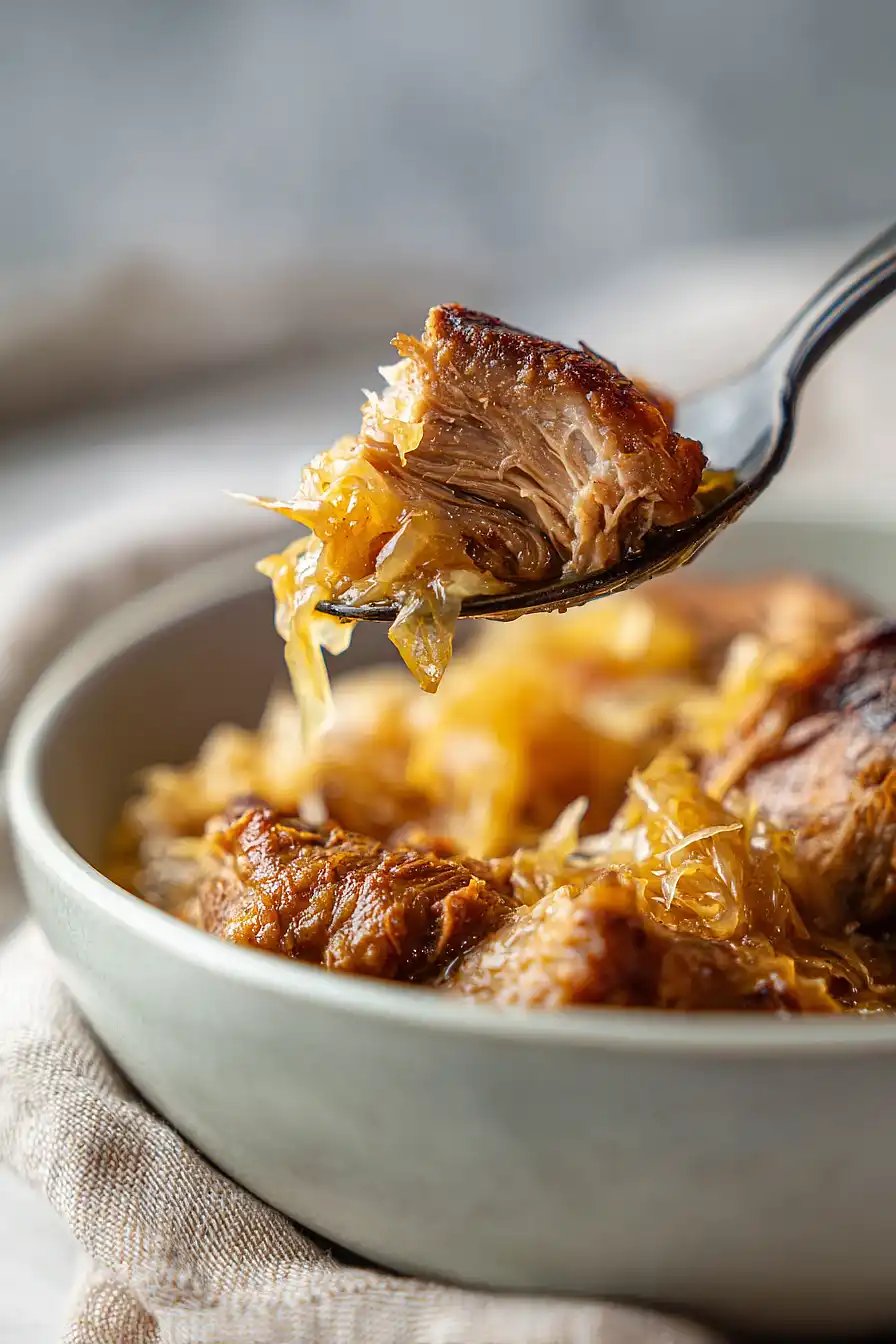
This hearty dish practically begs for some good mashed potatoes or buttery egg noodles on the side to soak up all those amazing juices. A slice of rye bread or pumpernickel is perfect for mopping up your plate, and it goes really well with the tangy sauerkraut flavors. If you want to add something fresh to balance out the richness, try a simple cucumber salad with dill and sour cream, or some roasted root vegetables like carrots and parsnips. For a traditional approach, serve it with boiled potatoes and a dollop of whole grain mustard on the side for an extra kick.
Storage Instructions
Store: This dish actually gets better after a day or two in the fridge! Keep it in an airtight container for up to 5 days. The flavors really meld together nicely, making it perfect for meal prep or enjoying as leftovers throughout the week.
Freeze: Pork and sauerkraut freezes really well for up to 3 months. Let it cool completely, then portion it into freezer-safe containers or bags. I like to freeze it in meal-sized portions so I can thaw just what I need.
Reheat: Warm it up gently on the stovetop over medium-low heat with a splash of water or beer to keep it moist. You can also reheat it in the microwave, stirring occasionally. The pork should be nice and tender after reheating, just like when you first made it.
| Preparation Time | 10-15 minutes |
| Cooking Time | 80-110 minutes |
| Total Time | 90-125 minutes |
| Level of Difficulty | Easy |
| Servings | 8 servings |
Estimated Nutrition
Estimated nutrition for the whole recipe (without optional ingredients):
- Calories: 3000-3400
- Protein: 260-300 g
- Fat: 200-220 g
- Carbohydrates: 110-130 g
Ingredients
For the pork:
- black pepper to taste (freshly ground preferred)
- 2 tbsp olive oil (or any neutral oil like canola)
- 3 lbs boneless pork shoulder (cut into 2-inch chunks)
- salt to taste
For the braising liquid:
- 1 onion (diced into 1/2-inch pieces)
- 1 cup dark beer
- 3 bay leaves
- 2 cups water
- 1 tbsp paprika
For the sauerkraut:
- 4 lbs sauerkraut (I use Libby’s sauerkraut, drained if using canned)
Step 1: Prepare Mise en Place and Season the Pork
- 3 lbs boneless pork shoulder
- salt to taste
- black pepper to taste
- 1 onion
Cut the pork shoulder into 2-inch chunks and season generously with salt and freshly ground black pepper on all sides—this creates a flavorful crust when seared.
Dice the onion into 1/2-inch pieces and have all ingredients measured and ready before you begin cooking.
Preheat your oven to 300°F so it reaches temperature while you’re building the braising liquid.
Step 2: Sear the Pork to Build Flavor
- 2 tbsp olive oil
- seasoned pork chunks from Step 1
Heat the olive oil in a large, heavy-bottomed pot or Dutch oven over medium-high heat until it shimmers.
Working in batches if needed to avoid crowding, sear the seasoned pork chunks for 3-4 minutes per side until deeply browned on all surfaces.
I always let the pork sit undisturbed for a minute or two on each side—this creates a proper crust instead of steaming the meat.
Transfer the browned pork to a plate and set aside; don’t worry about it being cooked through, the oven will finish it.
Step 3: Build the Braising Liquid Base
- 1 onion
- 1 tbsp paprika
- 1 cup dark beer
In the same pot with the rendered pork fat, add the diced onion and cook for 3-4 minutes, stirring occasionally, until softened and beginning to turn golden.
Sprinkle the paprika over the onions and stir constantly for about 30 seconds to bloom the spice and release its flavor.
Pour in the dark beer, scraping up any flavorful browned bits stuck to the bottom of the pot with a wooden spoon—this is called deglazing and adds tremendous depth to your braising liquid.
Step 4: Create the Braising Liquid and Return Pork
- 2 cups water
- 3 bay leaves
- browned pork from Step 2
- braising liquid from Step 3
Add the water and bay leaves to the pot and bring the liquid to a gentle simmer.
Return the browned pork to the pot, nestling it into the liquid so it’s mostly submerged.
Cover the pot with a lid and transfer it to the preheated 300°F oven.
Braise for 1 to 1.5 hours until the pork is completely tender and easily breaks apart with a fork—the low, slow heat ensures the meat becomes melt-in-your-mouth tender rather than tough and dry.
Step 5: Add Sauerkraut and Finish
- 4 lbs sauerkraut
- braised pork and liquid from Step 4
Remove the pot from the oven and arrange the drained sauerkraut around and on top of the pork.
If the liquid seems too reduced or the mixture looks dry, add a splash of water (about 1/4 to 1/2 cup) to keep everything moist.
I prefer the sauerkraut to have just enough braising liquid to keep it from sticking without making it soupy.
Cover the pot again and return it to the oven for a final 20 minutes, allowing the sauerkraut to warm through and absorb the flavors from the pork and braising liquid.
Step 6: Rest and Serve
Remove the pot from the oven and let it rest, covered, for 5 minutes before serving.
This allows the flavors to settle and any excess heat to distribute evenly.
Taste the braising liquid and adjust the seasoning with additional salt and pepper as needed.
Serve the tender pork and sauerkraut directly from the pot or transfer to a serving dish, making sure to include plenty of the flavorful braising liquid with each portion.

Traditional Pork and Sauerkraut and Beer
Ingredients
For the pork:
- black pepper to taste (freshly ground preferred)
- 2 tbsp olive oil (or any neutral oil like canola)
- 3 lbs boneless pork shoulder (cut into 2-inch chunks)
- salt to taste
For the braising liquid:
- 1 onion (diced into 1/2-inch pieces)
- 1 cup dark beer
- 3 bay leaves
- 2 cups water
- 1 tbsp paprika
For the sauerkraut:
- 4 lbs sauerkraut (I use Libby's sauerkraut, drained if using canned)
Instructions
- Cut the pork shoulder into 2-inch chunks and season generously with salt and freshly ground black pepper on all sides—this creates a flavorful crust when seared. Dice the onion into 1/2-inch pieces and have all ingredients measured and ready before you begin cooking. Preheat your oven to 300°F so it reaches temperature while you're building the braising liquid.
- Heat the olive oil in a large, heavy-bottomed pot or Dutch oven over medium-high heat until it shimmers. Working in batches if needed to avoid crowding, sear the seasoned pork chunks for 3-4 minutes per side until deeply browned on all surfaces. I always let the pork sit undisturbed for a minute or two on each side—this creates a proper crust instead of steaming the meat. Transfer the browned pork to a plate and set aside; don't worry about it being cooked through, the oven will finish it.
- In the same pot with the rendered pork fat, add the diced onion and cook for 3-4 minutes, stirring occasionally, until softened and beginning to turn golden. Sprinkle the paprika over the onions and stir constantly for about 30 seconds to bloom the spice and release its flavor. Pour in the dark beer, scraping up any flavorful browned bits stuck to the bottom of the pot with a wooden spoon—this is called deglazing and adds tremendous depth to your braising liquid.
- Add the water and bay leaves to the pot and bring the liquid to a gentle simmer. Return the browned pork to the pot, nestling it into the liquid so it's mostly submerged. Cover the pot with a lid and transfer it to the preheated 300°F oven. Braise for 1 to 1.5 hours until the pork is completely tender and easily breaks apart with a fork—the low, slow heat ensures the meat becomes melt-in-your-mouth tender rather than tough and dry.
- Remove the pot from the oven and arrange the drained sauerkraut around and on top of the pork. If the liquid seems too reduced or the mixture looks dry, add a splash of water (about 1/4 to 1/2 cup) to keep everything moist. I prefer the sauerkraut to have just enough braising liquid to keep it from sticking without making it soupy. Cover the pot again and return it to the oven for a final 20 minutes, allowing the sauerkraut to warm through and absorb the flavors from the pork and braising liquid.
- Remove the pot from the oven and let it rest, covered, for 5 minutes before serving. This allows the flavors to settle and any excess heat to distribute evenly. Taste the braising liquid and adjust the seasoning with additional salt and pepper as needed. Serve the tender pork and sauerkraut directly from the pot or transfer to a serving dish, making sure to include plenty of the flavorful braising liquid with each portion.