If you ask me, piccata sauce is one of those restaurant tricks that’s way easier than it looks.
This weeknight-friendly pasta dish brings together tender salmon pieces with a bright, lemony sauce that tastes fancy but comes together in about 30 minutes. The capers add little bursts of briny flavor, while the dairy-free butter creates a sauce that clings to every strand of angel hair.
The salmon gets a quick coating of flour before hitting the pan, which helps it stay moist inside while getting a nice golden crust. Then everything gets tossed with pasta and that tangy, garlicky sauce.
It’s a lighter dinner option that feels special enough for company but easy enough for a Tuesday night.
Why You’ll Love This Salmon Piccata Pasta
- Restaurant-quality meal at home – The bright lemon-caper sauce with tender salmon over pasta tastes like something you’d order at a fancy Italian restaurant, but you can make it in your own kitchen.
- Ready in under an hour – From start to finish, this dish comes together in about 45-55 minutes, making it perfect for a weeknight dinner that feels special.
- Easily adaptable for dietary needs – Whether you need gluten-free or dairy-free options, this recipe has simple swaps built right in so everyone can enjoy it.
- Light yet satisfying – The combination of flaky salmon and delicate angel hair pasta in a tangy sauce feels indulgent without being heavy, so you won’t feel weighed down after eating.
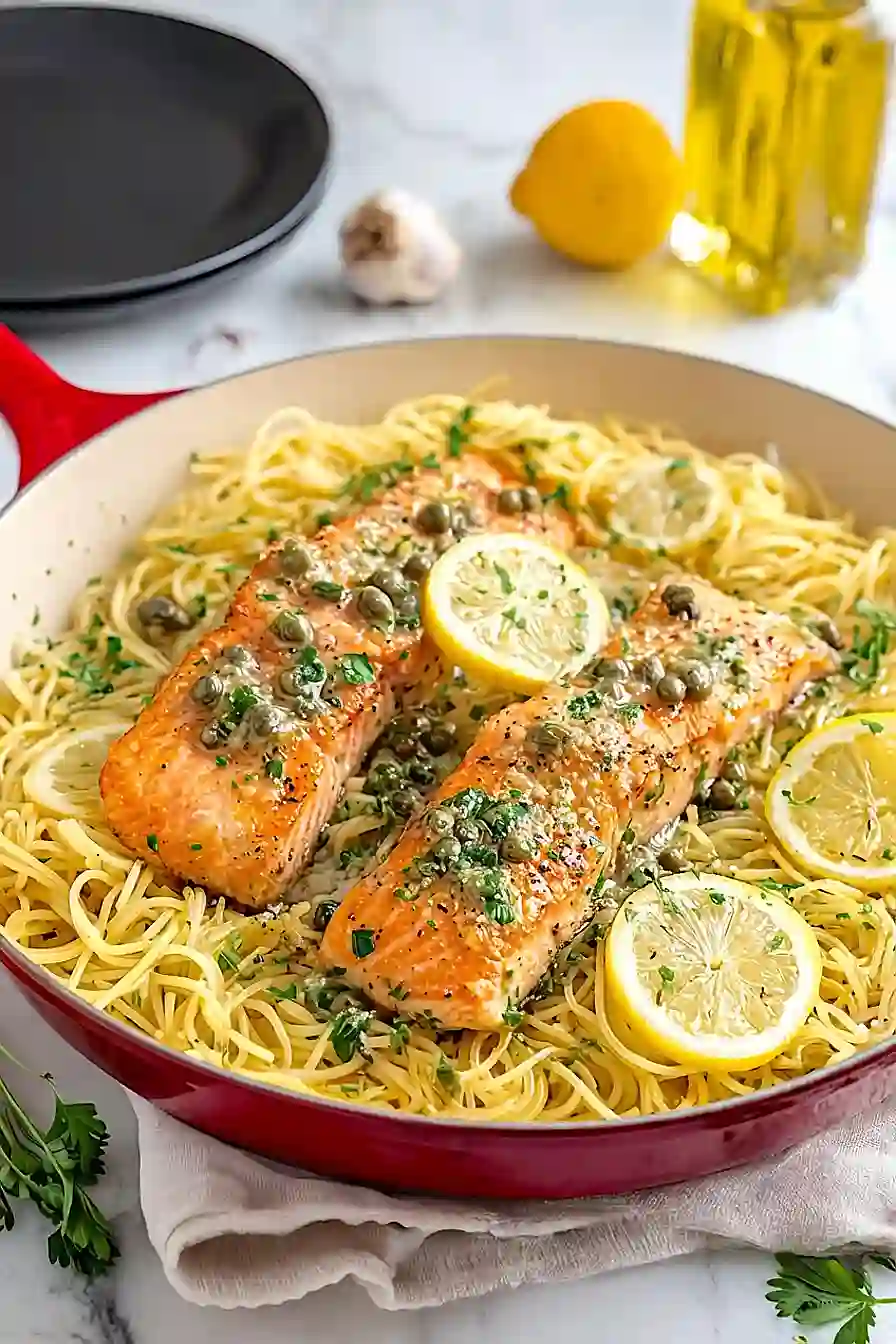
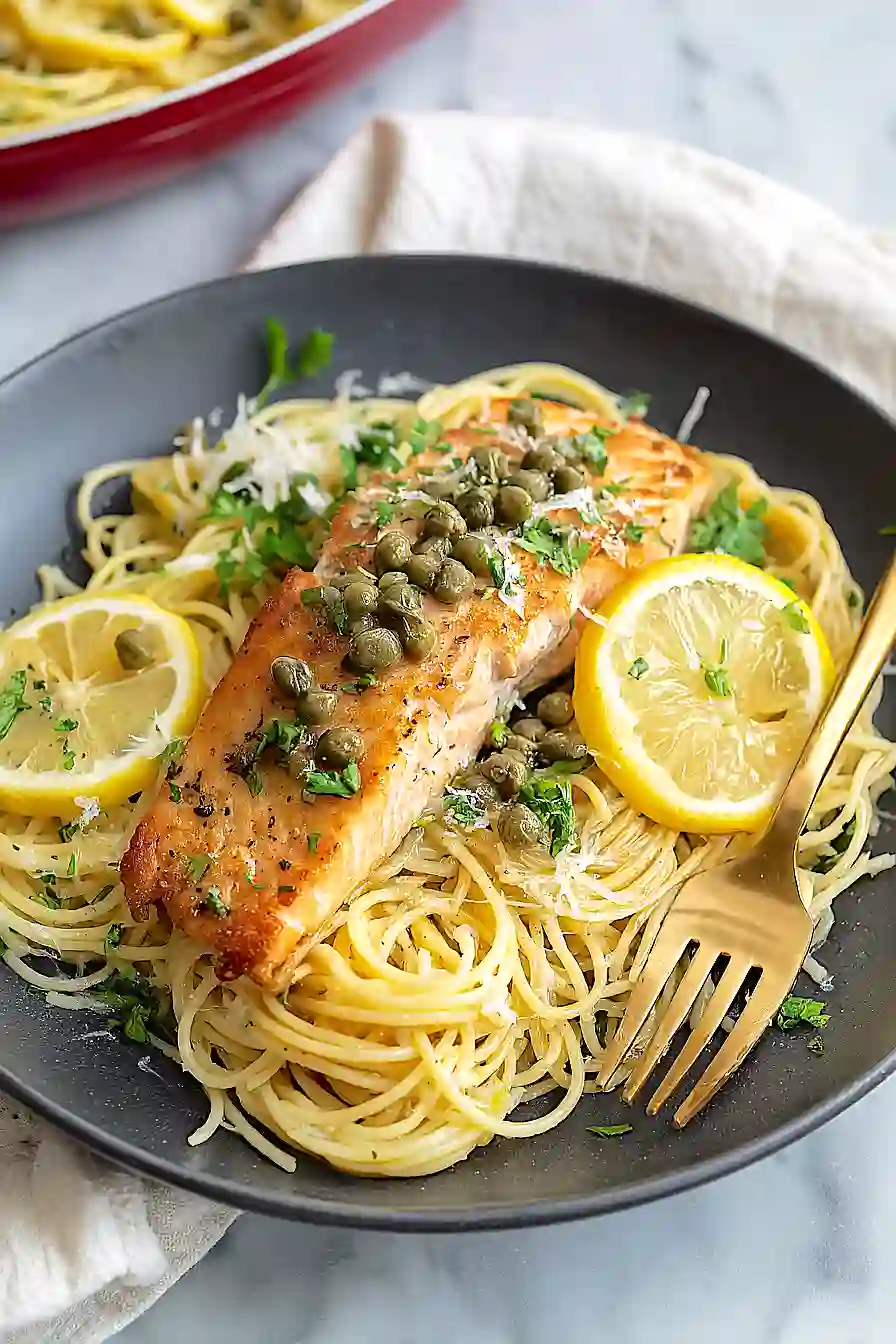
- Impressive presentation – This dish looks beautiful on the plate with the golden salmon, bright lemon, and fresh parsley, making it great for date nights or when you want to treat yourself to something nice.
What Kind of Salmon Should I Use?
For this recipe, you’ll want to grab center-cut salmon fillets rather than tail pieces, as they’re thicker and more uniform, which helps them cook evenly in the pan. You can use either farm-raised or wild salmon depending on what’s available and your budget – both will taste great in this piccata. If you’re buying fresh salmon at the store, check that it looks moist and doesn’t have a strong fishy smell, which means it’s nice and fresh. You can also use frozen salmon that’s been thawed properly, just make sure to pat it really dry with paper towels before cooking so you get a good sear on it.
Options for Substitutions
This recipe is pretty adaptable, so here are some swaps you can make based on what you have:
- Salmon: Not a salmon fan? You can use other firm fish like cod, halibut, or even chicken breast. Just adjust cooking time – chicken will need a few extra minutes to cook through.
- Angel hair pasta: Any long pasta works here – linguine, fettuccine, or regular spaghetti are all good choices. Just follow the package directions for cooking time.
- Dairy-free butter: Regular butter works perfectly if dairy isn’t a concern. You can also use ghee for a slightly nutty flavor.
- Vegetable broth: Chicken broth or fish stock make great substitutes and add a bit more depth to the sauce.
- Capers: If you’re not into capers, try chopped green olives for a similar briny punch, or just leave them out – the lemon will still give you plenty of flavor.
- Fresh lemon: In a pinch, bottled lemon juice works too. Use about 3 tablespoons since bottled juice tends to be slightly less potent than fresh.
- Flour: For a gluten-free version, cornstarch or arrowroot powder work well as thickeners. Use about 2 tablespoons instead of 3.
Watch Out for These Mistakes While Cooking
The biggest mistake with salmon piccata is overcooking the fish, which turns it dry and tough – salmon is done when it flakes easily with a fork and reaches 145°F internally, so pull it off the heat just before it looks completely cooked through since it’ll continue cooking while it rests.
Many people skip deglazing the pan after searing the salmon, but those browned bits stuck to the bottom are packed with flavor, so make sure to scrape them up with your lemon juice to build a richer sauce.
Another common error is adding the flour-broth mixture too quickly or forgetting to whisk the flour completely into the cold broth first, which creates lumps in your sauce – take your time stirring it smooth in the cup before adding it to the pan.
Finally, don’t let your sauce boil once you’ve added the butter and broth mixture, as high heat can cause it to separate and become greasy instead of smooth and silky.

What to Serve With Salmon Piccata Pasta?
Since this dish already has pasta built in, I like to keep the sides simple and let the lemony salmon shine. A crisp green salad with arugula or mixed greens and a light vinaigrette cuts through the richness of the butter sauce perfectly. Roasted asparagus or green beans with a little garlic make great veggie sides that complement the bright, tangy flavors without competing with them. If you want something a bit heartier, garlic bread or a warm baguette is perfect for soaking up any extra sauce left on your plate.
Storage Instructions
Store: Keep your leftover salmon piccata pasta in an airtight container in the fridge for up to 2 days. The lemon sauce might absorb into the pasta a bit as it sits, but it’ll still taste great. I like to add a splash of broth or a little extra lemon juice when reheating to freshen it up.
Reheat: Warm it up gently in a skillet over medium-low heat with a splash of vegetable broth or water to loosen the sauce. You can also microwave it on medium power, stirring every 30 seconds. Just be careful not to overcook the salmon or it’ll get dry and tough.
| Preparation Time | 20-25 minutes |
| Cooking Time | 25-30 minutes |
| Total Time | 45-55 minutes |
| Level of Difficulty | Medium |
| Servings | 2 servings |
Estimated Nutrition
Estimated nutrition for the whole recipe (without optional ingredients):
- Calories: 1200-1350
- Protein: 65-75 g
- Fat: 60-70 g
- Carbohydrates: 95-110 g
We'll Pay You $5 to Try This Recipe!
Cook our recipe, snap some photos, and earn a $5 Amazon Gift Card. It's that simple!
Here's how:
- Make the recipe
- Take nice pictures of your final dish
- Fill out our quick form (2 minutes max!)
- Your $5 reward is on the way!
Ingredients
For the pasta:
- 4 oz angel hair pasta
- 2 tbsp pasta water (reserved from cooking)
For the salmon:
- 1 lb salmon filet pieces (cut into 4-6 pieces for even cooking)
- black pepper to taste
- 2 tbsp flour (for light coating)
- salt to taste
- 2 tbsp olive oil (or any neutral oil like canola)
For the piccata sauce:
- 2 lemons (juiced and zested)
- 3/4 cup vegetable broth
- 3 tbsp capers (drained and rinsed)
- 1 tbsp flour (whisked in for thickening)
- 1 garlic clove (freshly minced)
- 1/4 tsp black pepper
- 1.5 tbsp parsley (fresh, finely chopped)
- 1/4 tsp salt
- 4 tbsp dairy-free butter (creates the silky sauce base)
Step 1: Prepare Mise en Place and Start Pasta
- 4 oz angel hair pasta
- 2 lemons
- 1 garlic clove
- 3 tbsp capers
- 1.5 tbsp parsley
- 1 lb salmon filet pieces
Begin boiling salted water for the pasta in a large pot over high heat.
While the water comes to a boil, prepare all your ingredients: juice and zest the lemons into separate bowls, mince the garlic, drain and rinse the capers, chop the fresh parsley, and cut the salmon filet into 4-6 even pieces.
Having everything prepped before cooking ensures you can work quickly once the salmon hits the pan.
Once the water boils, add the pasta and cook according to package directions until al dente.
Reserve 2 tablespoons of pasta water in a small bowl before draining, then set the cooked pasta aside.
Step 2: Season and Sear the Salmon
- 2 tbsp flour
- salt to taste
- black pepper to taste
- 1 lb salmon filet pieces
- 2 tbsp olive oil
In a small bowl, combine 2 tablespoons flour with salt and black pepper to taste.
Pat the salmon pieces dry with paper towels, then lightly coat just one side of each piece with the seasoned flour—this creates a delicate crust without making the dish heavy.
Heat 2 tablespoons oil in a large skillet over medium-high heat until it shimmers.
Once hot, carefully place the salmon into the pan floured-side down and sear for 2.5-3 minutes without moving it, allowing the exterior to develop a golden crust.
Flip the salmon and cook for another 2-4 minutes until just cooked through.
Remove the salmon to a plate and loosely cover with foil to keep it warm while you build the sauce.
Step 3: Build the Piccata Sauce Base
- 2 lemons
- 4 tbsp dairy-free butter
- 1 garlic clove
- 3 tbsp capers
- 1.5 tbsp parsley
- salt to taste
- black pepper to taste
With the skillet still on medium-high heat, deglaze the pan by pouring in 1 tablespoon of fresh lemon juice and scraping up all the browned bits from the bottom—these flavorful bits are liquid gold for your sauce.
Reduce heat to medium and add 1 tablespoon of dairy-free butter along with the minced garlic, cooking for 1-2 minutes until fragrant.
I like to let the garlic bloom just slightly here to take the edge off its raw bite.
Now add the remaining 3 tablespoons of butter, the second tablespoon of lemon juice, the drained capers, lemon zest, fresh parsley, and a pinch of salt and pepper.
Stir constantly for about a minute until the butter fully melts and emulsifies with the lemon juice, creating a silky base.
Step 4: Thicken the Sauce and Simmer
- 1 tbsp flour
- 3/4 cup vegetable broth
- 2 tbsp pasta water
In a small cup or bowl, whisk together 1 tablespoon flour with the 3/4 cup vegetable broth until the flour is completely dissolved and there are no lumps—this prevents the flour from clumping when added to the hot sauce.
Pour this broth mixture into the skillet with the butter and lemon base, stirring constantly.
Add the 2 tablespoons of reserved pasta water, which adds starch and helps create a silkier, more cohesive sauce that clings beautifully to the pasta.
Reduce the heat to low and simmer for 2-3 minutes, stirring frequently, until the sauce thickens to a light, glossy consistency that coats the back of a spoon.
Step 5: Finish and Plate the Dish
- salmon from Step 2
- sauce from Steps 3 and 4
- cooked pasta from Step 1
Gently return the seared salmon pieces to the skillet, nestling them into the sauce and spooning the piccata sauce generously over the top.
Cook on low heat for just 1-3 minutes more—the salmon is already cooked, so this step is just to warm it through and marry the flavors together.
I find that letting everything sit together for a minute or two really helps the flavors meld.
Divide the cooked pasta from Step 1 among serving bowls or plates, then top each portion with a piece of salmon and plenty of the silky lemon-caper sauce.
The pasta water you reserved is key here—it helps the sauce coat the noodles evenly rather than pooling at the bottom of the plate.
Tasty Salmon Piccata Pasta
Ingredients
For the pasta:
- 4 oz angel hair pasta
- 2 tbsp pasta water (reserved from cooking)
For the salmon:
- 1 lb salmon filet pieces (cut into 4-6 pieces for even cooking)
- black pepper to taste
- 2 tbsp flour (for light coating)
- salt to taste
- 2 tbsp olive oil (or any neutral oil like canola)
For the piccata sauce:
- 2 lemons (juiced and zested)
- 3/4 cup vegetable broth
- 3 tbsp capers (drained and rinsed)
- 1 tbsp flour (whisked in for thickening)
- 1 garlic clove (freshly minced)
- 1/4 tsp black pepper
- 1.5 tbsp parsley (fresh, finely chopped)
- 1/4 tsp salt
- 4 tbsp dairy-free butter (creates the silky sauce base)
Instructions
- Begin boiling salted water for the pasta in a large pot over high heat. While the water comes to a boil, prepare all your ingredients: juice and zest the lemons into separate bowls, mince the garlic, drain and rinse the capers, chop the fresh parsley, and cut the salmon filet into 4-6 even pieces. Having everything prepped before cooking ensures you can work quickly once the salmon hits the pan. Once the water boils, add the pasta and cook according to package directions until al dente. Reserve 2 tablespoons of pasta water in a small bowl before draining, then set the cooked pasta aside.
- In a small bowl, combine 2 tablespoons flour with salt and black pepper to taste. Pat the salmon pieces dry with paper towels, then lightly coat just one side of each piece with the seasoned flour—this creates a delicate crust without making the dish heavy. Heat 2 tablespoons oil in a large skillet over medium-high heat until it shimmers. Once hot, carefully place the salmon into the pan floured-side down and sear for 2.5-3 minutes without moving it, allowing the exterior to develop a golden crust. Flip the salmon and cook for another 2-4 minutes until just cooked through. Remove the salmon to a plate and loosely cover with foil to keep it warm while you build the sauce.
- With the skillet still on medium-high heat, deglaze the pan by pouring in 1 tablespoon of fresh lemon juice and scraping up all the browned bits from the bottom—these flavorful bits are liquid gold for your sauce. Reduce heat to medium and add 1 tablespoon of dairy-free butter along with the minced garlic, cooking for 1-2 minutes until fragrant. I like to let the garlic bloom just slightly here to take the edge off its raw bite. Now add the remaining 3 tablespoons of butter, the second tablespoon of lemon juice, the drained capers, lemon zest, fresh parsley, and a pinch of salt and pepper. Stir constantly for about a minute until the butter fully melts and emulsifies with the lemon juice, creating a silky base.
- In a small cup or bowl, whisk together 1 tablespoon flour with the 3/4 cup vegetable broth until the flour is completely dissolved and there are no lumps—this prevents the flour from clumping when added to the hot sauce. Pour this broth mixture into the skillet with the butter and lemon base, stirring constantly. Add the 2 tablespoons of reserved pasta water, which adds starch and helps create a silkier, more cohesive sauce that clings beautifully to the pasta. Reduce the heat to low and simmer for 2-3 minutes, stirring frequently, until the sauce thickens to a light, glossy consistency that coats the back of a spoon.
- Gently return the seared salmon pieces to the skillet, nestling them into the sauce and spooning the piccata sauce generously over the top. Cook on low heat for just 1-3 minutes more—the salmon is already cooked, so this step is just to warm it through and marry the flavors together. I find that letting everything sit together for a minute or two really helps the flavors meld. Divide the cooked pasta from Step 1 among serving bowls or plates, then top each portion with a piece of salmon and plenty of the silky lemon-caper sauce. The pasta water you reserved is key here—it helps the sauce coat the noodles evenly rather than pooling at the bottom of the plate.