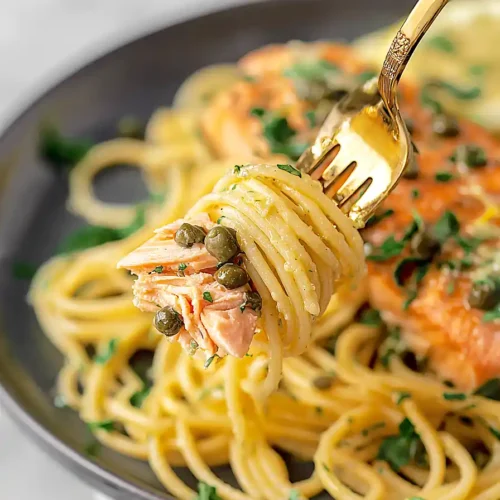
Tasty Salmon Piccata Pasta
Delicious Tasty Salmon Piccata Pasta recipe with step-by-step instructions.
Ingredients
For the pasta:
- 4 oz angel hair pasta
- 2 tbsp pasta water (reserved from cooking)
For the salmon:
- 1 lb salmon filet pieces (cut into 4-6 pieces for even cooking)
- black pepper to taste
- 2 tbsp flour (for light coating)
- salt to taste
- 2 tbsp olive oil (or any neutral oil like canola)
For the piccata sauce:
- 2 lemons (juiced and zested)
- 3/4 cup vegetable broth
- 3 tbsp capers (drained and rinsed)
- 1 tbsp flour (whisked in for thickening)
- 1 garlic clove (freshly minced)
- 1/4 tsp black pepper
- 1.5 tbsp parsley (fresh, finely chopped)
- 1/4 tsp salt
- 4 tbsp dairy-free butter (creates the silky sauce base)
Instructions
- Begin boiling salted water for the pasta in a large pot over high heat. While the water comes to a boil, prepare all your ingredients: juice and zest the lemons into separate bowls, mince the garlic, drain and rinse the capers, chop the fresh parsley, and cut the salmon filet into 4-6 even pieces. Having everything prepped before cooking ensures you can work quickly once the salmon hits the pan. Once the water boils, add the pasta and cook according to package directions until al dente. Reserve 2 tablespoons of pasta water in a small bowl before draining, then set the cooked pasta aside.
- In a small bowl, combine 2 tablespoons flour with salt and black pepper to taste. Pat the salmon pieces dry with paper towels, then lightly coat just one side of each piece with the seasoned flour—this creates a delicate crust without making the dish heavy. Heat 2 tablespoons oil in a large skillet over medium-high heat until it shimmers. Once hot, carefully place the salmon into the pan floured-side down and sear for 2.5-3 minutes without moving it, allowing the exterior to develop a golden crust. Flip the salmon and cook for another 2-4 minutes until just cooked through. Remove the salmon to a plate and loosely cover with foil to keep it warm while you build the sauce.
- With the skillet still on medium-high heat, deglaze the pan by pouring in 1 tablespoon of fresh lemon juice and scraping up all the browned bits from the bottom—these flavorful bits are liquid gold for your sauce. Reduce heat to medium and add 1 tablespoon of dairy-free butter along with the minced garlic, cooking for 1-2 minutes until fragrant. I like to let the garlic bloom just slightly here to take the edge off its raw bite. Now add the remaining 3 tablespoons of butter, the second tablespoon of lemon juice, the drained capers, lemon zest, fresh parsley, and a pinch of salt and pepper. Stir constantly for about a minute until the butter fully melts and emulsifies with the lemon juice, creating a silky base.
- In a small cup or bowl, whisk together 1 tablespoon flour with the 3/4 cup vegetable broth until the flour is completely dissolved and there are no lumps—this prevents the flour from clumping when added to the hot sauce. Pour this broth mixture into the skillet with the butter and lemon base, stirring constantly. Add the 2 tablespoons of reserved pasta water, which adds starch and helps create a silkier, more cohesive sauce that clings beautifully to the pasta. Reduce the heat to low and simmer for 2-3 minutes, stirring frequently, until the sauce thickens to a light, glossy consistency that coats the back of a spoon.
- Gently return the seared salmon pieces to the skillet, nestling them into the sauce and spooning the piccata sauce generously over the top. Cook on low heat for just 1-3 minutes more—the salmon is already cooked, so this step is just to warm it through and marry the flavors together. I find that letting everything sit together for a minute or two really helps the flavors meld. Divide the cooked pasta from Step 1 among serving bowls or plates, then top each portion with a piece of salmon and plenty of the silky lemon-caper sauce. The pasta water you reserved is key here—it helps the sauce coat the noodles evenly rather than pooling at the bottom of the plate.