Finding the perfect dessert for when you want something sweet but don’t need a towering two-layer cake can be tricky. After all, most cake recipes seem designed for big celebrations or dinner parties, and things get even more complicated when you’re cooking for just a few people or want something that won’t sit around getting stale for days.
Luckily, this single layer lemon cake checks all the boxes: it’s light yet satisfying, simple to make in one pan, and gives you just the right amount of cake without the leftovers guilt.
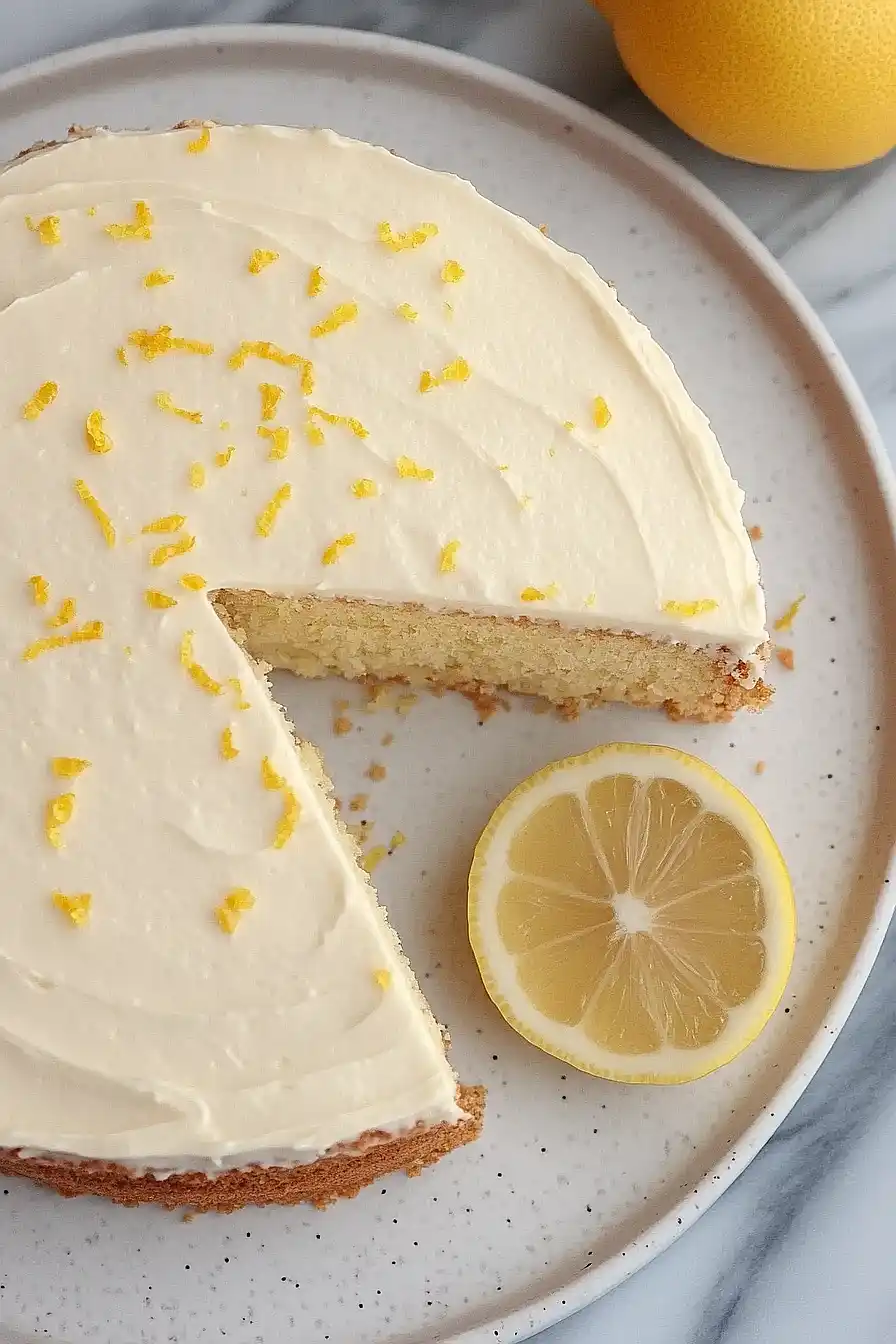
Why You’ll Love This Lemon Cake
- Quick and easy single layer – No need to worry about multiple cake layers or complicated assembly – this simple one-layer cake comes together in under an hour and still looks impressive.
- Bright, fresh lemon flavor – The combination of lemon zest and juice in both the cake and frosting gives you that perfect tangy-sweet balance that makes your taste buds happy.
- Moist and tender texture – The sour cream in the batter keeps this cake incredibly soft and prevents it from drying out, so every bite is perfectly moist.
- Simple pantry ingredients – You probably have most of these basic baking staples on hand already, making this an easy go-to dessert when you need something sweet.
- Perfect for any occasion – Whether it’s a casual family dinner or a spring gathering, this cake hits the right note without being too fancy or complicated.
What Kind of Lemons Should I Use?
For this cake, you’ll want to use fresh lemons rather than bottled lemon juice – the difference in flavor is really noticeable. Meyer lemons are a great choice if you can find them since they’re a bit sweeter and less acidic than regular lemons, but standard grocery store lemons work perfectly fine too. When picking out lemons, look for ones that feel heavy for their size and have smooth, bright yellow skin – these will give you the most juice and the best zest. Make sure to wash and dry your lemons well before zesting, and try to only zest the yellow part of the peel since the white pith underneath can be bitter.
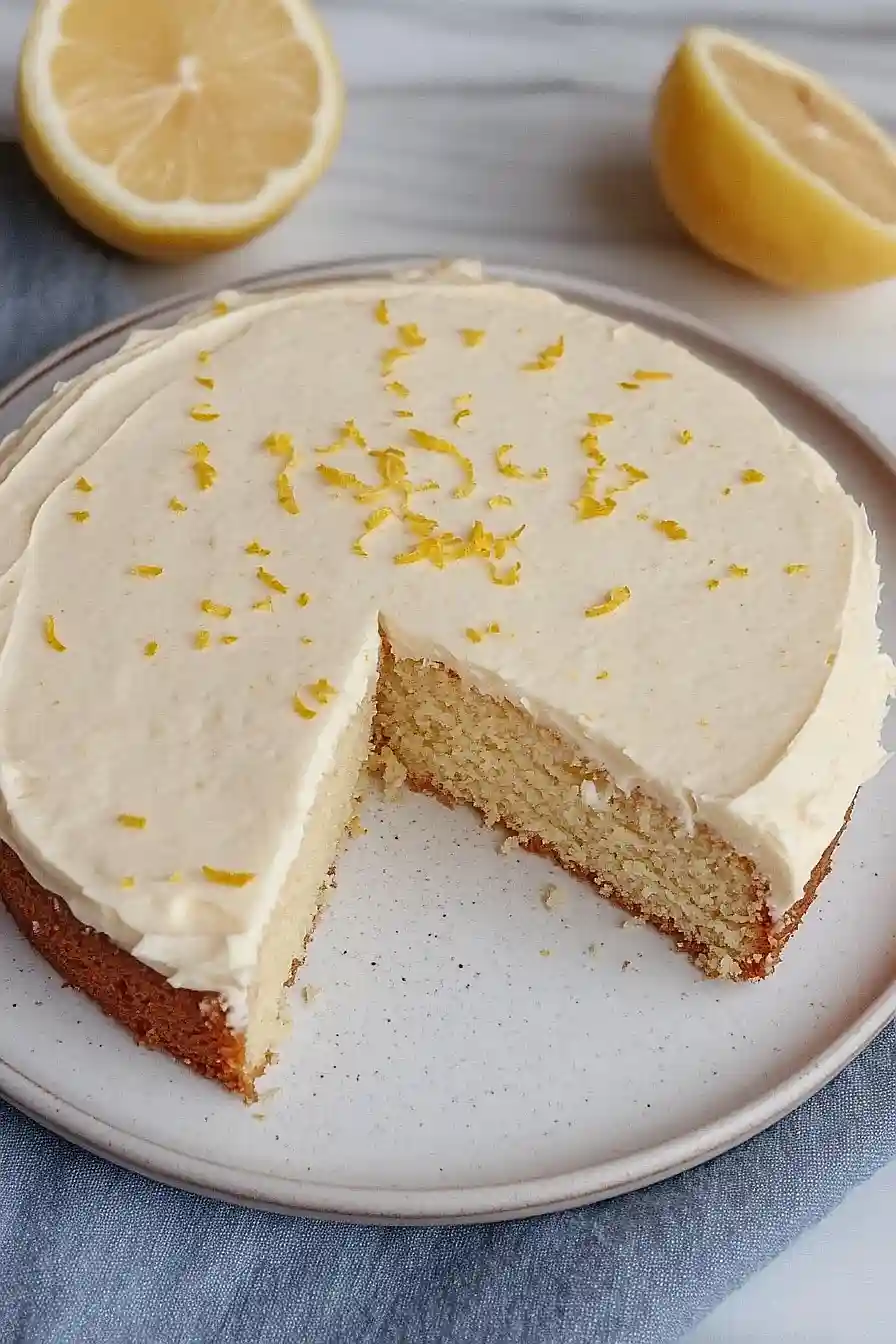
Options for Substitutions
This lemon cake is pretty forgiving when it comes to swaps, so here are some options if you’re missing ingredients:
- Sour cream: No sour cream? Greek yogurt works perfectly as a 1:1 substitute in both the cake and frosting. You can also use buttermilk, but reduce it slightly (use about 3/4 the amount) since it’s thinner.
- Fresh lemon juice and zest: Fresh is definitely best here since lemon is the star, but if you’re in a pinch, bottled lemon juice works. You’ll need about the same amount, though the flavor won’t be quite as bright.
- All-purpose flour: Cake flour will give you a more tender crumb – use 1¾ cups instead of 1½ cups all-purpose. Don’t substitute with self-rising flour as it already contains leavening agents.
- Unsalted butter: Salted butter works fine, just reduce the added salt in the recipe by half. The butter should be room temperature for proper creaming – this is important for texture.
- Eggs: Make sure your eggs are at room temperature for better mixing. If you forgot to take them out early, place them in warm water for 5-10 minutes.
- Vanilla extract: Vanilla paste gives little specks and more flavor, but regular extract works just fine. You can also try almond extract, but use only ¼ teaspoon as it’s much stronger.
Watch Out for These Mistakes While Baking
The biggest mistake people make with lemon cake is not bringing their ingredients to room temperature first, which can cause the butter and eggs to separate and create a dense, uneven texture – take your eggs, butter, and sour cream out about an hour before baking.
Overmixing the batter once you add the flour is another common error that leads to a tough cake, so mix just until the ingredients are combined and you can’t see any streaks of flour.
When it comes to the frosting, adding powdered sugar too quickly can create a lumpy mess, so sift it first and add it gradually while beating on low speed.
Don’t forget to test for doneness with a toothpick inserted in the center – it should come out with just a few moist crumbs, not completely clean, since the cake will continue cooking slightly as it cools.
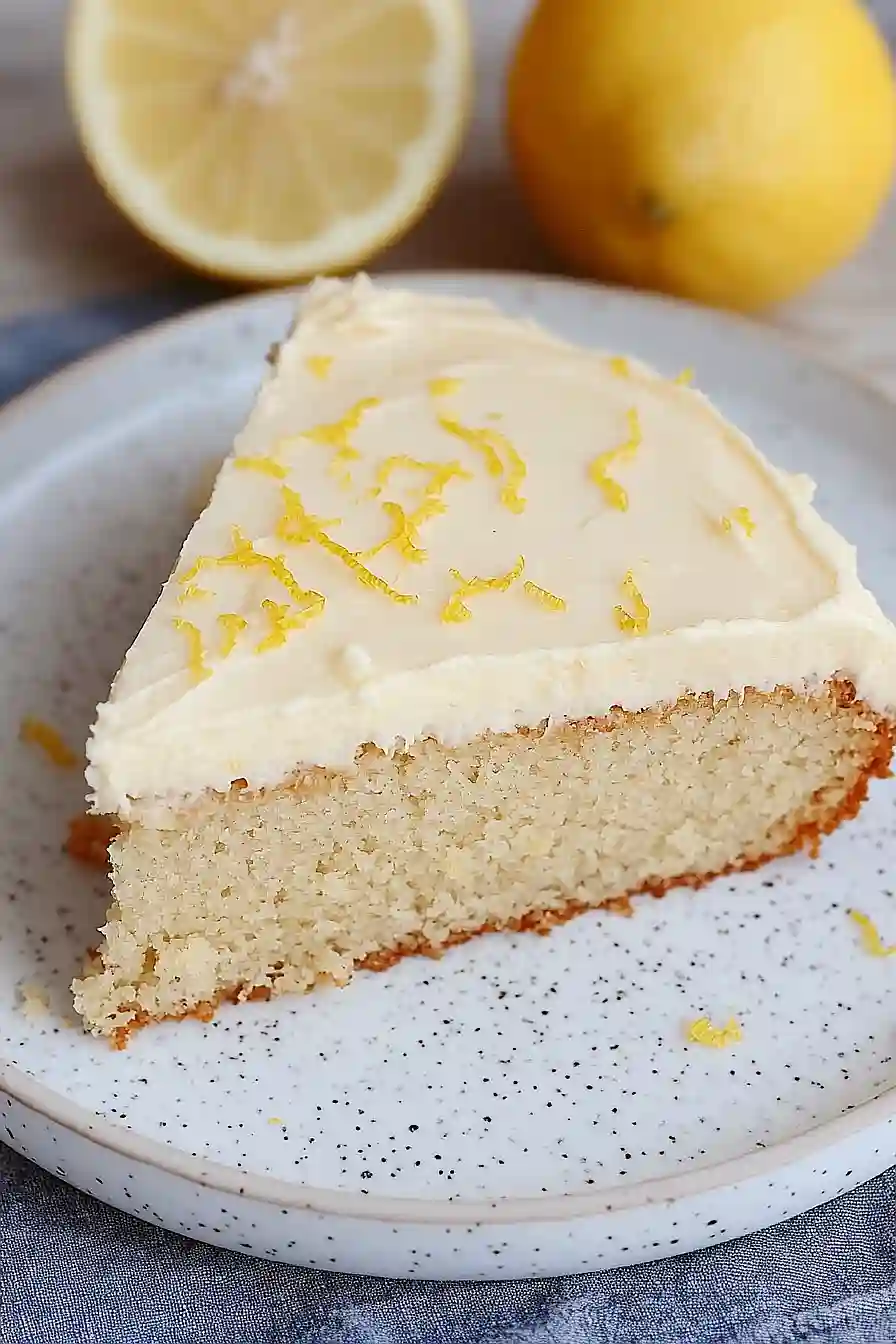
What to Serve With Lemon Cake?
This bright, citrusy cake is perfect on its own, but I love serving it with fresh berries like strawberries or blueberries that complement the lemon flavor beautifully. A dollop of whipped cream or a scoop of vanilla ice cream makes it feel extra special for dessert. For afternoon tea or coffee time, this cake pairs wonderfully with a hot cup of Earl Grey or a strong coffee – the lemon really brings out the flavors in both drinks. You could also serve thin slices alongside a fruit salad for a lighter finish to a meal.
Storage Instructions
Keep Fresh: This lemon cake stays moist and delicious when covered tightly with plastic wrap or stored in an airtight container at room temperature for up to 3 days. If your kitchen is really warm, you can pop it in the fridge for up to a week, just let it come to room temperature before serving for the best flavor.
Freeze: You can freeze this cake for up to 3 months! Wrap individual slices in plastic wrap and then place them in a freezer bag, or freeze the whole cake wrapped well in plastic and foil. I like to freeze slices so I can grab just what I need for a quick dessert.
Serve: Frozen cake slices thaw beautifully at room temperature in about 30 minutes, or you can thaw them overnight in the fridge. The frosting might look a little different after freezing, but the taste is still amazing and nobody will know the difference!
| Preparation Time | 20-30 minutes |
| Cooking Time | 25-30 minutes |
| Total Time | 45-60 minutes |
| Level of Difficulty | Medium |
Estimated Nutrition
Estimated nutrition for the whole recipe (without optional ingredients):
- Calories: 3200-3600
- Protein: 30-40 g
- Fat: 230-250 g
- Carbohydrates: 330-350 g
Ingredients
For the cake:
- 1 1/2 cups all-purpose flour (180 grams)
- 1 tsp baking powder
- 1/2 tsp salt
- 1/4 tsp baking soda
- 1 stick unsalted butter, at room temperature (113 grams)
- 1 cup granulated sugar (198 grams)
- 2 large eggs, room temperature
- 1/2 cup sour cream (113 grams)
- 1 tbsp grated lemon peel
- 2 tbsp fresh lemon juice
For the lemon frosting:
- 2 sticks unsalted butter, at room temperature (226 grams)
- 1 tbsp grated lemon peel
- 1 1/2 tbsp fresh lemon juice
- 1/4 tsp salt
- 1 1/2 cups powdered sugar (170 grams)
- 1/4 cup sour cream, room temperature (57 grams)
- 1/2 tsp vanilla extract or vanilla paste
Step 1: Prepare the Baking Pan and Oven
Preheat your oven to 350˚F (177˚C).
Lightly grease a 9-inch round baking pan with butter or nonstick spray.
Line the bottom of the pan with a round of parchment paper to help the cake release easily after baking.
Step 2: Combine Dry Ingredients
- 1 1/2 cups all-purpose flour (180 grams)
- 1 tsp baking powder
- 1/2 tsp salt
- 1/4 tsp baking soda
In a medium mixing bowl, whisk together the all-purpose flour, baking powder, salt, and baking soda.
Make sure the mixture is well combined and free of lumps before setting it aside.
Step 3: Mix Wet Ingredients and Prepare Cake Batter
- 1 stick unsalted butter, at room temperature (113 grams)
- 1 cup granulated sugar (198 grams)
- 2 large eggs, room temperature
- 1/2 cup sour cream (113 grams)
- 1 tbsp grated lemon peel
- 2 tbsp fresh lemon juice
- dry mixture from Step 2
In a large mixing bowl with an electric mixer fitted with a paddle attachment, beat 1 stick of unsalted butter at room temperature until smooth.
Add the granulated sugar and beat on medium speed for about 3 minutes until light and fluffy.
Scrape down the bowl as needed.
Add the eggs one at a time, mixing in each egg thoroughly before adding the next.
Scrape down the bowl again.
Add 1/2 cup sour cream, 1 tablespoon grated lemon peel, and 2 tablespoons fresh lemon juice, then beat for 1 minute.
Gradually add the dry flour mixture from Step 2, beating on medium speed for about 25 seconds or until just combined.
If any flour remains unmixed, use a spatula to fold it in gently; the batter will be thick.
I like to make sure not to overmix here—just fold until no dry streaks remain for a tender cake.
Step 4: Bake and Cool the Cake
- batter from Step 3
Transfer the thick batter from Step 3 into the prepared baking pan from Step 1.
Smooth the top with a spatula.
Bake in the preheated oven for 25–30 minutes, or until a toothpick inserted into the center comes out with a few moist crumbs attached.
Remove the cake from the oven and allow it to cool completely in the pan on a wire rack before assembling.
Step 5: Make the Lemon Frosting
- 2 sticks unsalted butter, at room temperature (226 grams)
- 1 tbsp grated lemon peel
- 1 1/2 tbsp fresh lemon juice
- 1/4 tsp salt
- 1 1/2 cups powdered sugar (170 grams)
- 1/4 cup sour cream, room temperature (57 grams)
- 1/2 tsp vanilla extract or vanilla paste
In a large mixing bowl with an electric mixer fitted with a paddle attachment, beat 2 sticks of unsalted butter at room temperature on medium speed until smooth and creamy, about 3 minutes.
Add 1 tablespoon grated lemon peel, 1 1/2 tablespoons fresh lemon juice, and 1/4 teaspoon salt, then mix again until combined.
Gradually add the powdered sugar and continue beating on high speed until the mixture is smooth and lump-free.
Add 1/4 cup sour cream and 1/2 teaspoon vanilla extract or paste, beating for another minute to finish the frosting.
For extra zing, I sometimes add a tiny pinch more salt or a drop of lemon juice at the end to brighten the flavors.
Step 6: Assemble and Frost the Cake
- baked and cooled cake from Step 4
- lemon frosting from Step 5
Once the cake is completely cool, run a sharp knife around the edge of the cake pan to loosen the cake.
Invert the cake onto a plate or your hand and remove the parchment paper from the bottom.
Place the cake upright on a cake stand or large plate.
Spoon about three-quarters of the prepared lemon frosting from Step 5 over the top of the cake.
Add more frosting if needed.
Gently smooth it over with a spatula, creating stripes or swirls for decoration if desired.
Slice and serve.