When I first started eating paleo, I thought stir-fries were off the menu because of all those store-bought sauces filled with sugar and soy. That’s how my mom always made them, and I couldn’t imagine a stir-fry without that sweet-and-salty sauce from a bottle.
Turns out, I was totally wrong about needing those packaged sauces. With just a few simple ingredients and some fresh vegetables, you can make a stir-fry that’s not only paleo-friendly but actually tastes better than the takeout version. And the best part? It’s ready in less time than it takes to get delivery.
Why You’ll Love This Chicken Stir Fry
- Quick preparation – Ready in just 20-30 minutes, this stir fry is perfect for those busy weeknights when you need a fast but satisfying meal.
- Diet-friendly – This paleo-compliant recipe fits perfectly into a grain-free, dairy-free lifestyle while still delivering amazing flavor with its date-sweetened sauce.
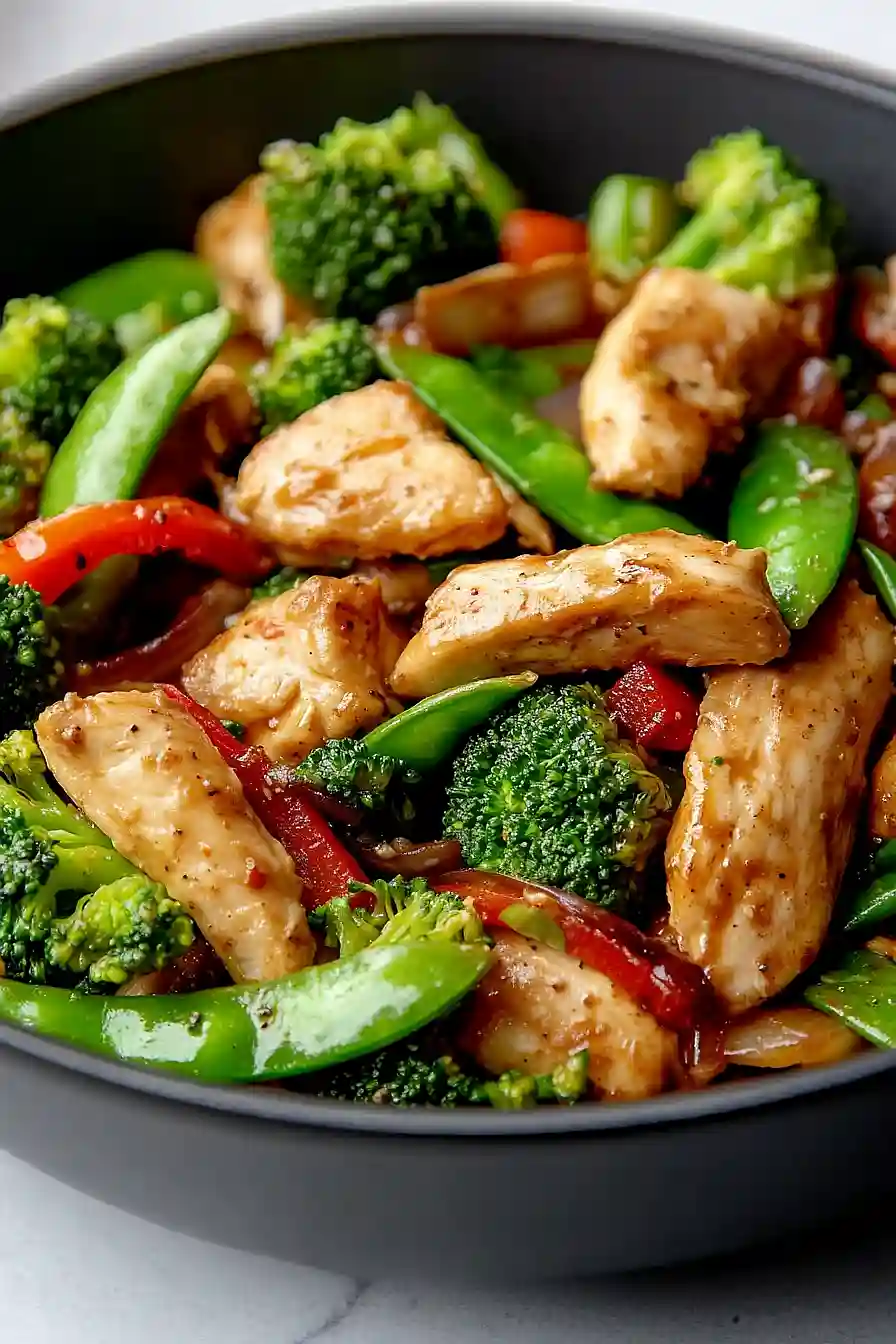
- Packed with vegetables – With broccoli, bell peppers, snow peas, and cabbage, you’ll get plenty of nutrients and fiber in every colorful serving.
- Clean ingredients – Using simple, whole-food ingredients like coconut aminos instead of soy sauce and bone broth for extra nutrition, this recipe keeps things natural and healthy.
- Customizable – You can easily swap in different vegetables based on what you have on hand, making this a flexible option for using up produce in your fridge.
What Kind of Chicken Should I Use?
For stir-frying, chicken thighs are actually a better choice than chicken breasts because they stay more tender and juicy during the high-heat cooking process. Dark meat is more forgiving and won’t dry out as quickly as breast meat, making it perfect for beginners who are just learning to stir-fry. If you’re buying your chicken thighs from the store, both boneless skinless or bone-in will work, though boneless skinless saves prep time since they’re ready to slice and cook. Just make sure to cut your chicken pieces uniformly – about 1 inch in size – so they cook evenly in the pan.
Options for Substitutions
This paleo stir fry is pretty adaptable and you can make several swaps while keeping it paleo-friendly:
- Medjool date: If you don’t have dates, you can use 1 tablespoon of honey or maple syrup to add natural sweetness. Just make sure to check that this fits your dietary needs.
- Coconut aminos: While coconut aminos are the paleo substitute for soy sauce, you can use tamari if you’re not strictly paleo. Note that tamari is stronger, so start with half the amount.
- Tapioca/arrowroot starch: These starches are interchangeable in this recipe. If you’re not following paleo, cornstarch works too – use the same amount.
- Chicken thighs: You can swap in chicken breast if you prefer, just be careful not to overcook it as it can dry out more quickly than thighs. Cut the pieces slightly larger.
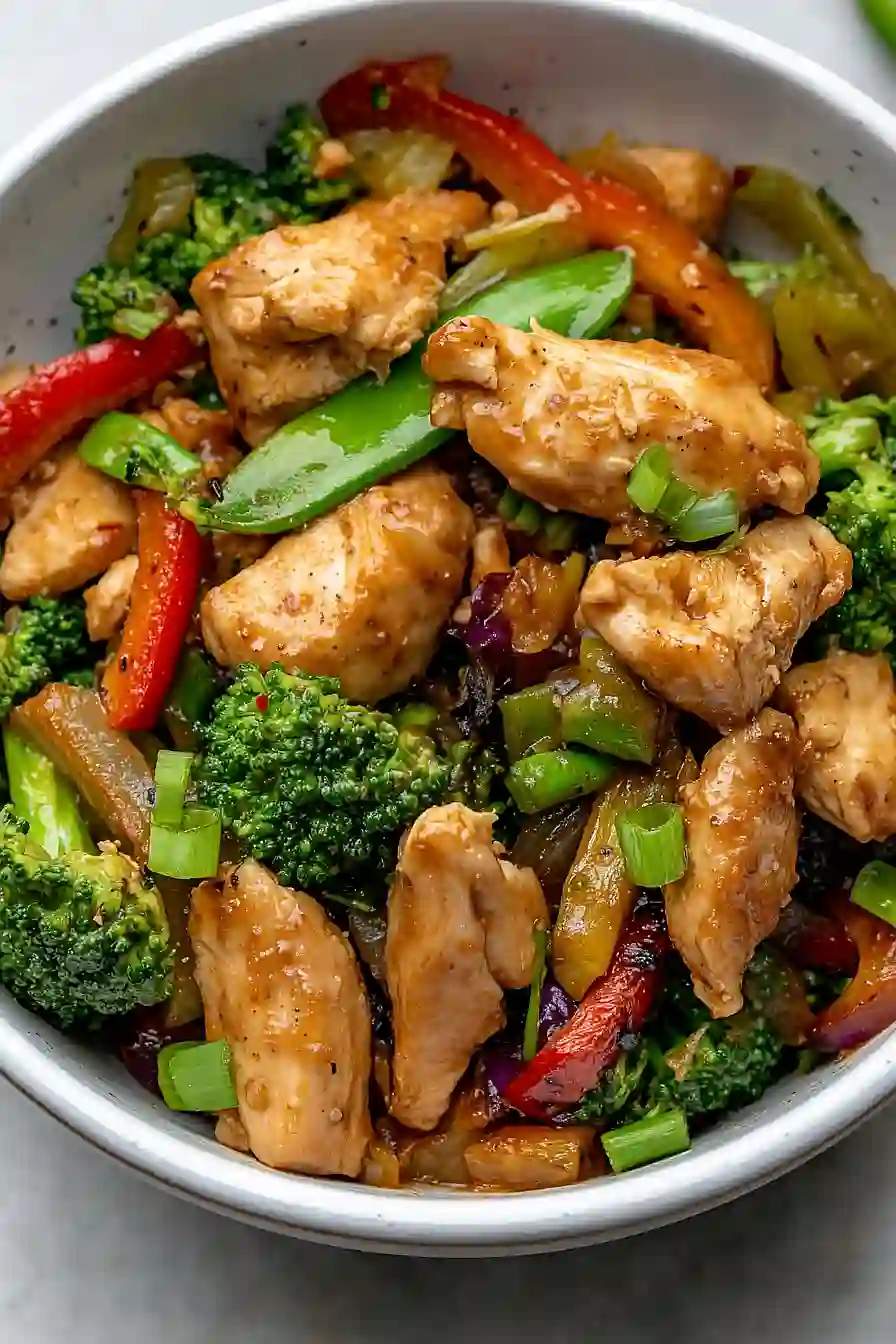
- Vegetables: The great thing about stir-fries is that you can mix and match vegetables. Try snap peas instead of snow peas, cauliflower instead of broccoli, or add mushrooms and carrots. Just keep the total amount of veggies about the same.
- Bone broth: Regular chicken broth works fine here, or you can use vegetable broth. If using regular broth, you might want to reduce the salt in your seasoning.
Watch Out for These Mistakes While Cooking
The biggest challenge when making stir-fry is overcrowding your pan, which causes the vegetables to steam instead of getting that perfect crispy-tender texture – work in batches if needed and keep your pan hot. Another common mistake is not prepping all ingredients before starting to cook, since stir-frying moves quickly and requires immediate attention once you begin. Adding the sauce too early can make your chicken and vegetables soggy, so make sure to cook the meat and vegetables first until they’re almost done, then add the sauce mixture in the final minutes of cooking. For the best results, cut all your vegetables in similar-sized pieces to ensure even cooking, and don’t forget to let your chicken pieces come to room temperature before cooking to prevent them from releasing excess moisture into the pan.
What to Serve With Chicken Stir Fry?
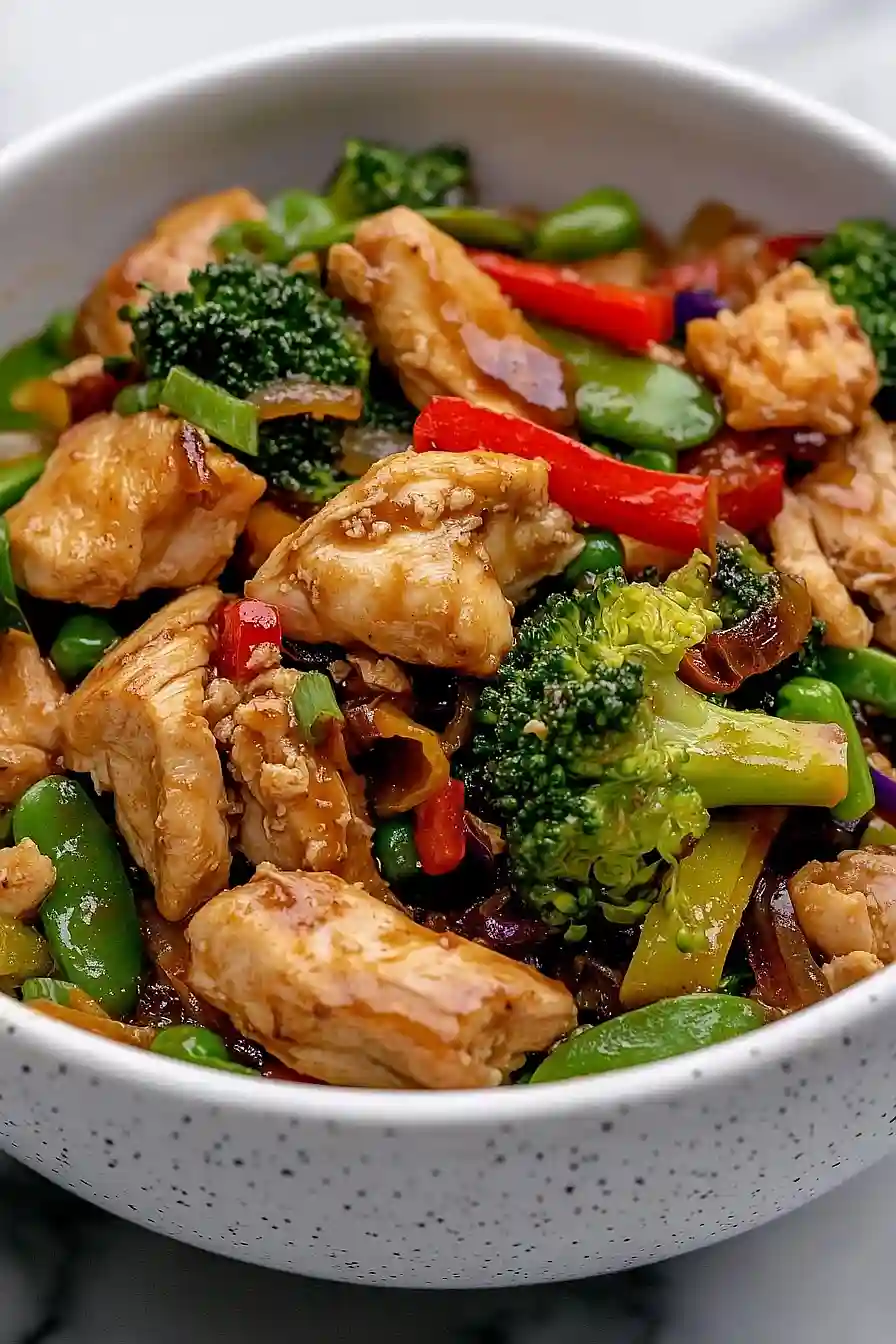
Since this paleo stir fry is already packed with protein and vegetables, you’ll want to focus on simple sides that complement without overwhelming the dish. Cauliflower rice makes a perfect grain-free base – just sauté it with a little coconut oil and salt to soak up all that tasty sauce. For extra crunch and flavor, you might want to add some chopped cashews or sliced almonds on top. If you’re really hungry, a side of simple cucumber salad dressed with rice vinegar adds a cool, refreshing element that pairs nicely with the warm stir fry.
Storage Instructions
Keep Fresh: This stir fry is perfect for meal prep! Place it in an airtight container and keep it in the fridge for up to 4 days. The flavors actually get better as they meld together, making your leftovers extra tasty.
Pack: For lunch prep, portion the stir fry into individual containers. The chicken and veggies stay fresh and maintain their texture really well. If you’re packing for work or school, it’s an easy grab-and-go option that’ll keep you satisfied.
Warm Up: When you’re ready to eat your leftover stir fry, just pop it in the microwave for 1-2 minutes or heat it in a pan on the stove. Give it a quick stir halfway through heating to make sure everything warms evenly. The veggies might be a bit softer than when freshly made, but they’ll still be good!
| Preparation Time | 10-15 minutes |
| Cooking Time | 10-15 minutes |
| Total Time | 20-30 minutes |
| Level of Difficulty | Easy |
Estimated Nutrition
Estimated nutrition for the whole recipe (without optional ingredients):
- Calories: 800-1000
- Protein: 90-110 g
- Fat: 50-60 g
- Carbohydrates: 40-50 g
Ingredients
For the sauce:
- 6 tbsp coconut aminos (I use Teriyaki style)
- 1/2 tbsp tapioca starch (or arrowroot powder as thickener)
- 5 tbsp chicken broth
- 1 medjool date (pitted, for natural sweetness and sauce body)
- 1/2 tbsp sesame oil (for authentic flavor)
- 2 tbsp rice vinegar
- 1.5 inch ginger (peeled and minced)
- 5 cloves garlic (minced)
For the stir fry:
- 1 handful cabbage (roughly chopped)
- pepper (freshly ground, to taste)
- 1.5 lb chicken thighs (boneless and skinless, cut into bite-sized chunks)
- 1 cup snow peas (strings removed)
- salt (to taste)
- 1.5 tbsp coconut oil (I use Nutiva organic)
- 1.5 bell pepper (any color, diced into 1/2-inch pieces)
- 2 cups broccoli (cut into 1-inch florets)
Step 1: Prepare the Sauce Base and Marinate the Chicken
- 1 medjool date
- 2 tbsp rice vinegar
- 5 cloves garlic
- 1.5 inch ginger
- 6 tbsp coconut aminos
- 5 tbsp chicken broth
- 1/2 tbsp sesame oil
- 1/2 tbsp tapioca starch
- 1.5 lb chicken thighs
Start by creating a smooth, flavorful sauce that will coat the chicken and vegetables.
Blend the pitted medjool date, rice vinegar, minced garlic, minced ginger, coconut aminos, chicken broth, sesame oil, and tapioca starch until completely smooth—the date acts as a natural sweetener and thickener while the starch helps achieve the right consistency.
Reserve about 3-4 tablespoons of this sauce in a separate bowl and toss it with your bite-sized chicken pieces, coating them evenly.
This pre-marinating step allows the chicken to absorb flavor while you prep the vegetables, which saves time and improves the final taste.
Step 2: Prep and Quick-Cook the Vegetables
- 1.5 tbsp coconut oil
- 2 cups broccoli
- 1.5 bell pepper
- 1 cup snow peas
- 1 handful cabbage
While the chicken is marinating, prepare all your vegetables: cut broccoli into 1-inch florets, dice the bell pepper into 1/2-inch pieces, remove the strings from snow peas, and roughly chop the cabbage.
Heat 1.5 tablespoons of coconut oil in a large pan over medium-high heat until shimmering.
Add all the vegetables and cook for 3 minutes, stirring occasionally—you want them to have a slight char and remain crisp-tender, not soft.
Remove the vegetables to a plate and set aside.
I like to cook vegetables separately first because it gives them better texture and prevents them from becoming mushy when the sauce is added.
Step 3: Sear the Marinated Chicken
- 1.5 tbsp coconut oil
- marinated chicken from Step 1
- salt
- pepper
Add another 1.5 tablespoons of coconut oil to the same pan over medium-high heat.
Working in batches if necessary to avoid overcrowding, add the marinated chicken pieces from Step 1.
Season with salt and pepper to taste, then cook for 3-5 minutes, stirring occasionally until the chicken is golden brown on the outside and cooked through.
The marinade coating will help create a flavorful crust while the chicken stays juicy inside.
Step 4: Combine and Finish with Sauce
- remaining sauce from Step 1
- cooked chicken from Step 3
- cooked vegetables from Step 2
Reduce the heat to medium and pour the remaining sauce (reserved from Step 1) over the cooked chicken.
Add the quick-cooked vegetables from Step 2 back into the pan and stir everything together gently.
Cook for 2 minutes, allowing the sauce to coat everything evenly and the flavors to meld.
The sauce will thicken slightly from the tapioca starch, creating a glossy finish that clings beautifully to the chicken and vegetables.
Step 5: Serve and Garnish
Transfer the stir fry to serving plates while still warm.
Top with optional garnishes like sliced scallions, sesame seeds, or diced red pepper for extra color and flavor.
Serve immediately over cauliflower rice or your preferred paleo-friendly base if desired.