I didn’t grow up eating rhubarb. My mom wasn’t really into it, and honestly, I thought it was just something people used in pie if they ran out of other fruit. Then I moved to Portland and suddenly rhubarb was everywhere in the spring—at the farmers market, in my neighbor’s garden, piled up on the counter at the grocery store.
That’s when I learned rhubarb makes really good jam. It’s tart, it’s sweet, and it tastes like spring in a jar. The best part? You don’t need to be some expert canner to pull it off. If you can boil water and stir, you can make this jam.
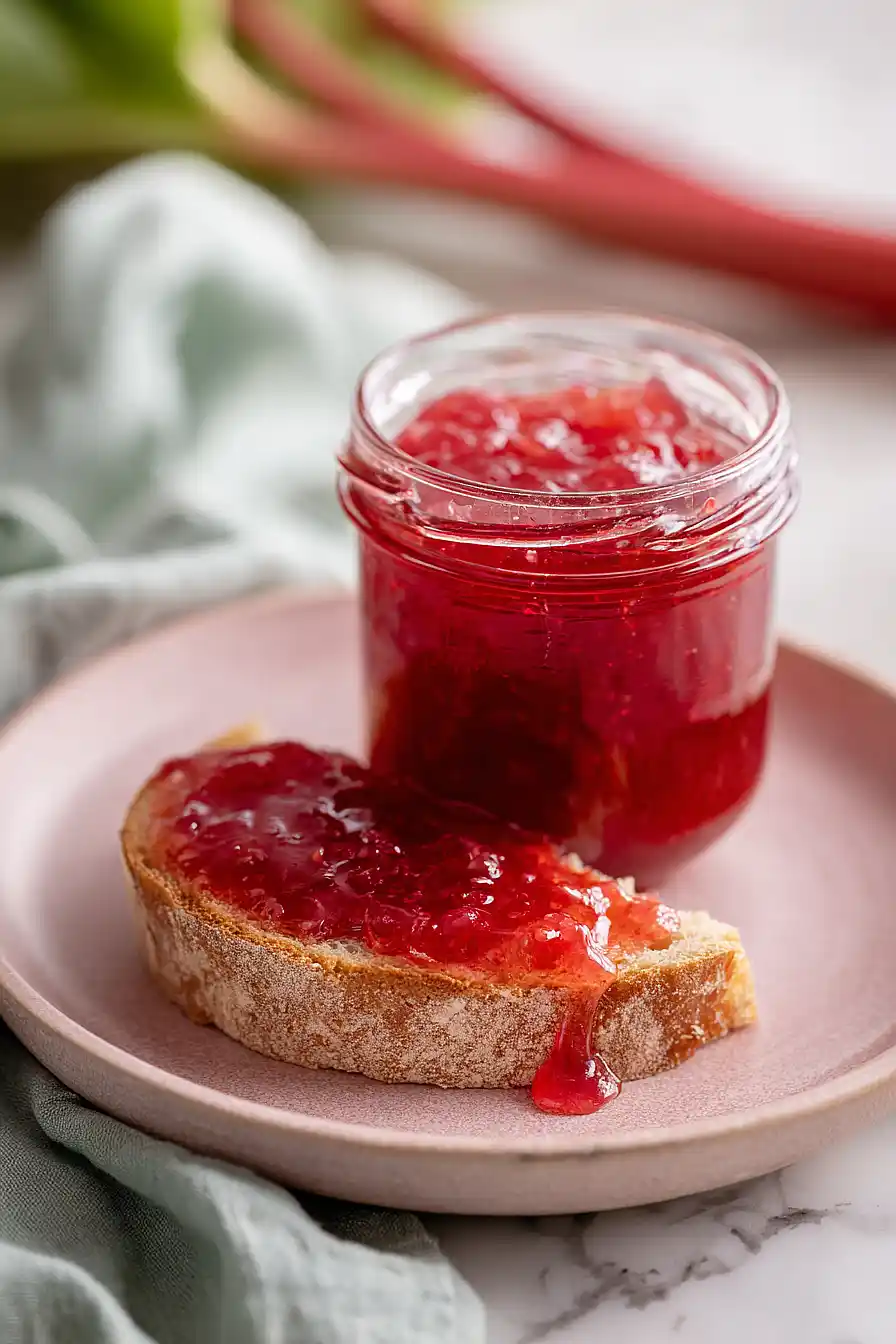
Why You’ll Love This Rhubarb Jam
- Quick and easy – This jam comes together in under an hour, making it perfect for when you want homemade preserves without spending all day in the kitchen.
- Simple ingredients – With just four basic ingredients, you can make delicious jam without hunting down anything fancy or unusual.
- Perfect balance of sweet and tart – The natural tanginess of rhubarb combined with sugar creates a jam that’s not too sweet and has that classic rhubarb flavor everyone loves.
- Great for gifting – Homemade jam always makes a thoughtful present, and this recipe yields enough to share with friends and family or stock your own pantry for months.
What Kind of Rhubarb Should I Use?
For jam-making, you can use either red or green rhubarb stalks – both will work perfectly fine, though the red variety will give you a prettier pink color in your finished jam. Field-grown rhubarb tends to be more flavorful than hothouse rhubarb, so if you have access to a farmer’s market or grow your own, that’s your best bet. Look for firm, crisp stalks and avoid any that feel soft or look shriveled. And remember, always trim off and discard the leaves since they’re toxic – you only want to use the stalks for your jam.
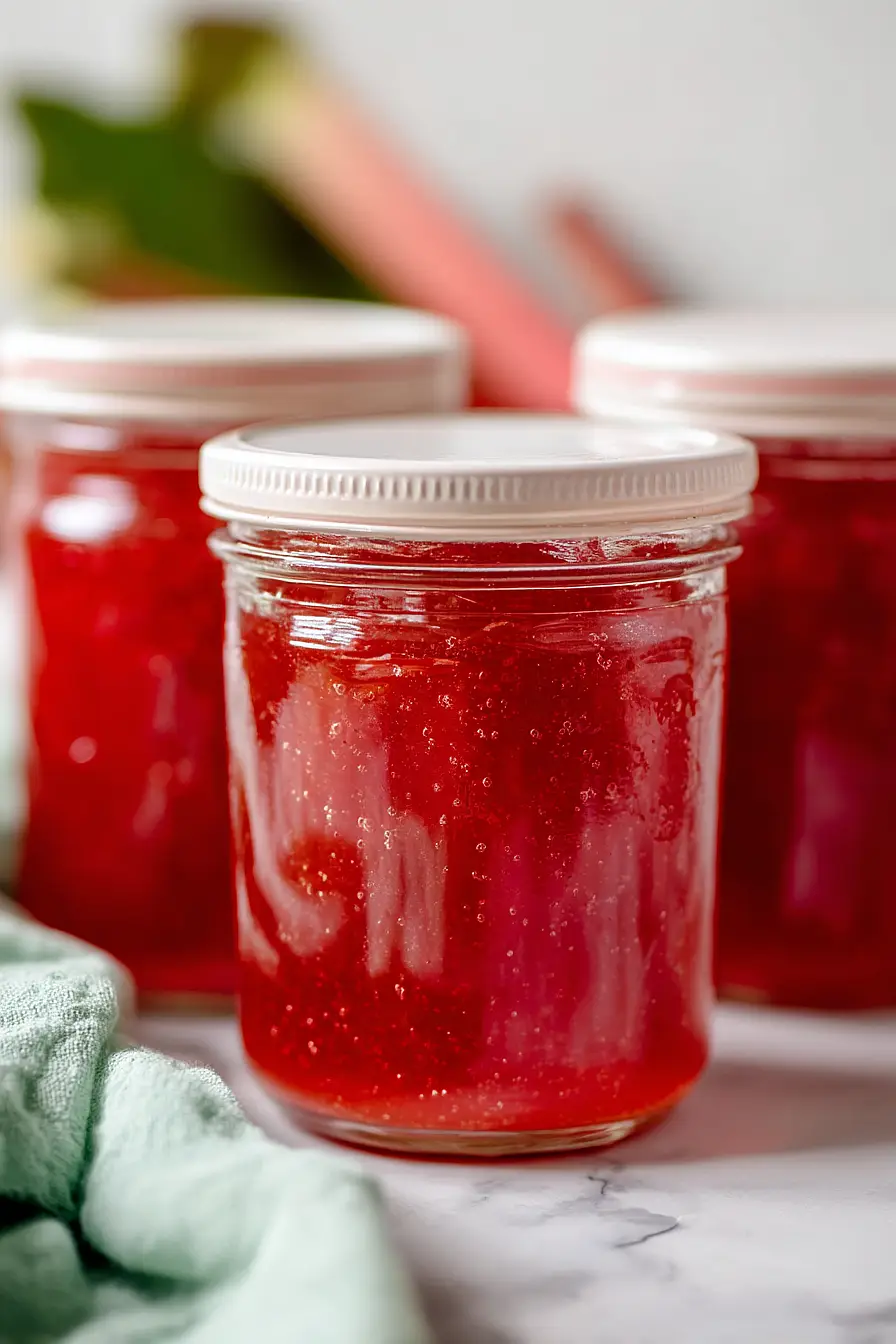
Options for Substitutions
While jam recipes are pretty specific, there are a few swaps you can make:
- Sugar: The sugar amount is crucial for proper jam setting and preservation, so I wouldn’t recommend reducing it. However, you can use a mix of white and brown sugar (up to 1 lb brown sugar) for a deeper, caramel-like flavor.
- Lemon juice: Fresh lemon juice works best, but bottled lemon juice is fine too. You could also use lime juice for a slightly different citrus note.
- Pectin: Don’t skip the pectin – it’s what makes your jam set properly. Make sure to use the type called for in your recipe (liquid vs. powdered) as they work differently. If you’re using a different brand, follow the package directions as ratios may vary.
- Rhubarb: Stick with rhubarb for this recipe – it’s the star ingredient and can’t really be substituted. Both red and green stalks work fine, though red gives a prettier color. Just make sure to remove all leaves as they’re toxic.
Watch Out for These Mistakes While Cooking
The biggest mistake when making rhubarb jam is adding the sugar too early, which can draw out too much liquid and prevent the jam from setting properly – always wait until after the pectin has been added and had time to work.
Another common error is not testing for the set point correctly – when you drop jam on that frozen saucer, it should wrinkle when you push it with your finger, not just thicken slightly.
Skipping the step of sterilizing your jars properly can lead to spoiled jam, so make sure to use boiling water and let the jars air dry completely before filling them.
Finally, resist the urge to stir constantly during the final boil, as this can break down the pectin and keep your jam from reaching that perfect spreadable consistency.
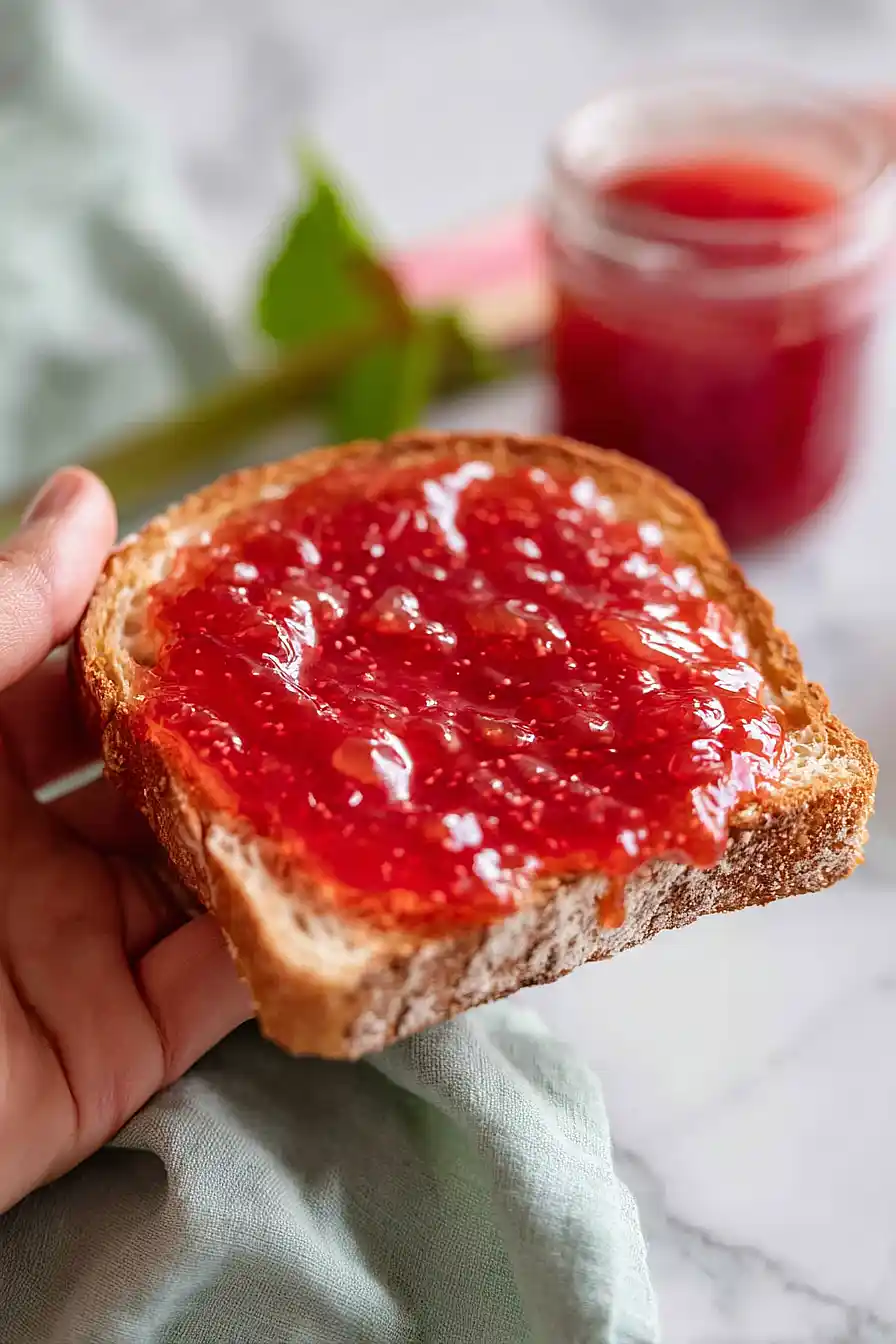
What to Serve With Rhubarb Jam?
This tangy-sweet jam is perfect slathered on warm buttered toast or English muffins for breakfast. I love spreading it on flaky biscuits or scones with a dollop of cream cheese for an afternoon snack. You can also swirl it into plain yogurt or oatmeal to add a bright, fruity flavor to your morning routine. For something a bit fancier, try using it as a filling for thumbprint cookies or layer it between vanilla cake layers for a homemade dessert that’ll impress everyone.
Storage Instructions
Store: Once your rhubarb jam has cooled completely, keep it in clean jars in the refrigerator for up to 3 weeks. If you properly canned it using the water bath method, sealed jars can sit in your pantry for up to a year unopened.
Freeze: Rhubarb jam freezes really well if you want to save some for later. Just leave about half an inch of space at the top of your containers since the jam will expand when frozen, and it’ll keep for up to a year in the freezer.
Use: After opening a jar, always use a clean spoon to scoop out the jam to keep it fresh longer. If you notice any mold or off smells, toss it out. Thaw frozen jam overnight in the fridge before using.
| Preparation Time | 5-10 minutes |
| Cooking Time | 35-40 minutes |
| Total Time | 40-50 minutes |
| Level of Difficulty | Medium |
| Servings | 7.5 cups of jam |
Estimated Nutrition
Estimated nutrition for the whole recipe (without optional ingredients):
- Calories: 6200-6550
- Protein: 6-8 g
- Fat: 0-2 g
- Carbohydrates: 1600-1700 g
Ingredients
- 4 lb rhubarb (trimmed and cut into 1/2-inch pieces)
- 3.75 lb sugar (I always use C&H cane sugar)
- 4 tbsp lemon juice
- 1.75 oz pectin (I use Sure-Jell for a reliable set)
- Pinch of salt
Step 1: Prepare Equipment and Mise en Place
- Canning jars and lids
- 4 lb rhubarb, trimmed and cut into 1/2-inch pieces
- 3.75 lb sugar
- 4 tbsp lemon juice
- 1.75 oz pectin
- Pinch of salt
Place a small saucer in the freezer—this will be your setting test throughout the cooking process.
Prepare your canning jars and lids by rinsing them thoroughly with boiling water and setting them aside to dry; this sterilizes them and keeps them warm for filling.
Trim your rhubarb and cut it into 1/2-inch pieces, and measure out all your ingredients so everything is ready when you begin cooking.
Step 2: Cook Rhubarb and Build Flavor Base
- 4 lb rhubarb, trimmed and cut into 1/2-inch pieces
- 4 tbsp lemon juice
Combine the rhubarb pieces and lemon juice in a large, heavy-bottomed pot (at least 8-quart capacity to prevent boiling over).
Bring to a boil over medium-high heat, stirring occasionally to help the rhubarb break down.
Let it boil for 10 minutes—the rhubarb will soften and release its juices, creating the foundation of your jam’s flavor.
Step 3: Add Pectin and Develop the Gel Structure
- Rhubarb mixture from Step 2
- 1.75 oz pectin
Stir the pectin into the boiling rhubarb mixture, breaking up any lumps to distribute it evenly throughout the fruit.
This will activate the pectin and help your jam set properly.
Continue boiling for another 10 minutes at a rolling boil, stirring frequently to ensure the pectin is fully incorporated and working throughout the mixture.
Step 4: Add Sugar and Reach Setting Point
- Rhubarb and pectin mixture from Step 3
- 3.75 lb sugar
- Pinch of salt
Add the sugar and pinch of salt to the pot, stirring constantly until the sugar dissolves completely—this usually takes 2-3 minutes.
I like to add the salt at this stage because it balances the tartness of the rhubarb and enhances the overall flavor without making it taste salty.
Return to a rolling boil and cook for 15-20 minutes, stirring frequently to prevent sticking on the bottom of the pot.
Start testing for doneness after 15 minutes by dropping a small spoonful of jam onto your frozen saucer, letting it cool for a minute, then pushing it with your finger—it’s ready when it wrinkles and doesn’t run back together.
Step 5: Fill Jars and Seal
- Finished jam from Step 4
- Prepared jars and lids from Step 1
Once the jam reaches setting point, carefully ladle it into your prepared warm jars, leaving about 1/4-inch headspace at the top.
Immediately place the lids on the jars and screw the bands on finger-tight.
I prefer to let the jars sit at room temperature for 24 hours undisturbed—this allows them to seal properly and the jam to fully set before you move or store them.
Mouthwatering Rhubarb Jam
Ingredients
- 4 lb rhubarb (trimmed and cut into 1/2-inch pieces)
- 3.75 lb sugar (I always use C&H cane sugar)
- 4 tbsp lemon juice
- 1.75 oz pectin (I use Sure-Jell for a reliable set)
- Pinch of salt
Instructions
- Place a small saucer in the freezer—this will be your setting test throughout the cooking process. Prepare your canning jars and lids by rinsing them thoroughly with boiling water and setting them aside to dry; this sterilizes them and keeps them warm for filling. Trim your rhubarb and cut it into 1/2-inch pieces, and measure out all your ingredients so everything is ready when you begin cooking.
- Combine the rhubarb pieces and lemon juice in a large, heavy-bottomed pot (at least 8-quart capacity to prevent boiling over). Bring to a boil over medium-high heat, stirring occasionally to help the rhubarb break down. Let it boil for 10 minutes—the rhubarb will soften and release its juices, creating the foundation of your jam's flavor.
- Stir the pectin into the boiling rhubarb mixture, breaking up any lumps to distribute it evenly throughout the fruit. This will activate the pectin and help your jam set properly. Continue boiling for another 10 minutes at a rolling boil, stirring frequently to ensure the pectin is fully incorporated and working throughout the mixture.
- Add the sugar and pinch of salt to the pot, stirring constantly until the sugar dissolves completely—this usually takes 2-3 minutes. I like to add the salt at this stage because it balances the tartness of the rhubarb and enhances the overall flavor without making it taste salty. Return to a rolling boil and cook for 15-20 minutes, stirring frequently to prevent sticking on the bottom of the pot. Start testing for doneness after 15 minutes by dropping a small spoonful of jam onto your frozen saucer, letting it cool for a minute, then pushing it with your finger—it's ready when it wrinkles and doesn't run back together.
- Once the jam reaches setting point, carefully ladle it into your prepared warm jars, leaving about 1/4-inch headspace at the top. Immediately place the lids on the jars and screw the bands on finger-tight. I prefer to let the jars sit at room temperature for 24 hours undisturbed—this allows them to seal properly and the jam to fully set before you move or store them.