If you ask me, a perfectly roasted chicken is one of those meals that never gets old.
This classic recipe gives you golden, crispy skin on the outside and juicy, tender meat on the inside. Fresh herbs and garlic mix with butter to create flavors that seep into every bite.
The chicken roasts on a bed of onions and gets basted with white wine while it cooks. Lemon and rosemary sprigs tucked inside the cavity add an extra layer of flavor that fills your kitchen with an amazing smell.
It’s a satisfying dinner that feels special but isn’t complicated to pull off, perfect for a Sunday meal with the family.
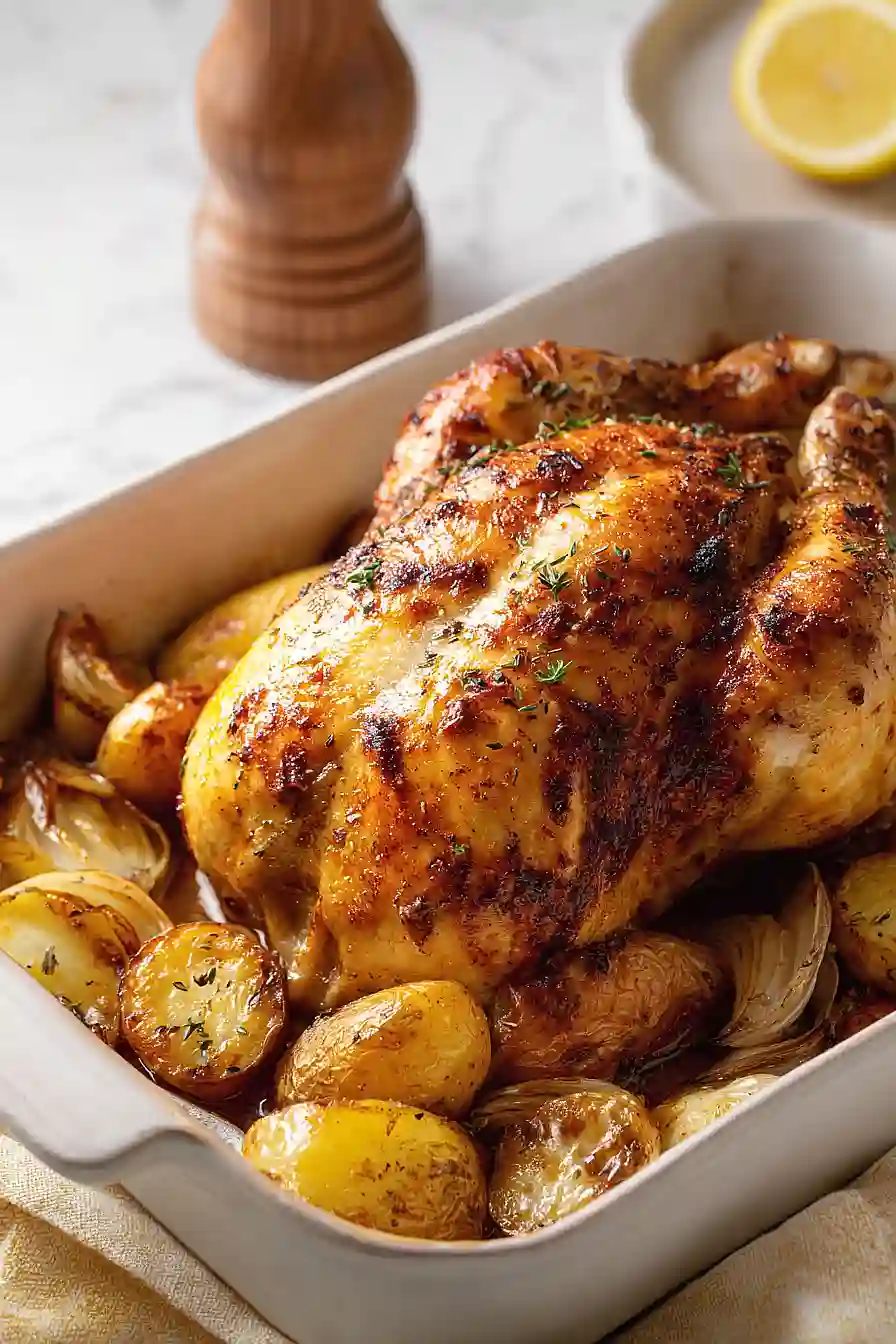
Why You’ll Love This Roast Chicken
- Simple ingredients – You probably already have most of these staples in your kitchen, making this an easy go-to recipe without a special trip to the store.
- Impressive presentation – This golden, herb-butter roasted chicken looks like something from a fancy restaurant, but it’s actually straightforward to make at home.
- Flavorful and juicy – The combination of fresh herbs, garlic butter, and white wine keeps the chicken moist and packed with flavor in every bite.
- Perfect for meal prep – One roast chicken gives you enough meat for multiple meals throughout the week, from sandwiches to salads to quick dinners.
- Great for any occasion – Whether it’s a casual Sunday dinner or a special gathering with friends, this roast chicken fits the bill perfectly.
What Kind of Chicken Should I Use?
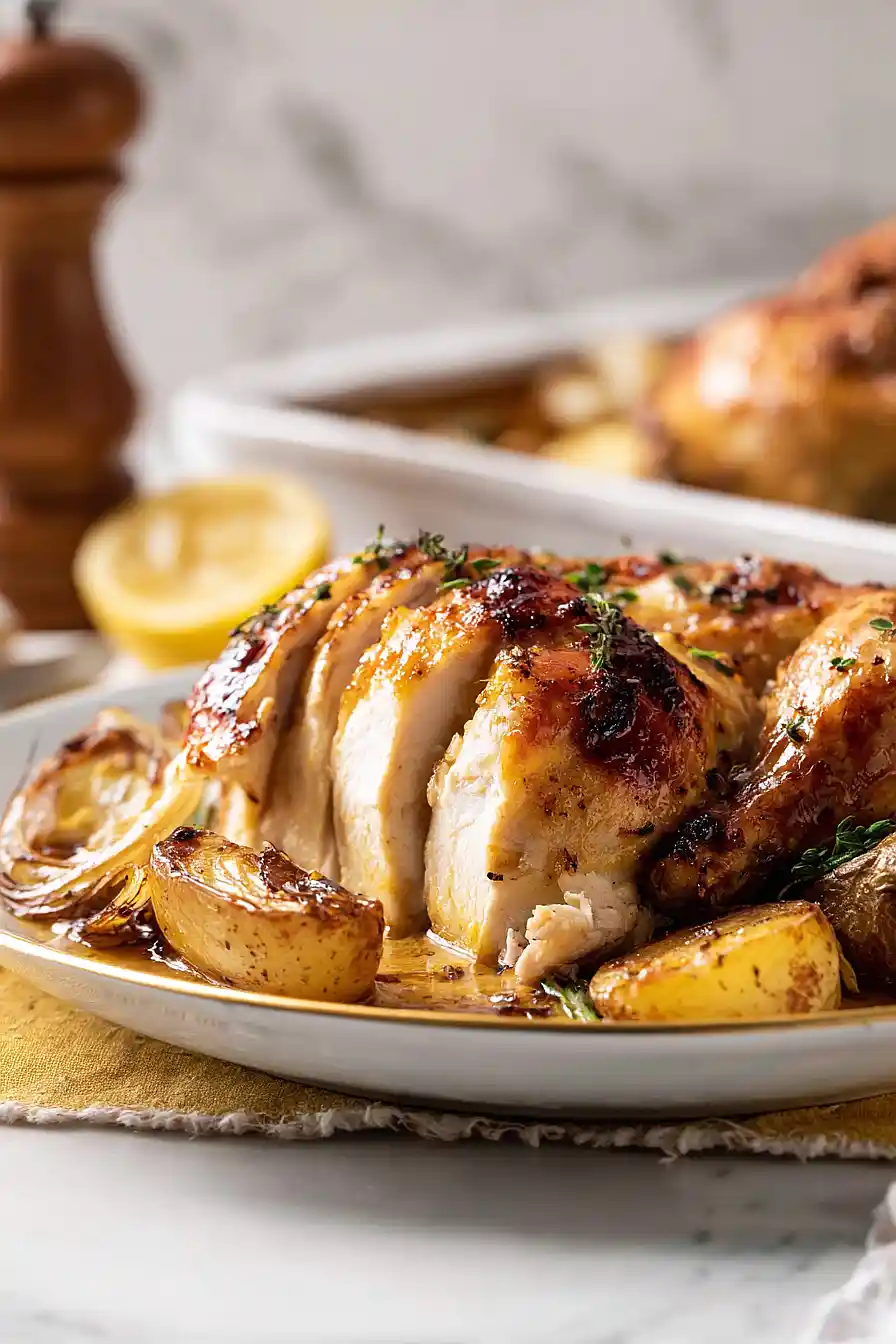
For this recipe, you’ll want to grab a whole chicken that’s around 4 pounds, which is perfect for feeding about four people. You can use either a fresh or frozen chicken – just make sure if you’re going with frozen that you give it plenty of time to thaw completely in the fridge, usually about 24 hours. When you’re at the store, look for a chicken that feels plump and has skin that looks smooth without any tears or discoloration. If you can find an organic or free-range chicken, those tend to have better flavor, but a regular whole chicken from your grocery store will work just fine and still give you a delicious roast.
Options for Substitutions
This roast chicken recipe is pretty forgiving, so here are some swaps you can make:
- Whole chicken: If you can’t find a 4-pound chicken, anything between 3.5 to 5 pounds will work fine. Just adjust your cooking time – add about 15 minutes per extra pound.
- Fresh herbs: Don’t have fresh rosemary, sage, or parsley? You can use dried herbs instead. Just use about one-third of the amount called for since dried herbs are more concentrated. So for 2 teaspoons fresh rosemary, use about 2/3 teaspoon dried.
- Dry white wine: If you don’t have white wine, chicken stock or broth works great. You can also use a mix of stock with a splash of white wine vinegar or lemon juice for some acidity.
- Butter: You can replace butter with more olive oil if needed, though the butter does add a nice rich flavor to the herb mixture.
- Lemon: Fresh lemon is best here for stuffing the cavity, but if you’re in a bind, you can use orange or skip it and add extra garlic and herbs instead.
Watch Out for These Mistakes While Cooking
The biggest mistake when roasting chicken is not letting it come to room temperature before cooking, which leads to uneven cooking with a dried-out exterior and undercooked interior – always set your chicken out for at least 30 minutes before it goes in the oven.
Many home cooks skip the resting period after roasting, but this 15-minute wait is crucial because it allows the juices to redistribute throughout the meat instead of spilling out all over your cutting board.
To get crispy skin all over, make sure your chicken is completely dry before seasoning by patting it down with paper towels, and don’t forget to baste with those pan juices at the 30-minute and 1-hour marks to keep the meat moist.
Finally, trust your thermometer over the clock – ovens vary, so always check that the thickest part of the thigh reaches 165°F rather than relying solely on cooking time.
What to Serve With Roast Chicken?
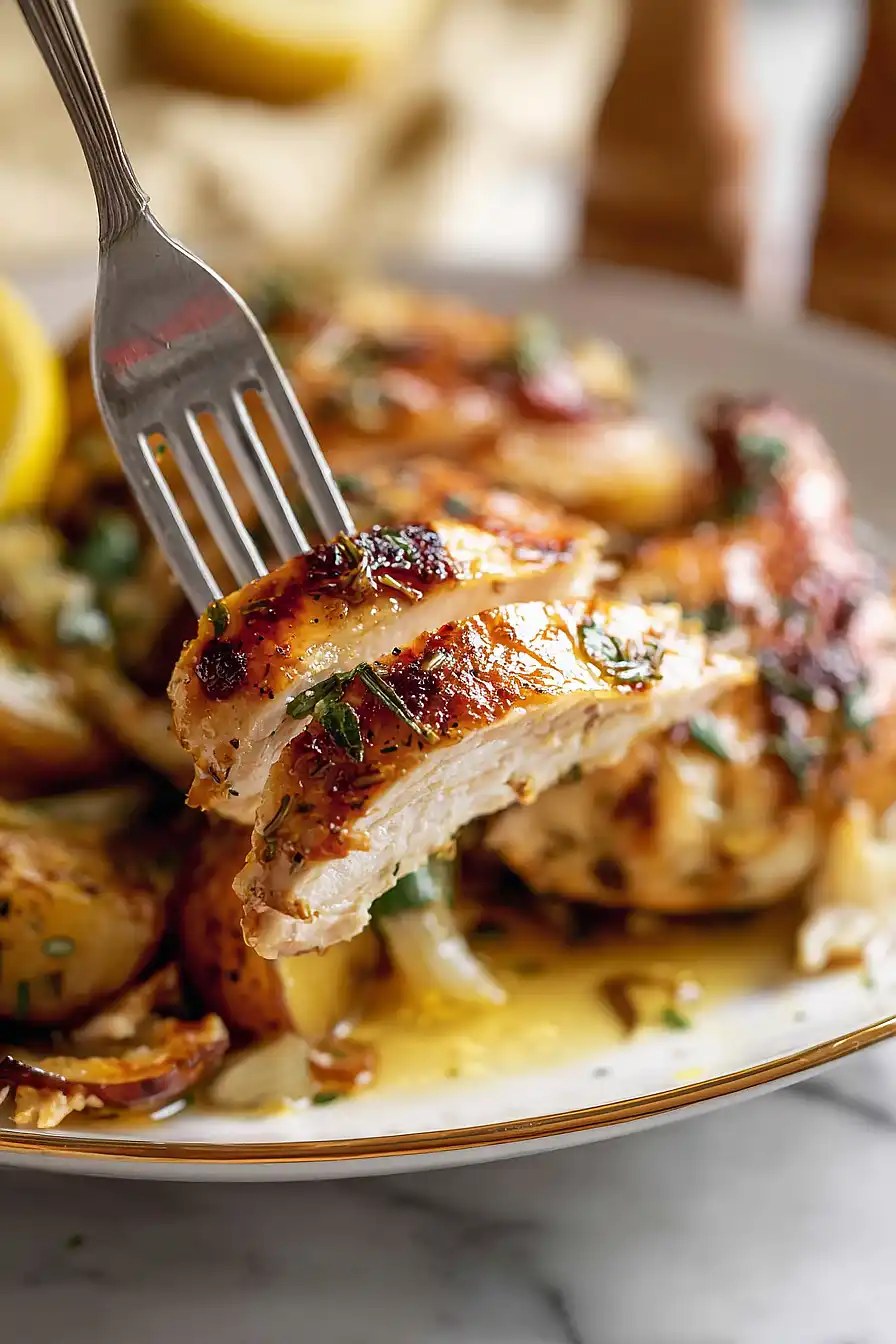
Roast chicken is one of those meals that goes with just about anything, so you really can’t go wrong here. I love serving it with roasted vegetables like carrots, potatoes, and Brussels sprouts that cook right alongside the chicken in the oven and soak up all those good pan drippings. A simple side salad with a lemony vinaigrette helps cut through the richness of the butter and keeps things balanced. If you want something a bit heartier, mashed potatoes or creamy polenta are perfect for spooning that garlicky herb butter over, and don’t forget some crusty bread to mop up every bit of sauce from the pan.
Storage Instructions
Store: Let your roast chicken cool down before storing it in an airtight container in the fridge for up to 4 days. I like to pull the meat off the bones and store it separately from any leftover pan drippings, which you can save for making gravy or soup later.
Freeze: Shredded or sliced chicken freezes really well for up to 3 months. Store it in portion-sized freezer bags so you can grab just what you need for sandwiches, salads, or casseroles throughout the month.
Reheat: Warm up leftover chicken in the oven at 350°F covered with foil to keep it moist, or use the microwave on medium power with a damp paper towel over it. If you saved those pan drippings, drizzle a bit over the chicken before reheating to bring back some of that juicy flavor.
| Preparation Time | 20-30 minutes |
| Cooking Time | 85-90 minutes |
| Total Time | 105-120 minutes |
| Level of Difficulty | Medium |
| Servings | 6 servings |
Estimated Nutrition
Estimated nutrition for the whole recipe (without optional ingredients):
- Calories: 3700-4100
- Protein: 340-380 g
- Fat: 250-280 g
- Carbohydrates: 30-40 g
Ingredients
For the chicken:
- 4.5 lb chicken (I use Perdue for consistent size and quality)
- 2.5 tsp olive oil
- 1 lemon (quartered for stuffing the cavity)
- 4 rosemary sprigs
- salt
- black pepper
For the herb butter:
- 1.25 sticks butter (I prefer Kerrygold unsalted butter for this)
- 4 garlic cloves (finely minced for even distribution)
- 1.5 tbsp sage
- 2.5 tsp rosemary
- 1.5 tbsp parsley
- 0.75 tsp salt
- 0.75 tsp black pepper
- 0.5 tsp paprika
- 0.25 tsp cayenne pepper
For the roasting pan:
- 1.25 cups dry white wine (I use Oyster Bay Sauvignon Blanc)
- 1 large onion (cut into 1-inch thick wedges)
- 1 garlic bulb (sliced in half crosswise to expose the cloves)
Step 1: Prepare the Herb Butter and Mise en Place
- 1.25 sticks butter
- 4 garlic cloves, finely minced
- 1.5 tbsp sage
- 2.5 tsp rosemary
- 1.5 tbsp parsley
- 0.75 tsp salt
- 0.75 tsp black pepper
- 0.5 tsp paprika
- 0.25 tsp cayenne pepper
- 2 lemon wedges
While the chicken comes to room temperature (about 30 minutes), prepare your herb butter.
Soften the butter and mix it thoroughly with the finely minced garlic, sage, parsley, rosemary, paprika, cayenne pepper, salt, and black pepper until well combined.
Squeeze juice from 2 lemon wedges into the herb butter and stir to incorporate.
This allows the flavors to meld while you prepare the rest of your ingredients.
Preheat your oven to 450°F (220°C).
Prepare the onion by cutting it into 1-inch thick wedges, and slice the garlic bulb in half crosswise to expose the cloves.
Pat the chicken dry with paper towels once it reaches room temperature.
Step 2: Season the Chicken and Build Flavor Layers
- 4.5 lb chicken
- herb butter mixture from Step 1
- 2 lemon wedges
- 4 rosemary sprigs
- salt
- black pepper
Gently loosen the skin from the breast and drumsticks by sliding your fingers between the skin and meat, being careful not to tear the skin.
This creates pockets for maximum flavor penetration.
Distribute most of the herb butter under the loosened skin, working it evenly across the breast and thighs—I like to use my fingers to massage it in for even distribution.
Rub the remaining herb butter over the exterior of the chicken.
Squeeze the remaining 2 lemon wedges over the bird, then stuff the cavity with the squeezed lemon wedges and the rosemary sprigs.
Season the outside generously with additional salt and pepper.
Step 3: Truss and Prepare for Roasting
- seasoned chicken from Step 2
- 1 large onion, cut into 1-inch wedges
- 1 garlic bulb, sliced in half crosswise
Tie the chicken’s legs together using kitchen twine—this promotes even cooking and helps the bird hold its shape.
Tuck the wing tips under the body to prevent them from drying out during roasting.
Arrange the onion wedges and halved garlic bulb in the bottom of your roasting pan, spreading them out to create a natural rack that allows air to circulate under the chicken.
Place the seasoned chicken breast-side up on top of the vegetables.
Step 4: Start the Roast with High Heat and Wine
- 1.25 cups dry white wine
- 2.5 tsp olive oil
Pour the dry white wine around the chicken (not over it) and drizzle the olive oil over the chicken’s skin.
This combination creates steam and flavor while the oil helps the skin crisp and brown.
Place the pan in your preheated 450°F oven for exactly 10 minutes to get initial browning and crisping on the skin.
After 10 minutes, reduce the oven temperature to 350°F (180°C)—this gentler heat will cook the meat through without burning the exterior.
Step 5: Braise and Baste Until Cooked Through
- chicken and vegetables from Step 3
Continue roasting at 350°F for approximately 1 hour and 15 minutes, or until the internal temperature reaches 165°F (75°C) when measured at the thickest part of the thigh.
Baste the chicken with the pan juices at the 30-minute mark and again at the 1-hour mark—this keeps the skin moist and enriches it with the concentrated flavors developing in the pan.
The vegetables will caramelize and flavor the liquid, creating an excellent pan sauce.
Step 6: Rest and Serve with Pan Juices
- rested chicken from Step 5
- pan juices and roasted vegetables from Step 5
Once the chicken reaches the target internal temperature, remove it from the oven and transfer it to a cutting board or serving platter.
Let it rest for 15 minutes before carving—this allows the juices to redistribute throughout the meat, keeping it moist and tender when you cut into it.
Spoon the pan juices with the roasted vegetables and caramelized onions over the chicken as you serve it.
The wine and roasted garlic create a naturally rich sauce that needs no additional preparation.
Homemade Roast Chicken
Ingredients
For the chicken
- 4.5 lb chicken (I use Perdue for consistent size and quality)
- 2.5 tsp olive oil
- 1 lemon (quartered for stuffing the cavity)
- 4 rosemary sprigs
- salt
- black pepper
For the herb butter
- 1.25 sticks butter (I prefer Kerrygold unsalted butter for this)
- 4 garlic cloves (finely minced for even distribution)
- 1.5 tbsp sage
- 2.5 tsp rosemary
- 1.5 tbsp parsley
- 0.75 tsp salt
- 0.75 tsp black pepper
- 0.5 tsp paprika
- 0.25 tsp cayenne pepper
For the roasting pan
- 1.25 cups dry white wine (I use Oyster Bay Sauvignon Blanc)
- 1 large onion (cut into 1-inch thick wedges)
- 1 garlic bulb (sliced in half crosswise to expose the cloves)
Instructions
- While the chicken comes to room temperature (about 30 minutes), prepare your herb butter. Soften the butter and mix it thoroughly with the finely minced garlic, sage, parsley, rosemary, paprika, cayenne pepper, salt, and black pepper until well combined. Squeeze juice from 2 lemon wedges into the herb butter and stir to incorporate. This allows the flavors to meld while you prepare the rest of your ingredients. Preheat your oven to 450°F (220°C). Prepare the onion by cutting it into 1-inch thick wedges, and slice the garlic bulb in half crosswise to expose the cloves. Pat the chicken dry with paper towels once it reaches room temperature.
- Gently loosen the skin from the breast and drumsticks by sliding your fingers between the skin and meat, being careful not to tear the skin. This creates pockets for maximum flavor penetration. Distribute most of the herb butter under the loosened skin, working it evenly across the breast and thighs—I like to use my fingers to massage it in for even distribution. Rub the remaining herb butter over the exterior of the chicken. Squeeze the remaining 2 lemon wedges over the bird, then stuff the cavity with the squeezed lemon wedges and the rosemary sprigs. Season the outside generously with additional salt and pepper.
- Tie the chicken's legs together using kitchen twine—this promotes even cooking and helps the bird hold its shape. Tuck the wing tips under the body to prevent them from drying out during roasting. Arrange the onion wedges and halved garlic bulb in the bottom of your roasting pan, spreading them out to create a natural rack that allows air to circulate under the chicken. Place the seasoned chicken breast-side up on top of the vegetables.
- Pour the dry white wine around the chicken (not over it) and drizzle the olive oil over the chicken's skin. This combination creates steam and flavor while the oil helps the skin crisp and brown. Place the pan in your preheated 450°F oven for exactly 10 minutes to get initial browning and crisping on the skin. After 10 minutes, reduce the oven temperature to 350°F (180°C)—this gentler heat will cook the meat through without burning the exterior.
- Continue roasting at 350°F for approximately 1 hour and 15 minutes, or until the internal temperature reaches 165°F (75°C) when measured at the thickest part of the thigh. Baste the chicken with the pan juices at the 30-minute mark and again at the 1-hour mark—this keeps the skin moist and enriches it with the concentrated flavors developing in the pan. The vegetables will caramelize and flavor the liquid, creating an excellent pan sauce.
- Once the chicken reaches the target internal temperature, remove it from the oven and transfer it to a cutting board or serving platter. Let it rest for 15 minutes before carving—this allows the juices to redistribute throughout the meat, keeping it moist and tender when you cut into it. Spoon the pan juices with the roasted vegetables and caramelized onions over the chicken as you serve it. The wine and roasted garlic create a naturally rich sauce that needs no additional preparation.