I didn’t try real Greek salad until I was in my thirties, and honestly, I was a little confused at first. Where was the lettuce? The creamy dressing? Turns out, what I’d been eating at chain restaurants my whole life wasn’t actually Greek at all.
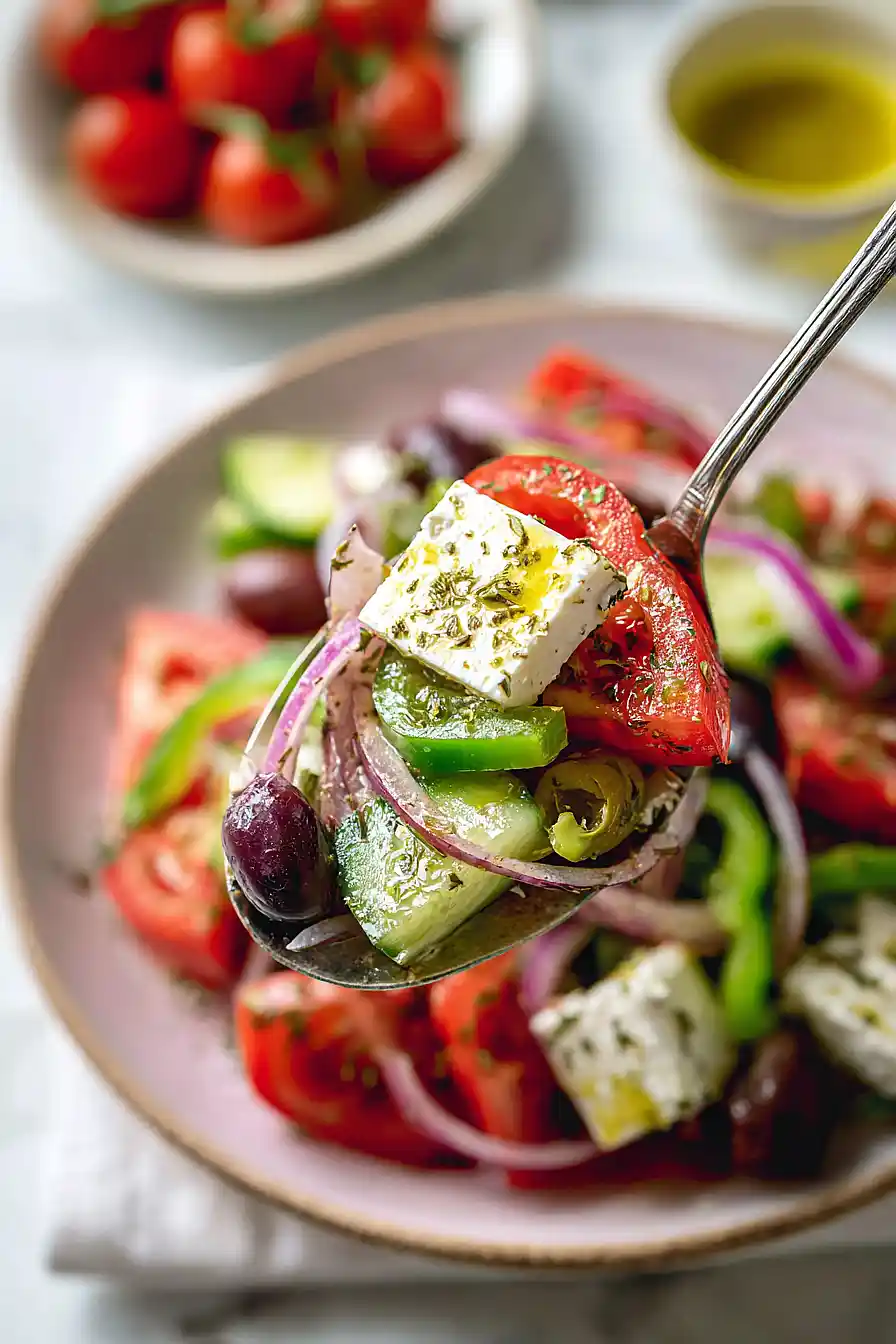
Horiatiki—the salad Greeks actually eat—is way simpler than I expected. It’s just chunky vegetables, good feta, and a basic olive oil dressing. No lettuce, no fuss. The key is cutting everything thick so you get these satisfying bites, not sad little pieces drowning in vinaigrette. Once I figured that out, it became my go-to summer side dish.

Why You’ll Love This Greek Salad
- Ready in 15-20 minutes – This salad comes together super fast, making it perfect for busy weeknights or when you need a quick side dish for guests.
- Fresh, simple ingredients – You only need a handful of vegetables and pantry staples to create this classic Mediterranean dish.
- Healthy and refreshing – Packed with crisp vegetables and heart-healthy olive oil, this salad is a light option that doesn’t skimp on flavor.
- No cooking required – Just chop, toss, and serve—no stove or oven needed, which keeps your kitchen cool and cleanup minimal.
- Great for meal prep – The vegetables hold up well, so you can prep the components ahead and assemble when you’re ready to eat.
What Kind of Tomatoes Should I Use?
For a proper Greek salad, you’ll want to use ripe, juicy tomatoes that are in season if possible. Beefsteak tomatoes are a classic choice because they’re meaty and hold up well when cut into chunks, but Roma tomatoes work great too if that’s what you have on hand. If it’s summer, grab some heirloom tomatoes from the farmers market for extra flavor. Whatever you choose, make sure they’re firm but ripe – you want them to have good flavor without being mushy or watery, since they’re really the star of this salad.
Options for Substitutions
This classic Greek salad is pretty straightforward, but here are some swaps you can make:
- Red onion: If red onion is too sharp for your taste, you can use sweet onion or even thinly sliced scallions. You could also soak the red onion slices in cold water for 10 minutes to mellow out the bite.
- Green bell pepper: Feel free to use red, yellow, or orange bell peppers instead. They’re a bit sweeter than green peppers but work just as well in this salad.
- Kalamata olives: While traditional horiatiki uses Kalamata olives, you can substitute with any briny olive you prefer – black olives, green olives, or even a mix.
- Red wine vinegar: In a pinch, white wine vinegar or even fresh lemon juice works great and still gives you that tangy flavor.
- Feta cheese: This is the one ingredient I wouldn’t recommend substituting. Feta is really what makes a Greek salad authentic, so try to stick with it if possible. Look for a block of feta rather than pre-crumbled for the best texture.
Watch Out for These Mistakes While Cooking
The biggest mistake people make with Greek salad is cutting the vegetables too small – traditional horiatiki features large, chunky pieces that you can actually bite into, so aim for thick wedges of tomato and cucumber rather than dainty cubes.
Skipping the onion soak is another common error that leads to harsh, overpowering flavor, so don’t rush this step – the ice water and vinegar bath mellows out the sharpness and makes the onion crisp and mild.
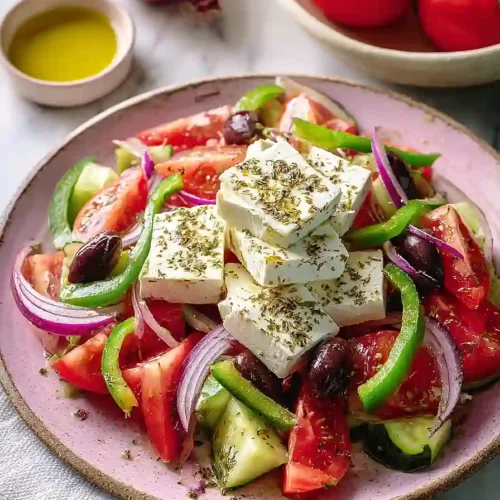
Many home cooks also make the mistake of tossing the feta into the salad like any other ingredient, but authentic Greek salad places a thick slab of feta on top so diners can break off pieces as they eat.
Finally, resist the urge to overdress your salad – Greek salad should be lightly coated with oil and vinegar, not swimming in dressing, which keeps the vegetables fresh and crisp.

What to Serve With Greek Salad?
Greek salad is pretty filling on its own, but it pairs perfectly with grilled chicken, lamb kebabs, or even some crispy falafel if you want to keep things vegetarian. I love serving it alongside warm pita bread that you can use to scoop up all the good stuff, especially those chunks of feta and the tangy dressing at the bottom of the bowl. It also makes a great side dish for any Mediterranean-style grilled fish or shrimp, and honestly, it’s one of those salads that works with just about any protein you throw at it. If you’re going for a full Greek spread, add some hummus, tzatziki, and dolmas to really round out the meal.
Storage Instructions
Store: This salad is best enjoyed fresh, but you can prep the veggies ahead and keep them in separate containers in the fridge for up to 2 days. Just wait to add the dressing, feta, and oregano until right before serving so everything stays crisp and doesn’t get watery.
Leftovers: If you’ve already dressed the salad, it’ll keep in an airtight container in the refrigerator for about a day. The veggies will release some liquid and get softer, but it’s still perfectly good to eat. Just give it a quick stir and maybe drain off any excess liquid before serving.
| Preparation Time | 15-20 minutes |
| Cooking Time | 0 minutes |
| Total Time | 15-20 minutes |
| Level of Difficulty | Easy |
| Servings | 4 servings |
Estimated Nutrition
Estimated nutrition for the whole recipe (without optional ingredients):
- Calories: 600-700
- Protein: 15-20 g
- Fat: 50-55 g
- Carbohydrates: 30-35 g
Ingredients
For the salad:
- 1 red onion (sliced into thin 1/8-inch half-moons for a milder bite)
- 4 tomatoes
- 1 cucumber (partially peeled in strips and sliced into 1/2-inch thick semi-circles)
- 1 green bell pepper
- 1 handful olives (I use Mezzetta Kalamata olives)
- 7 oz feta cheese (I prefer Dodoni feta for its authentic sheep’s milk tang)
- 2 tablespoons fresh mint, chopped
For the dressing and seasoning:
- 2 tsp oregano
- salt to taste
- 1/3 cup olive oil (I use Lucini Premium Select for a peppery finish)
- 3 tbsp red wine vinegar
- 1/4 teaspoon black pepper
Step 1: Prepare and Soften the Red Onion
- 1 red onion, sliced into thin half-moons
- 1 tablespoon red wine vinegar
- ice water
Slice the red onion into thin 1/8-inch half-moons and place them in a bowl with ice water and 1 tablespoon of the red wine vinegar.
Let soak for 10 minutes—this mellows the onion’s sharp bite and makes it crisp and refreshing.
While the onion soaks, prepare all other vegetables.
Step 2: Prep All Vegetables and Cheese
- 4 tomatoes
- 1 cucumber, partially peeled in strips
- 1 green bell pepper
- 7 oz feta cheese
While the onion soaks, cut the tomatoes into wedges or chunks, then slice the cucumber into 1/2-inch thick semi-circles (partially peel in strips first for visual appeal).
Dice the green bell pepper into bite-sized pieces.
Crumble or cut the feta cheese into large chunks—I prefer leaving it in substantial pieces rather than crumbling it fine, as it holds better in the salad.
Chop the fresh mint and have all ingredients ready to assemble.
Step 3: Assemble and Dress the Salad
- tomatoes, cucumber, bell pepper, and olives from Step 2
- soaked red onion from Step 1
- 1/3 cup olive oil
- 2 tablespoons red wine vinegar
- salt to taste
- 1/4 teaspoon black pepper
- 1 teaspoon oregano
In a large shallow dish or platter, arrange the tomatoes, cucumber, bell pepper, and olives in a pleasing pattern—this is a rustic salad, so don’t overthink it, just keep vegetables somewhat organized.
Drain the soaked red onion well and scatter it over the vegetables.
In a small bowl, whisk together the olive oil, remaining red wine vinegar, salt, and black pepper.
Drizzle this dressing over the entire salad and sprinkle with half of the oregano, then toss gently to combine.
I like to let it sit for a few minutes after dressing so the flavors can meld together.
Step 4: Top with Feta and Fresh Herbs
- feta cheese from Step 2
- 1 teaspoon oregano
- 2 tablespoons fresh mint, chopped
Arrange the feta cheese chunks over the top of the dressed salad, creating an attractive presentation.
Sprinkle the remaining oregano over the feta, then scatter the chopped fresh mint across the entire salad.
Serve immediately at room temperature—this is how horiatiki is traditionally enjoyed, allowing all the fresh flavors to shine without being chilled.
Gluten-Free Horiatiki Greek Salad
Ingredients
For the salad::
- 1 red onion (sliced into thin 1/8-inch half-moons for a milder bite)
- 4 tomatoes
- 1 cucumber (partially peeled in strips and sliced into 1/2-inch thick semi-circles)
- 1 green bell pepper
- 1 handful olives (I use Mezzetta Kalamata olives)
- 7 oz feta cheese (I prefer Dodoni feta for its authentic sheep's milk tang)
- 2 tablespoons fresh mint, chopped
For the dressing and seasoning::
- 2 tsp oregano
- salt to taste
- 1/3 cup olive oil (I use Lucini Premium Select for a peppery finish)
- 3 tbsp red wine vinegar
- 1/4 teaspoon black pepper
Instructions
- Slice the red onion into thin 1/8-inch half-moons and place them in a bowl with ice water and 1 tablespoon of the red wine vinegar. Let soak for 10 minutes—this mellows the onion's sharp bite and makes it crisp and refreshing. While the onion soaks, prepare all other vegetables.
- While the onion soaks, cut the tomatoes into wedges or chunks, then slice the cucumber into 1/2-inch thick semi-circles (partially peel in strips first for visual appeal). Dice the green bell pepper into bite-sized pieces. Crumble or cut the feta cheese into large chunks—I prefer leaving it in substantial pieces rather than crumbling it fine, as it holds better in the salad. Chop the fresh mint and have all ingredients ready to assemble.
- In a large shallow dish or platter, arrange the tomatoes, cucumber, bell pepper, and olives in a pleasing pattern—this is a rustic salad, so don't overthink it, just keep vegetables somewhat organized. Drain the soaked red onion well and scatter it over the vegetables. In a small bowl, whisk together the olive oil, remaining red wine vinegar, salt, and black pepper. Drizzle this dressing over the entire salad and sprinkle with half of the oregano, then toss gently to combine. I like to let it sit for a few minutes after dressing so the flavors can meld together.
- Arrange the feta cheese chunks over the top of the dressed salad, creating an attractive presentation. Sprinkle the remaining oregano over the feta, then scatter the chopped fresh mint across the entire salad. Serve immediately at room temperature—this is how horiatiki is traditionally enjoyed, allowing all the fresh flavors to shine without being chilled.