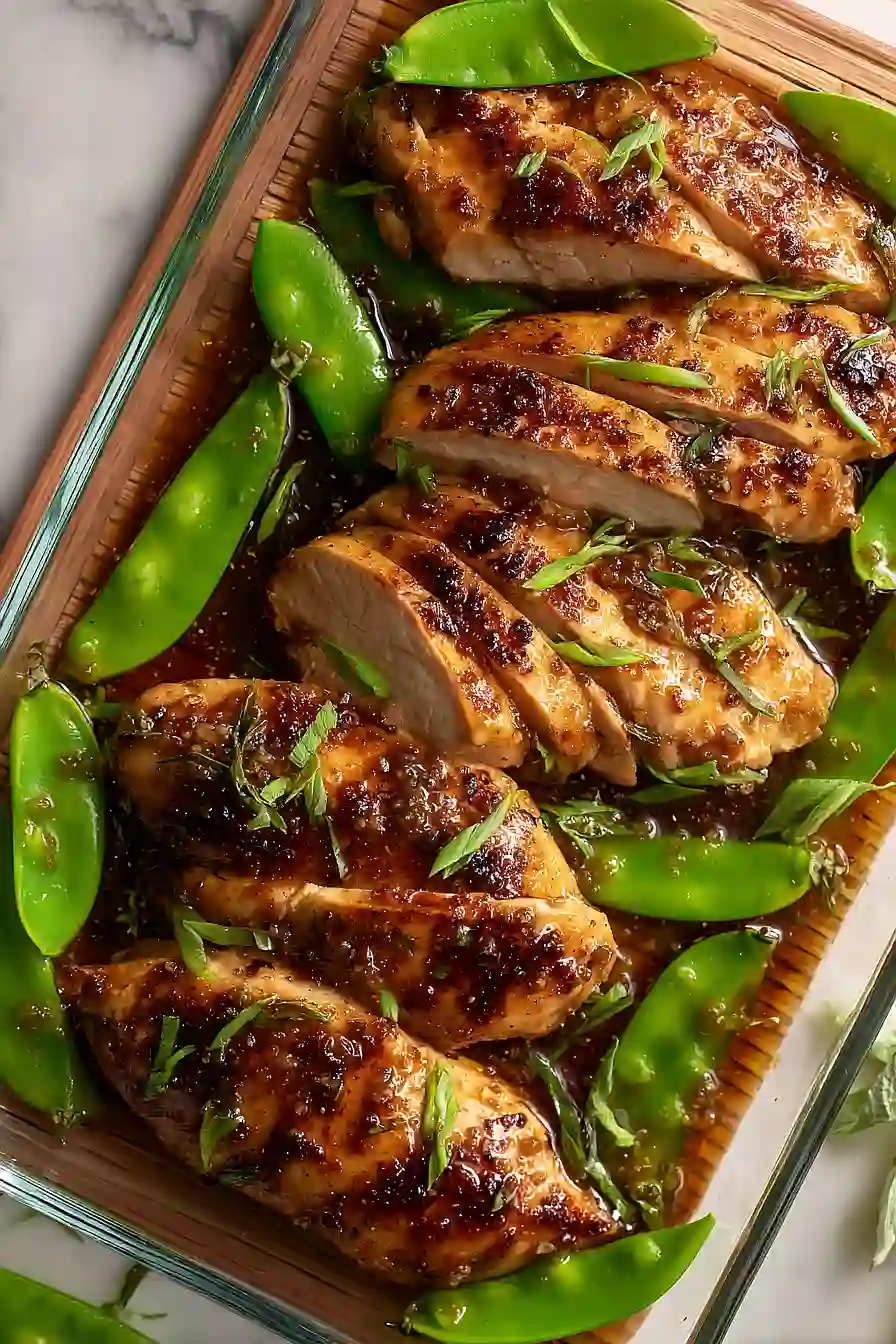
Here is my favorite Thai chicken breast recipe, with a sweet and tangy sauce made from soy sauce, brown sugar, vinegar, and fish sauce, plus fresh ginger, garlic, and crispy sugar snap peas.
This Thai chicken is one of those dinners that feels like takeout but tastes so much better homemade. The sauce is a little sweet, a little salty, and has just the right amount of kick from the red pepper flakes.
Why You’ll Love This Thai Chicken Breast
- Quick weeknight dinner – Ready in just 30-45 minutes, this recipe is perfect for busy evenings when you want something flavorful without spending hours in the kitchen.
- Restaurant-quality flavor at home – The sweet and tangy sauce with fresh ginger and garlic tastes like takeout, but you’ll save money making it yourself.
- Simple ingredients – Most of these are pantry staples you probably already have, so you won’t need to make a special trip to the store.
- Balanced meal in one pan – With protein and veggies cooked together, you’ve got dinner sorted without juggling multiple pots and pans.
What Kind of Chicken Breast Should I Use?
For this Thai chicken recipe, you can use either fresh or frozen chicken breasts – just make sure to thaw frozen ones completely before cooking. Boneless, skinless breasts are what you’ll need here, and they should be pounded thin so they cook evenly and quickly. If you’re at the store and see chicken breasts labeled as “thin sliced” or “cutlets,” those can save you some prep time since they’re already the right thickness. Try to pick breasts that are similar in size so they all finish cooking at the same time, and don’t worry too much about getting the most expensive organic option – regular chicken breasts work perfectly fine for this recipe.
Options for Substitutions
This Thai-inspired chicken is pretty forgiving when it comes to swaps:
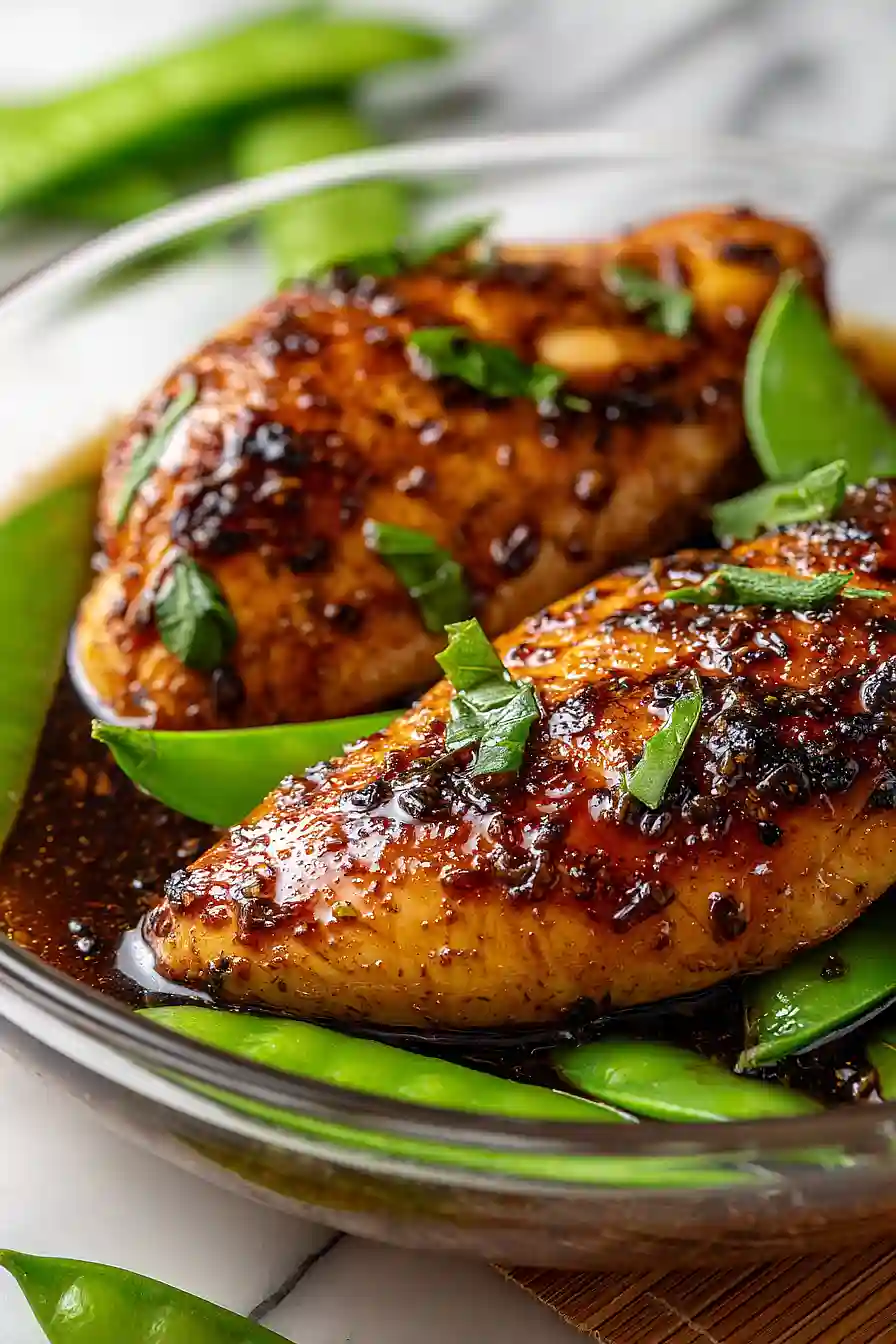
- Fresh ginger: If you don’t have fresh ginger, you can use 1 tablespoon of ground ginger instead. It won’t have quite the same punch, but it’ll still give you that warm, spicy flavor.
- Chicken breasts: Chicken thighs work great here and actually stay more tender during cooking. You can also use pork chops for a different protein – just adjust cooking time as needed.
- White wine vinegar: Rice vinegar is a more authentic choice for Thai flavors, but apple cider vinegar or regular white vinegar will work too. Start with a bit less and taste as you go.
- Fish sauce: This adds that authentic umami kick, but if you don’t have it, just use an extra tablespoon of soy sauce. The flavor will be slightly different but still tasty.
- Sugar snap peas: Snow peas, green beans, or broccoli florets all work well here. Add them at the same time you would the snap peas.
- Brown sugar: Regular white sugar or honey can replace brown sugar in equal amounts, though honey will add a slightly different sweetness.
Watch Out for These Mistakes While Cooking
The biggest mistake when making this Thai chicken is burning the ginger and garlic mixture, which happens fast since they’re cooking in the residual oil – keep the heat at medium and stir constantly for about 30 seconds to 1 minute until fragrant, not dark brown.
Another common error is not pounding the chicken breasts to an even thickness, which leads to some parts being overcooked and dry while others are undercooked – aim for about 1/2 inch thickness throughout.
When reducing the sauce, many people crank up the heat too high and end up with a burnt, bitter glaze instead of a glossy coating, so keep it at a gentle simmer and be patient as it thickens.
Finally, adding the sugar snap peas too early will turn them mushy and dull, so toss them in raw right at the end or quickly blanch them for just 30 seconds to keep their crunch.
What to Serve With Thai Chicken Breast?
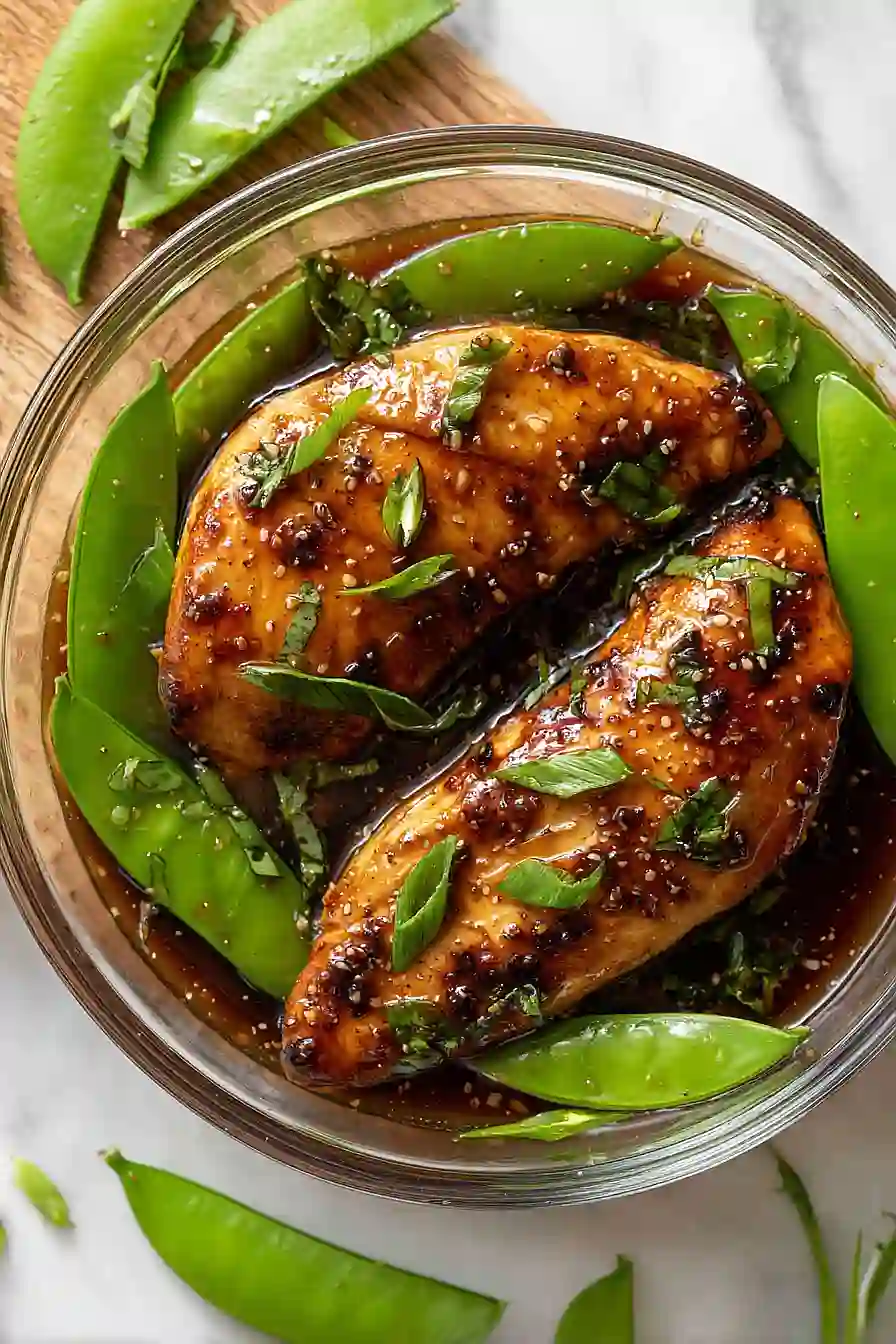
This Thai chicken is packed with sweet and savory flavors, so I love serving it over a big bowl of jasmine rice or rice noodles to soak up all that delicious sauce. Steamed broccoli or bok choy on the side adds a nice fresh crunch and balances out the richness of the dish. If you want to keep the Thai theme going, try adding a cucumber salad with rice vinegar and sesame seeds, or some quick-pickled vegetables for a tangy contrast. You could also serve it with extra sugar snap peas stir-fried with a bit of sesame oil for a simple veggie side that complements the chicken perfectly.
Storage Instructions
Store: Keep your leftover Thai chicken in an airtight container in the fridge for up to 4 days. The sauce might thicken up a bit as it sits, but that’s totally normal and still tastes great when you reheat it.
Freeze: This chicken freezes really well for up to 3 months. I like to portion it out into individual servings before freezing so I can grab just what I need. Just make sure everything has cooled down completely first, then pop it in freezer-safe containers or bags.
Reheat: Warm it up gently in a skillet over medium-low heat with a splash of water or chicken broth to loosen the sauce. You can also microwave it, but I’d do it in short bursts and stir in between so the chicken doesn’t get rubbery.
| Preparation Time | 10-15 minutes |
| Cooking Time | 20-30 minutes |
| Total Time | 30-45 minutes |
| Level of Difficulty | Medium |
| Servings | 4 servings |
Estimated Nutrition
Estimated nutrition for the whole recipe (without optional ingredients):
- Calories: 1100-1300
- Protein: 105-120 g
- Fat: 30-36 g
- Carbohydrates: 100-120 g
Ingredients
For the chicken:
- 4 medium chicken breasts
- 1/2 cup King Arthur all-purpose flour
- 2 1/2 tbsp olive oil
- 1/2 tsp salt
- 1/2 tsp freshly ground black pepper
For the sauce:
- 3 tbsp fresh ginger, minced
- 2 tbsp garlic, minced
- 1/4 tsp red pepper flakes
- 4 tbsp Kikkoman soy sauce
- 1/3 cup brown sugar, firmly packed
- 1/2 cup vinegar
- 1 1/2 tsp fish sauce
- 1/2 tsp toasted sesame oil
For the garnish:
- 1 cup sugar snap peas, trimmed and sliced diagonally
- 2 tbsp fresh cilantro, chopped
Step 1: Prepare the Mise en Place and Coat the Chicken
- 4 medium chicken breasts
- 1/2 cup King Arthur all-purpose flour
- 1/2 tsp salt
- 1/2 tsp freshly ground black pepper
- 3 tbsp fresh ginger, minced
- 2 tbsp garlic, minced
- 1 cup sugar snap peas, trimmed and sliced diagonally
Pat the chicken breasts dry with paper towels—this ensures better browning.
In a shallow bowl, combine the flour, salt, and pepper.
Coat each chicken breast evenly on both sides with the flour mixture, shaking off any excess.
Set aside on a plate.
Mince the ginger and garlic, and trim and slice the sugar snap peas diagonally.
Having everything prepped before you start cooking ensures the dish comes together smoothly without interruptions.
Step 2: Sear the Chicken Until Golden
- 2 1/2 tbsp olive oil
- floured chicken breasts from Step 1
Heat the olive oil in a large skillet over medium-high heat until shimmering, about 2 minutes.
Working in batches if needed to avoid crowding, place the flour-coated chicken breasts in the pan and sear for 6-7 minutes on the first side until golden brown.
Flip and cook the other side for another 6-7 minutes until the internal temperature reaches 165°F.
Transfer the cooked chicken to a clean plate and set aside.
Step 3: Build the Thai Sauce Base
- 3 tbsp fresh ginger, minced
- 2 tbsp garlic, minced
- 1/4 tsp red pepper flakes
- 4 tbsp Kikkoman soy sauce
- 1/3 cup brown sugar, firmly packed
- 1/2 cup vinegar
- 1 1/2 tsp fish sauce
- 1/2 tsp toasted sesame oil
In the same skillet with the rendered chicken drippings, add the minced ginger, garlic, and red pepper flakes over medium heat.
Stir constantly for about 1-2 minutes until fragrant and the mixture begins to caramelize slightly—this develops deep, complex flavors.
Add the soy sauce, brown sugar, vinegar, fish sauce, and sesame oil, stirring to combine.
I like to taste the sauce at this point and adjust the balance; if it’s too acidic, I add a touch more sugar, and if it needs more depth, a splash more soy sauce works perfectly.
Step 4: Simmer the Sauce Until Thickened
- sauce mixture from Step 3
- cooked chicken from Step 2
Bring the sauce to a gentle boil, then reduce the heat to medium-low and simmer for 5-7 minutes, stirring occasionally, until the sauce reduces by about one-third and thickens slightly.
The sauce should coat the back of a spoon.
Return the cooked chicken to the skillet, nestling it into the sauce, and simmer for another 2-3 minutes to allow the chicken to absorb some of the flavors and warm through.
Step 5: Finish With Fresh Vegetables and Garnish
- sugar snap peas from Step 1
- 2 tbsp fresh cilantro, chopped
Add the sliced sugar snap peas to the skillet and toss gently to coat them in the sauce.
Cook for 1-2 minutes just until the peas are heated through but still retain their crisp-tender texture.
Transfer the chicken to serving plates, spoon the sauce and vegetables over the top, and garnish with fresh cilantro.
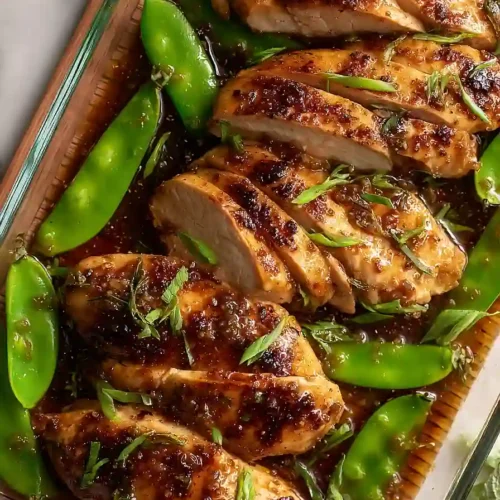
Glazed Thai Chicken Breast
Ingredients
For the chicken
- 4 medium chicken breasts
- 1/2 cup King Arthur all-purpose flour
- 2 1/2 tbsp olive oil
- 1/2 tsp salt
- 1/2 tsp freshly ground black pepper
For the sauce
- 3 tbsp fresh ginger, minced
- 2 tbsp garlic, minced
- 1/4 tsp red pepper flakes
- 4 tbsp Kikkoman soy sauce
- 1/3 cup brown sugar, firmly packed
- 1/2 cup vinegar
- 1 1/2 tsp fish sauce
- 1/2 tsp toasted sesame oil
For the garnish
- 1 cup sugar snap peas, trimmed and sliced diagonally
- 2 tbsp fresh cilantro, chopped
Instructions
- Pat the chicken breasts dry with paper towels—this ensures better browning. In a shallow bowl, combine the flour, salt, and pepper. Coat each chicken breast evenly on both sides with the flour mixture, shaking off any excess. Set aside on a plate. Mince the ginger and garlic, and trim and slice the sugar snap peas diagonally. Having everything prepped before you start cooking ensures the dish comes together smoothly without interruptions.
- Heat the olive oil in a large skillet over medium-high heat until shimmering, about 2 minutes. Working in batches if needed to avoid crowding, place the flour-coated chicken breasts in the pan and sear for 6-7 minutes on the first side until golden brown. Flip and cook the other side for another 6-7 minutes until the internal temperature reaches 165°F. Transfer the cooked chicken to a clean plate and set aside.
- In the same skillet with the rendered chicken drippings, add the minced ginger, garlic, and red pepper flakes over medium heat. Stir constantly for about 1-2 minutes until fragrant and the mixture begins to caramelize slightly—this develops deep, complex flavors. Add the soy sauce, brown sugar, vinegar, fish sauce, and sesame oil, stirring to combine. I like to taste the sauce at this point and adjust the balance; if it's too acidic, I add a touch more sugar, and if it needs more depth, a splash more soy sauce works perfectly.
- Bring the sauce to a gentle boil, then reduce the heat to medium-low and simmer for 5-7 minutes, stirring occasionally, until the sauce reduces by about one-third and thickens slightly. The sauce should coat the back of a spoon. Return the cooked chicken to the skillet, nestling it into the sauce, and simmer for another 2-3 minutes to allow the chicken to absorb some of the flavors and warm through.
- Add the sliced sugar snap peas to the skillet and toss gently to coat them in the sauce. Cook for 1-2 minutes just until the peas are heated through but still retain their crisp-tender texture. Transfer the chicken to serving plates, spoon the sauce and vegetables over the top, and garnish with fresh cilantro.