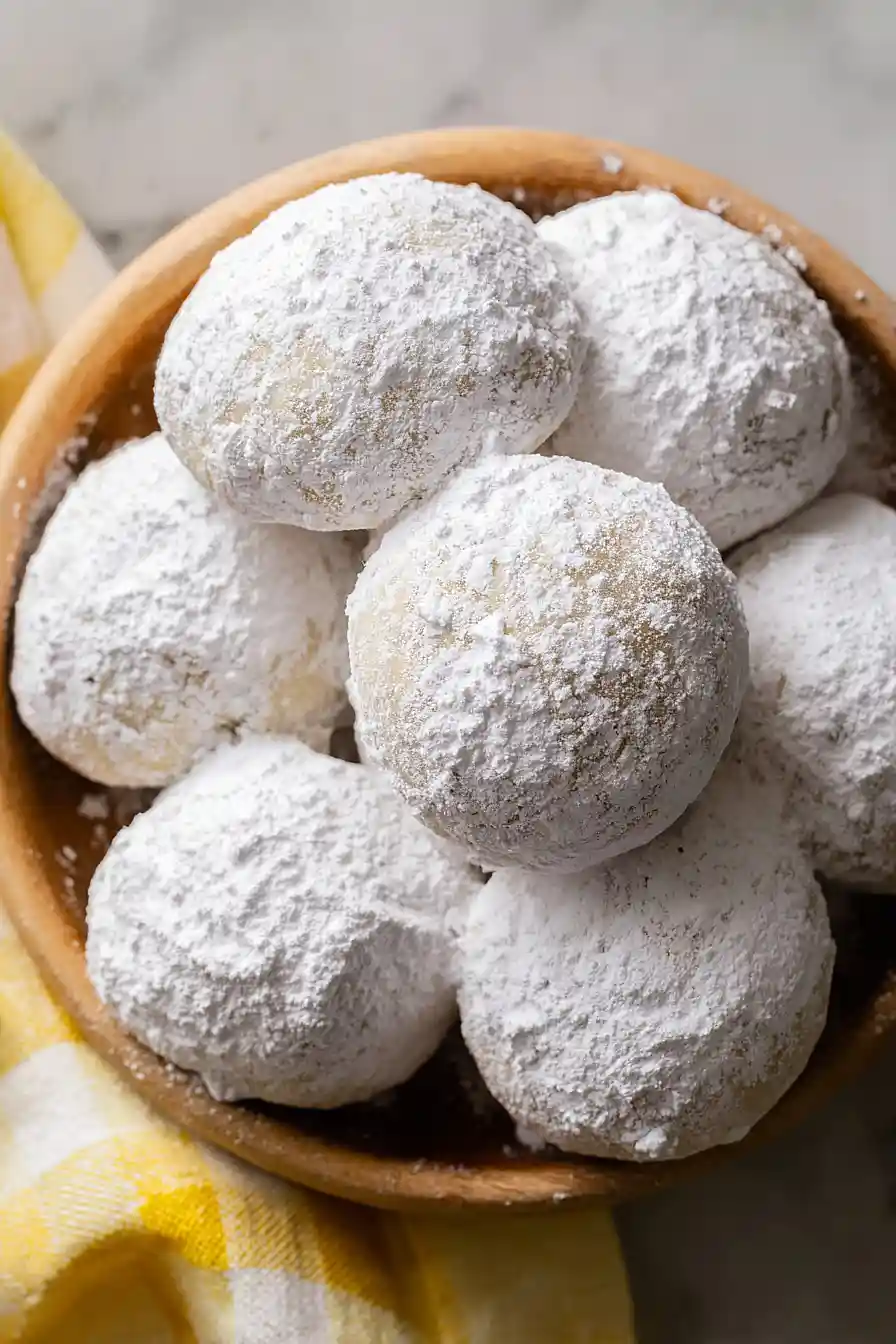
I’ve always had a soft spot for cookies that look fancy but are actually simple to make. Russian tea cakes fall right into that category. They’re buttery, they melt in your mouth, and they look like little snowballs sitting on your cookie plate. Plus, they make your kitchen smell like a bakery.
This almond version is one I reach for when I want something a little different from the usual pecan or walnut kind. The toasted almonds add a nice nutty flavor that pairs really well with the powdered sugar coating. And honestly? Rolling warm cookies in confectioner’s sugar is kind of therapeutic.
These cookies are great for cookie swaps, holiday platters, or just keeping in a tin for when you need something sweet with your afternoon tea. They store well, they travel well, and they disappear fast. Fair warning on that last part.
Why You’ll Love These Almond Russian Tea Cakes
- Quick and easy – These cookies come together in under 45 minutes, making them perfect for last-minute gatherings or when you need a sweet treat fast.
- Simple ingredients – You probably have most of these pantry staples on hand already, and the recipe uses just six basic ingredients.
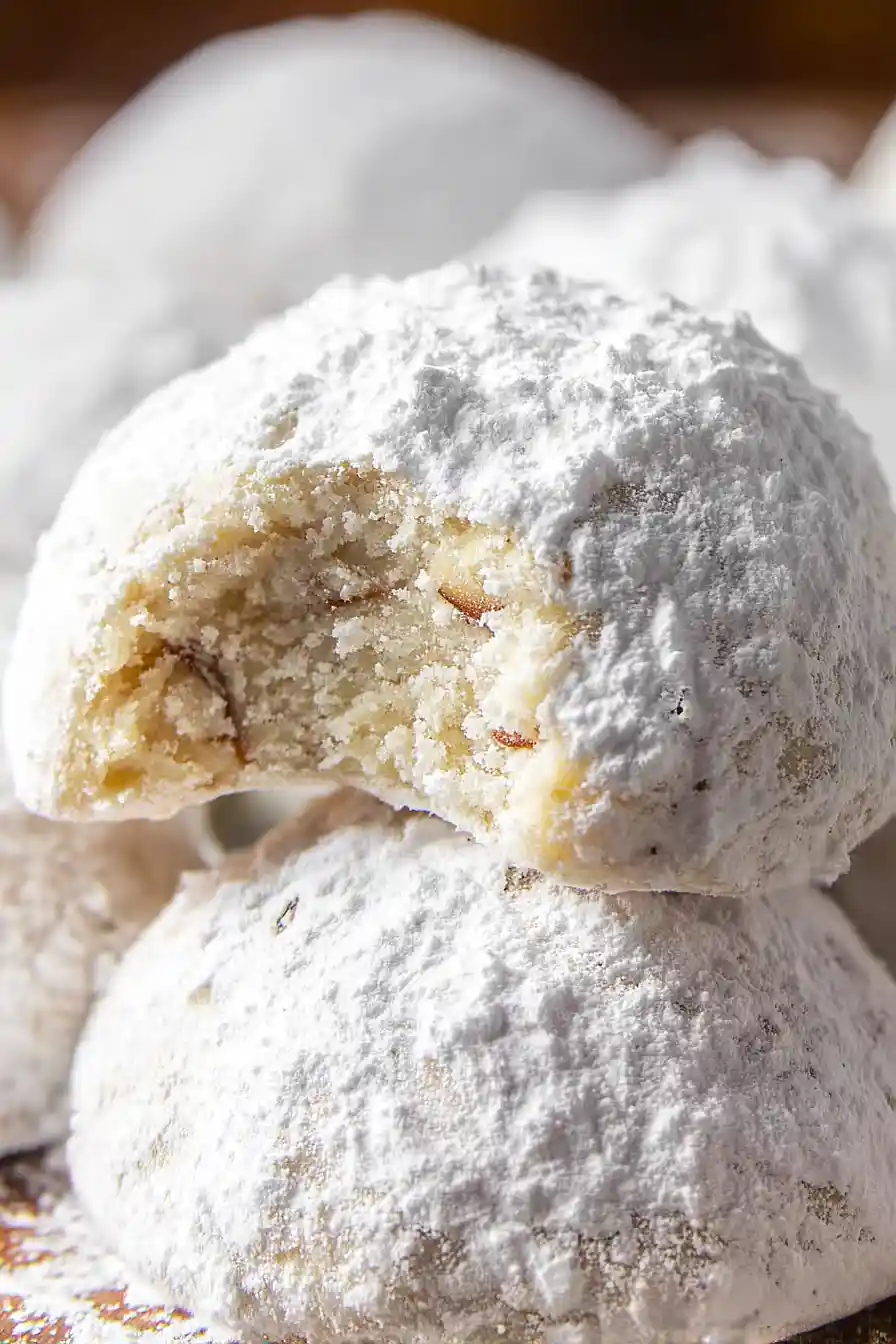
- Melt-in-your-mouth texture – The combination of butter and ground almonds creates a tender, crumbly cookie that practically dissolves on your tongue.
- Perfect for any occasion – These cookies work great for holiday cookie trays, afternoon tea, or casual get-togethers with friends and family.
- Make-ahead friendly – You can bake these in advance and store them for days, which makes holiday baking so much easier.
What Kind of Almonds Should I Use?
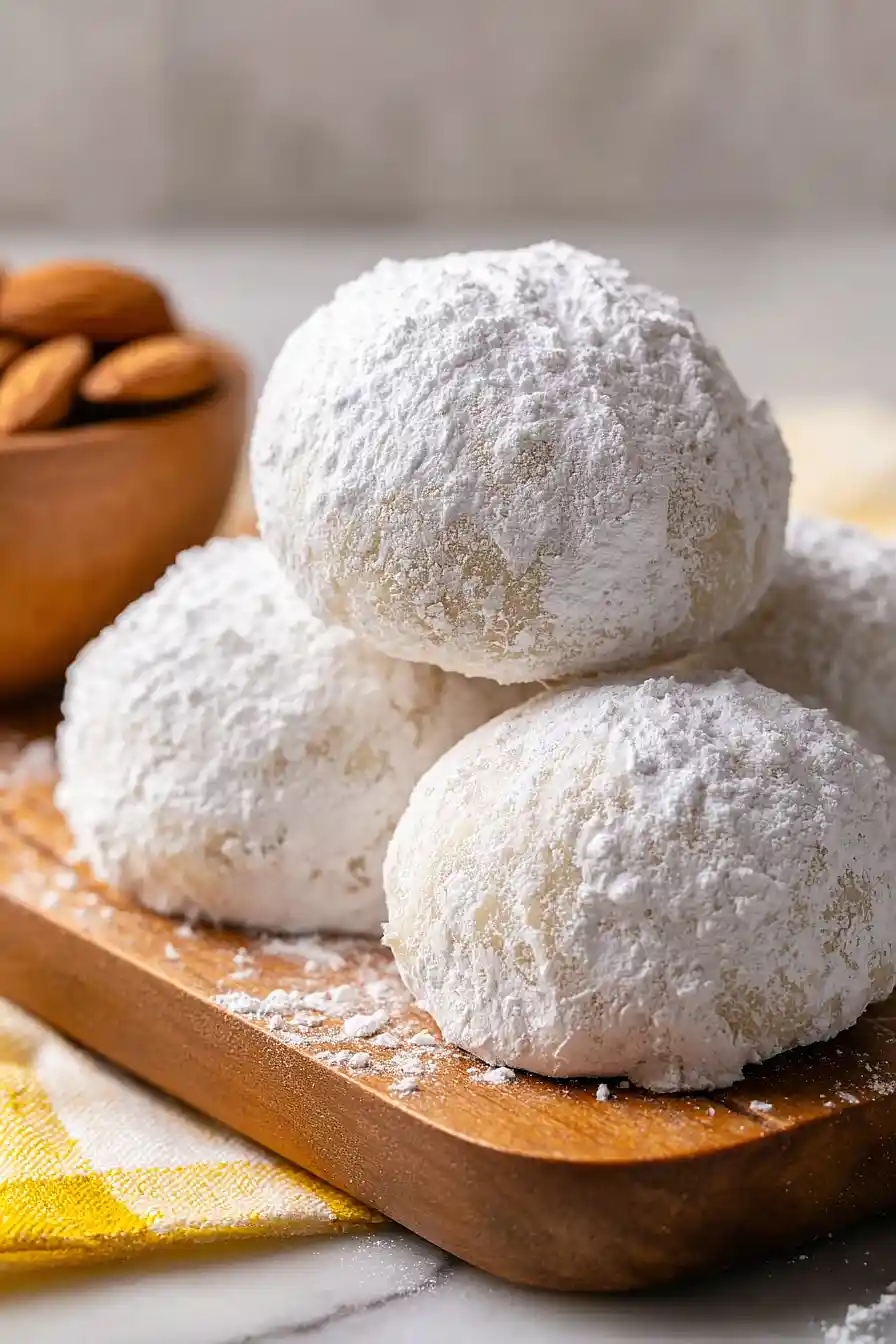
For this recipe, you’ll want to start with raw almonds that you’ll toast yourself – it makes a huge difference in flavor compared to using pre-toasted ones. You can use whole almonds, sliced almonds, or slivered almonds since you’ll be grinding them up anyway, so just grab whatever’s on sale or what you have in your pantry. Once they’re toasted and cooled, you’ll grind them in a food processor until they reach a fine, meal-like consistency, but be careful not to over-process them or you’ll end up with almond butter instead of the texture you need for these cookies.
Options for Substitutions
These cookies are pretty forgiving when it comes to swaps, so here’s what you can do:
- Unsalted butter: You can use salted butter if that’s what you have – just skip the added salt in the recipe to avoid making them too salty.
- Almond extract: Vanilla extract works great if you’re not a fan of almond flavor, or try half vanilla and half almond for a milder taste. Use the same amount.
- Ground toasted almonds: Pecans or walnuts make excellent substitutes and give you a different but equally tasty cookie. Toast them the same way you would the almonds before grinding. You could also use store-bought almond meal in a pinch, though toasting your own nuts gives better flavor.
- All-purpose flour: This is one ingredient you’ll want to stick with – the flour structure is important for these delicate cookies to hold their shape and get that melt-in-your-mouth texture.
- Confectioner’s sugar: Don’t substitute this with granulated sugar, as the powdery texture is what gives these cookies their signature snowy coating and tender crumb.
Watch Out for These Mistakes While Baking
The biggest mistake with Russian tea cakes is rolling them in powdered sugar while they’re still hot from the oven, which causes the sugar to melt and disappear – instead, let them cool for about 5 minutes until they’re warm but not scorching, then roll them once and again after they’ve completely cooled for that signature snowy coating.
Overbaking these delicate cookies will turn them dry and crumbly rather than tender and melt-in-your-mouth, so pull them from the oven when the bottoms are just lightly golden and the tops still look pale.
Another common error is skipping the step of toasting the almonds before grinding them, which really brings out their flavor and prevents the cookies from tasting flat or bland.
Finally, make sure your butter is truly at room temperature and not melted or too cold – it should be soft enough to leave an indent when you press it, which helps create that perfect crumbly texture.
What to Serve With Almond Russian Tea Cakes?
These buttery cookies are perfect alongside a hot cup of coffee or tea for an afternoon pick-me-up or after-dinner treat. I love serving them on a platter with other simple cookies like shortbread or biscotti when I have friends over, since they’re not too sweet and won’t overwhelm your taste buds. They also pair beautifully with a scoop of vanilla ice cream or some fresh berries if you want to dress them up for dessert. For a cozy winter evening, try them with hot chocolate or a glass of dessert wine like Moscato.
Storage Instructions
Store: These cookies stay fresh in an airtight container at room temperature for about a week. I like to add a sheet of parchment paper between layers to keep them from sticking together. They’re perfect for making ahead when you have guests coming over!
Freeze: Russian tea cakes freeze really well, which makes them great for holiday baking. You can freeze the baked cookies in a freezer-safe container for up to 3 months. Just let them thaw at room temperature for about 30 minutes before serving, and give them a fresh dusting of confectioner’s sugar if needed.
| Preparation Time | 20-30 minutes |
| Cooking Time | 10-15 minutes |
| Total Time | 30-45 minutes |
| Level of Difficulty | Easy |
Estimated Nutrition
Estimated nutrition for the whole recipe (without optional ingredients):
- Calories: 2700-2900
- Protein: 30-35 g
- Fat: 190-200 g
- Carbohydrates: 250-270 g
Ingredients
- 1 tsp almond extract (for best flavor and aroma)
- 2 cups all-purpose flour (I use King Arthur all-purpose flour)
- 1/4 tsp salt
- 1 cup unsalted butter (softened to room temperature, about 70°F)
- 1 cup ground toasted almonds (finely ground, about 1/16-inch texture)
- 6 tbsp confectioner’s sugar (sifted to remove lumps)
Step 1: Toast and Grind Almonds
- 1 cup whole almonds
Preheat your oven to 350°F.
Spread whole almonds on a baking sheet and toast for about 15 minutes, shaking the pan halfway through to ensure even browning.
The almonds should be fragrant and lightly golden.
Once toasted, let them cool completely to room temperature—this is important because warm almonds release oils and become harder to grind finely.
Once cooled, pulse them in a food processor until they reach a fine, flour-like consistency (about 1/16-inch texture).
Measure out 1 cup of the ground almonds and set aside.
Step 2: Cream Butter and Sugar
- 1 cup unsalted butter
- 6 tbsp confectioner’s sugar
In a large mixing bowl, beat the softened butter and sifted confectioner’s sugar together on medium speed for about 2-3 minutes until the mixture is pale, fluffy, and creamy.
This creaming process incorporates air into the dough, which helps the cookies have a tender, delicate crumb.
Stop to scrape down the bowl halfway through to ensure everything is evenly combined.
Step 3: Add Almond Extract and Dry Ingredients
- 1 tsp almond extract
- butter-sugar mixture from Step 2
- 2 cups all-purpose flour
- 1/4 tsp salt
- ground toasted almonds from Step 1
With the mixer still running on low speed, add the almond extract to the butter-sugar mixture from Step 2 and beat until fully incorporated.
In a separate bowl, whisk together the flour and salt.
Add the flour mixture and ground almonds from Step 1 to the wet ingredients, mixing on low speed just until the dough comes together.
I like to finish this last bit by hand with a wooden spoon or spatula—this prevents overmixing, which can make the cookies tough.
The dough should look like coarse, moist sand that holds together when squeezed.
Step 4: Shape and Bake Cookies
- cookie dough from Step 3
Roll the dough from Step 3 into 1-inch balls, working quickly so the dough doesn’t warm up too much (this helps the cookies stay tender).
Place the balls on a parchment-lined baking sheet about 2 inches apart to allow for slight spreading.
Bake at 350°F for 10-11 minutes—the cookies should be set but still pale on top with very slight golden edges.
Don’t overbake; these cookies continue cooking on the hot pan after you remove them from the oven.
Step 5: Sugar Coat the Cookies
- baked cookies from Step 4
- confectioner’s sugar for coating
Let the baked cookies cool on the baking sheet for about 2-3 minutes until they’re still warm but firm enough to handle.
While they’re still warm, roll them in powdered sugar, coating them generously on all sides—the warmth helps the sugar stick.
Let them cool completely on a wire rack, then roll them in powdered sugar one more time for that signature thick, snowy coating that Russian tea cakes are known for.
I find the double-coating gives the best visual appeal and texture contrast between the tender cookie and the sweet sugar shell.

Crumbly Almond Russian Tea Cakes
Ingredients
- 1 tsp almond extract (for best flavor and aroma)
- 2 cups all-purpose flour (I use King Arthur all-purpose flour)
- 1/4 tsp salt
- 1 cup unsalted butter (softened to room temperature, about 70°F)
- 1 cup ground toasted almonds (finely ground, about 1/16-inch texture)
- 6 tbsp confectioner's sugar (sifted to remove lumps)
Instructions
- Preheat your oven to 350°F. Spread whole almonds on a baking sheet and toast for about 15 minutes, shaking the pan halfway through to ensure even browning. The almonds should be fragrant and lightly golden. Once toasted, let them cool completely to room temperature—this is important because warm almonds release oils and become harder to grind finely. Once cooled, pulse them in a food processor until they reach a fine, flour-like consistency (about 1/16-inch texture). Measure out 1 cup of the ground almonds and set aside.
- In a large mixing bowl, beat the softened butter and sifted confectioner's sugar together on medium speed for about 2-3 minutes until the mixture is pale, fluffy, and creamy. This creaming process incorporates air into the dough, which helps the cookies have a tender, delicate crumb. Stop to scrape down the bowl halfway through to ensure everything is evenly combined.
- With the mixer still running on low speed, add the almond extract to the butter-sugar mixture from Step 2 and beat until fully incorporated. In a separate bowl, whisk together the flour and salt. Add the flour mixture and ground almonds from Step 1 to the wet ingredients, mixing on low speed just until the dough comes together. I like to finish this last bit by hand with a wooden spoon or spatula—this prevents overmixing, which can make the cookies tough. The dough should look like coarse, moist sand that holds together when squeezed.
- Roll the dough from Step 3 into 1-inch balls, working quickly so the dough doesn't warm up too much (this helps the cookies stay tender). Place the balls on a parchment-lined baking sheet about 2 inches apart to allow for slight spreading. Bake at 350°F for 10-11 minutes—the cookies should be set but still pale on top with very slight golden edges. Don't overbake; these cookies continue cooking on the hot pan after you remove them from the oven.
- Let the baked cookies cool on the baking sheet for about 2-3 minutes until they're still warm but firm enough to handle. While they're still warm, roll them in powdered sugar, coating them generously on all sides—the warmth helps the sugar stick. Let them cool completely on a wire rack, then roll them in powdered sugar one more time for that signature thick, snowy coating that Russian tea cakes are known for. I find the double-coating gives the best visual appeal and texture contrast between the tender cookie and the sweet sugar shell.