I didn’t grow up eating sauerkraut, so pork and sauerkraut goulash wasn’t on my radar until I married into a family that made it every winter. The first time I tried it, I wasn’t sure what to expect—the smell of sauerkraut can be a little intimidating if you’re not used to it.
But here’s the thing: when you combine tangy sauerkraut with tender pork, smoky bacon, and the warm spice of Hungarian paprika, something really good happens. It’s hearty, it’s comforting, and it fills your house with the kind of smell that makes everyone wander into the kitchen asking when dinner will be ready. Plus, it’s one of those one-pot meals that gets better as it simmers, which means less work for you and more flavor for everyone else.

Why You’ll Love This Pork and Sauerkraut Goulash
- Rich, comforting flavors – The combination of tender pork, tangy sauerkraut, and smoky bacon creates a deeply satisfying dish that warms you from the inside out.
- One-pot meal – Everything cooks together in a single pot, which means less cleanup and more time to relax after dinner.
- Budget-friendly ingredients – Pork shoulder and sauerkraut are affordable staples that stretch your dollar while delivering big flavor.
- Perfect for meal prep – This goulash tastes even better the next day, making it ideal for leftovers or preparing ahead for busy weeknights.
- Authentic Eastern European comfort – With traditional spices like caraway and Hungarian paprika, you get a taste of classic home cooking without needing fancy ingredients or techniques.
What Kind of Pork Shoulder Should I Use?
For this goulash, you’ll want a nice marbled pork shoulder since the fat helps keep the meat tender during the long cooking process. You can usually find pork shoulder labeled as “pork butt” or “Boston butt” at the grocery store, and either boneless or bone-in will work fine – just remove the bone before cutting into cubes. If pork shoulder isn’t available, pork collar or even country-style ribs can work as substitutes, though shoulder really gives you the best flavor and texture. When you’re cutting it into cubes, aim for roughly 1 to 1.5-inch pieces so they cook evenly and stay nice and juicy throughout the braising process.
Options for Substitutions
This goulash is pretty forgiving when it comes to swapping ingredients:
- Pork shoulder: If you can’t find pork shoulder, pork butt or pork loin work well too. Just keep in mind that leaner cuts like pork loin might dry out a bit, so check for doneness earlier.
- Sauerkraut: Don’t skip the sauerkraut – it’s what makes this dish special. However, if yours is super sour, rinse it under cold water and drain well before using to mellow out the tang.
- Smoked bacon: Regular bacon works just fine if you don’t have smoked on hand. You can also use pancetta or skip it entirely and add a bit more oil, though you’ll lose some of that smoky depth.
- Hungarian paprika: Hungarian paprika gives this dish its authentic flavor, but if you only have regular paprika, go ahead and use it. The taste will be a bit different but still good.
- Caraway powder: If you only have caraway seeds, use about 1½ teaspoons and crush them lightly with the back of a spoon before adding. No caraway at all? You can leave it out, though it does add a traditional Eastern European flavor.
- Sunflower oil: Any neutral cooking oil like vegetable or canola oil works perfectly here.
Watch Out for These Mistakes While Cooking
The biggest mistake when making pork and sauerkraut goulash is skipping the step of rinsing your sauerkraut under cold water, which can leave your dish overly salty and sour – give it a good rinse and squeeze out the excess liquid for a more balanced flavor.
Another common error is adding the sauerkraut too early in the cooking process, as it needs less time to cook than the pork and can become mushy if overcooked, so wait until your pork is halfway tender before stirring it in.
Don’t rush the initial browning of the pork after adding it to the onions – letting it develop a nice sear for those 4-5 minutes adds depth to the overall flavor of the dish.
Finally, resist the urge to add all the salt at the beginning since both the bacon and sauerkraut already contain salt, and you can always adjust the seasoning at the end once everything has cooked together.

What to Serve With Pork and Sauerkraut Goulash?
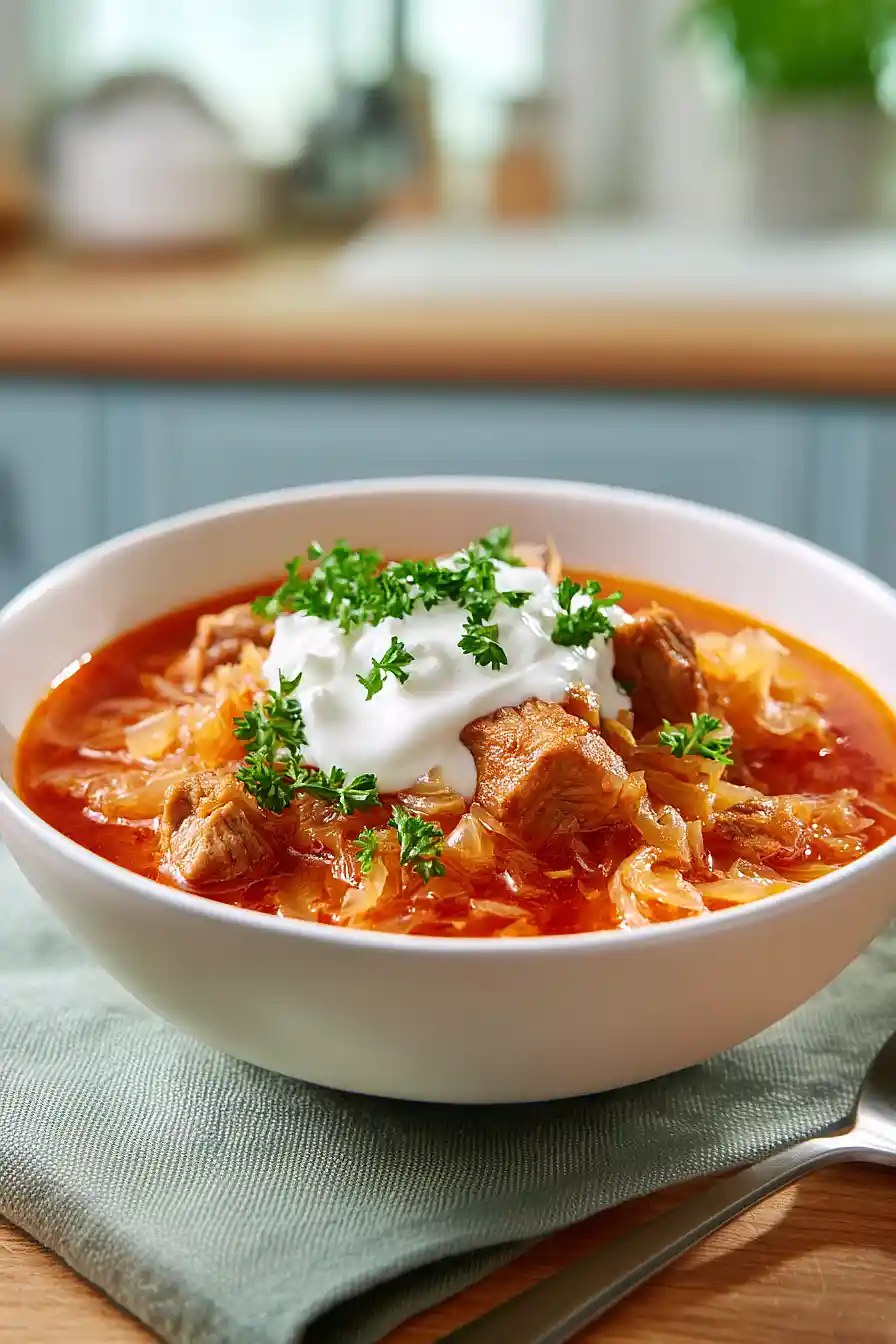
This hearty goulash is perfect with a side of buttered egg noodles or spätzle, which are great for soaking up all that rich, tangy sauce. You could also serve it over mashed potatoes or with crusty rye bread on the side for dipping. A dollop of sour cream on top adds a nice cool contrast to the warm, savory flavors of the pork and sauerkraut. For a complete meal, I like adding a simple cucumber salad dressed with vinegar and dill, which cuts through the richness and adds a refreshing crunch.
Storage Instructions
Store: This goulash actually tastes even better the next day after all the flavors have had time to mingle. Keep it in an airtight container in the fridge for up to 4 days. The sauerkraut and pork hold up really well, making this a great make-ahead meal for busy weeknights.
Freeze: Pork and sauerkraut goulash freezes like a dream. Let it cool completely, then portion it into freezer-safe containers or bags and freeze for up to 3 months. I like to freeze it in individual servings so I can grab just what I need for lunch.
Reheat: Warm it up gently on the stovetop over medium-low heat, stirring occasionally and adding a splash of water if it seems too thick. You can also microwave it, but I find the stovetop gives you better control and keeps the pork tender.
| Preparation Time | 20-30 minutes |
| Cooking Time | 50-70 minutes |
| Total Time | 70-100 minutes |
| Level of Difficulty | Medium |
| Servings | 6 servings |
Estimated Nutrition
Estimated nutrition for the whole recipe (without optional ingredients):
- Calories: 2200-2500
- Protein: 140-160 g
- Fat: 160-180 g
- Carbohydrates: 55-70 g
Ingredients
For the goulash:
- 4.25 cups warm water
- 1 tsp paprika cream
- 2 tsp Hungarian paprika
- 1.75 lb pork shoulder (cut into 1-inch cubes)
- 1 tsp caraway powder (freshly ground preferred for more flavor)
- 1 tbsp tomato paste (I use San Marzano)
- 3.4 fl oz sunflower oil
- 2 bay leaves
- 3.5 oz smoked bacon (diced into 1/4-inch pieces)
- 1.5 tsp sea salt
- 2 medium onions (diced into 1/2-inch pieces)
- 1 tsp ground pepper
For the sauerkraut:
- 2.2 lb jarred sauerkraut (rinsed and drained for less tangy flavor)
Step 1: Prepare Mise en Place
- 1.75 lb pork shoulder
- 3.5 oz smoked bacon
- 2 medium onions
- 2.2 lb jarred sauerkraut
- 2 tsp Hungarian paprika
- 1 tsp caraway powder
- 1 tsp ground pepper
- 1 tbsp tomato paste
- 1 tsp paprika cream
- 2 bay leaves
- 1.5 tsp sea salt
- 4.25 cups warm water
Cut the pork shoulder into 1-inch cubes and set aside.
Dice the bacon into 1/4-inch pieces, dice the onions into 1/2-inch pieces, and place them in separate bowls.
Rinse the sauerkraut thoroughly under cold water and drain well—this removes excess brine and mellows the tanginess.
Measure out all spices (paprika, Hungarian paprika, caraway powder, ground pepper), tomato paste, paprika cream, bay leaves, and salt into small bowls.
Heat the warm water in a kettle or pot and keep it ready for adding to the goulash.
Step 2: Render Bacon and Build Aromatic Base
- 3.4 fl oz sunflower oil
- 3.5 oz smoked bacon
- 2 medium onions
Heat the sunflower oil in a large heavy-bottomed pot or Dutch oven over medium-high heat.
Add the diced bacon and cook for 2 minutes, stirring occasionally, until the fat begins to render and the bacon starts to crisp slightly.
Add the diced onions and sauté for 3-4 minutes, stirring frequently, until the onions become translucent and begin to soften.
The bacon fat will help develop deeper flavor in the onions, creating an aromatic base for the entire dish.
Step 3: Add Seasonings and Tomato Paste
- 1 tsp caraway powder
- 2 bay leaves
- 1 tsp paprika cream
- 1 tbsp tomato paste
- 1 tsp ground pepper
- 2 tsp Hungarian paprika
Add the caraway powder, bay leaves, paprika cream, tomato paste, ground pepper, and Hungarian paprika to the aromatic base.
Stir continuously for 1-2 minutes to bloom the spices and allow the tomato paste to caramelize slightly in the hot fat.
This technique develops deeper, more complex flavors than simply adding them all at once.
I find that blooming these spices in the fat releases their essential oils and creates a richer foundation for the goulash.
Step 4: Sear the Pork and Begin Braising
- 1.75 lb pork shoulder
- spice and aromatic mixture from Step 3
- 4.25 cups warm water
Add the cubed pork to the seasoned aromatic base and stir well to coat all pieces with the spice mixture.
Cook for 4-5 minutes, stirring occasionally, until the pork is lightly browned on the outside (the goal is light browning, not deep searing, as goulash develops flavor through long, gentle cooking rather than a hard sear).
Pour in the warm water until it just covers the pork.
Bring the liquid to a gentle simmer, then reduce heat to medium-low.
Cook uncovered for 30-40 minutes, stirring occasionally, until the pork is about halfway cooked—it should be tender but still hold its shape.
Step 5: Add Sauerkraut and Finish Braising
- 2.2 lb jarred sauerkraut
- pork and braising liquid from Step 4
- warm water as needed
Add the rinsed and drained sauerkraut to the pot, stirring gently to combine it with the pork and braising liquid.
The sauerkraut will add acidity and depth, balancing the rich, savory flavors.
Pour in additional warm water as needed—the mixture should have enough liquid to braise gently without being soupy.
Continue cooking on medium-low heat for 20-30 minutes until the pork is completely tender and easily breaks apart with a spoon.
I like to taste the broth at this point and adjust the seasoning with salt and pepper if needed—the sauerkraut contributes quite a bit of salt, so taste carefully before adding more.
Step 6: Finish and Serve
- completed goulash from Step 5
Taste the goulash and season with additional salt and ground pepper as needed.
The flavors should be savory, slightly smoky from the paprika, and balanced with the tangy notes from the sauerkraut.
Ladle the goulash into bowls and serve piping hot with crusty bread, a dollop of sour cream, and a sprinkle of fresh chili (or chili flakes) on top for added heat and freshness.

Classic Pork and Sauerkraut Goulash
Ingredients
For the goulash:
- 4.25 cups warm water
- 1 tsp paprika cream
- 2 tsp Hungarian paprika
- 1.75 lb pork shoulder (cut into 1-inch cubes)
- 1 tsp caraway powder (freshly ground preferred for more flavor)
- 1 tbsp tomato paste (I use San Marzano)
- 3.4 fl oz sunflower oil
- 2 bay leaves
- 3.5 oz smoked bacon (diced into 1/4-inch pieces)
- 1.5 tsp sea salt
- 2 medium onions (diced into 1/2-inch pieces)
- 1 tsp ground pepper
For the sauerkraut:
- 2.2 lb jarred sauerkraut (rinsed and drained for less tangy flavor)
Instructions
- Cut the pork shoulder into 1-inch cubes and set aside. Dice the bacon into 1/4-inch pieces, dice the onions into 1/2-inch pieces, and place them in separate bowls. Rinse the sauerkraut thoroughly under cold water and drain well—this removes excess brine and mellows the tanginess. Measure out all spices (paprika, Hungarian paprika, caraway powder, ground pepper), tomato paste, paprika cream, bay leaves, and salt into small bowls. Heat the warm water in a kettle or pot and keep it ready for adding to the goulash.
- Heat the sunflower oil in a large heavy-bottomed pot or Dutch oven over medium-high heat. Add the diced bacon and cook for 2 minutes, stirring occasionally, until the fat begins to render and the bacon starts to crisp slightly. Add the diced onions and sauté for 3-4 minutes, stirring frequently, until the onions become translucent and begin to soften. The bacon fat will help develop deeper flavor in the onions, creating an aromatic base for the entire dish.
- Add the caraway powder, bay leaves, paprika cream, tomato paste, ground pepper, and Hungarian paprika to the aromatic base. Stir continuously for 1-2 minutes to bloom the spices and allow the tomato paste to caramelize slightly in the hot fat. This technique develops deeper, more complex flavors than simply adding them all at once. I find that blooming these spices in the fat releases their essential oils and creates a richer foundation for the goulash.
- Add the cubed pork to the seasoned aromatic base and stir well to coat all pieces with the spice mixture. Cook for 4-5 minutes, stirring occasionally, until the pork is lightly browned on the outside (the goal is light browning, not deep searing, as goulash develops flavor through long, gentle cooking rather than a hard sear). Pour in the warm water until it just covers the pork. Bring the liquid to a gentle simmer, then reduce heat to medium-low. Cook uncovered for 30-40 minutes, stirring occasionally, until the pork is about halfway cooked—it should be tender but still hold its shape.
- Add the rinsed and drained sauerkraut to the pot, stirring gently to combine it with the pork and braising liquid. The sauerkraut will add acidity and depth, balancing the rich, savory flavors. Pour in additional warm water as needed—the mixture should have enough liquid to braise gently without being soupy. Continue cooking on medium-low heat for 20-30 minutes until the pork is completely tender and easily breaks apart with a spoon. I like to taste the broth at this point and adjust the seasoning with salt and pepper if needed—the sauerkraut contributes quite a bit of salt, so taste carefully before adding more.
- Taste the goulash and season with additional salt and ground pepper as needed. The flavors should be savory, slightly smoky from the paprika, and balanced with the tangy notes from the sauerkraut. Ladle the goulash into bowls and serve piping hot with crusty bread, a dollop of sour cream, and a sprinkle of fresh chili (or chili flakes) on top for added heat and freshness.

