Getting a classic St. Patrick’s Day dinner on the table while juggling work, family, and everything else on your plate is not always easy, especially when most recipes ask you to babysit a pot on the stove for hours.
That’s where this baked corned beef and cabbage recipe comes in handy. By roasting everything together in the oven, you get all the traditional flavors of this Irish-American favorite with way less hands-on time, and the best part is that the vegetables cook right alongside the meat, so everything’s ready at once.
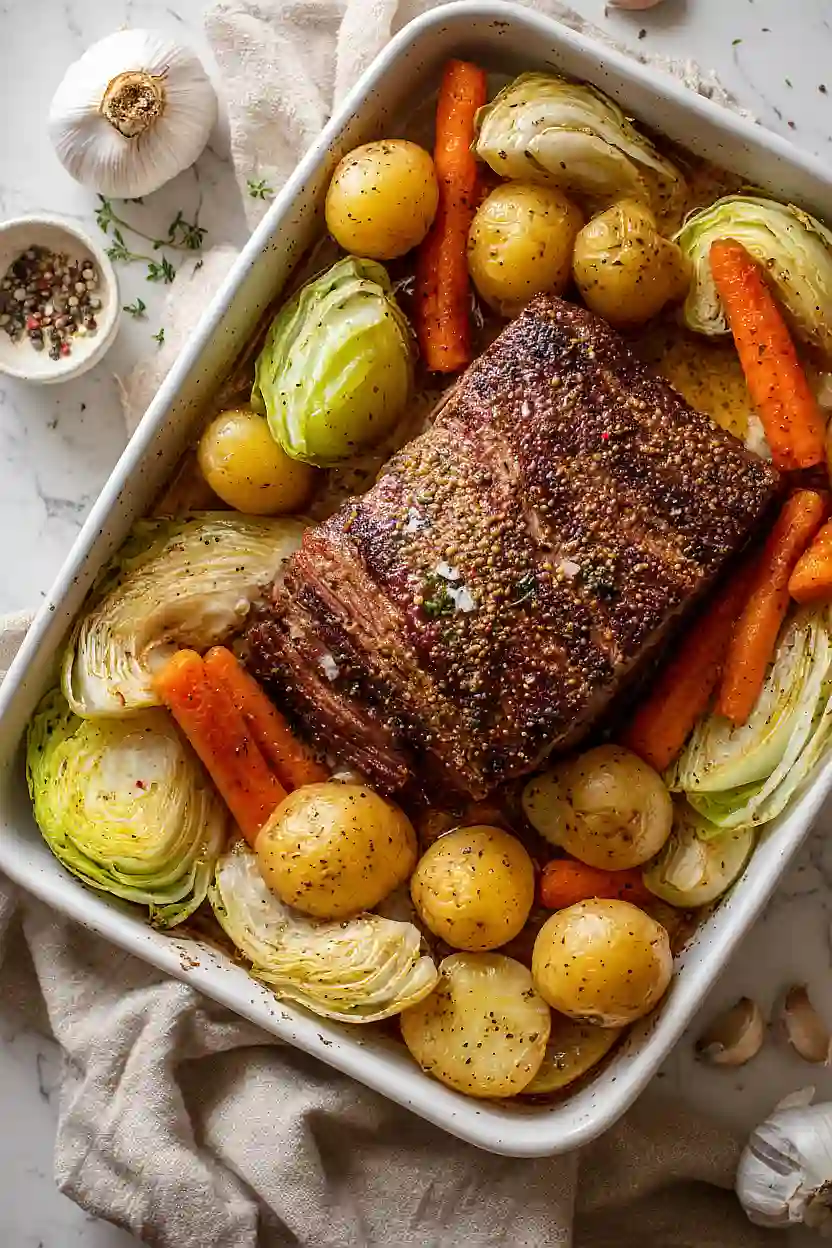
Why You’ll Love This Baked Corned Beef and Cabbage
- One-pan meal – Everything bakes together in the oven, so you get tender corned beef and perfectly cooked vegetables without juggling multiple pots on the stove.
- Simple ingredients – This recipe uses straightforward, affordable ingredients you can easily find at any grocery store, with no fancy or hard-to-find items required.
- Perfect for feeding a crowd – With 4 pounds of corned beef and plenty of hearty vegetables, this dish easily serves a large family or group of friends with leftovers to spare.
- Mostly hands-off cooking – Once you get everything in the oven, you can relax for a few hours while it does its thing, making it ideal for busy days or when you’re entertaining.
- Classic comfort food – The sweet and tangy mustard-brown sugar glaze takes this traditional dish to the next level without any complicated techniques.
The Best Corned Beef for This Recipe
You’ll find two main cuts of corned beef at the grocery store: the flat cut and the point cut.
The flat cut is leaner and slices more evenly, making it the go-to choice for most home cooks. The point cut has more marbling and fat, which means it’s juicier but a bit harder to slice neatly.
Either cut will work great for this recipe since we’re baking it low and slow, which helps tenderize the meat regardless of which one you pick.
Most corned beef comes pre-brined in a vacuum-sealed package with a spice packet included. Look for one that feels firm and has a good deep red color without any grey spots.
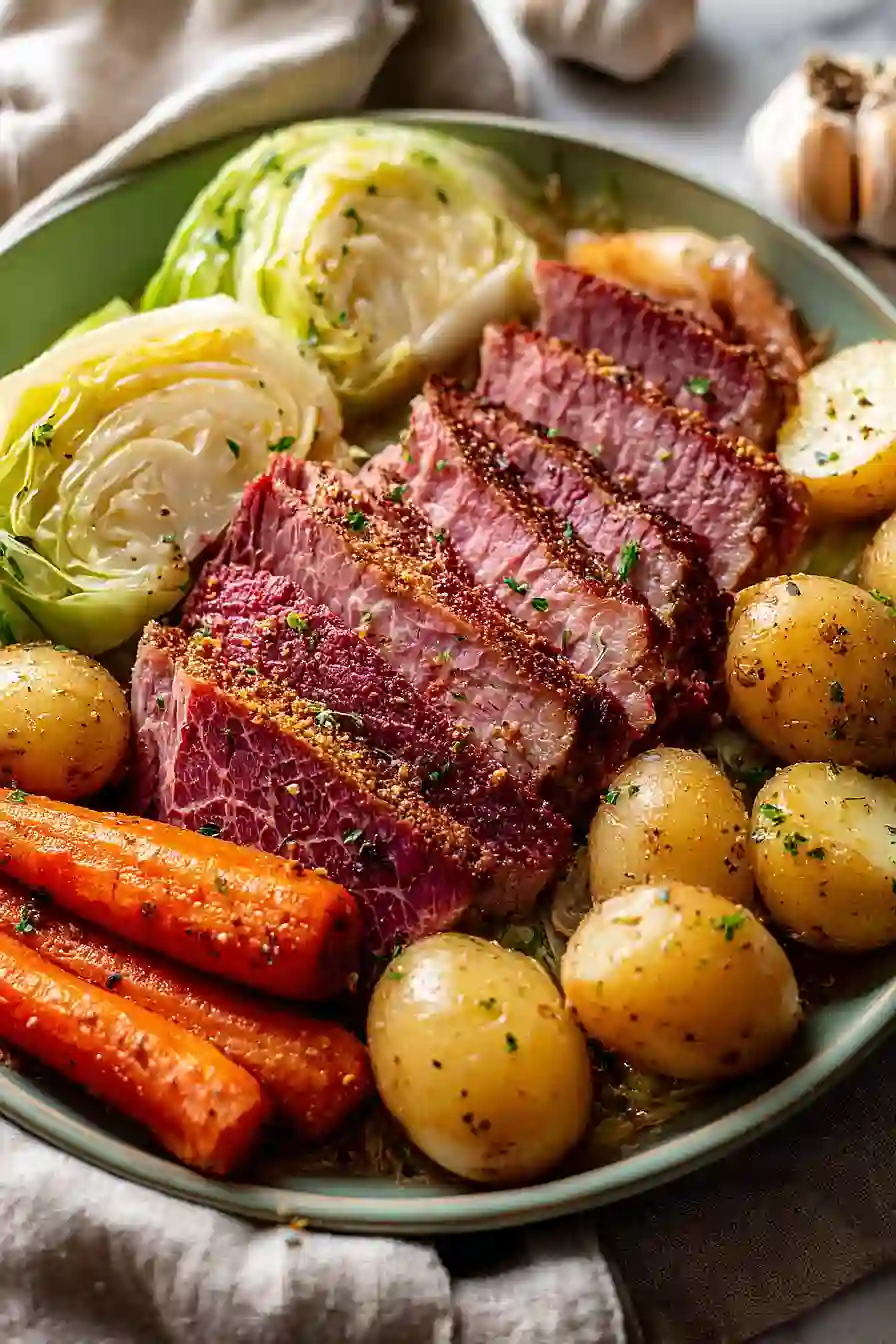
Easy Ingredient Swaps
Don’t have everything on the list? No problem. Here are some simple substitutions that work well in this recipe:
- Mustard: Yellow mustard, dijon, or whole grain mustard all work great here. Pick whichever you have in your fridge.
- Brown sugar: You can use honey or maple syrup instead – just use the same amount. White sugar mixed with a tiny bit of molasses works too.
- Cabbage: Green cabbage is traditional, but savoy cabbage works nicely if that’s what you have. Just avoid red cabbage as it can turn everything an odd color.
- Potatoes: Any potato variety works here – russets, red potatoes, or Yukon golds are all good choices. Just cut them into similar-sized pieces so they cook evenly.
- Carrots: Baby carrots are a convenient swap and don’t need any chopping. You can also use parsnips for half the carrots if you want to mix things up.
Mistakes That Can Ruin Your Corned Beef
Not using enough liquid is one of the easiest ways to end up with dry, tough meat. Make sure the water comes at least halfway up the sides of the brisket and top it off if needed throughout cooking.
Always slice against the grain. Cutting with it leads to chewy, stringy pieces, so take a moment to identify the muscle fibers and cut perpendicular to them.
Do not skip the resting period. Letting the brisket sit for 10 to 15 minutes after it comes out of the oven gives the juices time to redistribute for a moist, flavorful result.
Keep your vegetables in large chunks, about 2 inches, so they hold up during the long bake without turning mushy.
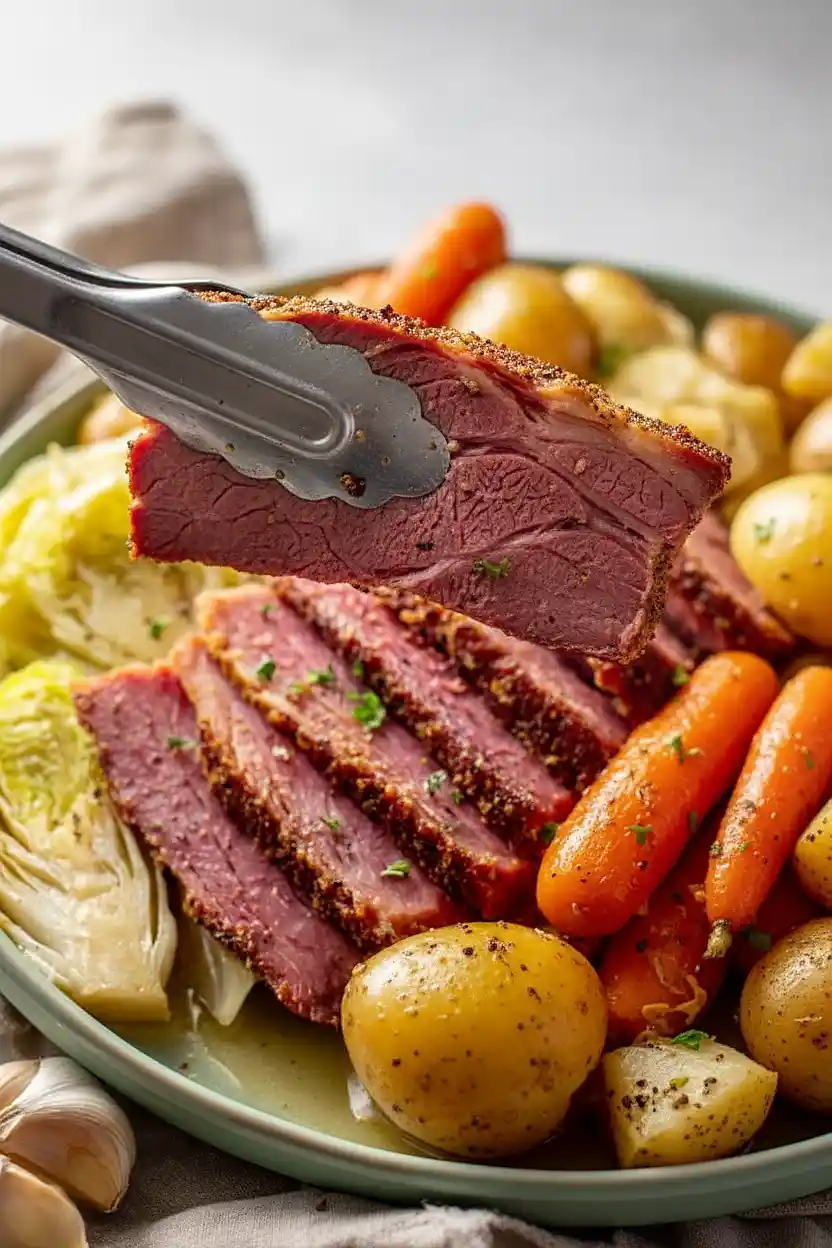
Great Sides for Corned Beef and Cabbage
This dish already has meat, veggies, and potatoes all baked together, but a few simple additions can round it out nicely:
- Crusty rye bread or Irish soda bread
- Whole grain mustard or horseradish sauce
- Cucumber salad with dill and vinegar
Keeping Leftovers Fresh
Store: Leftover corned beef and cabbage keeps really well in the fridge. Store everything in an airtight container for up to 4 days. I like to keep the meat and veggies separate if I have room, since they reheat better that way.
Freeze: The corned beef freezes great for up to 3 months. I usually slice it first and wrap portions in foil, then put them in a freezer bag. The cabbage and potatoes don’t freeze as well since they can get mushy, but the carrots are fine to freeze if you want.
Reheat: Warm up your leftovers in the oven at 325°F covered with foil, or heat individual portions in the microwave. Add a splash of water or broth to keep everything moist. The corned beef is also delicious cold for sandwiches the next day!
| Preparation Time | 10-15 minutes |
| Cooking Time | 150-180 minutes |
| Total Time | 160-195 minutes |
| Level of Difficulty | Medium |
| Servings | 8 servings |
Estimated Nutrition
Estimated nutrition for the whole recipe (without optional ingredients):
- Calories: 4150-4450
- Protein: 310-340 g
- Fat: 210-230 g
- Carbohydrates: 240-265 g
Ingredients
For the brisket rub:
- 4 tbsp mustard (I use Grey Poupon Dijon for a sharp tang)
- 4 tbsp brown sugar
- 1/2 tsp black pepper
For the roast and vegetables:
- 4 lb corned beef brisket (I like using Snake River Farms for consistent quality)
- 1 cabbage (cut into 2-inch thick wedges)
- 1 onion
- 2 lb carrots (cut into 3-inch chunks)
- 1.5 lb potatoes (cut into 2-inch pieces)
- 12 garlic cloves
- 4 cups water
- 1 bay leaf
Step 1: Prepare the Mise en Place and Season the Corned Beef
- 4 tbsp mustard
- 4 tbsp brown sugar
- 1/2 tsp black pepper
- 4 lb corned beef brisket
- 1 cabbage, cut into 2-inch wedges
- 1 onion, halved
- 2 lb carrots, cut into 3-inch chunks
- 1.5 lb potatoes, cut into 2-inch pieces
- 12 garlic cloves, peeled
While your oven preheats to 325°F, prepare all vegetables: cut cabbage into 2-inch thick wedges, cut carrots into 3-inch chunks, cut potatoes into 2-inch pieces, peel garlic cloves, and halve the onion.
In a small bowl, combine mustard, brown sugar, and black pepper to create a glaze.
Place the corned beef brisket in a large roasting pan (at least 9×13 inches or similar) and rub the mustard mixture evenly over all sides of the meat, pressing it gently so it adheres well.
This flavor-building step creates a caramelized crust that keeps the meat moist during cooking.
Step 2: Braise the Corned Beef Low and Slow
- 4 cups water
- 1 bay leaf
- seasoned corned beef and onion from Step 1
Pour 4 cups of water into the roasting pan around (not over) the seasoned meat, and add the bay leaf and halved onion.
Cover the pan tightly with aluminum foil to trap steam and create a braising environment.
Place in the preheated 325°F oven and braise for 2 hours—this low-and-slow cooking breaks down the tough collagen in the brisket, making it tender and flavorful.
The meat is done when it’s fork-tender but not falling apart.
Step 3: Add Vegetables and Finish in the Oven
- prepared vegetables from Step 1
- braised corned beef and pan juices from Step 2
Remove the pan from the oven and carefully arrange the prepared vegetables (cabbage, carrots, potatoes, and garlic cloves) around the corned beef, nestling them into the braising liquid.
Pour the pan juices over the vegetables to ensure they cook evenly and absorb the savory flavors.
Increase the oven temperature to 350°F, cover the pan with foil again, and bake for 30 minutes.
I like to arrange the potatoes closer to the meat where it’s warmest, since they take longer to cook than the cabbage.
After 30 minutes, remove the foil and bake uncovered for another 30-45 minutes, allowing the vegetables to caramelize slightly and the liquid to reduce into a rich, concentrated broth.
Step 4: Slice and Serve
- corned beef and roasted vegetables from Step 3
Remove the pan from the oven and let it rest for 5 minutes—this allows the meat fibers to relax, keeping the slices juicy rather than dry.
Carefully slice the corned beef against the grain into 1/4-inch thick pieces.
Arrange the sliced meat on a serving platter and surround it with the roasted vegetables.
Pour the remaining pan juices (now a concentrated, flavorful broth) over everything before serving.
For the most impressive presentation, arrange the vegetables by type for visual appeal.