Oatmeal raisin cookies get a bad reputation, but I think that’s completely unfair. Sure, they’re not chocolate chip cookies, but they don’t need to be. There’s something really comforting about a chewy oatmeal cookie with plump raisins and warm spices. Maybe it’s because they remind me of the cookies my mom used to pack in our school lunches.
These days, I make my oatmeal raisin cookies with oat flour instead of all-purpose flour. It gives them a heartier texture and a richer oat flavor that I actually prefer. Plus, the oat flour keeps them soft for days, which means they don’t turn into hockey pucks by Wednesday.
The secret to really good oatmeal raisin cookies is using fresh raisins and not skimping on the cinnamon and nutmeg. Trust me, those spices make all the difference. And if you’ve got someone in your life who claims they don’t like oatmeal raisin cookies, these might just change their mind.
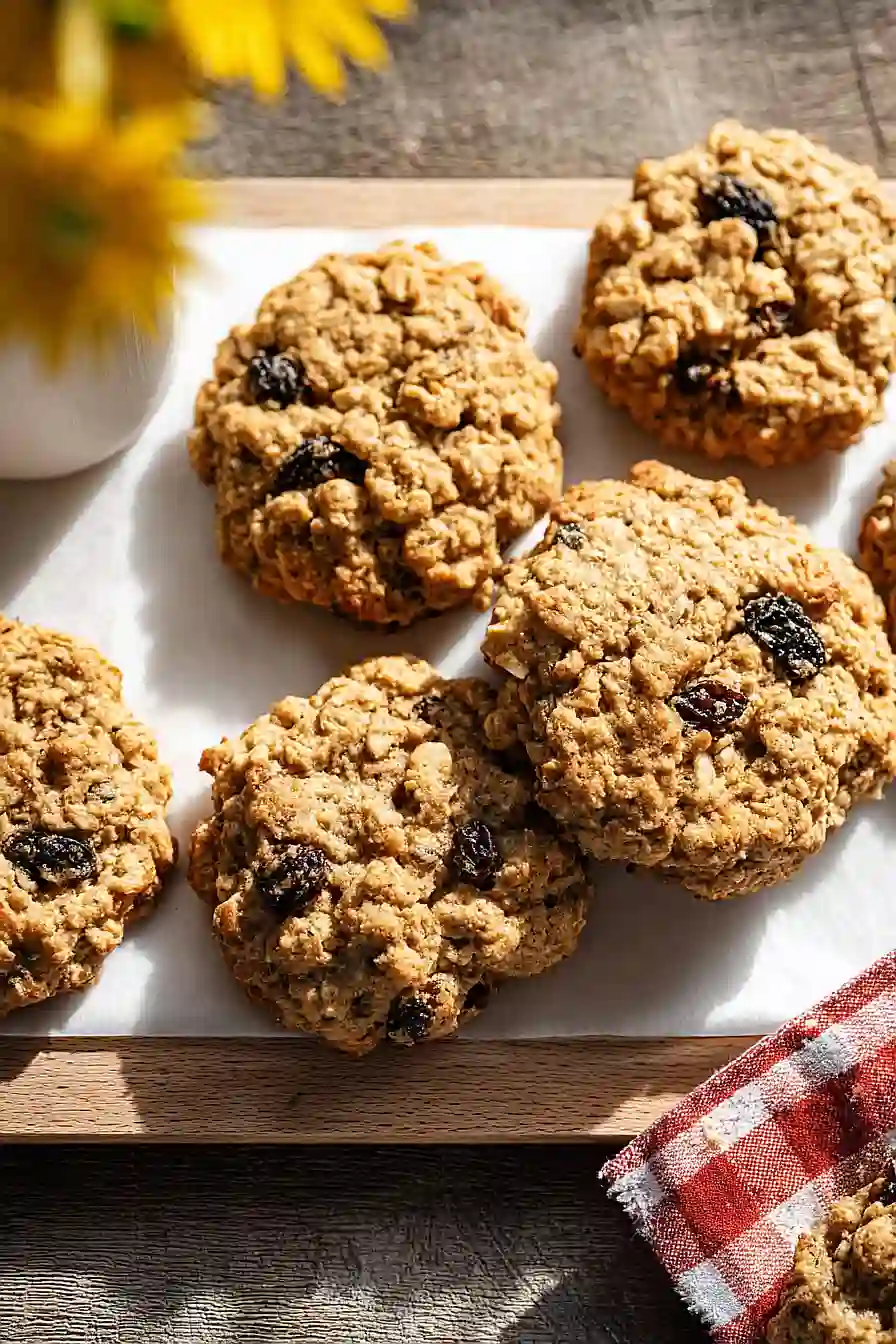
Why You’ll Love These Oatmeal Raisin Cookies
- Gluten-free friendly – Made with oat flour instead of regular flour, these cookies are naturally gluten-free (just make sure your oats are certified gluten-free if needed).
- Perfectly spiced – The combination of cinnamon and nutmeg gives these cookies that classic, cozy flavor that reminds you of grandma’s kitchen.
- Chewy texture – These cookies have the perfect balance of soft centers and slightly crispy edges that make them hard to resist.
- Simple pantry ingredients – You probably have most of these ingredients in your kitchen already, making this an easy recipe to whip up whenever a cookie craving hits.
What Kind of Oat Flour Should I Use?
You can either buy pre-made oat flour from the store or make your own at home by blending rolled oats in a food processor or blender until they reach a fine, flour-like consistency. Homemade oat flour is actually a great option because it’s fresher and usually cheaper than store-bought, plus you know exactly what’s in it. If you’re making your own, just be sure to blend it well so there aren’t any large chunks left behind, as this can affect the texture of your cookies. Whether you go with store-bought or homemade, regular oat flour works perfectly for this recipe – no need to seek out fancy varieties.
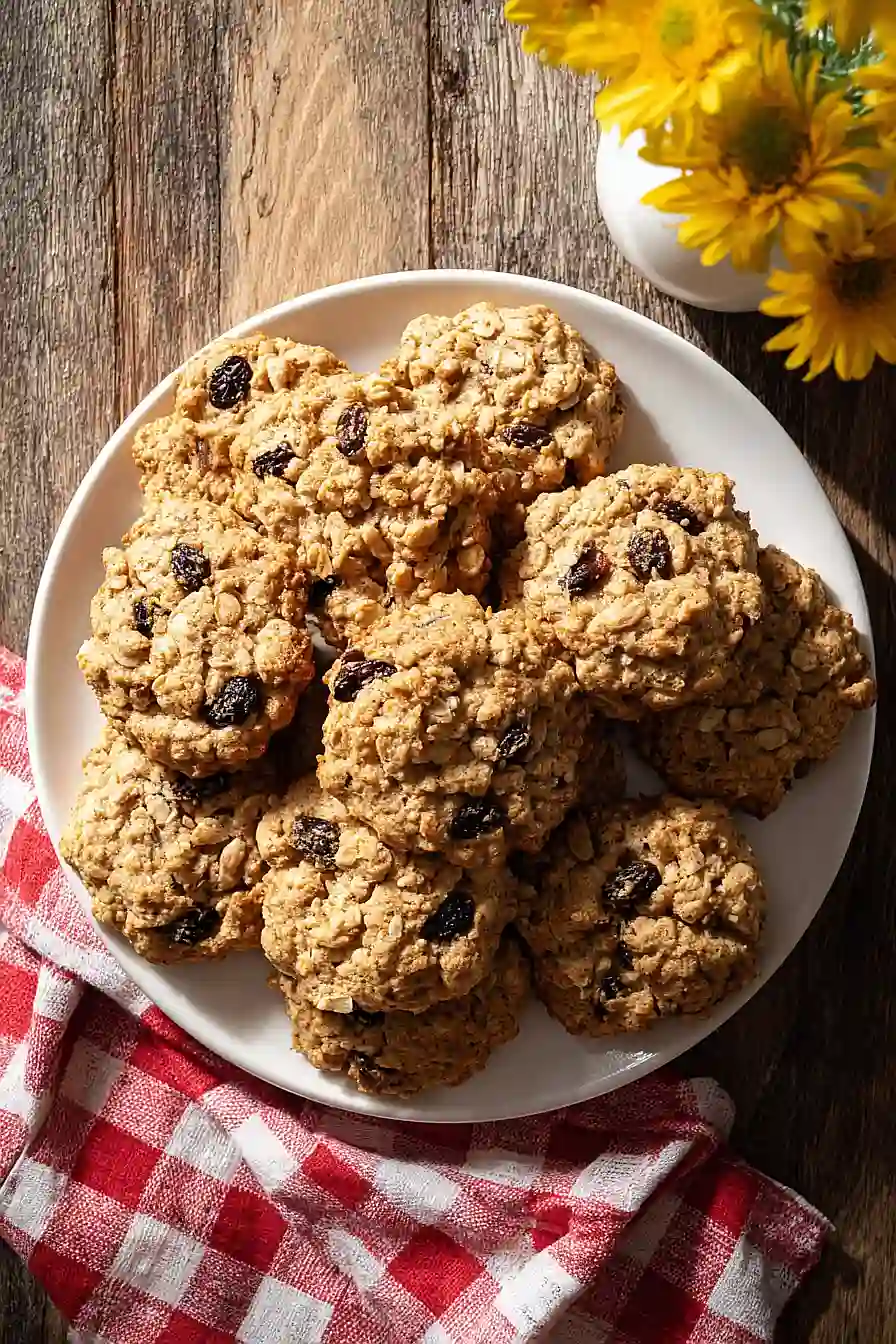
Options for Substitutions
This recipe is pretty forgiving when it comes to swaps, so here are some options if you need them:
- Oat flour: You can easily make your own oat flour by grinding rolled oats in a food processor or blender until they reach a fine powder. Just measure after grinding to get the right amount.
- Butter: If you only have unsalted butter, just add an extra pinch of salt to the dough. Coconut oil works too if you’re dairy-free, though the texture will be slightly different.
- Brown sugar: You can use all cane sugar if that’s what you have, but the cookies will be a bit less chewy. Or mix 1/2 cup cane sugar with 1 tablespoon molasses to make your own brown sugar.
- Tapioca starch: Cornstarch works perfectly as a one-to-one swap here. They both help give the cookies a tender texture.
- Raisins: Not a raisin fan? Try dried cranberries, chopped dates, or chocolate chips instead. You can also use a mix of whatever dried fruit you like.
- Spices: If you don’t have nutmeg, you can skip it or add a little extra cinnamon. The cookies will still taste great with just cinnamon alone.
Watch Out for These Mistakes While Baking
The biggest mistake when baking oat flour cookies is overmixing the dough once you add the dry ingredients, which can lead to tough, dense cookies instead of chewy ones – mix just until everything is combined and no flour streaks remain.
Since oat flour absorbs liquid differently than regular flour, your dough might seem a bit softer than typical cookie dough, but resist the urge to add more flour or your cookies will turn out dry and crumbly.
Another common error is not letting the butter soften properly before mixing – it should be soft enough to leave an indent when pressed but not melted or greasy, which ensures your cookies spread evenly and have the right texture.
Finally, don’t skip flattening these cookies slightly before baking since oat flour cookies don’t spread as much as traditional ones, and pull them from the oven when the edges are set but the centers still look slightly underdone for that perfect chewy bite.
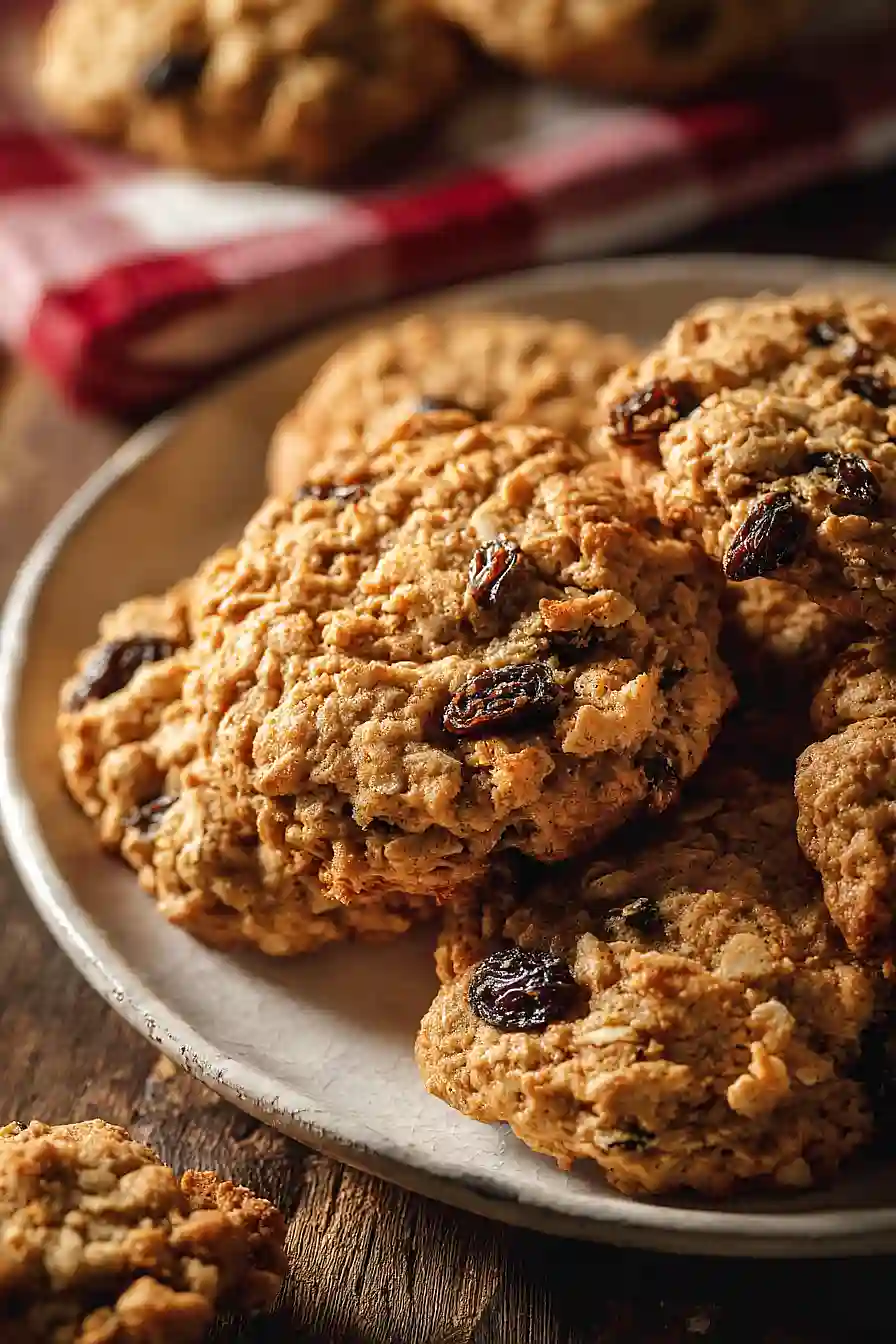
What to Serve With Oatmeal Raisin Cookies?
These cookies are perfect alongside a cold glass of milk or a warm cup of coffee for an afternoon snack. I love packing them in lunchboxes with some apple slices and cheese cubes for a balanced treat, or serving them after dinner with a scoop of vanilla ice cream for something a bit more special. They also make a great breakfast on-the-go when paired with a banana and some yogurt, giving you that cozy oatmeal feeling without needing a bowl and spoon.
Storage Instructions
Store: These oatmeal raisin cookies stay soft and chewy when kept in an airtight container at room temperature for up to a week. If you want them to last even longer, pop them in the fridge where they’ll keep for about 2 weeks.
Freeze: You can freeze baked cookies or even the cookie dough! For baked cookies, layer them with parchment paper in a freezer container for up to 3 months. For dough, scoop it into balls, freeze on a baking sheet, then transfer to a freezer bag. You can bake them straight from frozen, just add a couple extra minutes to the baking time.
Enjoy: Frozen cookies taste great at room temperature after thawing for about 30 minutes. If you want that fresh-baked feel, warm them in the microwave for 10-15 seconds or in a 300°F oven for a few minutes.
| Preparation Time | 15-20 minutes |
| Cooking Time | 10-12 minutes per batch |
| Total Time | 45-70 minutes |
| Level of Difficulty | Medium |
Estimated Nutrition
Estimated nutrition for the whole recipe (without optional ingredients):
- Calories: 2200-2400
- Protein: 22-26 g
- Fat: 76-86 g
- Carbohydrates: 372-396 g
Ingredients
- 4 oz salted butter (softened to room temperature)
- 1/2 cup packed brown sugar
- 3/4 cup raisins (plump and fresh)
- 1.5 cups rolled oats (old-fashioned style)
- 1 egg (room temperature)
- 1/4 tsp baking powder
- 2 tsp tapioca starch
- 1/4 tsp nutmeg
- 1.25 cups oat flour (finely ground)
- 1 tsp ground cinnamon (freshly ground preferred for more flavor)
- 1/4 tsp sea salt
- 2 tsp vanilla extract (I use Madagascar vanilla)
- 1/2 cup cane sugar
Step 1: Prepare Mise en Place and Dry Ingredients
- 1.25 cups oat flour
- 2 tsp tapioca starch
- 1/4 tsp baking powder
- 1 tsp ground cinnamon
- 1/4 tsp nutmeg
- 1/4 tsp sea salt
Measure out all ingredients and arrange them within reach—this is essential for smooth baking.
In a small bowl, whisk together the oat flour, tapioca starch, baking powder, cinnamon, nutmeg, and sea salt.
Set this dry mixture aside.
I prefer using freshly ground cinnamon here because it releases so much more aromatic flavor than pre-ground spice.
Ensure your butter is truly softened to room temperature and your egg is also at room temperature; this helps everything incorporate evenly and creates a lighter, more tender cookie.
Step 2: Cream Butter and Sugars
- 4 oz salted butter
- 1/2 cup packed brown sugar
- 1/2 cup cane sugar
In a large mixing bowl, combine the softened butter, brown sugar, and cane sugar.
Using an electric mixer or vigorous hand-mixing, cream these together for 2-3 minutes until the mixture is light, fluffy, and pale in color.
This creaming process incorporates air into the dough, which helps the cookies rise slightly and become tender rather than dense.
Stop occasionally to scrape down the bowl to ensure everything is evenly combined.
Step 3: Incorporate Egg, Vanilla, and Spices
- 1 egg
- 2 tsp vanilla extract
- 1 tsp ground cinnamon
- 1/4 tsp nutmeg
- 1/4 tsp sea salt
Add the room-temperature egg to the creamed butter-sugar mixture and beat until fully incorporated, about 1 minute.
Pour in the vanilla extract and mix to combine.
Then add the dry spice ingredients (cinnamon, nutmeg, salt) directly to the wet mixture and stir until you no longer see streaks of spice.
I like to add the spices to the wet mixture at this point rather than waiting—it helps them distribute more evenly throughout the dough and prevents any clumping.
Step 4: Combine Wet and Dry Ingredients
- dry ingredient mixture from Step 1
Gently fold the dry ingredient mixture from Step 1 into the wet mixture from Step 3 using a spatula or wooden spoon.
Mix until just combined—you want to avoid overmixing, which can develop gluten and make the cookies tough.
The dough should come together without any visible flour streaks.
Cover the bowl with plastic wrap and let the dough rest at room temperature for 30 minutes.
This resting period allows the oat flour to fully hydrate and helps the flavors meld together, which results in better-textured cookies.
Step 5: Preheat Oven and Fold in Oats and Raisins
- 1.5 cups rolled oats
- 3/4 cup raisins
- rested dough from Step 4
While the dough rests, preheat your oven to 350°F and line your baking sheets with parchment paper.
After the 30-minute rest, remove the dough from the bowl and fold in the rolled oats and raisins using a spatula.
Stir gently until the oats and raisins are evenly distributed throughout the dough.
I like to use fresh, plump raisins because they stay moist during baking and provide better texture and sweetness than hard, old raisins.
Step 6: Shape and Bake Cookies
- oat and raisin dough from Step 5
Using a cookie scoop or spoon, drop rounded portions of dough onto the prepared baking sheets, spacing them about 2 inches apart.
Gently flatten each cookie with the bottom of a measuring cup or your palm to about 1/2-inch thickness.
Bake for 10-12 minutes until the edges are light golden brown but the centers still look slightly underdone—they will continue to cook as they cool.
The cookies should feel just set on the outside but still have a tiny bit of give in the center for a chewy interior.
Step 7: Cool and Finish
Remove the cookies from the oven and let them cool on the baking sheet for 5 minutes—this allows them to set without becoming too firm.
Transfer the cookies to a wire cooling rack to cool completely.
This two-stage cooling process prevents the cookies from being too delicate to move while still ensuring they finish cooking evenly.
Store cooled cookies in an airtight container for up to 5 days.

Cinnamon Oat Flour Oatmeal Raisin Cookies
Ingredients
- 4 oz salted butter (softened to room temperature)
- 1/2 cup packed brown sugar
- 3/4 cup raisins (plump and fresh)
- 1.5 cups rolled oats (old-fashioned style)
- 1 egg (room temperature)
- 1/4 tsp baking powder
- 2 tsp tapioca starch
- 1/4 tsp nutmeg
- 1.25 cups oat flour (finely ground)
- 1 tsp ground cinnamon (freshly ground preferred for more flavor)
- 1/4 tsp sea salt
- 2 tsp vanilla extract (I use Madagascar vanilla)
- 1/2 cup cane sugar
Instructions
- Measure out all ingredients and arrange them within reach—this is essential for smooth baking. In a small bowl, whisk together the oat flour, tapioca starch, baking powder, cinnamon, nutmeg, and sea salt. Set this dry mixture aside. I prefer using freshly ground cinnamon here because it releases so much more aromatic flavor than pre-ground spice. Ensure your butter is truly softened to room temperature and your egg is also at room temperature; this helps everything incorporate evenly and creates a lighter, more tender cookie.
- In a large mixing bowl, combine the softened butter, brown sugar, and cane sugar. Using an electric mixer or vigorous hand-mixing, cream these together for 2-3 minutes until the mixture is light, fluffy, and pale in color. This creaming process incorporates air into the dough, which helps the cookies rise slightly and become tender rather than dense. Stop occasionally to scrape down the bowl to ensure everything is evenly combined.
- Add the room-temperature egg to the creamed butter-sugar mixture and beat until fully incorporated, about 1 minute. Pour in the vanilla extract and mix to combine. Then add the dry spice ingredients (cinnamon, nutmeg, salt) directly to the wet mixture and stir until you no longer see streaks of spice. I like to add the spices to the wet mixture at this point rather than waiting—it helps them distribute more evenly throughout the dough and prevents any clumping.
- Gently fold the dry ingredient mixture from Step 1 into the wet mixture from Step 3 using a spatula or wooden spoon. Mix until just combined—you want to avoid overmixing, which can develop gluten and make the cookies tough. The dough should come together without any visible flour streaks. Cover the bowl with plastic wrap and let the dough rest at room temperature for 30 minutes. This resting period allows the oat flour to fully hydrate and helps the flavors meld together, which results in better-textured cookies.
- While the dough rests, preheat your oven to 350°F and line your baking sheets with parchment paper. After the 30-minute rest, remove the dough from the bowl and fold in the rolled oats and raisins using a spatula. Stir gently until the oats and raisins are evenly distributed throughout the dough. I like to use fresh, plump raisins because they stay moist during baking and provide better texture and sweetness than hard, old raisins.
- Using a cookie scoop or spoon, drop rounded portions of dough onto the prepared baking sheets, spacing them about 2 inches apart. Gently flatten each cookie with the bottom of a measuring cup or your palm to about 1/2-inch thickness. Bake for 10-12 minutes until the edges are light golden brown but the centers still look slightly underdone—they will continue to cook as they cool. The cookies should feel just set on the outside but still have a tiny bit of give in the center for a chewy interior.
- Remove the cookies from the oven and let them cool on the baking sheet for 5 minutes—this allows them to set without becoming too firm. Transfer the cookies to a wire cooling rack to cool completely. This two-stage cooling process prevents the cookies from being too delicate to move while still ensuring they finish cooking evenly. Store cooled cookies in an airtight container for up to 5 days.