I never thought I’d be able to make restaurant-quality poke bowls at home until I tried this recipe. Those beautiful bowls you see at trendy lunch spots? They seem fancy and complicated, but they’re actually pretty simple to put together. The trick is having everything prepped and ready to go.
What I love most about poke bowls is that you can prep the components ahead of time. I’ll marinate the salmon and make the spicy mayo in the morning, then assemble everything when I’m ready to eat. It’s perfect for busy weeknights when I want something fresh and filling without spending an hour in the kitchen.
The best part? Everyone can customize their own bowl. My kids will pile on extra avocado and go light on the spicy sauce, while I load mine up with cucumber and extra sriracha. It’s one of those meals that makes everyone happy without me having to make three different dinners.
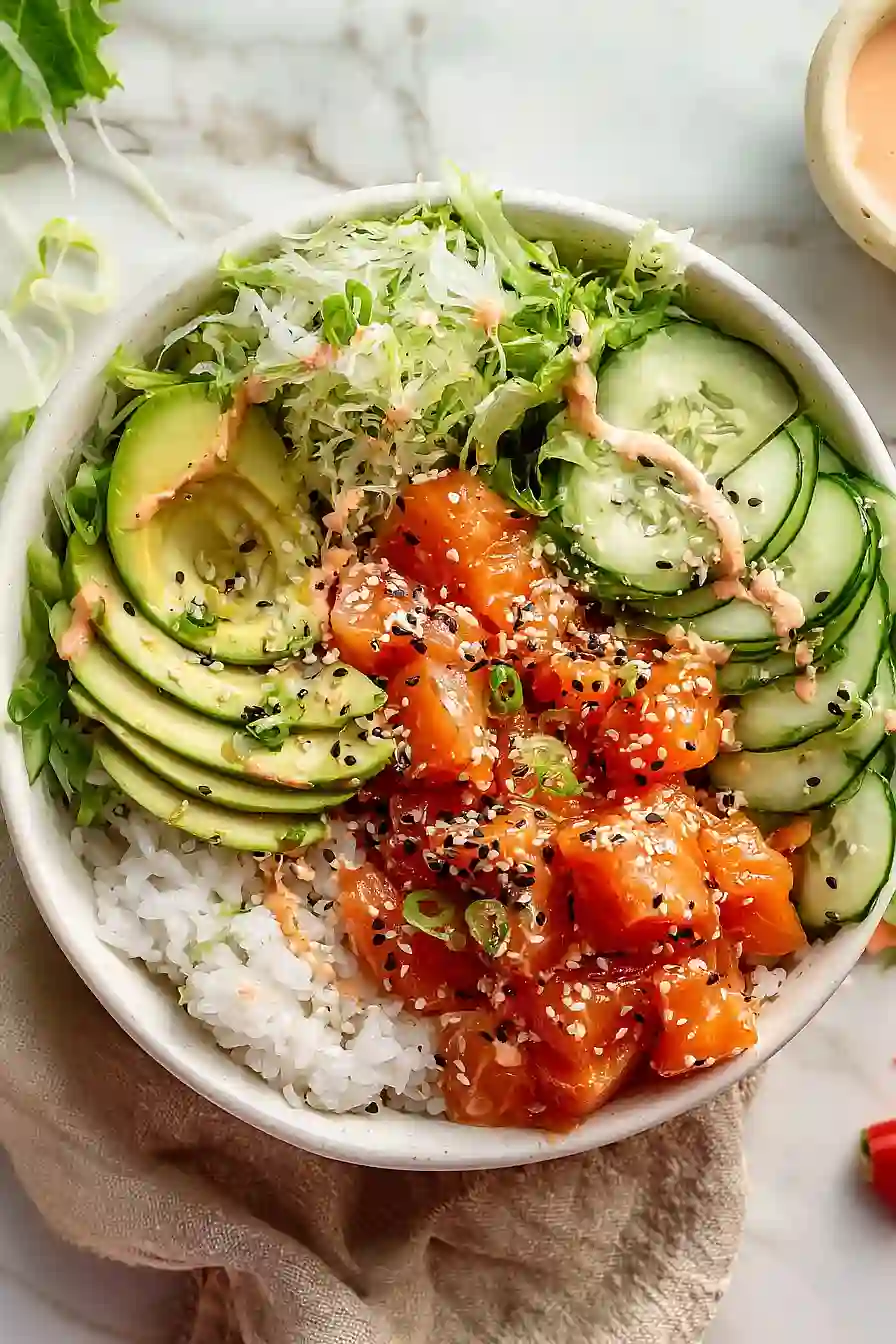
Why You’ll Love These Salmon Poke Bowls
- Restaurant-quality at home – You can skip the expensive poke shop and make these fresh, delicious bowls right in your own kitchen for a fraction of the cost.
- Quick and easy – Ready in under an hour, this recipe is perfect for busy weeknights when you want something healthy but don’t have tons of time.
- Healthy and protein-packed – Wild salmon gives you all those good omega-3s and lean protein, making this a nutritious meal that actually keeps you satisfied.
- Customizable – Once you’ve got the basic marinade down, you can add your favorite toppings like avocado, edamame, or cucumber to make it your own.
- Simple ingredients – Most of these pantry staples are things you probably already have, and the fresh salmon is really the only special ingredient you need to pick up.
What Kind of Salmon Should I Use?
For poke bowls, you’ll want to use sushi-grade salmon, which means it’s been frozen to a specific temperature to kill any parasites and is safe to eat raw. You can find sushi-grade salmon at most grocery stores in the seafood section, or ask your fishmonger specifically for salmon that’s safe to eat raw. Wild-caught salmon tends to have a firmer texture and richer flavor compared to farm-raised, making it a great choice for poke. If you can’t find sushi-grade salmon, don’t attempt to use regular salmon raw – instead, you could lightly sear regular salmon and use it as a cooked alternative in your bowl.
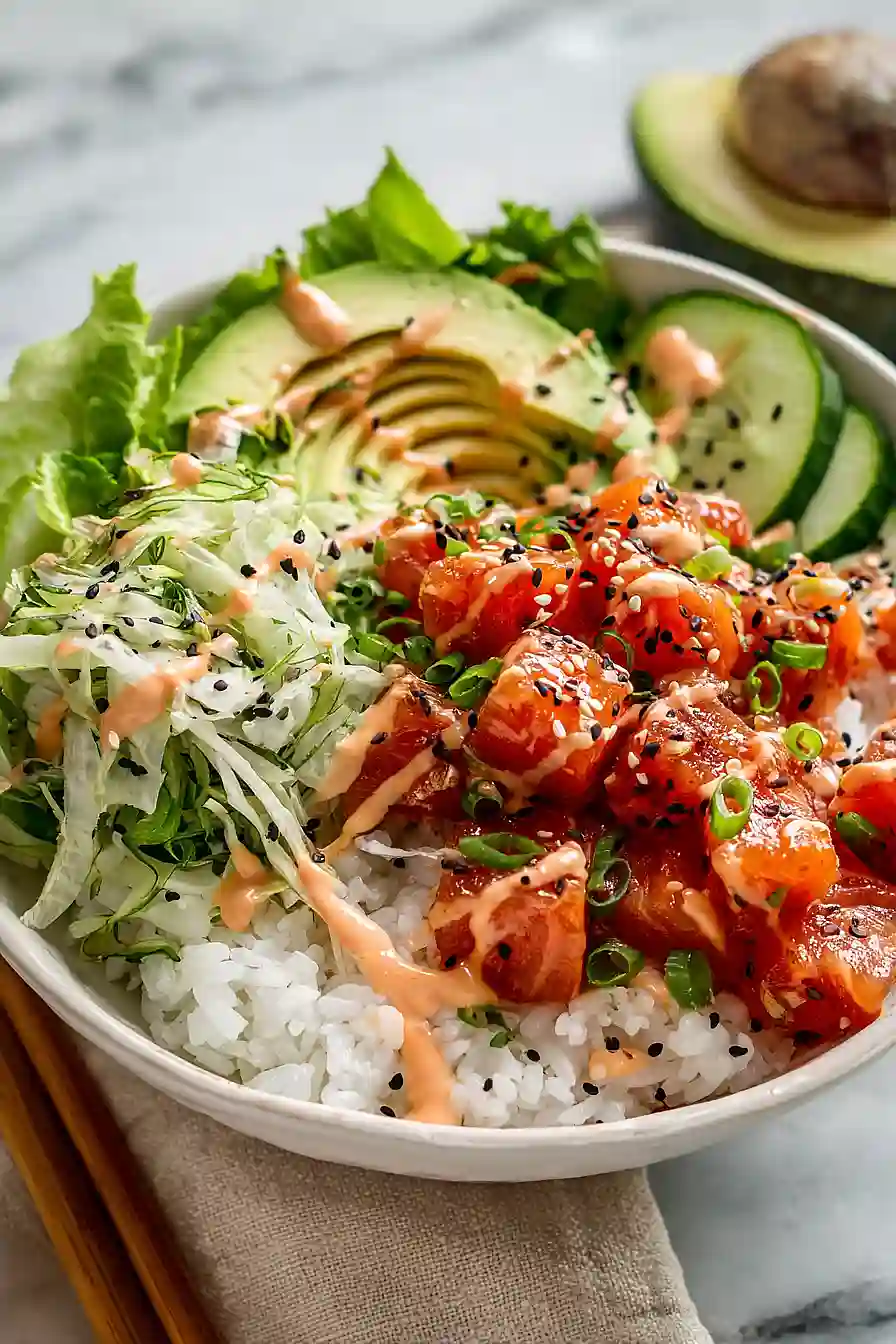
Options for Substitutions
This poke bowl recipe is pretty adaptable, so here are some swaps you can make:
- Sushi grade salmon: You can swap salmon for sushi grade tuna (ahi is a classic choice for poke) or even cooked shrimp if you’re not comfortable with raw fish. Just make sure whatever raw fish you use is labeled sushi grade or sashimi grade for safety.
- Tamari: Regular soy sauce works perfectly fine if you don’t have tamari. Tamari is just a gluten-free option with a slightly richer taste, but the difference is pretty minimal in this recipe.
- Grapeseed oil: Any neutral oil like canola, vegetable, or avocado oil will do the job here. You just want something that won’t overpower the other flavors.
- Rice wine vinegar: White vinegar or apple cider vinegar can work in a pinch, though rice wine vinegar has a milder, slightly sweeter taste that’s ideal for poke.
- White rice: Brown rice, sushi rice, or even cauliflower rice make good bases. You could also use mixed greens for a lighter option.
- Sriracha: Any hot sauce you like will work for the spicy mayo – just adjust the amount based on how hot your sauce is.
Watch Out for These Mistakes While Cooking
The biggest mistake you can make with poke bowls is using regular grocery store salmon instead of sushi-grade fish – since you’re eating it raw, you need salmon that’s been frozen to kill parasites and is safe for raw consumption, so always ask your fishmonger specifically for sushi-grade or sashimi-grade salmon.
Over-marinating the salmon is another common error that can actually “cook” the fish and make it mushy, so stick to the 20-minute marinating time and don’t leave it sitting for hours.
When cutting your salmon, make sure your knife is sharp and use clean, decisive cuts to create uniform cubes – a dull knife will tear the fish and make it look messy.
Finally, don’t add the sriracha mayo until right before serving, as letting it sit on the warm rice too long can make everything watery and dilute the flavors you worked hard to build.
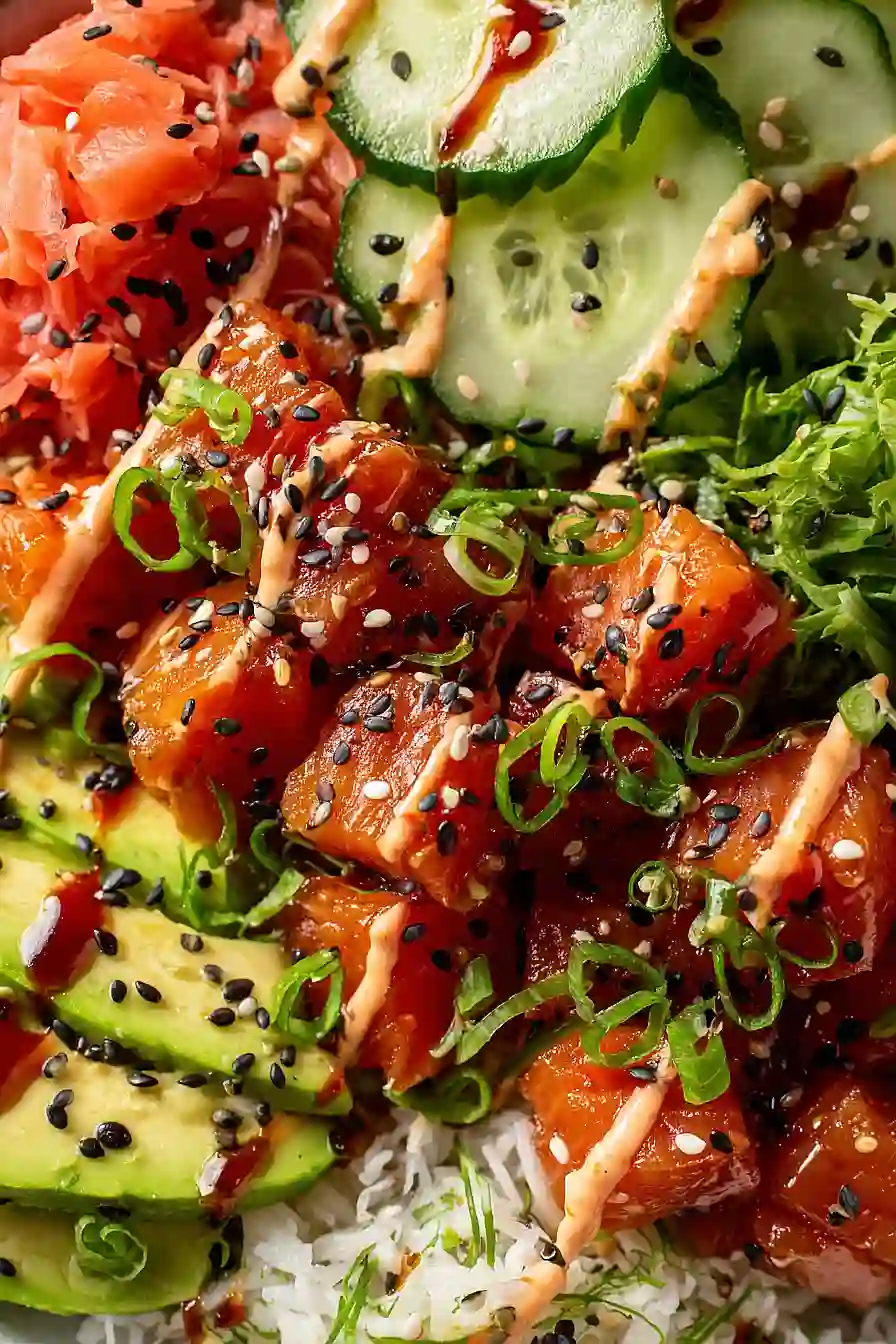
What to Serve With Poke Bowls?
Poke bowls are pretty filling on their own, but I love adding fresh toppings to make them even better. Sliced avocado, edamame, cucumber ribbons, and shredded carrots add great crunch and freshness to balance out the rich salmon. You can also throw on some pickled ginger, seaweed salad, or sesame seeds for extra flavor and texture. If you want to make it a bigger meal, serve some miso soup or a light cucumber salad on the side.
Storage Instructions
Store: Keep your poke bowl components separate in the fridge for best results. The marinated salmon should be eaten within 24 hours since it’s raw fish, while the rice and toppings can last 3-4 days in airtight containers. I like to prep everything ahead and assemble my bowls fresh each day.
Make Ahead: You can totally prep parts of this ahead to save time. Cook your rice and make the spicy mayo up to 3 days in advance, but wait to cut and marinate the salmon until you’re ready to eat. The fresher the fish, the better it tastes!
Serve: If your rice has been refrigerated, warm it up in the microwave with a splash of water to bring it back to life. The salmon should stay cold though – that’s the whole point of poke! Just assemble everything right before eating for the best texture and flavor.
| Preparation Time | 20-30 minutes |
| Cooking Time | 20-30 minutes |
| Total Time | 40-60 minutes |
| Level of Difficulty | Easy |
| Servings | 2 servings |
Estimated Nutrition
Estimated nutrition for the whole recipe (without optional ingredients):
- Calories: 1200-1400
- Protein: 65-80 g
- Fat: 65-80 g
- Carbohydrates: 110-140 g
Ingredients
For the base:
- 1.5 cups white rice (Nishiki brand preferred for sticky texture)
For the salmon and marinade:
- 12 oz salmon (cut into 1/2-inch cubes)
- 3.5 tbsp tamari (San-J brand preferred)
- 2.5 tsp sesame oil
- 2 tsp grapeseed oil
- 0.5 tsp sugar
- 1.5 tbsp rice vinegar
- 1/2 tsp chili flakes
- 1 tsp fresh ginger, finely grated
For the sriracha sauce:
- 1/4 cup mayo (Hellmann’s preferred)
- 1.5 tbsp sriracha
- 1 tbsp lime juice (freshly squeezed)
- 2 tsp tamari
For the toppings (optional):
- avocado (diced into 1/2-inch pieces)
- 1/2 cup cucumber, thinly sliced
- 1 tbsp toasted sesame seeds
- 2 green onions, thinly sliced
Step 1: Cook the Rice
- 1.5 cups white rice
Start by cooking the rice according to package directions, as this is the foundation of your bowls and takes the longest.
I prefer using Nishiki brand for its sticky, sushi-rice-like texture that holds up well with the wet toppings.
While the rice cooks, you’ll have time to prepare everything else.
Step 2: Prepare the Salmon Marinade and Marinate
- 12 oz salmon, cut into 1/2-inch cubes
- 3.5 tbsp tamari
- 2.5 tsp sesame oil
- 2 tsp grapeseed oil
- 0.5 tsp sugar
- 1.5 tbsp rice vinegar
- 0.5 tsp chili flakes
- 1 tsp fresh ginger, finely grated
While rice cooks, whisk together tamari, sesame oil, grapeseed oil, sugar, rice vinegar, chili flakes, and grated ginger in a bowl until the sugar dissolves completely.
Add the cubed salmon and gently toss to coat evenly, then let sit for 20 minutes at room temperature.
This allows the fish to absorb the marinade flavors while remaining silky and fresh—the acid from the vinegar gently cures the exterior without cooking it.
Step 3: Make the Sriracha Mayo and Prepare Toppings
- 1/4 cup mayo
- 1.5 tbsp sriracha
- 1 tbsp lime juice
- 2 tsp tamari
- avocado
- 1/2 cup cucumber, thinly sliced
- 2 green onions, thinly sliced
While the salmon marinates, make the sriracha mayo by whisking together mayo, sriracha, lime juice, and tamari until smooth and creamy.
Then prepare all your toppings: dice the avocado into 1/2-inch pieces, thinly slice the cucumber, and slice the green onions.
I like to prep the avocado last so it doesn’t oxidize—the lime juice from the sriracha mayo will help preserve it when assembled.
Step 4: Assemble the Bowls
- rice from Step 1
- marinated salmon from Step 2
- sriracha mayo from Step 3
- cucumber from Step 3
- avocado from Step 3
- green onions from Step 3
- 1 tbsp toasted sesame seeds
Divide the cooked rice between bowls as your base.
Top each bowl with marinated salmon from Step 2, then arrange the cucumber, avocado, and green onions around it.
Drizzle generously with the sriracha mayo from Step 3, then sprinkle with toasted sesame seeds for crunch and nutty flavor.
Serve immediately while the rice is still warm.
Asian Salmon Poke Bowls
Ingredients
For the base
- 1.5 cups white rice (Nishiki brand preferred for sticky texture)
For the salmon and marinade
- 12 oz salmon (cut into 1/2-inch cubes)
- 3.5 tbsp tamari (San-J brand preferred)
- 2.5 tsp sesame oil
- 2 tsp grapeseed oil
- 0.5 tsp sugar
- 1.5 tbsp rice vinegar
- 1/2 tsp chili flakes
- 1 tsp fresh ginger, finely grated
For the sriracha sauce
- 1/4 cup mayo (Hellmann's preferred)
- 1.5 tbsp sriracha
- 1 tbsp lime juice (freshly squeezed)
- 2 tsp tamari
For the toppings (optional)
- avocado (diced into 1/2-inch pieces)
- 1/2 cup cucumber, thinly sliced
- 1 tbsp toasted sesame seeds
- 2 green onions, thinly sliced
Instructions
- Start by cooking the rice according to package directions, as this is the foundation of your bowls and takes the longest. I prefer using Nishiki brand for its sticky, sushi-rice-like texture that holds up well with the wet toppings. While the rice cooks, you'll have time to prepare everything else.
- While rice cooks, whisk together tamari, sesame oil, grapeseed oil, sugar, rice vinegar, chili flakes, and grated ginger in a bowl until the sugar dissolves completely. Add the cubed salmon and gently toss to coat evenly, then let sit for 20 minutes at room temperature. This allows the fish to absorb the marinade flavors while remaining silky and fresh—the acid from the vinegar gently cures the exterior without cooking it.
- While the salmon marinates, make the sriracha mayo by whisking together mayo, sriracha, lime juice, and tamari until smooth and creamy. Then prepare all your toppings: dice the avocado into 1/2-inch pieces, thinly slice the cucumber, and slice the green onions. I like to prep the avocado last so it doesn't oxidize—the lime juice from the sriracha mayo will help preserve it when assembled.
- Divide the cooked rice between bowls as your base. Top each bowl with marinated salmon from Step 2, then arrange the cucumber, avocado, and green onions around it. Drizzle generously with the sriracha mayo from Step 3, then sprinkle with toasted sesame seeds for crunch and nutty flavor. Serve immediately while the rice is still warm.