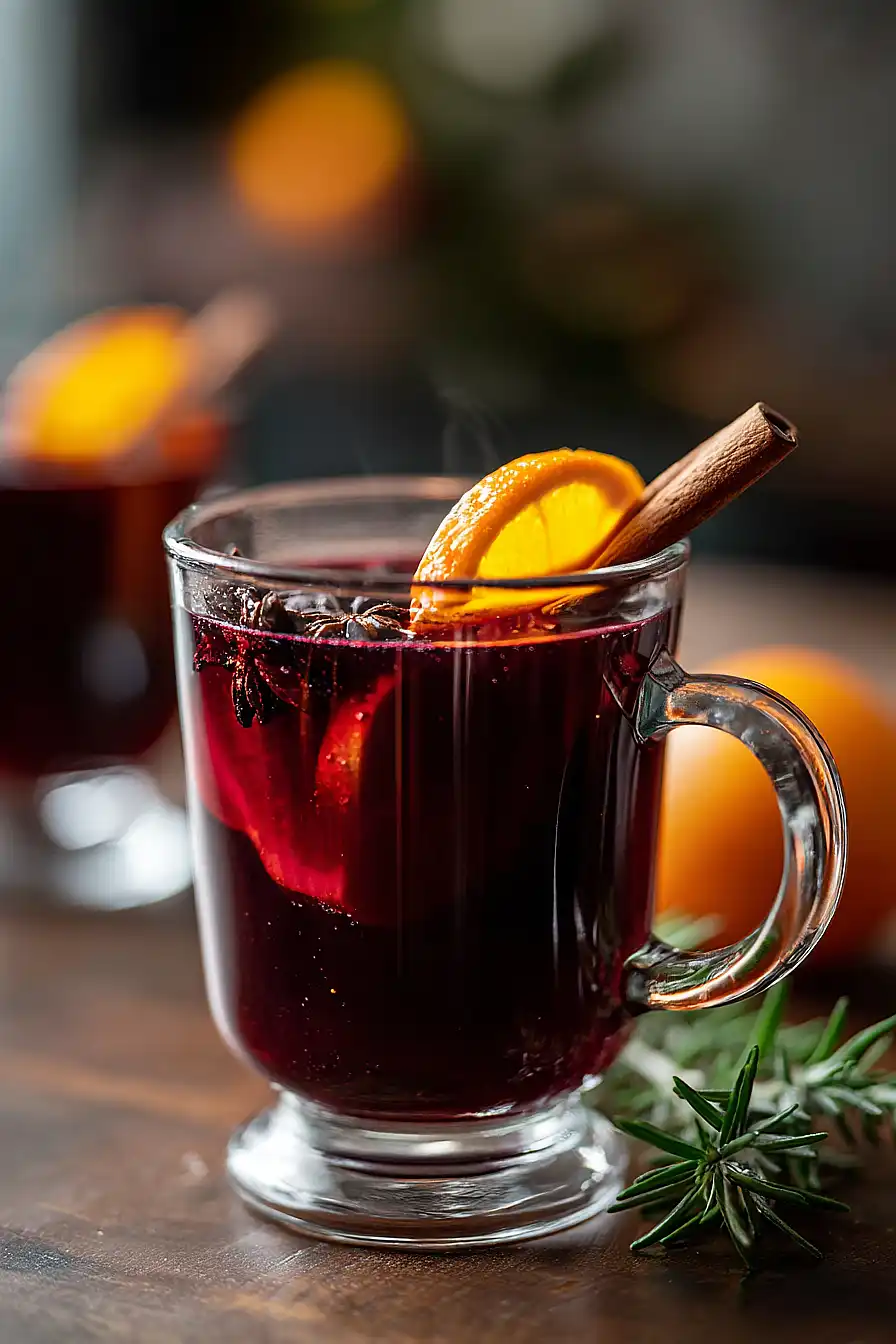
There’s nothing quite like a warm mug of mulled wine on a cold evening.
This cozy drink brings together red wine, apple cider, and aromatic spices that fill your kitchen with the most inviting smell. Cinnamon sticks and star anise simmer alongside orange halves studded with cloves, while honey adds just the right amount of sweetness.
A splash of brandy gives it extra depth and warmth, though you can leave it out if you prefer. The whole thing comes together in one pot on the stovetop, making it easy to serve at holiday gatherings or casual get-togethers.
It’s the kind of drink that makes everyone feel welcome and relaxed, perfect for sipping while catching up with friends.
Why You’ll Love This Mulled Wine
- Perfect for cozy gatherings – This warm, spiced wine fills your home with amazing aromas and creates an inviting atmosphere for holiday parties or cold winter nights.
- Simple to make – Just combine everything in one pot and let it simmer—no complicated techniques or special equipment needed.
- Customizable sweetness – The honey makes it easy to adjust the sweetness to your taste, so you can make it exactly how you like it.
- Impressive yet effortless – Your guests will think you spent hours on this festive drink, but it comes together in less than an hour with ingredients you can find at any grocery store.
What Kind of Red Wine Should I Use?
For mulled wine, you’ll want to grab a dry, fruity red wine that won’t break the bank since you’re adding spices and sweeteners to it. Merlot, Zinfandel, and Cabernet Sauvignon are all solid choices that hold up well to the warming spices without getting too heavy or tannic. There’s no need to splurge on an expensive bottle here – a mid-range wine in the $8-12 range will work perfectly fine. Just avoid anything too sweet or too cheap, as overly sweet wines can make your mulled wine taste syrupy, and bottom-shelf wines might have harsh flavors that come through even with all the spices.
Options for Substitutions
This mulled wine recipe is forgiving and easy to customize based on what you have in your pantry:
- Red wine: Stick with a dry, fruity red wine for the best results – Merlot, Zinfandel, or Cabernet Sauvignon are all solid choices. Avoid expensive bottles since the spices will mask the subtle flavors anyway. A budget-friendly option works perfectly here.
- Apple cider: If you don’t have apple cider, you can use apple juice instead. For a richer flavor, try cranberry juice or pomegranate juice as an alternative.
- Honey: Maple syrup or brown sugar work well in place of honey. Start with 3 tablespoons and adjust to your taste, since sweetness levels vary.
- Brandy: The brandy adds a nice kick, but it’s totally optional. You can leave it out for a lighter version, or substitute with rum or bourbon if that’s what you have on hand.
- Whole spices: Don’t worry if you’re missing one or two spices. The cinnamon sticks and cloves are the most important for that classic mulled wine flavor. If you’re out of cardamom or star anise, just skip them or add a pinch of ground nutmeg instead.
Watch Out for These Mistakes While Cooking
The biggest mistake when making mulled wine is letting it boil, which cooks off the alcohol and can make the spices taste bitter – keep the heat low and aim for a gentle simmer where you see small bubbles around the edges but no rolling boil.
Another common error is adding the brandy too early in the process, so wait until the very end after you’ve turned off the heat to stir it in and preserve its flavor.
Don’t skip the steeping time either – your mulled wine needs at least 15-20 minutes of simmering to let the spices fully infuse, and it actually tastes even better if you let it sit on low heat for up to an hour.
Finally, resist the urge to use cheap wine thinking it won’t matter once you add all the spices, because a wine you wouldn’t enjoy drinking on its own will still taste off even with honey and cinnamon added.
What to Serve With Mulled Wine?
Mulled wine is perfect for cozy gatherings, so I love serving it alongside a cheese board with sharp cheddar, brie, and some crackers. The warm spices in the wine pair really nicely with roasted nuts like almonds or pecans, and some dried fruits like apricots or figs. If you’re hosting a holiday party, gingerbread cookies or shortbread are great for nibbling between sips. For something more substantial, try serving it with charcuterie, olives, and some crusty bread to make it a full spread that everyone can enjoy while staying warm.
Storage Instructions
Store: Leftover mulled wine keeps well in the fridge for up to 3 days in an airtight container or pitcher. Just strain out the spices before storing so they don’t make it too strong. The flavors actually get even better as they sit together!
Reheat: Gently warm the mulled wine on the stove over low heat until it’s steaming but not boiling. You can also reheat individual servings in the microwave for about 1-2 minutes on medium power. Add a fresh cinnamon stick or orange slice when serving to brighten it up again.
| Preparation Time | 10-15 minutes |
| Cooking Time | 30-40 minutes |
| Total Time | 40-55 minutes |
| Level of Difficulty | Easy |
Estimated Nutrition
Estimated nutrition for the whole recipe (without optional ingredients):
- Calories: 1100-1250
- Protein: 2-3 g
- Fat: 0-1 g
- Carbohydrates: 125-145 g
Ingredients
- 2 cinnamon sticks (about 3-4 inches each)
- 1/4 cup honey (adds warmth and subtle sweetness)
- 1 orange (halved or quartered)
- 2 cups apple cider (fresh cider preferred for better flavor)
- 4 green cardamom pods (crushed slightly to release oils)
- 1/4 cup brandy (optional but recommended for depth and warmth)
- orange slices for garnish (thin slices, about 1/4-inch thick)
- 1 whole star anise
- cinnamon sticks for garnish
- 5 whole cloves (pierced into orange halves for easy removal)
- 750 ml dry red wine (a full-bodied red like Burgundy or Côtes du Rhône works best)
Step 1: Prepare the Spices and Citrus
- 4 green cardamom pods
- 1 orange
- 5 whole cloves
- orange slices for garnish
- cinnamon sticks for garnish
Lightly crush the green cardamom pods with the flat side of a knife to crack them open and release their aromatic oils—this is crucial for maximum flavor extraction.
Cut the orange in half or quarters, then stud each piece with the whole cloves, piercing them directly into the flesh so they won’t float loose during simmering.
Prepare thin orange slices (about 1/4-inch thick) for garnish and set aside.
Have the cinnamon sticks ready for both cooking and garnish.
Step 2: Build the Base Liquid
- 750 ml dry red wine
- 2 cups apple cider
- 1/4 cup honey
Pour the red wine and apple cider into a large pot, then add the honey and stir until the honey is fully dissolved into the liquid.
The combination of wine and cider creates a balanced flavor base—the cider adds natural sweetness and fruitiness that complements the wine’s deeper notes.
I prefer to use fresh apple cider when available rather than pasteurized, as it has a more vibrant apple character that really shines through.
Step 3: Add Aromatics and Bring to Temperature
- base liquid from Step 2
- 2 cinnamon sticks
- 1 whole star anise
- orange halves with cloves from Step 1
Add the cinnamon sticks, star anise, and the orange halves (with cloves) to the pot.
Gently bring the mixture to a simmer over medium heat, stirring occasionally to ensure even heat distribution.
Once you see small, gentle bubbles breaking the surface, reduce the heat to low—this is your target temperature for the rest of cooking.
Step 4: Infuse the Spices (30 minutes)
- simmering mixture from Step 3
- 4 green cardamom pods from Step 1
Maintain a gentle simmer—the surface should barely bubble—and cook for 30 minutes without boiling, as boiling will cook off the delicate aromatic oils and make the wine taste harsh.
The longer, slower infusion allows the cinnamon, cardamom, cloves, and star anise to gradually release their oils into the warm liquid, creating a deeply spiced, complex flavor.
I like to stir occasionally and take a moment to enjoy the aroma—it’s one of the best parts of making mulled wine.
Step 5: Finish with Brandy and Serve
- infused wine from Step 4
- 1/4 cup brandy
- orange slices for garnish from Step 1
- cinnamon sticks for garnish from Step 1
Remove the pot from heat and stir in the brandy (if using), which adds warmth, depth, and a subtle complexity that rounds out the spices.
Let the mulled wine rest for a minute, then carefully strain it into a serving pitcher or ladle it directly into mugs, leaving most of the solids behind (the orange pieces can be left in for visual appeal if you prefer).
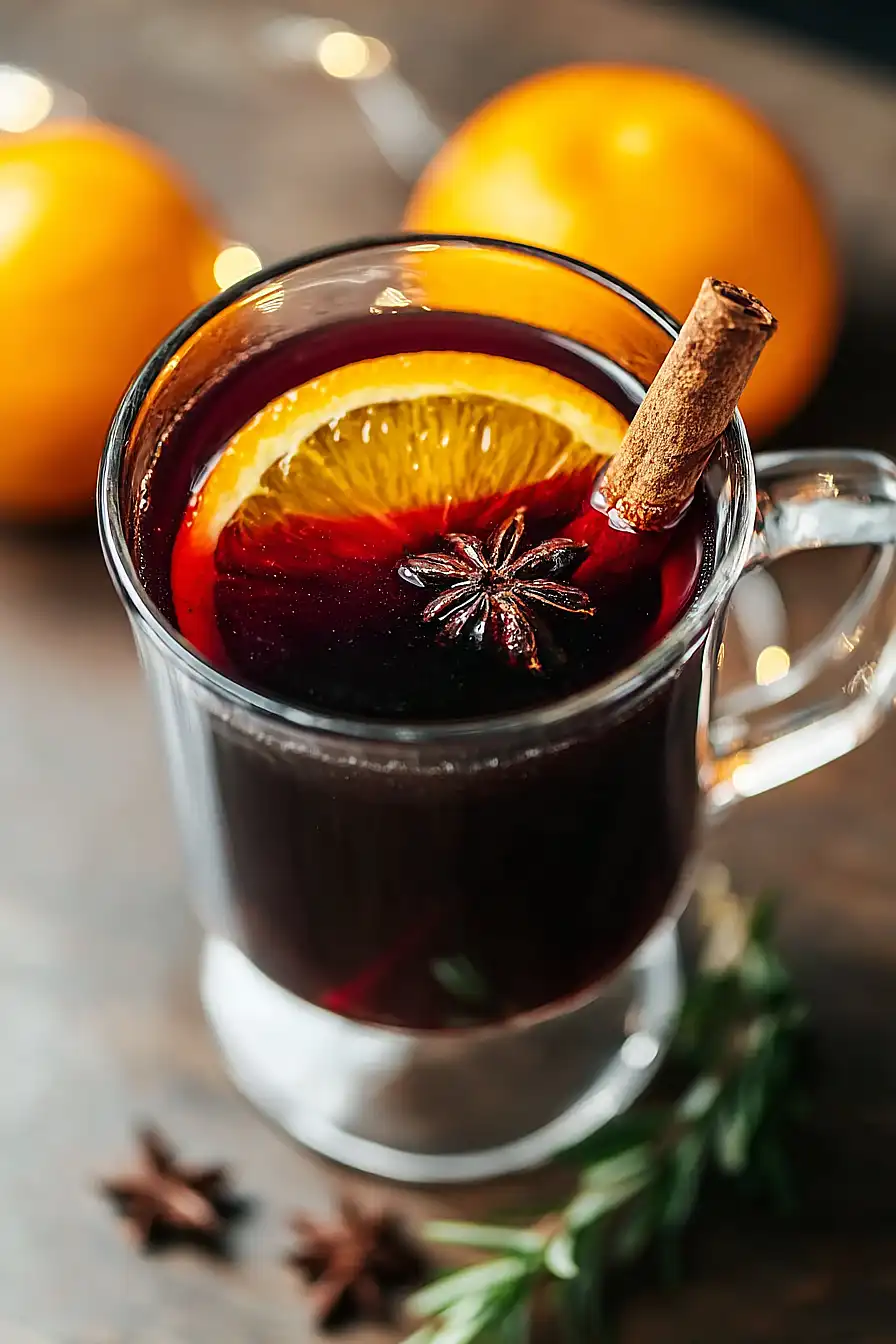
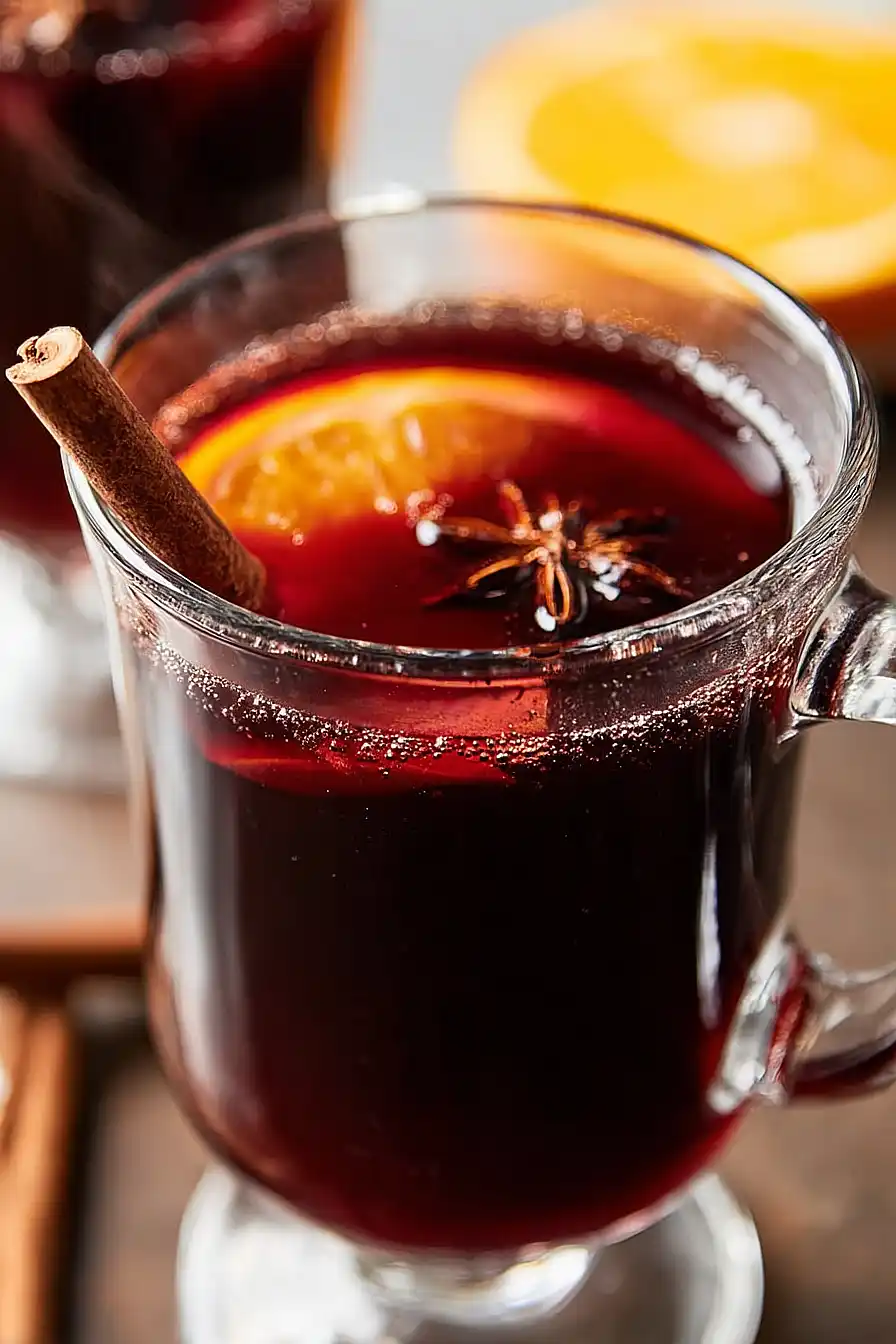
Garnish each serving with an orange slice and a cinnamon stick, and serve hot.

Winter Mulled Wine
Ingredients
- 2 cinnamon sticks (about 3-4 inches each)
- 1/4 cup honey (adds warmth and subtle sweetness)
- 1 orange (halved or quartered)
- 2 cups apple cider (fresh cider preferred for better flavor)
- 4 green cardamom pods (crushed slightly to release oils)
- 1/4 cup brandy (optional but recommended for depth and warmth)
- orange slices for garnish (thin slices, about 1/4-inch thick)
- 1 whole star anise
- cinnamon sticks for garnish
- 5 whole cloves (pierced into orange halves for easy removal)
- 750 ml dry red wine (a full-bodied red like Burgundy or Côtes du Rhône works best)
Instructions
- Lightly crush the green cardamom pods with the flat side of a knife to crack them open and release their aromatic oils—this is crucial for maximum flavor extraction. Cut the orange in half or quarters, then stud each piece with the whole cloves, piercing them directly into the flesh so they won't float loose during simmering. Prepare thin orange slices (about 1/4-inch thick) for garnish and set aside. Have the cinnamon sticks ready for both cooking and garnish.
- Pour the red wine and apple cider into a large pot, then add the honey and stir until the honey is fully dissolved into the liquid. The combination of wine and cider creates a balanced flavor base—the cider adds natural sweetness and fruitiness that complements the wine's deeper notes. I prefer to use fresh apple cider when available rather than pasteurized, as it has a more vibrant apple character that really shines through.
- Add the cinnamon sticks, star anise, and the orange halves (with cloves) to the pot. Gently bring the mixture to a simmer over medium heat, stirring occasionally to ensure even heat distribution. Once you see small, gentle bubbles breaking the surface, reduce the heat to low—this is your target temperature for the rest of cooking.
- Maintain a gentle simmer—the surface should barely bubble—and cook for 30 minutes without boiling, as boiling will cook off the delicate aromatic oils and make the wine taste harsh. The longer, slower infusion allows the cinnamon, cardamom, cloves, and star anise to gradually release their oils into the warm liquid, creating a deeply spiced, complex flavor. I like to stir occasionally and take a moment to enjoy the aroma—it's one of the best parts of making mulled wine.
- Remove the pot from heat and stir in the brandy (if using), which adds warmth, depth, and a subtle complexity that rounds out the spices. Let the mulled wine rest for a minute, then carefully strain it into a serving pitcher or ladle it directly into mugs, leaving most of the solids behind (the orange pieces can be left in for visual appeal if you prefer). Garnish each serving with an orange slice and a cinnamon stick, and serve hot.