If you ask me, roasted vegetables are one of those things that just make sense.
This Middle Eastern inspired dish takes everyday vegetables like cauliflower, carrots, and zucchini and roasts them until they’re golden and tender. The real magic happens with the tahini drizzle and a sprinkle of za’atar spice that ties everything together.
You’ll toss your veggies with olive oil and salt, then let the oven do most of the work. The pine nuts add a nice crunch, while the tahini sauce—made with lemon juice and garlic—gives it that creamy, tangy finish.
It’s a simple side dish that works for weeknight dinners or when you want to add something different to your table.

Why You’ll Love These Middle Eastern Roasted Vegetables
- Healthy and nutritious – Packed with colorful vegetables like beetroot, pumpkin, and cauliflower, this dish gives you a variety of vitamins and nutrients in one pan.
- Easy prep and cleanup – Just chop your vegetables, toss them on a baking sheet, and roast. One pan means less mess to clean up afterward.
- Bold, exciting flavors – The za’atar spice mix and creamy tahini dressing bring a taste of the Middle East to your dinner table, making plain roasted vegetables anything but boring.
- Perfect for meal prep – These roasted vegetables keep well in the fridge for several days, so you can make a big batch and enjoy them throughout the week as a side dish or add them to grain bowls.
- Naturally vegan and gluten-free – This recipe works for almost any dietary preference without needing any modifications.
What Kind of Vegetables Should I Use?
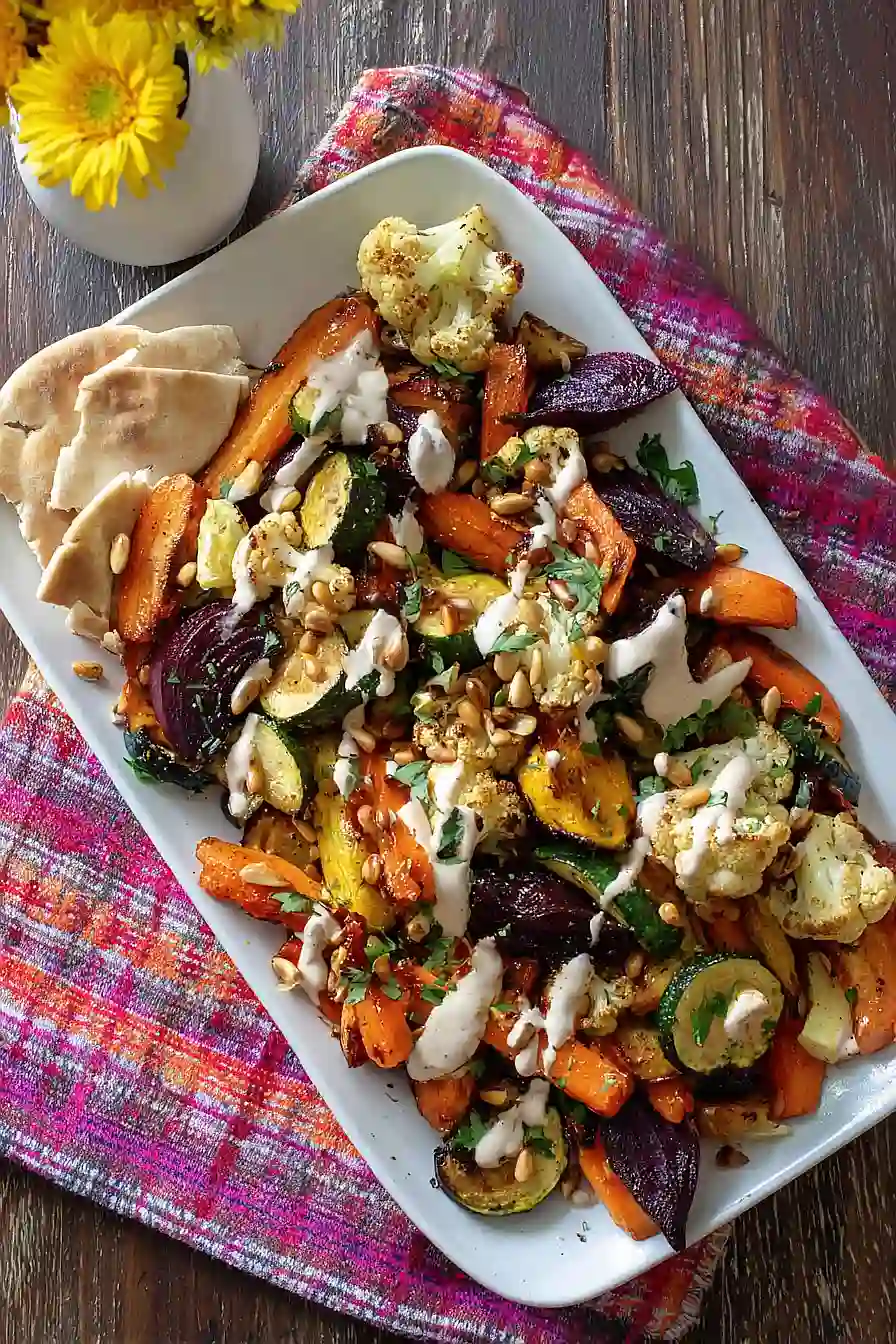
The beauty of this recipe is that you can really use whatever vegetables you have on hand or find at the market. The list I’ve provided is a great starting point, but feel free to swap things around based on what’s in season or what you prefer. Just keep in mind that you want to cut your vegetables into similar-sized pieces so they roast evenly – nobody wants some pieces burnt while others are still raw. If you’re using softer vegetables like zucchini alongside harder ones like carrots or pumpkin, you might want to add the softer ones to the pan about 10-15 minutes later so everything finishes at the same time.
Options for Substitutions
This recipe is really forgiving when it comes to swapping vegetables and ingredients:
- Vegetables: Feel free to mix and match based on what you have. Sweet potato, eggplant, bell peppers, or parsnips all work great. Just keep the pieces roughly the same size so everything roasts evenly.
- Pumpkin: Butternut squash or sweet potato make excellent substitutes. They have similar roasting times and that same slightly sweet flavor.
- Beetroot: If you’re not a fan of beets, try using more carrots or add some red bell peppers for color. Keep in mind beets will stain other vegetables slightly, so leaving them out changes the look a bit.
- Tahini: In a pinch, you can use cashew butter or almond butter thinned with a bit more lemon juice and olive oil. The flavor will be different but still tasty.
- Za’atar: Don’t have za’atar? Make a quick substitute by mixing dried thyme, sesame seeds, and a pinch of sumac if you have it. Or use a combination of dried oregano and thyme with some toasted sesame seeds.
- Pine nuts: These can be pricey, so swap them with toasted slivered almonds, chopped walnuts, or sunflower seeds for that same crunchy texture.
Watch Out for These Mistakes While Roasting
The biggest mistake when roasting vegetables is overcrowding the pan, which causes them to steam instead of caramelize – spread your veggies in a single layer with space between each piece, and use two baking sheets if needed.
Different vegetables cook at different rates, so cut your harder vegetables like carrots, pumpkin, and beetroot slightly smaller than softer ones like zucchini to ensure everything finishes at the same time.
Don’t skip tossing your vegetables halfway through roasting, as this promotes even browning and prevents burning on one side, and make sure your oven is fully preheated to at least 425°F before the vegetables go in.
For the tahini sauce, add water gradually one tablespoon at a time – it will seize up and look grainy at first, but keep whisking and it will smooth out into a creamy drizzle perfect for serving.
What to Serve With Middle Eastern Roasted Vegetables?
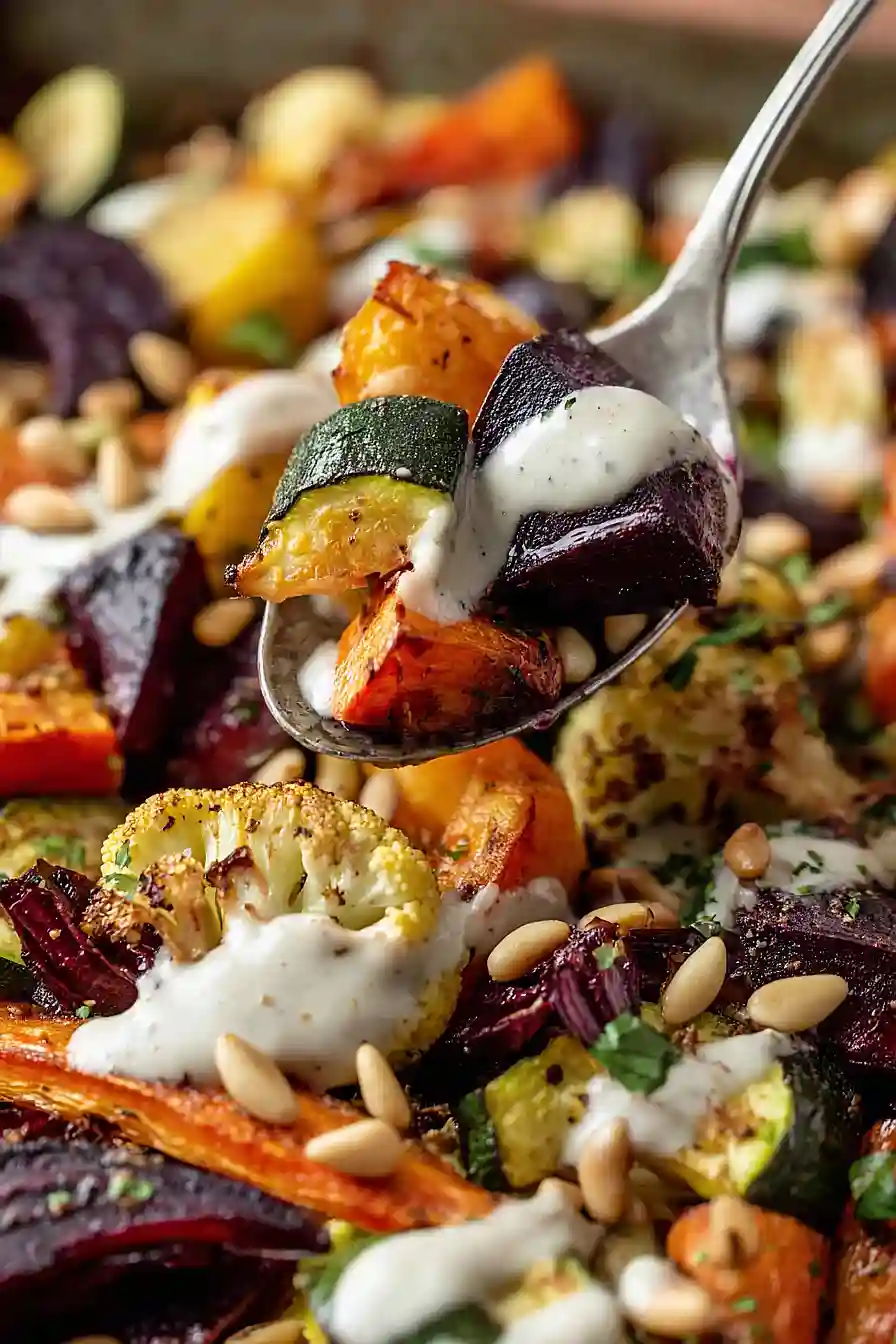
These roasted vegetables are perfect alongside grilled chicken, lamb kebabs, or falafel for a complete Middle Eastern feast. I love serving them over a bed of fluffy couscous or quinoa, which soaks up all that delicious tahini sauce. They also work great stuffed into warm pita bread with some hummus and a dollop of Greek yogurt, or you can pile them on top of rice pilaf for a hearty vegetarian meal. If you’re keeping things simple, just serve them with some warm flatbread for scooping and maybe a side of tabbouleh salad.
Storage Instructions
Store: Keep your roasted veggies in an airtight container in the fridge for up to 4 days. I like to store the tahini sauce separately in a small jar so the vegetables don’t get soggy. They’re great cold in salads or grain bowls, or you can warm them up when you’re ready to eat.
Reheat: Pop the vegetables back in a 350°F oven for about 10 minutes to warm them through and crisp them up a bit. You can also use the microwave if you’re in a hurry, though they won’t be quite as crispy. Drizzle the tahini sauce over top right before serving for the best flavor.
Make Ahead: You can prep all your vegetables a day ahead and keep them in the fridge until you’re ready to roast. The tahini sauce also makes ahead really well and actually tastes better after sitting for a few hours as the flavors blend together.
| Preparation Time | 10-15 minutes |
| Cooking Time | 30-40 minutes |
| Total Time | 40-55 minutes |
| Level of Difficulty | Easy |
Estimated Nutrition
Estimated nutrition for the whole recipe (without optional ingredients):
- Calories: 650-750
- Protein: 13-16 g
- Fat: 46-52 g
- Carbohydrates: 60-70 g
Ingredients
For the roasted vegetables:
- 1.5 cups cauliflower florets
- 1 beetroot (cut into 1-inch cubes)
- black pepper to taste
- 1 carrot (cut into 1-inch chunks)
- 1/4 pumpkin (cut into 1-inch cubes)
- 2 tbsp olive oil (extra virgin preferred)
- 1 red onion (cut into 1-inch wedges)
- 1 tsp salt
- 1 zucchini (cut into 1-inch rounds)
For the tahini sauce:
- black pepper to taste
- water as needed (to reach desired consistency)
- 1/2 tsp salt
- 3 tbsp tahini (I use Joyva tahini)
- 3 tbsp lemon juice (freshly squeezed for best flavor)
- 1 small garlic clove (minced)
For the garnish:
- 2 tbsp pine nuts (toasted for deeper flavor)
- 1 tbsp coriander (freshly ground preferred)
- 2 tsp za’atar spice mix
Step 1: Prepare and Season the Vegetables
- 1.5 cups cauliflower florets
- 1 beetroot, cut into 1-inch cubes
- 1 carrot, cut into 1-inch chunks
- 1/4 pumpkin, cut into 1-inch cubes
- 1 red onion, cut into 1-inch wedges
- 1 zucchini, cut into 1-inch rounds
- 2 tbsp olive oil
- 1 tsp salt
- black pepper to taste
- 1 tbsp coriander
Cut all vegetables into uniform 1-inch pieces—this ensures even cooking and creates an appealing presentation.
Cut the cauliflower into florets, the beetroot and pumpkin into cubes, the carrot into chunks, the red onion into wedges, and the zucchini into rounds.
In a large bowl, toss all prepared vegetables with the extra virgin olive oil, salt, coriander, and black pepper until evenly coated.
The coriander adds an authentic Middle Eastern warmth to the vegetables, and coating them now allows the flavors to meld as they roast.
Step 2: Roast the Vegetables
- seasoned vegetables from Step 1
Preheat your oven to 400°F/200°C (I find this temperature slightly higher than traditional recipes gives better caramelization and deeper flavor).
Spread the seasoned vegetables from Step 1 in a single layer on a baking tray, making sure pieces aren’t crowded—this allows them to roast rather than steam.
Roast for 30-40 minutes, stirring halfway through cooking to ensure even browning.
The vegetables are done when the edges are caramelized and golden, and a fork easily pierces the largest pieces.
Step 3: Make the Tahini Sauce
- 3 tbsp tahini
- 1 small garlic clove, minced
- 3 tbsp lemon juice
- water as needed
- 1/2 tsp salt
- black pepper to taste
While the vegetables roast, whisk together the tahini, minced garlic, and lemon juice in a bowl until combined.
Tahini can be thick, so gradually add water a tablespoon at a time, whisking after each addition, until the sauce reaches a honey-like consistency that will drizzle smoothly over the vegetables.
Taste and adjust seasoning with the remaining salt and black pepper.
The tahini sauce should be creamy but pourable—not too thick or it won’t coat the vegetables properly.
Step 4: Assemble and Garnish
- roasted vegetables from Step 2
- tahini sauce from Step 3
- 2 tbsp pine nuts
- 2 tsp za’atar spice mix
Arrange the roasted vegetables from Step 2 on a serving platter or individual plates.
Drizzle generously with the tahini sauce from Step 3, then sprinkle the toasted pine nuts and za’atar spice mix over the top.
The za’atar adds a bright, tangy finish that complements the earthiness of the roasted vegetables and richness of the tahini.

Vegan Middle Eastern Roasted Vegetables
Ingredients
For the roasted vegetables:
- 1.5 cups cauliflower florets
- 1 beetroot (cut into 1-inch cubes)
- black pepper to taste
- 1 carrot (cut into 1-inch chunks)
- 1/4 pumpkin (cut into 1-inch cubes)
- 2 tbsp olive oil (extra virgin preferred)
- 1 red onion (cut into 1-inch wedges)
- 1 tsp salt
- 1 zucchini (cut into 1-inch rounds)
For the tahini sauce:
- black pepper to taste
- water as needed (to reach desired consistency)
- 1/2 tsp salt
- 3 tbsp tahini (I use Joyva tahini)
- 3 tbsp lemon juice (freshly squeezed for best flavor)
- 1 small garlic clove (minced)
For the garnish:
- 2 tbsp pine nuts (toasted for deeper flavor)
- 1 tbsp coriander (freshly ground preferred)
- 2 tsp za'atar spice mix
Instructions
- Cut all vegetables into uniform 1-inch pieces—this ensures even cooking and creates an appealing presentation. Cut the cauliflower into florets, the beetroot and pumpkin into cubes, the carrot into chunks, the red onion into wedges, and the zucchini into rounds. In a large bowl, toss all prepared vegetables with the extra virgin olive oil, salt, coriander, and black pepper until evenly coated. The coriander adds an authentic Middle Eastern warmth to the vegetables, and coating them now allows the flavors to meld as they roast.
- Preheat your oven to 400°F/200°C (I find this temperature slightly higher than traditional recipes gives better caramelization and deeper flavor). Spread the seasoned vegetables from Step 1 in a single layer on a baking tray, making sure pieces aren't crowded—this allows them to roast rather than steam. Roast for 30-40 minutes, stirring halfway through cooking to ensure even browning. The vegetables are done when the edges are caramelized and golden, and a fork easily pierces the largest pieces.
- While the vegetables roast, whisk together the tahini, minced garlic, and lemon juice in a bowl until combined. Tahini can be thick, so gradually add water a tablespoon at a time, whisking after each addition, until the sauce reaches a honey-like consistency that will drizzle smoothly over the vegetables. Taste and adjust seasoning with the remaining salt and black pepper. The tahini sauce should be creamy but pourable—not too thick or it won't coat the vegetables properly.
- Arrange the roasted vegetables from Step 2 on a serving platter or individual plates. Drizzle generously with the tahini sauce from Step 3, then sprinkle the toasted pine nuts and za'atar spice mix over the top. The za'atar adds a bright, tangy finish that complements the earthiness of the roasted vegetables and richness of the tahini.