Here is my favorite Texas Red Chili recipe, with beef chuck, a blend of dried chili peppers, warm spices like cumin and cinnamon, and masa harina for a thick, rich texture.
This chili is what I make when my family wants something hearty and comforting on a cold weekend. I love that it has no beans or tomatoes—just beef, chilies, and bold flavors. It’s perfect with some cornbread on the side.
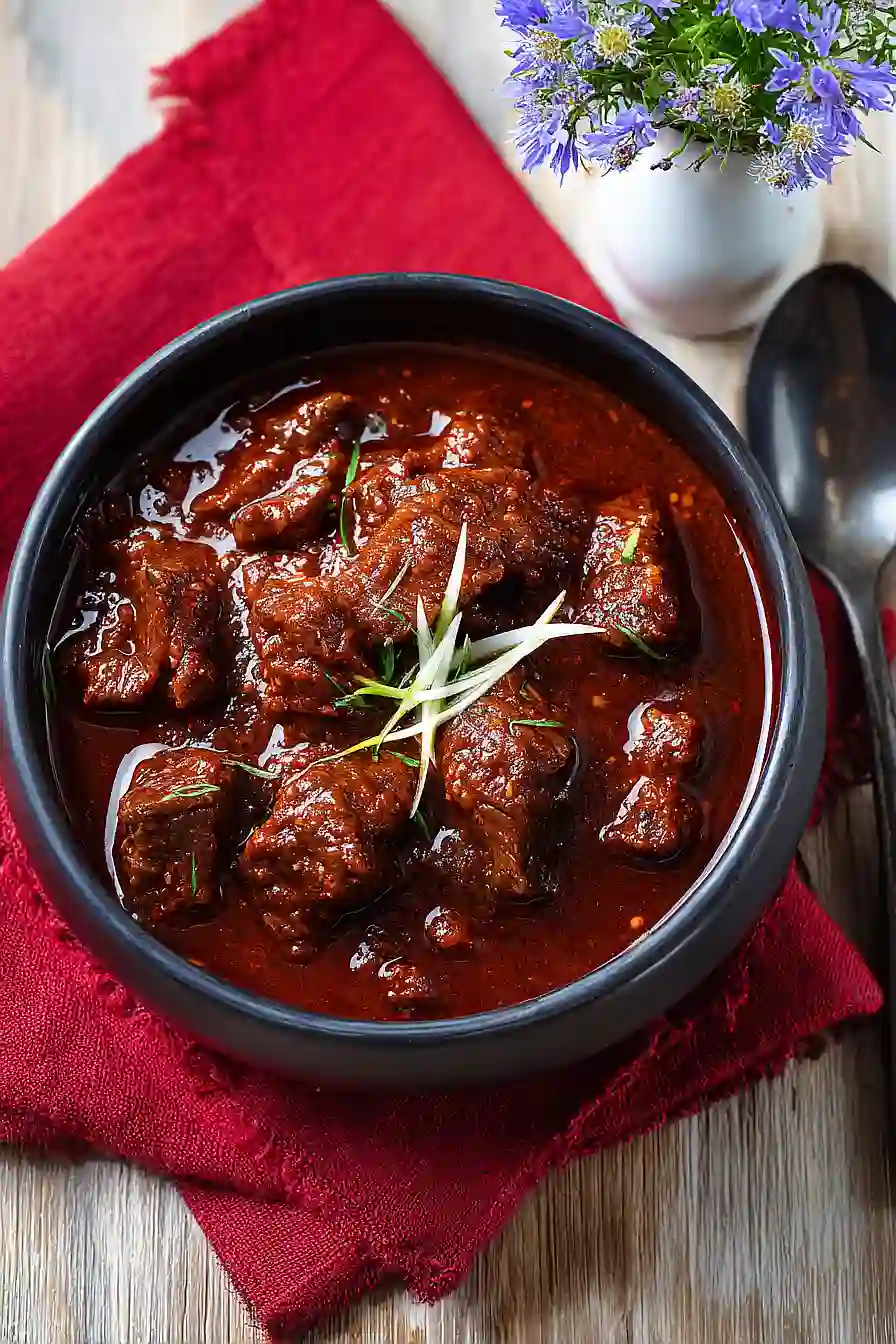
Why You’ll Love This Texas Red Chili
- Authentic Texas-style flavor – This recipe uses traditional dried chilies and no beans, giving you that deep, rich taste that real Texas chili is known for.
- Tender, melt-in-your-mouth beef – The long, slow cooking time transforms the beef chuck into incredibly tender chunks that practically fall apart with your fork.
- Perfect for meal prep – This chili actually tastes better the next day after the flavors have had time to meld together, making it ideal for making ahead or enjoying leftovers throughout the week.
- Impressive for gatherings – Whether it’s game day or a casual get-together, this hearty chili feeds a crowd and always gets compliments.
- Customizable heat level – You can easily adjust the spiciness by adding more or less cayenne pepper to suit your taste preferences.
What Kind of Beef Should I Use?
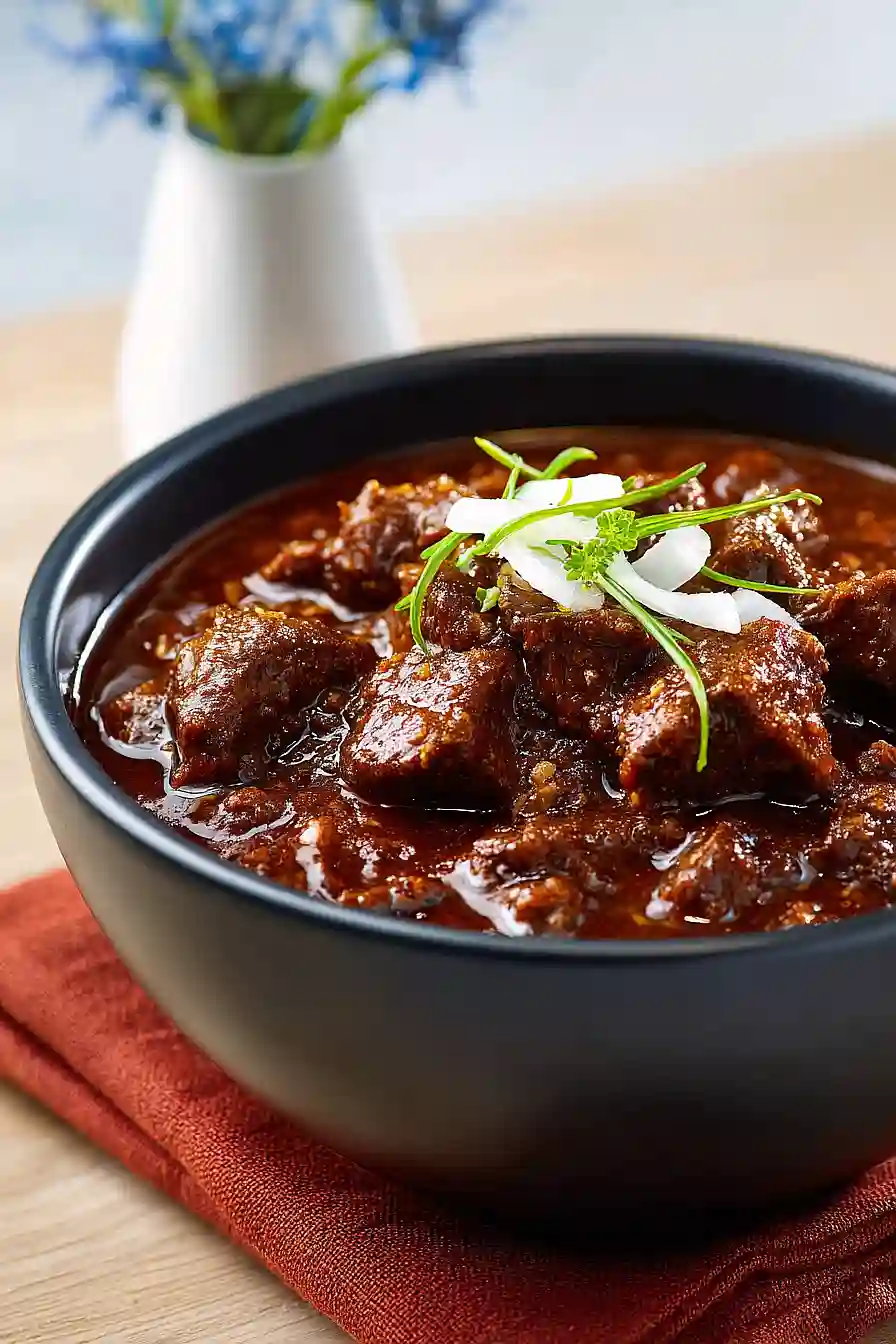
For Texas Red Chili, beef chuck is really your best bet because it has enough fat and connective tissue to stay tender during the long cooking process. You’ll want to look for a chuck roast that has some marbling throughout – that fat is what keeps the meat juicy and adds flavor as it slowly breaks down. If chuck isn’t available, beef shoulder or even short ribs can work as substitutes, though they might be a bit pricier. When you’re cutting your beef into cubes, try to keep them roughly the same size so they cook evenly, and don’t worry about trimming away every single bit of fat since some of it will render out and add richness to your chili.
Options for Substitutions
While Texas Red is pretty traditional, here are some swaps you can make if needed:
- Beef chuck: Chuck roast is really the best choice here since it stays tender during long cooking. You could use beef round or brisket, but they might turn out a bit tougher. Avoid lean cuts – you need that fat for flavor.
- Dried chili peppers: If you can’t find all three types of dried chilies, you can use 9 of any one variety, though the flavor will be less complex. In a real pinch, substitute with 6 tablespoons of good quality chili powder, but know that the taste won’t be quite the same.
- Stock: Any type of stock works fine here – beef, chicken, or vegetable. You can even use water if that’s all you have, though the chili won’t be as rich.
- Fresh poblano pepper: Swap this with a green bell pepper if poblanos aren’t available. For more heat, try using jalapeños instead, but start with just one.
- Masa harina: If you don’t have masa harina, the torn corn tortillas work great as a thickener. You can also skip both and just let the chili simmer longer to reduce naturally.
- Cinnamon stick: A cinnamon stick adds a subtle warmth, but you can use 1/4 teaspoon ground cinnamon if that’s what you have on hand.
Watch Out for These Mistakes While Cooking
The biggest mistake people make with Texas Red Chili is skipping the toasting step for the dried chilies, which brings out their deep, smoky flavors – just be careful not to burn them, as they can turn bitter in seconds.
Another common error is cranking up the heat to speed things along, but low and slow is the only way to get that melt-in-your-mouth tender beef, so resist the urge to rush the 2.5 to 3 hour simmer time.
Don’t skip browning the beef in batches either – overcrowding the pot will cause the meat to steam instead of getting that nice caramelized crust that adds serious depth to your chili.
Finally, if your chili tastes flat or one-dimensional at the end, it probably needs more salt than you think, so taste and adjust generously before serving.
What to Serve With Texas Red Chili?
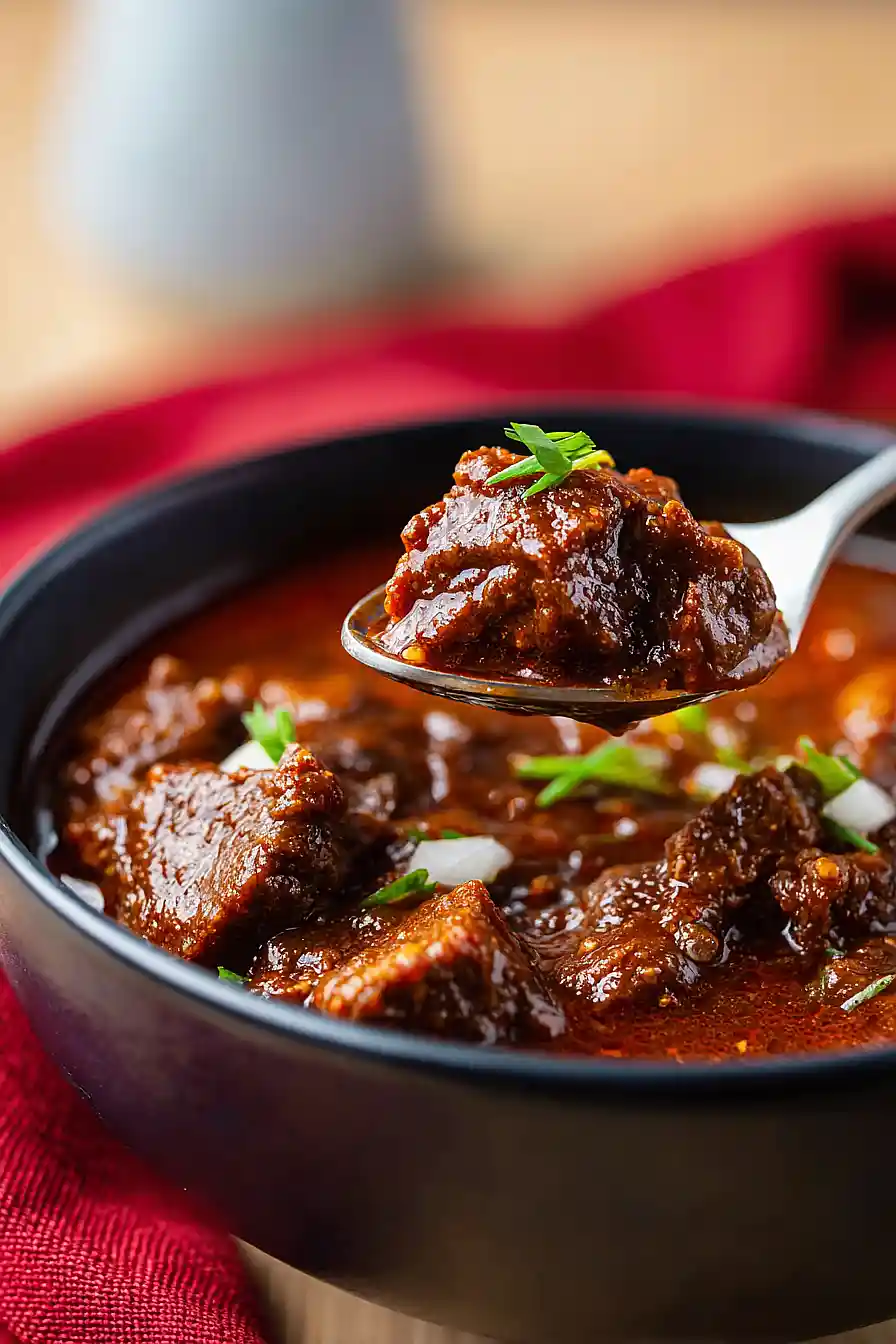
Texas red chili is hearty enough to stand on its own, but I love serving it with warm cornbread or flour tortillas on the side for soaking up all that rich, spicy broth. A dollop of sour cream and some shredded cheddar cheese on top helps cool things down if you went heavy on the cayenne, and diced white onions or sliced jalapeños add a nice fresh crunch. For a complete meal, I’ll often put out a spread of toppings like cilantro, lime wedges, and sliced avocado so everyone can customize their bowl. If you want to stretch the meal further, serve it over white rice or with a simple side of pinto beans and Mexican rice.
Storage Instructions
Store: Texas Red Chili actually gets better after a day or two in the fridge. Store it in an airtight container for up to 5 days, and you’ll notice the flavors really deepen and meld together. I usually make a big batch on Sunday and enjoy it throughout the week with different toppings.
Freeze: This chili is perfect for freezing. Let it cool completely, then portion it into freezer-safe containers or bags and freeze for up to 3 months. I like to freeze individual portions so I can grab just what I need for a quick dinner.
Reheat: Warm the chili gently on the stovetop over medium-low heat, stirring occasionally until heated through. You can also microwave it, but I find the stovetop gives better results. Add a splash of stock or water if it’s gotten too thick after storing.
| Preparation Time | 30-45 minutes |
| Cooking Time | 180-210 minutes |
| Total Time | 210-255 minutes |
| Level of Difficulty | Hard |
| Servings | 8 servings |
Estimated Nutrition
Estimated nutrition for the whole recipe (without optional ingredients):
- Calories: 3500-3800
- Protein: 320-350 g
- Fat: 240-270 g
- Carbohydrates: 65-80 g
Ingredients
For the chili pepper paste:
- 3 dried New Mexico chili peppers (remove stems and seeds)
- 2 cups beef stock (or broth)
- 3 dried Guajillo chili peppers (mild and slightly sweet)
- 3 dried Ancho chili peppers (for deeper flavor)
For the chili:
- 6 garlic cloves (freshly minced)
- 2 tbsp vegetable oil (or canola oil)
- 1 large poblano pepper (roasted and cut into strips)
- 1 tbsp masa harina (corn flour for thickening)
- 1/2 tsp ground allspice
- black pepper to taste
- 4 cups beef stock
- 1 tbsp ground cumin (freshly ground preferred)
- 1/4 to 1 tsp cayenne pepper (adjust to heat preference)
- 4 lb beef chuck (cut into 1-inch cubes)
- 1 large onion (diced into 1/2-inch pieces)
- 1 cinnamon stick
- salt to taste
Step 1: Prepare and Toast the Chili Peppers
- 3 dried New Mexico chili peppers
- 3 dried Guajillo chili peppers
- 3 dried Ancho chili peppers
Remove the stems and seeds from all dried chili peppers (New Mexico, Guajillo, and Ancho).
Heat a large skillet over medium heat and toast the prepared peppers for about 5 minutes, stirring occasionally, until fragrant—this step develops deeper, more complex flavors in the chili base.
Be careful not to burn them or the flavor will turn bitter.
Step 2: Hydrate and Blend the Chili Paste
- toasted peppers from Step 1
- 2 cups beef stock
- hot water
Transfer the toasted peppers to a pot and cover with hot water, then let them soak for 20 minutes until softened.
Pour the soaked peppers and their liquid into a blender, add 2 cups of beef stock, and blend until completely smooth.
Set this chili paste aside—this concentrated sauce is the flavor backbone of your chili.
I prefer to strain the paste through a fine-mesh sieve to remove any tough pepper skin pieces for a silkier texture.
Step 3: Brown the Beef in Batches
- 2 tbsp vegetable oil
- 4 lb beef chuck
Heat 2 tablespoons of vegetable oil in a large heavy-bottomed pot or Dutch oven over medium-high heat.
Working in batches to avoid crowding, brown the beef cubes for about 5 minutes on the first side until deeply caramelized, then flip and brown the second side for another 5 minutes.
Transfer each batch to a bowl as it finishes—the goal is a golden-brown crust, not fully cooked meat.
Repeat with the remaining beef, adding a touch more oil if the pot looks dry.
This browning step builds the savory foundation of the chili through the Maillard reaction.
Step 4: Sauté Aromatics and Bloom Spices
- 1 large onion
- 6 garlic cloves
- 1 tbsp ground cumin
- 1 cinnamon stick
- 1/2 tsp ground allspice
- 1/4 to 1 tsp cayenne pepper
Add the diced onion to the same pot (no need to clean it—those browned bits add flavor) and cook for about 5 minutes until softened and slightly caramelized.
Stir in the minced garlic and cook for 30 seconds until fragrant, then add the ground cumin, cinnamon stick, allspice, and cayenne pepper.
Cook everything together for about 1 minute, stirring constantly—this blooming technique releases the essential oils in the spices and makes them far more flavorful than just dumping them in raw.
Step 5: Build the Chili and Simmer
- browned beef from Step 3
- chili paste from Step 2
- 4 cups beef stock
- aromatic mixture from Step 4
Return the browned beef to the pot and stir in the chili paste from Step 2, then pour in the remaining 4 cups of beef stock.
Bring everything to a boil, then immediately reduce the heat to low and cover the pot.
Simmer gently for 2.5 to 3 hours, stirring occasionally, until the beef is fork-tender and breaks apart easily.
The long, slow simmer allows the beef to become incredibly tender while all the flavors meld together beautifully.
Step 6: Thicken, Finish, and Taste
- simmered chili from Step 5
- 1 tbsp masa harina
- water
- 1 large poblano pepper
- salt to taste
- black pepper to taste
Mix the masa harina with 3 tablespoons of water to create a smooth slurry, then stir it into the simmering chili.
Let it cook for another 2-3 minutes so the corn flour can thicken the sauce slightly.
Remove the pot from heat and add the roasted poblano pepper strips.
Taste the chili carefully and adjust the salt and black pepper to your preference—I find it’s often helpful to add a small pinch of salt first, then taste again before adding more.
If the chili tastes a bit flat, a splash of vinegar brightens it; if it’s too spicy, a teaspoon of sugar balances the heat.
Step 7: Serve
Ladle the Texas Red chili into bowls and serve hot.
This chili is hearty and rich, so it’s wonderful on its own or with traditional toppings like diced onion, fresh cilantro, or cornbread on the side.
Ultimate Texas Red Chili
Ingredients
For the chili pepper paste:
- 3 dried New Mexico chili peppers (remove stems and seeds)
- 2 cups beef stock (or broth)
- 3 dried Guajillo chili peppers (mild and slightly sweet)
- 3 dried Ancho chili peppers (for deeper flavor)
For the chili:
- 6 garlic cloves (freshly minced)
- 2 tbsp vegetable oil (or canola oil)
- 1 large poblano pepper (roasted and cut into strips)
- 1 tbsp masa harina (corn flour for thickening)
- 1/2 tsp ground allspice
- black pepper to taste
- 4 cups beef stock
- 1 tbsp ground cumin (freshly ground preferred)
- 1/4 to 1 tsp cayenne pepper (adjust to heat preference)
- 4 lb beef chuck (cut into 1-inch cubes)
- 1 large onion (diced into 1/2-inch pieces)
- 1 cinnamon stick
- salt to taste
Instructions
- Remove the stems and seeds from all dried chili peppers (New Mexico, Guajillo, and Ancho). Heat a large skillet over medium heat and toast the prepared peppers for about 5 minutes, stirring occasionally, until fragrant—this step develops deeper, more complex flavors in the chili base. Be careful not to burn them or the flavor will turn bitter.
- Transfer the toasted peppers to a pot and cover with hot water, then let them soak for 20 minutes until softened. Pour the soaked peppers and their liquid into a blender, add 2 cups of beef stock, and blend until completely smooth. Set this chili paste aside—this concentrated sauce is the flavor backbone of your chili. I prefer to strain the paste through a fine-mesh sieve to remove any tough pepper skin pieces for a silkier texture.
- Heat 2 tablespoons of vegetable oil in a large heavy-bottomed pot or Dutch oven over medium-high heat. Working in batches to avoid crowding, brown the beef cubes for about 5 minutes on the first side until deeply caramelized, then flip and brown the second side for another 5 minutes. Transfer each batch to a bowl as it finishes—the goal is a golden-brown crust, not fully cooked meat. Repeat with the remaining beef, adding a touch more oil if the pot looks dry. This browning step builds the savory foundation of the chili through the Maillard reaction.
- Add the diced onion to the same pot (no need to clean it—those browned bits add flavor) and cook for about 5 minutes until softened and slightly caramelized. Stir in the minced garlic and cook for 30 seconds until fragrant, then add the ground cumin, cinnamon stick, allspice, and cayenne pepper. Cook everything together for about 1 minute, stirring constantly—this blooming technique releases the essential oils in the spices and makes them far more flavorful than just dumping them in raw.
- Return the browned beef to the pot and stir in the chili paste from Step 2, then pour in the remaining 4 cups of beef stock. Bring everything to a boil, then immediately reduce the heat to low and cover the pot. Simmer gently for 2.5 to 3 hours, stirring occasionally, until the beef is fork-tender and breaks apart easily. The long, slow simmer allows the beef to become incredibly tender while all the flavors meld together beautifully.
- Mix the masa harina with 3 tablespoons of water to create a smooth slurry, then stir it into the simmering chili. Let it cook for another 2-3 minutes so the corn flour can thicken the sauce slightly. Remove the pot from heat and add the roasted poblano pepper strips. Taste the chili carefully and adjust the salt and black pepper to your preference—I find it's often helpful to add a small pinch of salt first, then taste again before adding more. If the chili tastes a bit flat, a splash of vinegar brightens it; if it's too spicy, a teaspoon of sugar balances the heat.
- Ladle the Texas Red chili into bowls and serve hot. This chili is hearty and rich, so it's wonderful on its own or with traditional toppings like diced onion, fresh cilantro, or cornbread on the side.