Here is my favorite Korean bibimbap recipe, with seasoned beef, sautéed vegetables including spinach, bean sprouts, mushrooms, and carrots, a spicy gochujang sauce, and a fried egg on top of warm rice.
This bibimbap has become our go-to weeknight dinner when we want something healthy but still packed with flavor. I love that I can prep all the vegetables ahead of time, and the kids actually eat their veggies when everything’s mixed together with that delicious sauce.
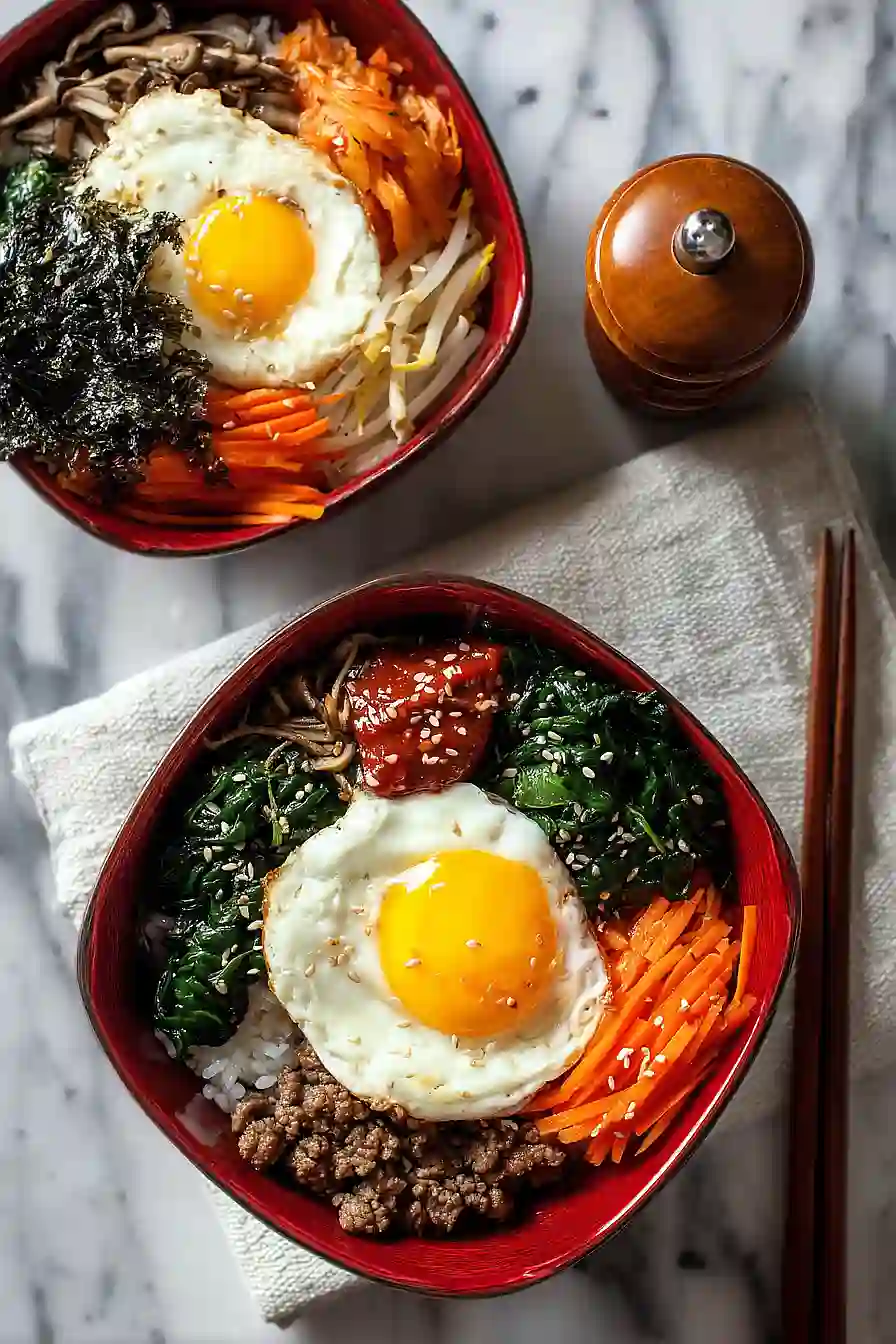
Why You’ll Love This Bibimbap
- Colorful, balanced meal – This Korean rice bowl packs in plenty of vegetables alongside seasoned beef and a fried egg, giving you a complete meal in one bowl.
- Customizable to your taste – You can adjust the spice level of the gochujang sauce and swap out vegetables based on what you have on hand or prefer.
- Make-ahead friendly – Prep all the components in advance and store them separately, then just assemble and mix when you’re ready to eat.
- Restaurant-quality at home – This popular Korean dish might seem fancy, but it’s actually straightforward to make in your own kitchen with ingredients you can find at most grocery stores.
What Kind of Rice Should I Use?
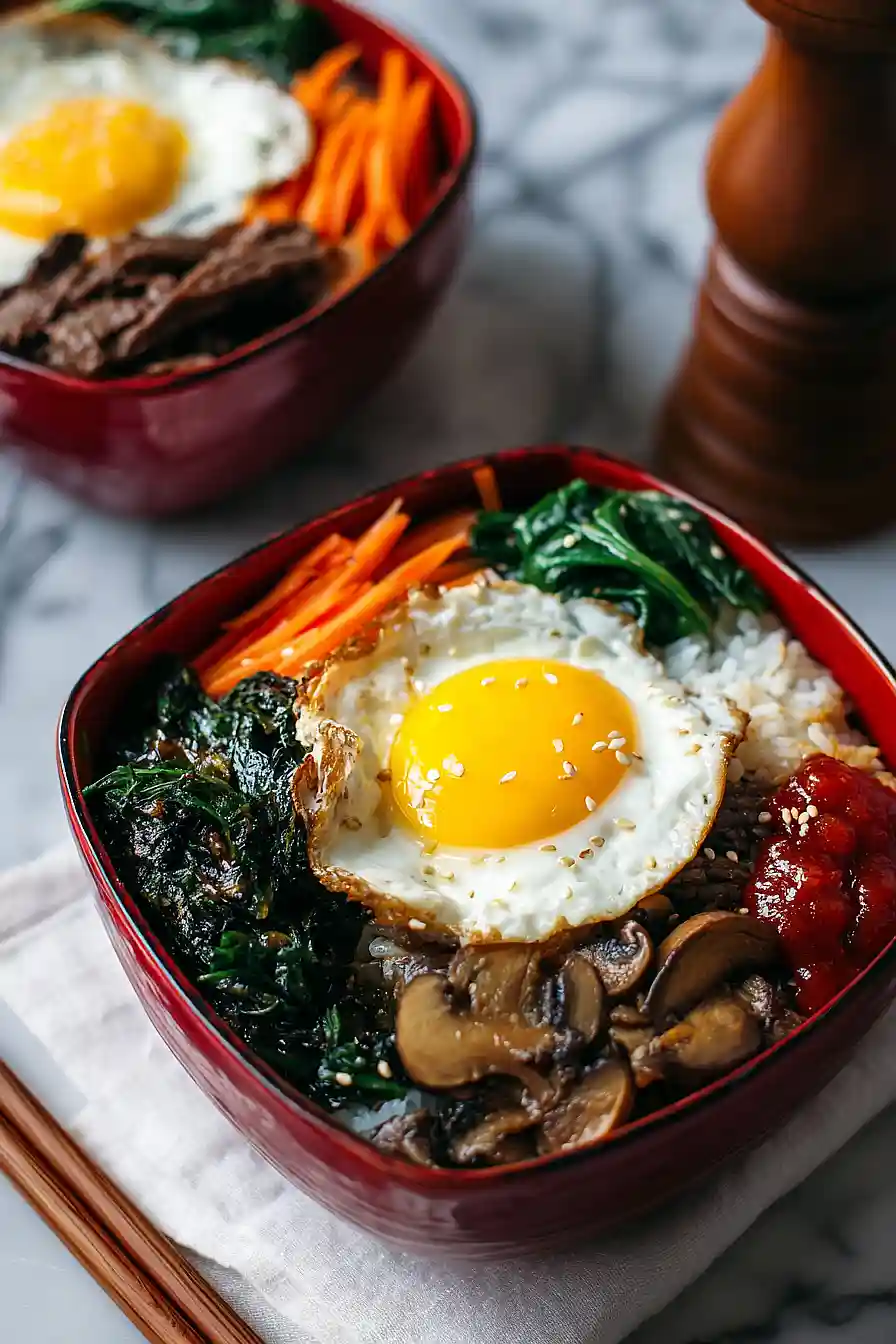
For bibimbap, short-grain white rice is your best bet since it has that slightly sticky texture that holds up well when you mix everything together. Japanese sushi rice or Korean short-grain rice are perfect choices and you can find them at most Asian grocery stores or even regular supermarkets these days. If you only have long-grain rice like jasmine or basmati on hand, it’ll still work, but the texture won’t be quite as authentic since those varieties are fluffier and less sticky. Make sure your rice is freshly steamed and still warm when you assemble your bibimbap – cold rice just doesn’t hit the same and won’t mix as nicely with the gochujang sauce.
Options for Substitutions
Bibimbap is a pretty forgiving dish when it comes to swapping ingredients, so feel free to work with what you have:
- Beef mince: You can easily swap beef for ground chicken, turkey, or pork. For a vegetarian version, try crumbled firm tofu or tempeh – just marinate it the same way and cook until golden.
- Gochujang: This Korean chili paste is pretty essential for authentic bibimbap flavor, so I’d recommend keeping it if possible. In a pinch, you can mix sriracha with a bit of miso paste, but the taste won’t be quite the same.
- Shiitake mushrooms: Regular button mushrooms, cremini, or oyster mushrooms all work well here. Just slice them thin and cook the same way.
- Bean sprouts: If you can’t find bean sprouts, julienned zucchini or thinly sliced cabbage make good substitutes. Blanch them briefly in boiling water before seasoning.
- Spinach: Kale, chard, or bok choy can replace spinach. Just remember they might need a bit more cooking time to become tender.
- Sesame oil: Sesame oil adds that nutty, toasted flavor that’s key to Korean cooking, so try not to skip it. If you must, use a neutral oil with a tiny splash of toasted sesame seeds blended in.
Watch Out for These Mistakes While Cooking
The biggest mistake when making bibimbap is cooking all your vegetables together, which leads to mushy textures and muddy flavors – each vegetable needs its own time in the pan to maintain its distinct taste and crunch.
Overcooking the beef mince is another common error that results in dry, tough meat, so cook it just until it’s no longer pink (about 3 minutes on medium-high heat) and remove it immediately from the pan.
Don’t skip the marinating step for the beef or rush it – that 30-minute wait allows the soy sauce and sesame oil to penetrate the meat and adds serious flavor to your dish.
Finally, make sure your rice is warm when assembling the bowl, as cold rice won’t mix well with the sauce and makes everything harder to combine when it’s time to eat.
What to Serve With Bibimbap?
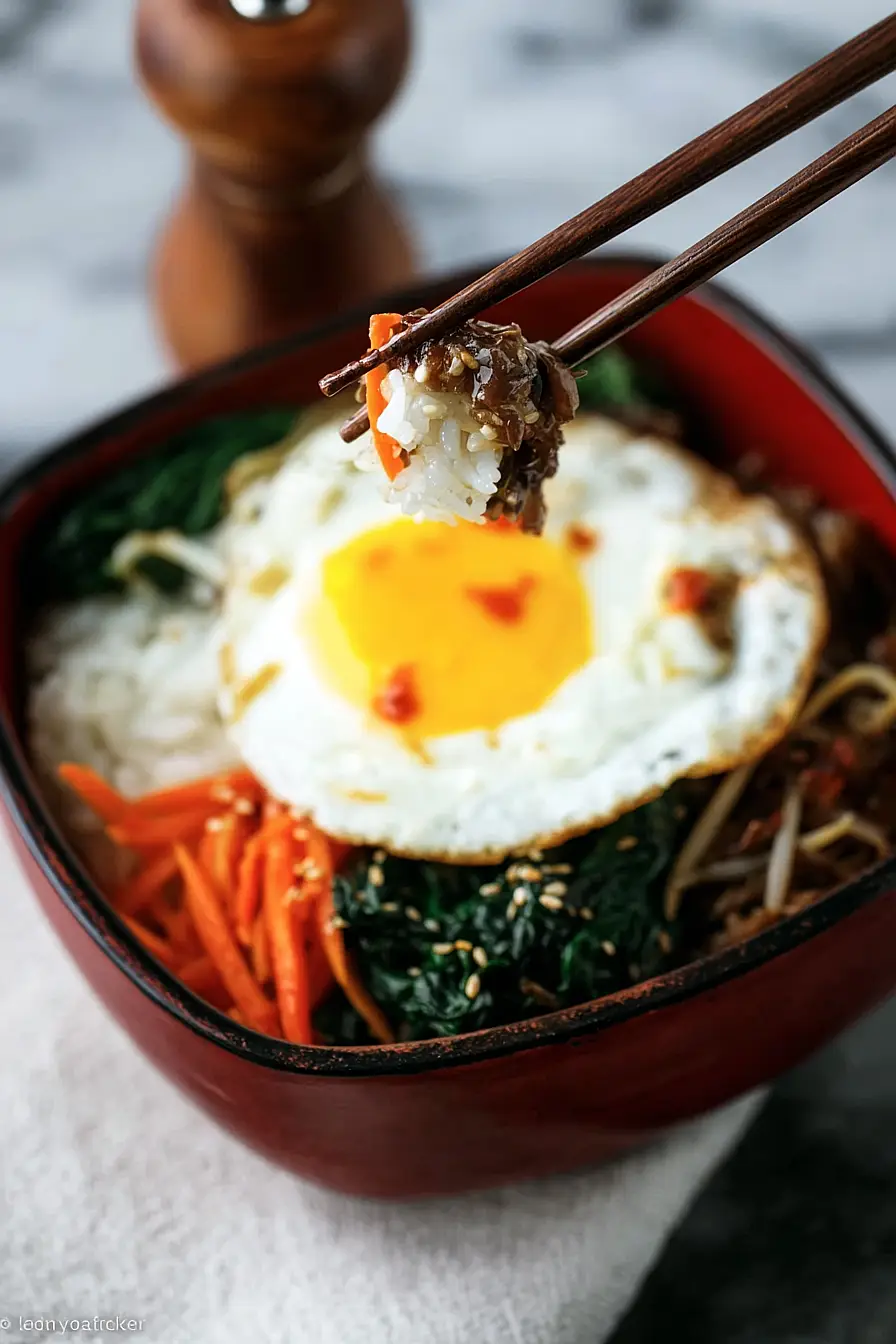
Bibimbap is pretty much a complete meal on its own since it’s packed with rice, veggies, and protein, but I love serving it with some classic Korean side dishes to round things out. A few pieces of kimchi on the side add a nice spicy, tangy kick that cuts through the richness of the egg and gochujang sauce. You could also add some cucumber salad dressed with rice vinegar and sesame oil for a cool, refreshing contrast, or serve it with miso soup or a light seaweed soup to keep the Korean theme going. If you want something extra, some crispy Korean fried chicken or pan-fried dumplings make great additions for a bigger spread.
Storage Instructions
Store: Bibimbap is actually great for meal prep! Keep the cooked vegetables, rice, and beef in separate airtight containers in the fridge for up to 4 days. I like to store the fried eggs separately too, or just cook them fresh when I’m ready to eat since they only take a minute.
Make Ahead: You can prep all the vegetables and beef a day or two in advance, which makes throwing together a bowl super quick on busy weeknights. The gochujang sauce also keeps well in a jar in the fridge for up to a week, so I usually make extra to have on hand.
Serve: When you’re ready to eat, warm up the rice, vegetables, and beef in the microwave or on the stove. Fry a fresh egg if you didn’t make one ahead, then assemble your bowl and drizzle with the sauce. Mix everything together right before eating for the best flavor!
| Preparation Time | 45-60 minutes |
| Cooking Time | 20-30 minutes |
| Total Time | 65-90 minutes |
| Level of Difficulty | Medium |
| Servings | 3.5 servings |
Estimated Nutrition
Estimated nutrition for the whole recipe (without optional ingredients):
- Calories: 1350-1550
- Protein: 50-60 g
- Fat: 45-55 g
- Carbohydrates: 205-225 g
Ingredients
For the beef:
- 4 oz beef mince
- 1 tbsp soy sauce (I use Kikkoman for the best balance of salt)
- 1 tbsp sesame oil
- 1.5 tsp brown sugar
- 1/2 tsp garlic
- 1/4 tsp ground ginger
For the vegetables and mushrooms:
- 9 oz spinach
- 12 oz bean sprouts
- 4 oz shiitake mushroom (thinly sliced into 1/8-inch strips)
- 4.5 oz carrots (julienned into 2-inch long matchsticks)
- 3/4 tsp salt
- cooking oil
For the sauce:
- 2 tbsp gochujang (I recommend O’Food brand for authentic heat)
- 1.5 tbsp sesame oil
- 1 tbsp sugar
- 1 tbsp water
- 1 tbsp sesame seeds
- 1 tsp vinegar
- 1 tsp garlic
For the base and assembly:
- 3 cups steamed rice (short-grain sushi rice provides the best texture)
- 3 eggs
- seaweed
Step 1: Prepare the Mise en Place and Marinate the Beef
- 4 oz beef mince
- 1 tbsp soy sauce
- 1 tbsp sesame oil
- 1.5 tsp brown sugar
- 1/2 tsp garlic
- 1/4 tsp ground ginger
- 4 oz shiitake mushroom, thinly sliced
- 4.5 oz carrots, julienned
Slice the shiitake mushrooms into thin 1/8-inch strips and julienne the carrots into 2-inch long matchsticks.
In a small bowl, combine the beef mince with 1 tablespoon soy sauce, 1 tablespoon sesame oil, brown sugar, garlic, and ground ginger.
Stir well to coat the meat evenly and set aside to marinate while you prepare the vegetables.
I find that letting the beef marinate even for just 15-20 minutes while you work on other components really deepens the flavor, so don’t skip this step if time allows.
Step 2: Cook the Vegetables in Batches
- cooking oil
- 3/4 tsp salt
- 4.5 oz carrots, julienned from Step 1
- 4 oz shiitake mushroom, sliced from Step 1
- 9 oz spinach
- 12 oz bean sprouts
Heat a large skillet or wok over medium-high heat with a light coating of cooking oil.
Working with one vegetable at a time, cook the carrots with a pinch of salt for 2-3 minutes until just tender-crisp, then transfer to a plate.
Repeat with the mushrooms, cooking them with salt for 2-3 minutes until golden and tender.
While the vegetables cook, blanch the spinach in boiling water for 1-2 minutes, then drain well and squeeze out excess moisture.
Similarly, blanch the bean sprouts for 2 minutes, drain, and season lightly with salt.
Cook each vegetable separately so they maintain their individual flavors and textures rather than becoming a mushy mixture.
Step 3: Cook the Marinated Beef
- marinated beef from Step 1
In the same skillet over medium-high heat, add the marinated beef from Step 1 and cook for 3-5 minutes, breaking it up with a spoon as it cooks, until browned and cooked through.
Transfer to a plate and set aside.
The beef should be well-browned to develop deep, savory flavors that anchor the entire dish.
Step 4: Prepare the Gochujang Sauce and Fry the Eggs
- 2 tbsp gochujang
- 1.5 tbsp sesame oil
- 1 tbsp sugar
- 1 tbsp water
- 1 tsp vinegar
- 1 tsp garlic
- 3 eggs
- cooking oil
While the beef cooks, whisk together the gochujang, 1.5 tablespoons sesame oil, sugar, water, vinegar, and garlic in a small bowl to create a smooth, well-combined sauce.
Set aside.
Then fry the 3 eggs in the skillet until the whites are set but the yolks remain runny—this creates a creamy element that brings everything together when you mix the bibimbap.
I always prefer runny yolks because they act as a sauce and coat all the ingredients beautifully.
Step 5: Assemble the Bibimbap Bowls
- 3 cups steamed rice
- cooked beef from Step 3
- cooked carrots from Step 2
- cooked mushrooms from Step 2
- cooked spinach from Step 2
- cooked bean sprouts from Step 2
- fried eggs from Step 4
- 1 tbsp sesame seeds
- seaweed
- gochujang sauce from Step 4
Divide the steamed rice evenly among three bowls, creating a slight well in the center of each.
Arrange the cooked beef, carrots, mushrooms, spinach, and bean sprouts from Steps 1-3 in separate sections on top of the rice, keeping them distinct and organized.
Place a fried egg from Step 4 on top of each bowl, sprinkle with sesame seeds, and add a sheet of seaweed.
Drizzle the gochujang sauce from Step 4 over the top.
Step 6: Mix and Serve
Use a spoon to vigorously mix all the components together until the rice is coated with sauce, the egg yolk breaks and creates a creamy texture, and all the vegetables and meat are distributed throughout.
Serve immediately while the rice is still warm and everything is at its peak flavor.
Ultimate Korean Bibimbap
Ingredients
For the beef
- 4 oz beef mince
- 1 tbsp soy sauce (I use Kikkoman for the best balance of salt)
- 1 tbsp sesame oil
- 1.5 tsp brown sugar
- 1/2 tsp garlic
- 1/4 tsp ground ginger
For the vegetables and mushrooms
- 9 oz spinach
- 12 oz bean sprouts
- 4 oz shiitake mushroom (thinly sliced into 1/8-inch strips)
- 4.5 oz carrots (julienned into 2-inch long matchsticks)
- 3/4 tsp salt
- cooking oil
For the sauce
- 2 tbsp gochujang (I recommend O'Food brand for authentic heat)
- 1.5 tbsp sesame oil
- 1 tbsp sugar
- 1 tbsp water
- 1 tbsp sesame seeds
- 1 tsp vinegar
- 1 tsp garlic
For the base and assembly
- 3 cups steamed rice (short-grain sushi rice provides the best texture)
- 3 eggs
- seaweed
Instructions
- Slice the shiitake mushrooms into thin 1/8-inch strips and julienne the carrots into 2-inch long matchsticks. In a small bowl, combine the beef mince with 1 tablespoon soy sauce, 1 tablespoon sesame oil, brown sugar, garlic, and ground ginger. Stir well to coat the meat evenly and set aside to marinate while you prepare the vegetables. I find that letting the beef marinate even for just 15-20 minutes while you work on other components really deepens the flavor, so don't skip this step if time allows.
- Heat a large skillet or wok over medium-high heat with a light coating of cooking oil. Working with one vegetable at a time, cook the carrots with a pinch of salt for 2-3 minutes until just tender-crisp, then transfer to a plate. Repeat with the mushrooms, cooking them with salt for 2-3 minutes until golden and tender. While the vegetables cook, blanch the spinach in boiling water for 1-2 minutes, then drain well and squeeze out excess moisture. Similarly, blanch the bean sprouts for 2 minutes, drain, and season lightly with salt. Cook each vegetable separately so they maintain their individual flavors and textures rather than becoming a mushy mixture.
- In the same skillet over medium-high heat, add the marinated beef from Step 1 and cook for 3-5 minutes, breaking it up with a spoon as it cooks, until browned and cooked through. Transfer to a plate and set aside. The beef should be well-browned to develop deep, savory flavors that anchor the entire dish.
- While the beef cooks, whisk together the gochujang, 1.5 tablespoons sesame oil, sugar, water, vinegar, and garlic in a small bowl to create a smooth, well-combined sauce. Set aside. Then fry the 3 eggs in the skillet until the whites are set but the yolks remain runny—this creates a creamy element that brings everything together when you mix the bibimbap. I always prefer runny yolks because they act as a sauce and coat all the ingredients beautifully.
- Divide the steamed rice evenly among three bowls, creating a slight well in the center of each. Arrange the cooked beef, carrots, mushrooms, spinach, and bean sprouts from Steps 1-3 in separate sections on top of the rice, keeping them distinct and organized. Place a fried egg from Step 4 on top of each bowl, sprinkle with sesame seeds, and add a sheet of seaweed. Drizzle the gochujang sauce from Step 4 over the top.
- Use a spoon to vigorously mix all the components together until the rice is coated with sauce, the egg yolk breaks and creates a creamy texture, and all the vegetables and meat are distributed throughout. Serve immediately while the rice is still warm and everything is at its peak flavor.