Weeknight dinners can feel like an endless cycle of the same old recipes, especially when you’re trying to balance flavor with something that actually comes together quickly. Between work, family schedules, and everything else on your plate, the last thing you want is a complicated meal that requires a trip to three different stores or hours in the kitchen.
That’s exactly why these Korean chicken bowls have become one of my most-requested recipes. They’re packed with bold, sweet, and spicy flavors from gochujang and honey, they come together in under 30 minutes, and you can customize them based on what you have in your fridge or what your family will actually eat.
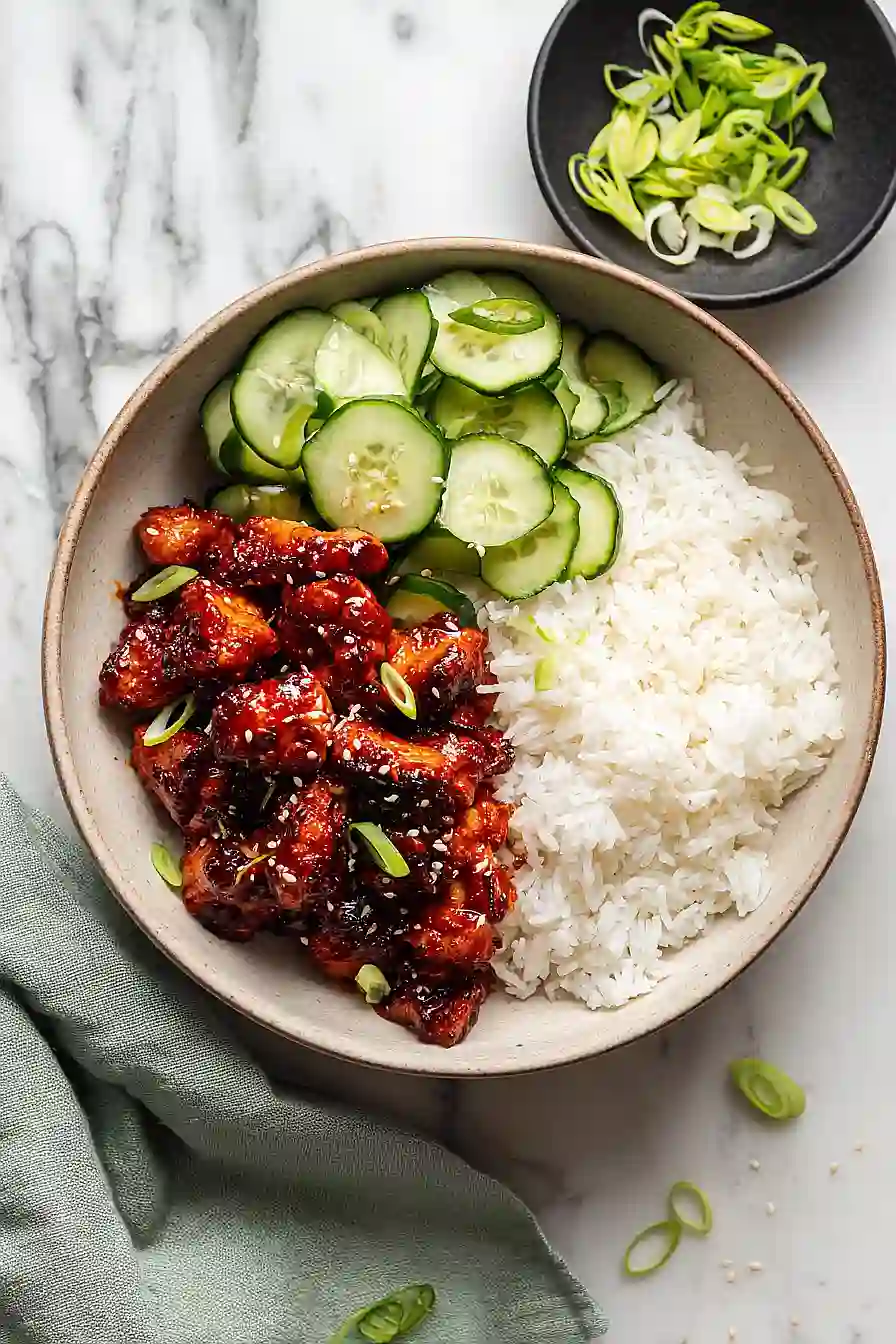
Why You’ll Love These Korean Chicken Bowls
- Ready in under 30 minutes – This recipe comes together quickly, making it perfect for busy weeknights when you need dinner on the table fast.
- Bold, balanced flavors – The sweet honey, spicy gochujang, and savory soy sauce create an addictive sauce that’ll have everyone asking for seconds.
- Simple ingredients – You probably have most of these pantry staples on hand, and the rest are easy to find at any grocery store.
- High-protein meal – Ground chicken is a lean protein that keeps you satisfied without feeling heavy, making this a healthier alternative to takeout.
- Customizable bowls – You can easily add your favorite toppings or adjust the spice level to suit your taste preferences.
What Kind of Ground Chicken Should I Use?
Ground chicken comes in different fat percentages, and for this Korean bowl recipe, you have some flexibility. The leaner 93/7 ground chicken will give you a lighter result, while 85/15 has more fat and will stay juicier as it cooks. If you can only find ground chicken breast at your store, that’ll work too, though it tends to be the driest option. Just keep an eye on it while cooking and don’t overdo it, since ground chicken can get a bit rubbly if it’s cooked too long. Some stores also sell ground dark meat chicken, which has the most flavor and moisture if you want to go that route.
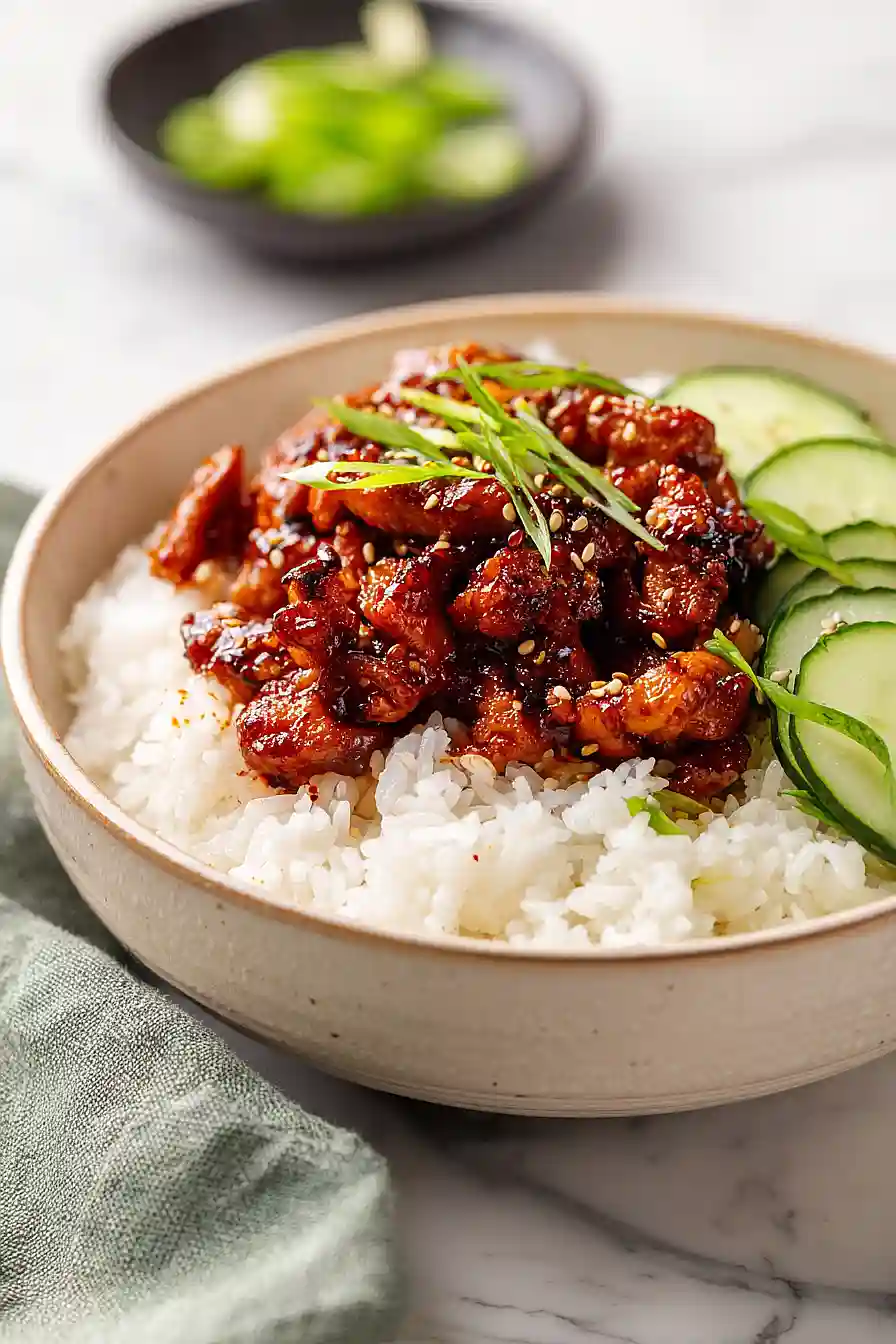
Options for Substitutions
This recipe is pretty forgiving when it comes to swaps, so here are some options if you’re missing an ingredient or two:
- Gochujang: This Korean chili paste is really what gives the dish its signature flavor, but if you can’t find it, mix together 1 tablespoon sriracha with 1 tablespoon miso paste as a substitute. It won’t be exactly the same, but you’ll still get that spicy, savory kick.
- Ground chicken: Ground turkey works great here and cooks the same way. You can also use ground pork for a richer flavor, or even crumbled firm tofu if you want a vegetarian version – just drain it well and cook it until it gets a bit crispy.
- Grapeseed oil: Any neutral cooking oil will do the job – vegetable oil, canola oil, or even avocado oil are all fine substitutes.
- Sesame oil: While sesame oil adds a nice nutty flavor, you can skip it if needed. The dish will still taste good, just with a slightly different profile.
- Fresh ginger: If you only have ground ginger, use about 1/4 teaspoon instead. It’s more concentrated than fresh, so a little goes a long way.
- Honey: Brown sugar, maple syrup, or agave nectar all work as sweeteners here. Start with the same amount and adjust to taste.
Watch Out for These Mistakes While Cooking
The biggest mistake when making Korean chicken bowls is not breaking up the ground chicken properly while it cooks, which leaves you with large clumps instead of a nice crumbly texture – use a wooden spoon or spatula to continuously break it apart as it browns.
Burning the garlic and ginger is another easy trap to fall into, so make sure your chicken is fully cooked before adding them, and only cook for that one minute since they can turn bitter quickly over high heat.
Don’t skip draining excess fat from the ground chicken before adding your sauce, as too much grease will make your bowl oily and prevent the sauce from coating the meat properly.
Finally, add the gochujang sauce off high heat or reduce to medium, because the honey can burn and turn bitter if the pan is too hot, ruining that perfect sweet and spicy balance you’re going for.
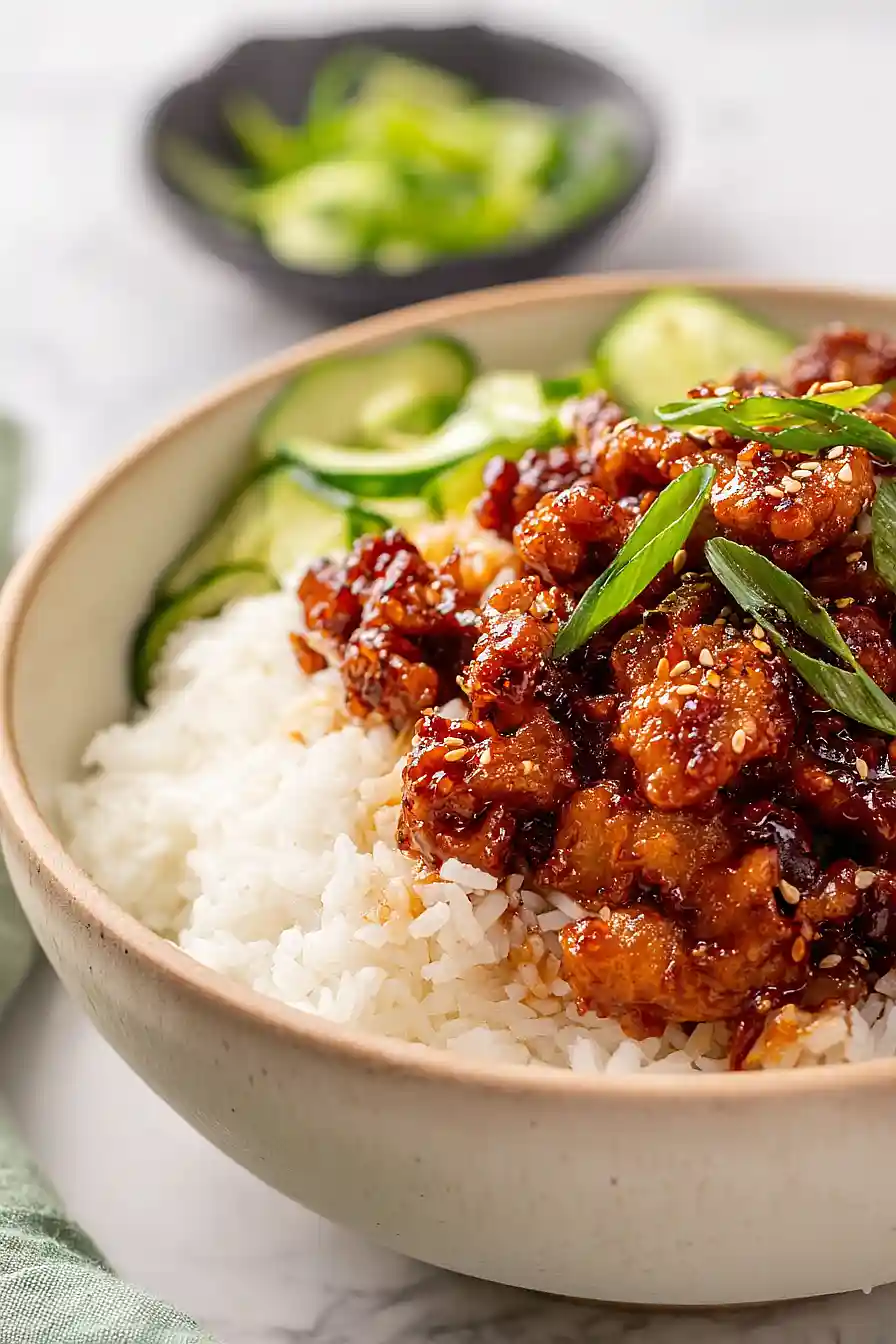
What to Serve With Korean Chicken Bowls?
These Korean chicken bowls are pretty filling on their own, but I love adding some quick pickled vegetables on the side for extra crunch and tang. Kimchi is an obvious choice here and adds that authentic Korean flavor, or you can make a simple cucumber salad with rice vinegar and a pinch of sugar if you want something milder. A fried egg on top of the bowl is another great addition – the runny yolk mixes into the rice and makes everything even more delicious. If you’re feeding a crowd, some steamed edamame or miso soup on the side rounds out the meal nicely without too much extra work.
Storage Instructions
Store: Keep your Korean chicken and rice in separate airtight containers in the fridge for up to 4 days. I like storing the cucumber separately too since it stays crunchier that way. When you’re ready to eat, just reheat the chicken and rice, then top with fresh cucumber.
Freeze: The Korean chicken freezes really well for up to 3 months in a freezer-safe container. I don’t recommend freezing the cucumber or rice though, as they don’t hold up as well. Just make fresh rice when you’re ready to eat and slice up some fresh cucumber.
Reheat: Warm up the chicken in a skillet over medium heat with a splash of water to keep it moist, or microwave it for about 2 minutes, stirring halfway through. The rice reheats best in the microwave with a damp paper towel on top to keep it from drying out.
| Preparation Time | 10-15 minutes |
| Cooking Time | 10-15 minutes |
| Total Time | 20-30 minutes |
| Level of Difficulty | Easy |
| Servings | 4 servings |
Estimated Nutrition
Estimated nutrition for the whole recipe (without optional ingredients):
- Calories: 1100-1300
- Protein: 55-65 g
- Fat: 40-50 g
- Carbohydrates: 110-140 g
Ingredients
For the sauce:
- 4 tbsp soy sauce (I use Kikkoman Less Sodium for better salt control)
- 3 tbsp gochujang
- 2 tbsp honey
- 1.5 tsp sesame oil (gives the sauce a toasted, nutty aroma)
- 1 tsp red pepper flakes
- 1 tbsp rice vinegar
For the chicken:
- 1 tbsp grapeseed oil
- 1 lb ground chicken
- 1/3 cup scallions (thinly sliced on a bias, about 1/8-inch thick)
- 2 tbsp garlic
- 1/2 tsp ginger (freshly grated for a brighter, zingy flavor)
For serving:
- 1 cucumber (thinly sliced into 1/8-inch rounds)
- rice (I prefer Nishiki medium grain for a sticky texture)
Step 1: Prepare the Sauce and Mise en Place
- 4 tbsp soy sauce
- 3 tbsp gochujang
- 2 tbsp honey
- 1.5 tsp sesame oil
- 1 tsp red pepper flakes
- 2 tbsp garlic, minced
- 1/2 tsp ginger, freshly grated
- 1/3 cup scallions, sliced on bias
- 1 cucumber, thinly sliced
While your rice cooks, whisk together the soy sauce, gochujang, honey, sesame oil, and red pepper flakes in a small bowl until the gochujang is fully incorporated and the sauce is smooth.
In a separate small bowl, combine the minced garlic and freshly grated ginger.
Thinly slice the cucumber into 1/8-inch rounds and set aside on a plate.
Slice the scallions on a bias into 1/8-inch pieces.
Having everything prepped and ready will let you move quickly through the cooking process without scrambling.
Step 2: Brown the Ground Chicken
- 1 tbsp grapeseed oil
- 1 lb ground chicken
Heat the grapeseed oil in a large skillet over high heat until shimmering.
Add the ground chicken and cook for about 5 minutes, breaking it up with a wooden spoon as it cooks, until it’s completely browned with no pink remaining.
Don’t rush this step—browning the chicken properly builds flavor through the Maillard reaction.
Pour off any excess fat if needed, leaving just enough to coat the pan.
Step 3: Add Aromatics and Build Flavor
- garlic and ginger mixture from Step 1
- scallions from Step 1
Reduce the heat to medium and add the garlic-ginger mixture from Step 1 along with the sliced scallions to the chicken.
Cook for about 1 minute, stirring constantly, until fragrant.
This brief cooking mellows the raw bite of the aromatics while keeping them bright and fresh.
I find that cooking aromatics for just a minute prevents them from becoming harsh or bitter.
Step 4: Finish the Chicken in the Sauce
- sauce mixture from Step 1
- 1 tbsp rice vinegar
Pour the sauce from Step 1 into the skillet with the chicken and aromatics.
Stir well to coat everything evenly, then simmer on medium heat for 2-3 minutes until the sauce thickens slightly and coats the chicken.
The heat will mellow the gochujang’s heat slightly while allowing the flavors to meld together.
Taste and adjust seasoning if needed—you may want a splash more rice vinegar if it feels too rich.
Step 5: Assemble and Serve
- rice, cooked
- chicken and sauce from Step 4
- sliced cucumber from Step 1
Divide the cooked rice between bowls and top with the Korean chicken from Step 4.
Arrange the sliced cucumber on the side or on top of the rice.
Serve immediately while the chicken is still warm and the sauce is glossy.
The cool, crisp cucumber provides a refreshing contrast to the savory, slightly spicy chicken.
Spicy Korean Chicken Bowls
Ingredients
For the sauce::
- 4 tbsp soy sauce (I use Kikkoman Less Sodium for better salt control)
- 3 tbsp gochujang
- 2 tbsp honey
- 1.5 tsp sesame oil (gives the sauce a toasted, nutty aroma)
- 1 tsp red pepper flakes
- 1 tbsp rice vinegar
For the chicken::
- 1 tbsp grapeseed oil
- 1 lb ground chicken
- 1/3 cup scallions (thinly sliced on a bias, about 1/8-inch thick)
- 2 tbsp garlic
- 1/2 tsp ginger (freshly grated for a brighter, zingy flavor)
For serving::
- 1 cucumber (thinly sliced into 1/8-inch rounds)
- rice (I prefer Nishiki medium grain for a sticky texture)
Instructions
- While your rice cooks, whisk together the soy sauce, gochujang, honey, sesame oil, and red pepper flakes in a small bowl until the gochujang is fully incorporated and the sauce is smooth. In a separate small bowl, combine the minced garlic and freshly grated ginger. Thinly slice the cucumber into 1/8-inch rounds and set aside on a plate. Slice the scallions on a bias into 1/8-inch pieces. Having everything prepped and ready will let you move quickly through the cooking process without scrambling.
- Heat the grapeseed oil in a large skillet over high heat until shimmering. Add the ground chicken and cook for about 5 minutes, breaking it up with a wooden spoon as it cooks, until it's completely browned with no pink remaining. Don't rush this step—browning the chicken properly builds flavor through the Maillard reaction. Pour off any excess fat if needed, leaving just enough to coat the pan.
- Reduce the heat to medium and add the garlic-ginger mixture from Step 1 along with the sliced scallions to the chicken. Cook for about 1 minute, stirring constantly, until fragrant. This brief cooking mellows the raw bite of the aromatics while keeping them bright and fresh. I find that cooking aromatics for just a minute prevents them from becoming harsh or bitter.
- Pour the sauce from Step 1 into the skillet with the chicken and aromatics. Stir well to coat everything evenly, then simmer on medium heat for 2-3 minutes until the sauce thickens slightly and coats the chicken. The heat will mellow the gochujang's heat slightly while allowing the flavors to meld together. Taste and adjust seasoning if needed—you may want a splash more rice vinegar if it feels too rich.
- Divide the cooked rice between bowls and top with the Korean chicken from Step 4. Arrange the sliced cucumber on the side or on top of the rice. Serve immediately while the chicken is still warm and the sauce is glossy. The cool, crisp cucumber provides a refreshing contrast to the savory, slightly spicy chicken.

