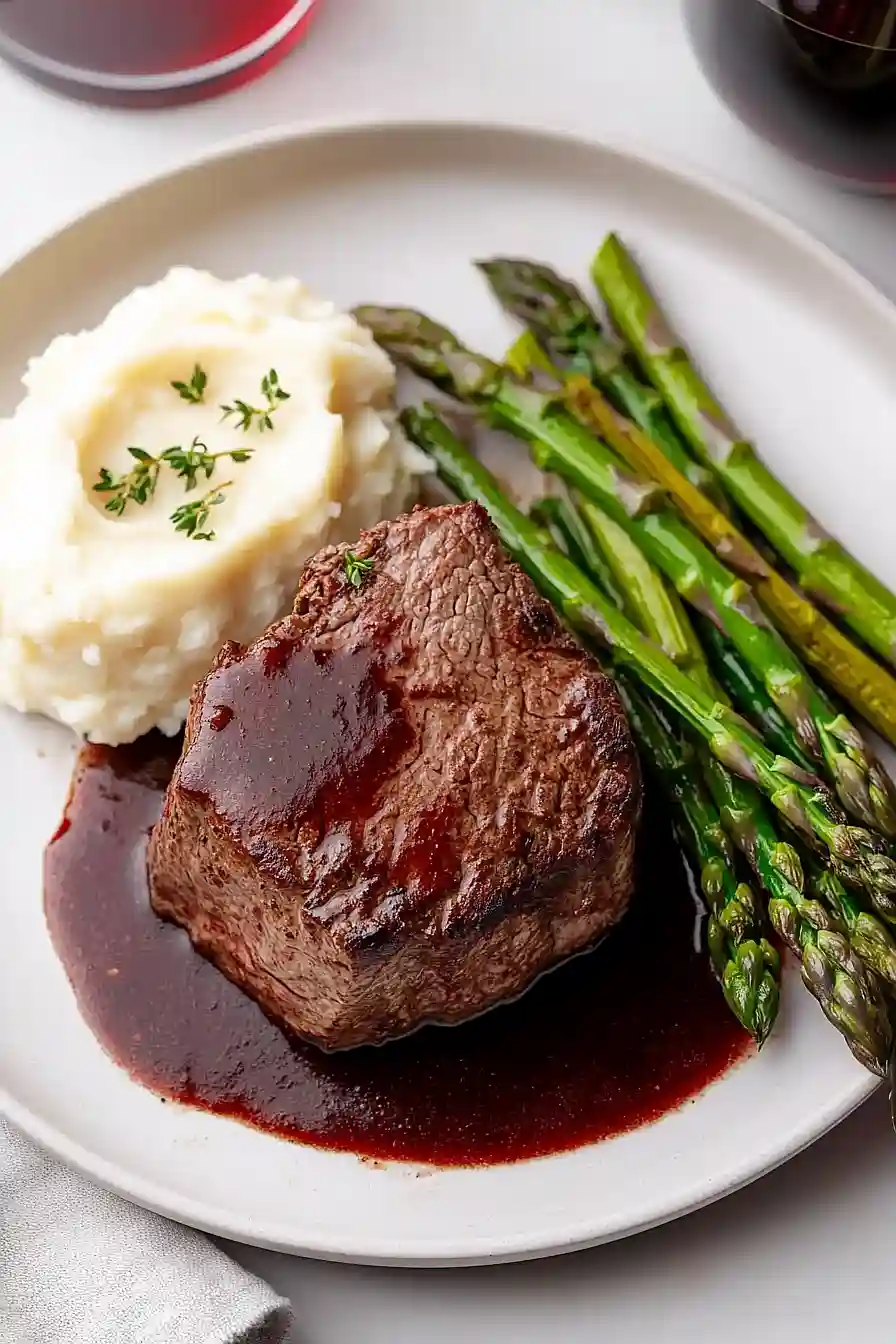
Here is my favorite filet mignon recipe, with a rich, easy red wine sauce that uses simple ingredients like shallots, garlic, butter, and a good bottle of red wine that brings everything together.
This filet mignon is what I make when I want to feel fancy at home without spending a fortune at a steakhouse. My husband always says it tastes better than any restaurant, and honestly, once you get the hang of it, it’s not as scary as you might think.
Why You’ll Love This Filet Mignon
- Restaurant-quality at home – You can create an elegant steakhouse experience in your own kitchen without the hefty price tag or need for reservations.
- Simple ingredients – With just a few basic ingredients like salt, butter, and red wine, you can make something that tastes incredibly fancy and impressive.
- Perfect for special occasions – Whether it’s date night, an anniversary, or celebrating a promotion, this dish makes any evening feel special and memorable.
- Rich red wine sauce – The pan sauce made with red wine and butter takes these tender steaks from good to absolutely amazing, adding depth and richness to every bite.
- Foolproof technique – Once you learn the basic searing and sauce-making method, you’ll have the confidence to make perfect filet mignon whenever the mood strikes.
What Kind of Filet Mignon Should I Use?
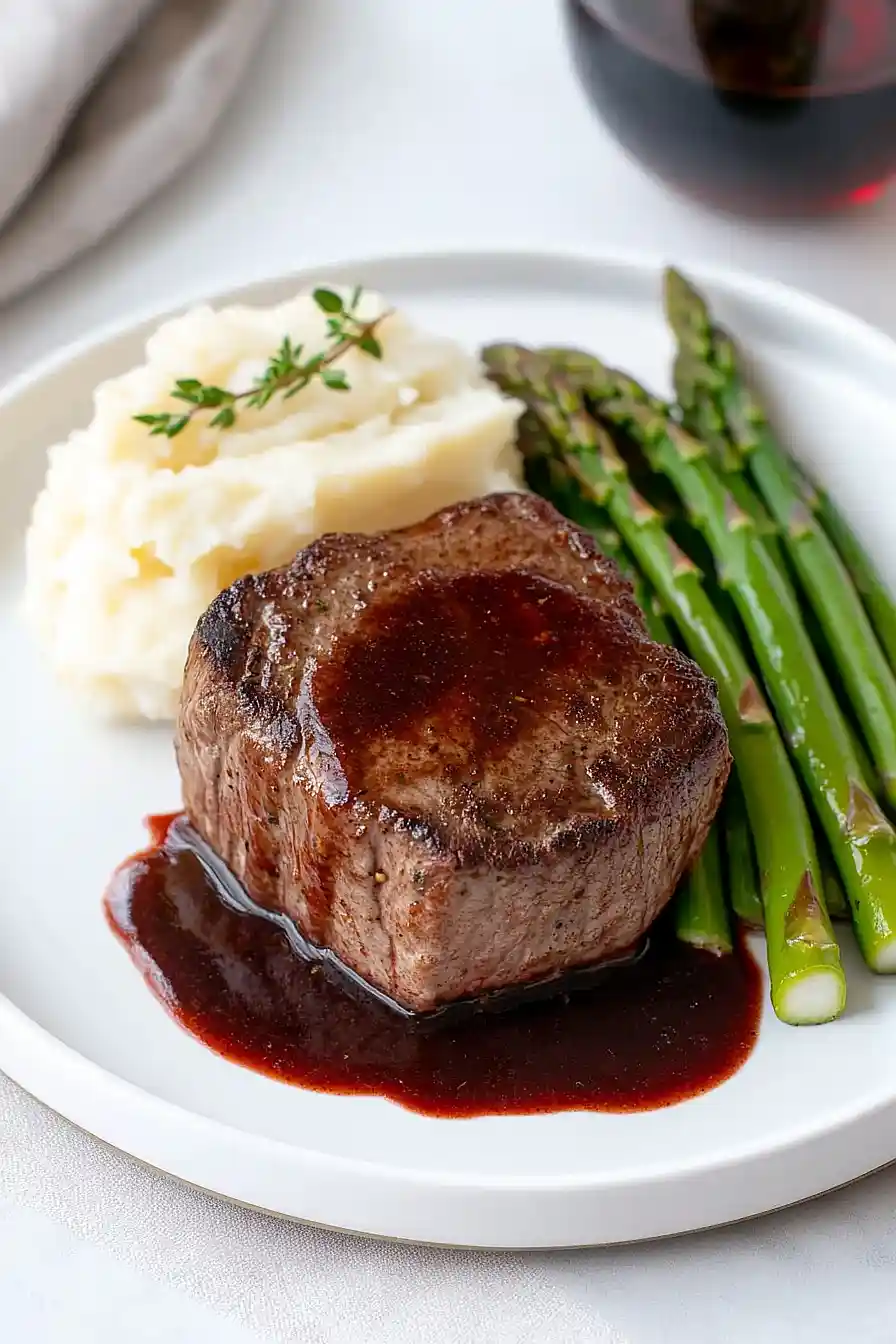
When shopping for filet mignon, look for steaks that are at least 1 to 2 inches thick – thinner cuts will cook too quickly and you’ll miss out on that perfect pink center. You can find filet mignon at most grocery stores, but for the best quality, consider visiting a local butcher who can cut them to your preferred thickness. The steaks should have a deep red color with minimal marbling since filet mignon is naturally a lean cut. If you’re buying from the grocery store, check the sell-by date and make sure the meat feels firm to the touch, not squishy or slimy.
Options for Substitutions
While filet mignon is the star here, you can make a few smart swaps if needed:
- Filet mignon: If filet mignon isn’t in the budget, try ribeye, New York strip, or sirloin steaks instead. They’ll have more marbling and slightly different texture, but will still be delicious with this red wine sauce.
- Red wine: Any full-bodied red wine works great – try Cabernet Sauvignon, Merlot, or Malbec if you don’t have Zinfandel. Just avoid cooking wines from the grocery store and use something you’d actually drink.
- Unsalted butter: Salted butter can work in a pinch, just reduce the salt you add to the dish. The butter is key for finishing the sauce, so don’t skip it entirely.
- Olive oil: Canola oil, vegetable oil, or even avocado oil work well for searing. You want something with a higher smoke point than extra virgin olive oil for the best sear.
Watch Out for These Mistakes While Cooking
The biggest mistake when cooking filet mignon is not letting the steaks come to room temperature before cooking, which leads to uneven cooking with a cold center and overcooked edges – pull them out of the fridge 30-45 minutes before you plan to cook.
Another common error is moving the steaks around too much in the pan, so resist the urge to flip or poke them constantly and let them develop a proper sear by leaving them untouched for 3-4 minutes per side.
When making the red wine sauce, avoid using cooking wine or cheap bottles since the flavor concentrates as it reduces – use something you’d actually drink, and don’t forget to let the alcohol cook off completely by simmering for at least 10 minutes.
Finally, always let your steaks rest for 5-10 minutes after cooking to allow the juices to redistribute, which prevents them from running all over your cutting board when you slice into them.
What to Serve With Filet Mignon?
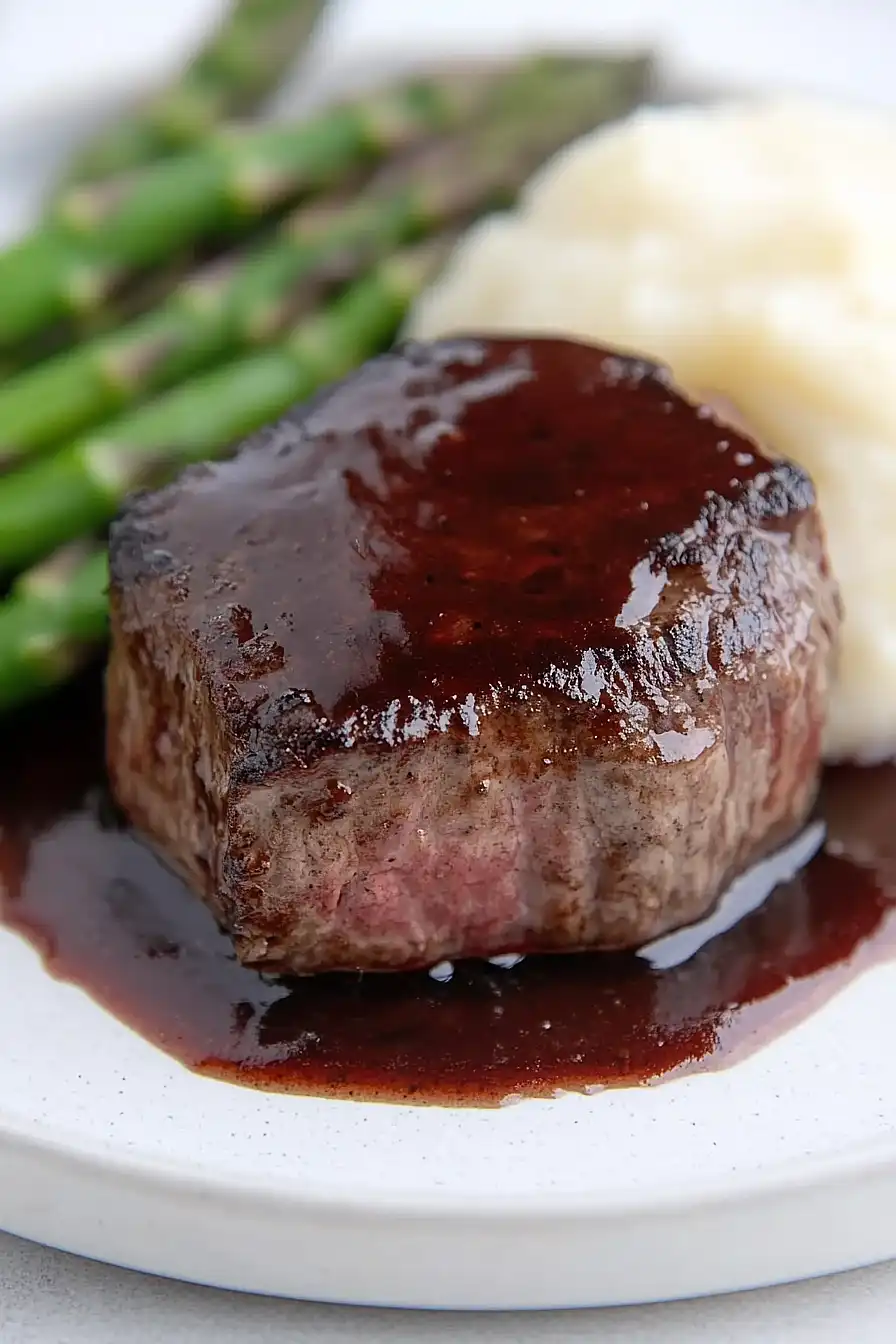
Since filet mignon is such a special cut of beef, I love pairing it with classic steakhouse sides that really complement that rich red wine sauce. Creamy mashed potatoes or roasted fingerling potatoes are perfect for soaking up all that delicious sauce, while roasted asparagus or green beans add a nice fresh contrast to the richness of the steak. A simple arugula salad with lemon vinaigrette helps cut through the butter and wine flavors, and don’t forget some crusty bread to make sure you get every drop of that sauce. For a truly indulgent meal, sautéed mushrooms or caramelized onions make excellent additions alongside your steak.
Storage Instructions
Refrigerate: Leftover filet mignon keeps well in the fridge for up to 3 days when stored in an airtight container. I like to slice it thin and use it for steak salads or sandwiches the next day. Store the red wine sauce separately in a small container so you can reheat it without overcooking the meat.
Freeze: You can freeze cooked filet mignon for up to 3 months, though the texture won’t be quite as tender as fresh. Wrap individual portions tightly in plastic wrap, then place in freezer bags. The red wine sauce freezes nicely too and actually tastes great after thawing.
Warm Up: To avoid overcooking your expensive steak, warm it gently in a low oven at 250°F until just heated through. For the sauce, simply reheat it on the stovetop over medium-low heat, stirring occasionally. You might need to add a splash of wine or broth if it gets too thick.
| Preparation Time | 30-90 minutes |
| Cooking Time | 15-20 minutes |
| Total Time | 45-110 minutes |
| Level of Difficulty | Medium |
Estimated Nutrition
Estimated nutrition for the whole recipe (without optional ingredients):
- Calories: 1100-1800
- Protein: 110-180 g
- Fat: 70-120 g
- Carbohydrates: 8-12 g
Ingredients
For the steaks:
- 2 to 4 filet mignon steaks (1 to 2 inches thick)
- Kosher salt
- 1 to 2 tbsp extra-virgin olive oil or canola oil
- Ground black pepper, as needed
For the pan sauce:
- 3 to 4 tbsp unsalted butter, divided
- 2 cups robust red wine (such as zinfandel)
Step 1: Prepare the Steaks
- 2 to 4 filet mignon steaks (1 to 2 inches thick)
Trim the filet mignon steaks of any tough silver skin or gristly bits if needed.
If your steak has the chain attached and you do not wish to serve it, cut it away and save for another purpose.
Step 2: Bring Steaks to Room Temperature and Season
- 2 to 4 filet mignon steaks (1 to 2 inches thick) from Step 1
- 1 to 2 tbsp extra-virgin olive oil or canola oil
- kosher salt
Allow the steaks to rest at room temperature for at least 30 minutes and up to 90 minutes, depending on their thickness.
Just before cooking, pat the steaks dry with paper towels.
Coat them with oil and salt generously on all sides.
This helps create a beautifully flavorful crust during searing.
I always recommend letting the steaks sit out to take the chill off for an even cook.
Step 3: Sear the Steaks
- 2 to 4 filet mignon steaks (1 to 2 inches thick) from Step 2
- 1 to 2 tbsp extra-virgin olive oil or canola oil
Heat 2 tablespoons of oil in a cast iron pan over high heat for 1 minute, swirling to coat the pan.
Place the steaks into the hot pan, then immediately reduce the heat to medium or medium-high depending on your stovetop.
Sear the steaks undisturbed for at least 3 minutes or up to 6 minutes per side for a 2-inch thick cut.
This initial sear helps develop a beautiful, flavorful crust.
Step 4: Cook the Other Side and Rest the Steaks
Flip the steaks and cook for another 2 to 5 minutes, adjusting the time based on the thickness and your preferred doneness.
For accuracy, use the finger test or an instant-read meat thermometer (120°F to 125°F for rare, 130°F to 135°F for medium rare, 140°F to 145°F for medium).
Remove the steaks from the pan, loosely tent them with foil, and let them rest while you prepare the sauce.
Resting allows the juices to redistribute—I always make sure to let my steaks rest for at least 5 minutes for maximum juiciness.
Step 5: Make the Red Wine Pan Sauce
- 2 cups robust red wine (such as Zinfandel)
- 3 to 4 tbsp unsalted butter, divided
- juices from rested steak (from Step 4)
- kosher salt
- ground black pepper, as needed
Pour the red wine into the same pan and turn the heat to high.
Boil the wine vigorously, scraping up any browned bits with a wooden spoon, until reduced by three-quarters, about 10 minutes.
Add any juices released by the resting steaks back into the sauce.
Once the wine has stopped bubbling, turn off the heat.
Whisk in the unsalted butter, one tablespoon at a time, ensuring each addition is fully incorporated before the next.
Taste the sauce and adjust with kosher salt as needed.
Pour the sauce over the rested steaks and sprinkle them with freshly ground black pepper before serving.
For an extra layer of flavor, I like to use a robust red wine—you’ll really taste the difference in the sauce!
Simple Filet Mignon with Red Wine Sauce
Ingredients
For the steaks:
- 2 to 4 filet mignon steaks (1 to 2 inches thick)
- kosher salt
- 1 to 2 tbsp extra-virgin olive oil or canola oil
- ground black pepper, as needed
For the pan sauce:
- 3 to 4 tbsp unsalted butter, divided
- 2 cups robust red wine (such as Zinfandel)
Instructions
- Trim the filet mignon steaks of any tough silver skin or gristly bits if needed. If your steak has the chain attached and you do not wish to serve it, cut it away and save for another purpose.
- Allow the steaks to rest at room temperature for at least 30 minutes and up to 90 minutes, depending on their thickness. Just before cooking, pat the steaks dry with paper towels. Coat them with oil and salt generously on all sides. This helps create a beautifully flavorful crust during searing. I always recommend letting the steaks sit out to take the chill off for an even cook.
- Heat 2 tablespoons of oil in a cast iron pan over high heat for 1 minute, swirling to coat the pan. Place the steaks into the hot pan, then immediately reduce the heat to medium or medium-high depending on your stovetop. Sear the steaks undisturbed for at least 3 minutes or up to 6 minutes per side for a 2-inch thick cut. This initial sear helps develop a beautiful, flavorful crust.
- Flip the steaks and cook for another 2 to 5 minutes, adjusting the time based on the thickness and your preferred doneness. For accuracy, use the finger test or an instant-read meat thermometer (120°F to 125°F for rare, 130°F to 135°F for medium rare, 140°F to 145°F for medium). Remove the steaks from the pan, loosely tent them with foil, and let them rest while you prepare the sauce. Resting allows the juices to redistribute—I always make sure to let my steaks rest for at least 5 minutes for maximum juiciness.
- Pour the red wine into the same pan and turn the heat to high. Boil the wine vigorously, scraping up any browned bits with a wooden spoon, until reduced by three-quarters, about 10 minutes. Add any juices released by the resting steaks back into the sauce. Once the wine has stopped bubbling, turn off the heat. Whisk in the unsalted butter, one tablespoon at a time, ensuring each addition is fully incorporated before the next. Taste the sauce and adjust with kosher salt as needed. Pour the sauce over the rested steaks and sprinkle them with freshly ground black pepper before serving. For an extra layer of flavor, I like to use a robust red wine—you'll really taste the difference in the sauce!