I didn’t try real Hungarian goulash until I was in my thirties, and I’ll be honest—I thought it was just beef stew with paprika. Turns out, I was way off. The goulash my neighbor’s grandmother made was nothing like what I’d been calling goulash my whole life.
Real Hungarian goulash is more like a thick soup than a stew, and it’s all about the paprika. Not just any paprika either—you need the good stuff from Hungary, which has a sweet, earthy flavor that regular grocery store paprika just can’t match. And here’s the thing: authentic goulash doesn’t take fancy cooking skills. It just takes the right ingredients and a little patience while everything simmers together on the stove.
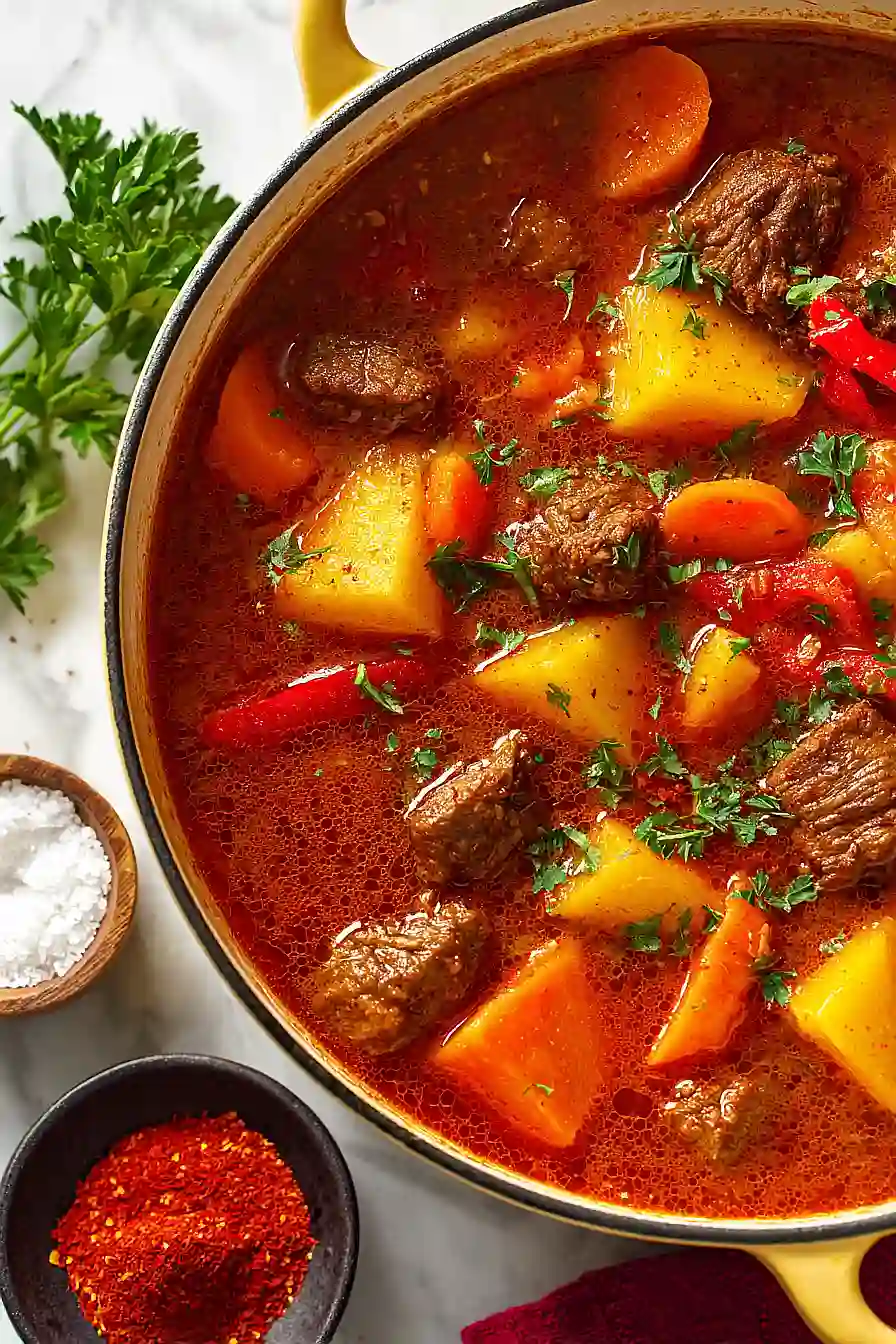
Why You’ll Love This Hungarian Goulash
- Authentic, rich flavors – This traditional recipe brings the real taste of Hungary to your kitchen with paprika-infused beef and vegetables that create a deeply satisfying meal.
- One-pot wonder – Everything cooks together in a single pot, which means less cleanup and more time to relax after dinner.
- Perfect for meal prep – Goulash actually tastes better the next day as the flavors meld together, making it ideal for batch cooking and enjoying throughout the week.
- Hearty and filling – Packed with tender beef, potatoes, and vegetables, this stew-like dish will keep you full and satisfied for hours.
- Budget-friendly comfort food – Using affordable cuts of beef and simple vegetables, you can feed a crowd without breaking the bank.
What Kind of Beef Should I Use?
For authentic Hungarian goulash, you’ll want to use a tougher cut of beef that can handle the long, slow cooking time. Chuck roast is probably your best bet here – it has enough marbling to stay tender and flavorful as it simmers away. Beef shank or stew meat also work really well and are often sold pre-cut into chunks at the grocery store, which saves you some prep time. Whatever cut you choose, make sure it has some fat running through it, as leaner cuts like sirloin will end up dry and chewy. Cut your beef into roughly 1 to 1.5-inch cubes so they cook evenly and become melt-in-your-mouth tender after a couple hours of simmering.
Options for Substitutions
While traditional goulash has some key ingredients you’ll want to keep, there’s still room for a few swaps:
- Pork lard: This is traditional and adds authentic flavor, but you can use vegetable oil, butter, or bacon fat if lard isn’t available. The taste will be slightly different but still delicious.
- Paprika: This is the heart and soul of goulash, so don’t skip it or substitute it with something else. Try to use Hungarian sweet paprika if possible for the most authentic taste.
- Beef: Chuck roast or beef shoulder works best, but you can also use stewing beef or even pork shoulder if you prefer. Just stick with cuts that can handle long, slow cooking.
- Bell peppers: Any color combination of bell peppers works fine. You can use all red, all yellow, or throw in some orange or green ones – whatever you have on hand.
- Potatoes: Russet, Yukon gold, or red potatoes all work well. You can also leave them out entirely and serve the goulash over egg noodles or dumplings instead.
- Caraway seeds: These add a traditional flavor, but if you’re not a fan or don’t have them, you can leave them out without ruining the dish.
Watch Out for These Mistakes While Cooking
The biggest mistake you can make with goulash is burning the paprika, which turns bitter and ruins the entire dish – always remove the pot from heat before stirring in the paprika, then return it to the stove once it’s mixed in.
Another common error is cutting your beef into pieces that are too small, as they’ll dry out during the long cooking time, so aim for 1 to 1.5-inch cubes that can handle the extended simmer.
Don’t rush the onion cooking step at the beginning, since properly caramelized onions create the sweet, rich base that makes authentic goulash special, and skipping this step leaves you with a flat, one-dimensional flavor.
Finally, resist the urge to add all the vegetables at once – potatoes and carrots need less cooking time than the meat, so adding them later prevents them from turning to mush while ensuring the beef becomes perfectly tender.

What to Serve With Hungarian Goulash?
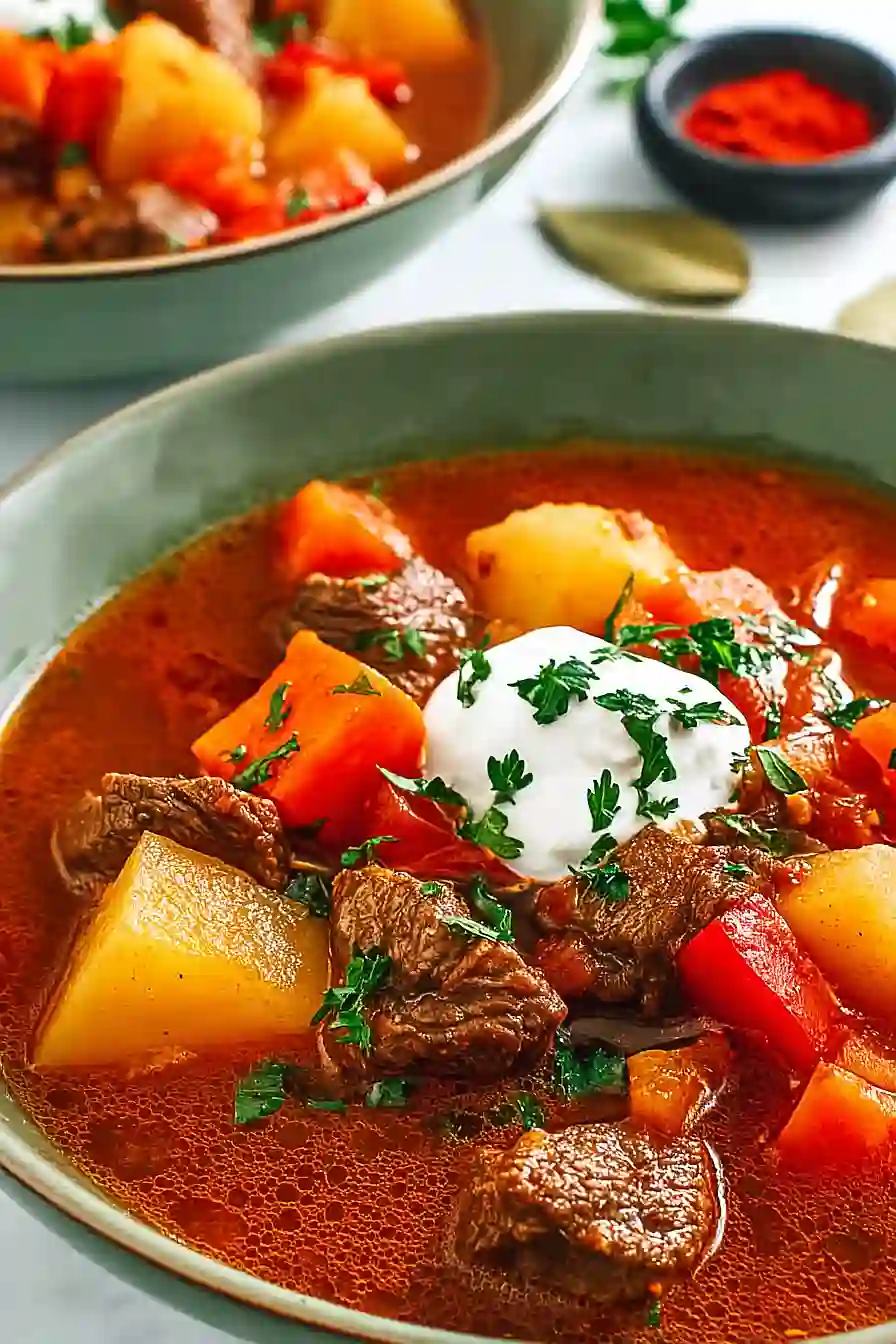
Hungarian goulash is a hearty stew that pairs perfectly with something to soak up all that rich, paprika-spiced broth. The traditional way to serve it is with egg noodles or spätzle, which are little German dumplings that catch all the sauce beautifully. A dollop of sour cream on top adds a nice tangy contrast to the savory beef and vegetables, and some crusty bread on the side never hurts for extra dipping. If you want to keep it simple, even plain white rice or mashed potatoes work great as a base to serve the goulash over.
Storage Instructions
Store: Goulash is one of those dishes that actually tastes better the next day after all the flavors have had time to mingle. Keep it in an airtight container in the fridge for up to 4 days. It’s perfect for meal prep since you can portion it out for easy lunches throughout the week.
Freeze: This stew freezes really well for up to 3 months. Let it cool completely, then store it in freezer-safe containers or bags. Just keep in mind that the potatoes might get a bit softer after freezing, but the flavor will still be amazing.
Reheat: Warm it up gently on the stovetop over medium-low heat, stirring occasionally until heated through. You can also microwave individual portions, but I find the stovetop method keeps the texture better. Add a splash of beef broth if it seems too thick after storing.
| Preparation Time | 20-30 minutes |
| Cooking Time | 110-130 minutes |
| Total Time | 130-160 minutes |
| Level of Difficulty | Medium |
| Servings | 6 servings |
Estimated Nutrition
Estimated nutrition for the whole recipe (without optional ingredients):
- Calories: 1950-2150
- Protein: 110-125 g
- Fat: 105-115 g
- Carbohydrates: 155-175 g
Ingredients
- 4 tbsp pork lard
- 2 lb yellow onions
- 1/2 cup paprika (I always use Pride of Szeged for authentic flavor)
- 1 1/2 lb beef (cut into 1-inch cubes)
- 5 garlic cloves (freshly minced for best aroma)
- 2 red bell peppers
- 1 yellow bell pepper
- 2 tomatoes
- 3 carrots (sliced into 1/2-inch rounds)
- 3 potatoes (peeled and diced into 1/2-inch cubes)
- 5 cups beef broth (I like Swanson Beef Broth for a rich base)
- 1 bay leaf
- 1 1/4 tsp salt
- 3/4 tsp black pepper
- 1/2 tsp caraway seeds
- 1/2 tsp dried marjoram
Step 1: Prepare Mise en Place and Build the Flavor Base
- 2 lb yellow onions, diced
- 1 1/2 lb beef, cut into 1-inch cubes
- 5 garlic cloves, minced
- 2 red bell peppers, diced
- 1 yellow bell pepper, diced
- 2 tomatoes, chopped
- 3 carrots, sliced into 1/2-inch rounds
- 3 potatoes, peeled and diced into 1/2-inch cubes
- 1/2 cup paprika
- 1 1/4 tsp salt
- 3/4 tsp black pepper
- 1/2 tsp caraway seeds
- 1/2 tsp dried marjoram
Dice the yellow onions into roughly 1/2-inch pieces, cut the beef into 1-inch cubes, mince the garlic cloves, dice the red and yellow bell peppers, chop the tomatoes, slice the carrots into 1/2-inch rounds, and peel and dice the potatoes into 1/2-inch cubes.
Having everything prepped before you start cooking is essential for authentic goulash, as the cooking process moves quickly once you begin.
Measure out the paprika, salt, pepper, caraway seeds, and marjoram into a small bowl for easy access.
Step 2: Caramelize Onions and Build the Base
- 4 tbsp pork lard
- 2 lb yellow onions, diced
Melt the pork lard in a large, heavy-bottomed pot or Dutch oven over medium heat.
Add the diced onions and cook for 7-10 minutes, stirring occasionally, until they become soft and lightly golden.
This slow cooking of onions is crucial—it builds a sweet, caramelized foundation that gives authentic goulash its distinctive depth.
I find that taking time with this step makes all the difference in the final flavor.
Step 3: Brown the Beef and Add Aromatics
- 1 1/2 lb beef, from Step 1
- 5 garlic cloves, minced, from Step 1
- 2 red bell peppers, diced, from Step 1
- 1 yellow bell pepper, diced, from Step 1
- 2 tomatoes, chopped, from Step 1
Increase the heat to medium-high and add the cubed beef to the caramelized onions.
Cook for 7-10 minutes, stirring occasionally, until the beef develops a golden-brown crust on the exterior.
This browning creates depth and savory complexity.
Add the minced garlic and cook for 1 minute until fragrant, then add the diced bell peppers and chopped tomatoes.
Cook this mixture for 6-8 minutes, stirring gently, until the peppers soften slightly and the tomatoes begin to break down.
Step 4: Add Paprika and Seasonings
- beef and vegetable mixture from Step 3
- 1/2 cup paprika
- 1 1/4 tsp salt
- 3/4 tsp black pepper
- 1/2 tsp caraway seeds
- 1/2 tsp dried marjoram
Remove the pot from heat and immediately add the paprika, salt, pepper, caraway seeds, and marjoram from your prepared spice mixture.
Stir well, coating everything evenly with the paprika.
Removing from heat before adding the paprika is important—this prevents the paprika from burning and becoming bitter, which would compromise the authentic flavor.
I always use freshly minced garlic and quality paprika because these ingredients are the soul of true Hungarian goulash.
Step 5: Simmer the Base Until Beef is Tender
- seasoned beef mixture from Step 4
- 5 cups beef broth
- 1 bay leaf
Return the pot to medium heat and add the beef broth and bay leaf, stirring gently to combine.
Bring to a boil, then reduce heat to low, cover with a lid, and simmer for 40 minutes.
The broth will develop a rich color from the paprika and spices, and the beef will begin to become tender.
The covered simmer allows the flavors to meld and the beef to cook gently and evenly.
Step 6: Add Root Vegetables and Finish Cooking
- goulash base from Step 5
- 3 carrots, sliced into 1/2-inch rounds, from Step 1
- 3 potatoes, peeled and diced into 1/2-inch cubes, from Step 1
After 40 minutes, open the pot carefully and add the sliced carrots and diced potatoes from your prepared vegetables.
Stir well to distribute them throughout the broth.
Return the lid to the pot and simmer for another 30-40 minutes on low heat until the potatoes are completely tender and easily pierced with a fork.
The vegetables will absorb the flavorful broth and become infused with the paprika and spices.
Step 7: Finish and Serve
- finished goulash from Step 6
Remove from heat and carefully remove the bay leaf using tongs or a fork.
Taste the goulash and adjust seasoning if needed.
Ladle the goulash into bowls while hot and serve immediately.
This rustic, hearty Hungarian dish is best enjoyed fresh from the pot with crusty bread or over egg noodles.
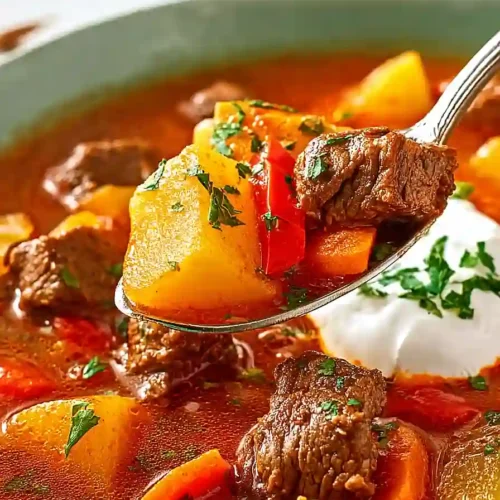
Rich Hungarian Goulash
Ingredients
- 4 tbsp pork lard
- 2 lb yellow onions
- 1/2 cup paprika (I always use Pride of Szeged for authentic flavor)
- 1 1/2 lb beef (cut into 1-inch cubes)
- 5 garlic cloves (freshly minced for best aroma)
- 2 red bell peppers
- 1 yellow bell pepper
- 2 tomatoes
- 3 carrots (sliced into 1/2-inch rounds)
- 3 potatoes (peeled and diced into 1/2-inch cubes)
- 5 cups beef broth (I like Swanson Beef Broth for a rich base)
- 1 bay leaf
- 1 1/4 tsp salt
- 3/4 tsp black pepper
- 1/2 tsp caraway seeds
- 1/2 tsp dried marjoram
Instructions
- Dice the yellow onions into roughly 1/2-inch pieces, cut the beef into 1-inch cubes, mince the garlic cloves, dice the red and yellow bell peppers, chop the tomatoes, slice the carrots into 1/2-inch rounds, and peel and dice the potatoes into 1/2-inch cubes. Having everything prepped before you start cooking is essential for authentic goulash, as the cooking process moves quickly once you begin. Measure out the paprika, salt, pepper, caraway seeds, and marjoram into a small bowl for easy access.
- Melt the pork lard in a large, heavy-bottomed pot or Dutch oven over medium heat. Add the diced onions and cook for 7-10 minutes, stirring occasionally, until they become soft and lightly golden. This slow cooking of onions is crucial—it builds a sweet, caramelized foundation that gives authentic goulash its distinctive depth. I find that taking time with this step makes all the difference in the final flavor.
- Increase the heat to medium-high and add the cubed beef to the caramelized onions. Cook for 7-10 minutes, stirring occasionally, until the beef develops a golden-brown crust on the exterior. This browning creates depth and savory complexity. Add the minced garlic and cook for 1 minute until fragrant, then add the diced bell peppers and chopped tomatoes. Cook this mixture for 6-8 minutes, stirring gently, until the peppers soften slightly and the tomatoes begin to break down.
- Remove the pot from heat and immediately add the paprika, salt, pepper, caraway seeds, and marjoram from your prepared spice mixture. Stir well, coating everything evenly with the paprika. Removing from heat before adding the paprika is important—this prevents the paprika from burning and becoming bitter, which would compromise the authentic flavor. I always use freshly minced garlic and quality paprika because these ingredients are the soul of true Hungarian goulash.
- Return the pot to medium heat and add the beef broth and bay leaf, stirring gently to combine. Bring to a boil, then reduce heat to low, cover with a lid, and simmer for 40 minutes. The broth will develop a rich color from the paprika and spices, and the beef will begin to become tender. The covered simmer allows the flavors to meld and the beef to cook gently and evenly.
- After 40 minutes, open the pot carefully and add the sliced carrots and diced potatoes from your prepared vegetables. Stir well to distribute them throughout the broth. Return the lid to the pot and simmer for another 30-40 minutes on low heat until the potatoes are completely tender and easily pierced with a fork. The vegetables will absorb the flavorful broth and become infused with the paprika and spices.
- Remove from heat and carefully remove the bay leaf using tongs or a fork. Taste the goulash and adjust seasoning if needed. Ladle the goulash into bowls while hot and serve immediately. This rustic, hearty Hungarian dish is best enjoyed fresh from the pot with crusty bread or over egg noodles.

