Getting a flavorful, homemade dinner on the table during busy weeknights can feel like an impossible task. Between work, errands, and everything else life throws at you, spending hours in the kitchen just isn’t realistic, and things get even more complicated when you’re trying to avoid the same boring rotation of meals week after week.
Luckily, this Thai red curry chicken checks all the boxes: it’s packed with flavor yet comes together in just 30 minutes, uses only one pot for easy cleanup, and delivers that restaurant-quality taste you’re craving without any complicated techniques or hard-to-find ingredients.
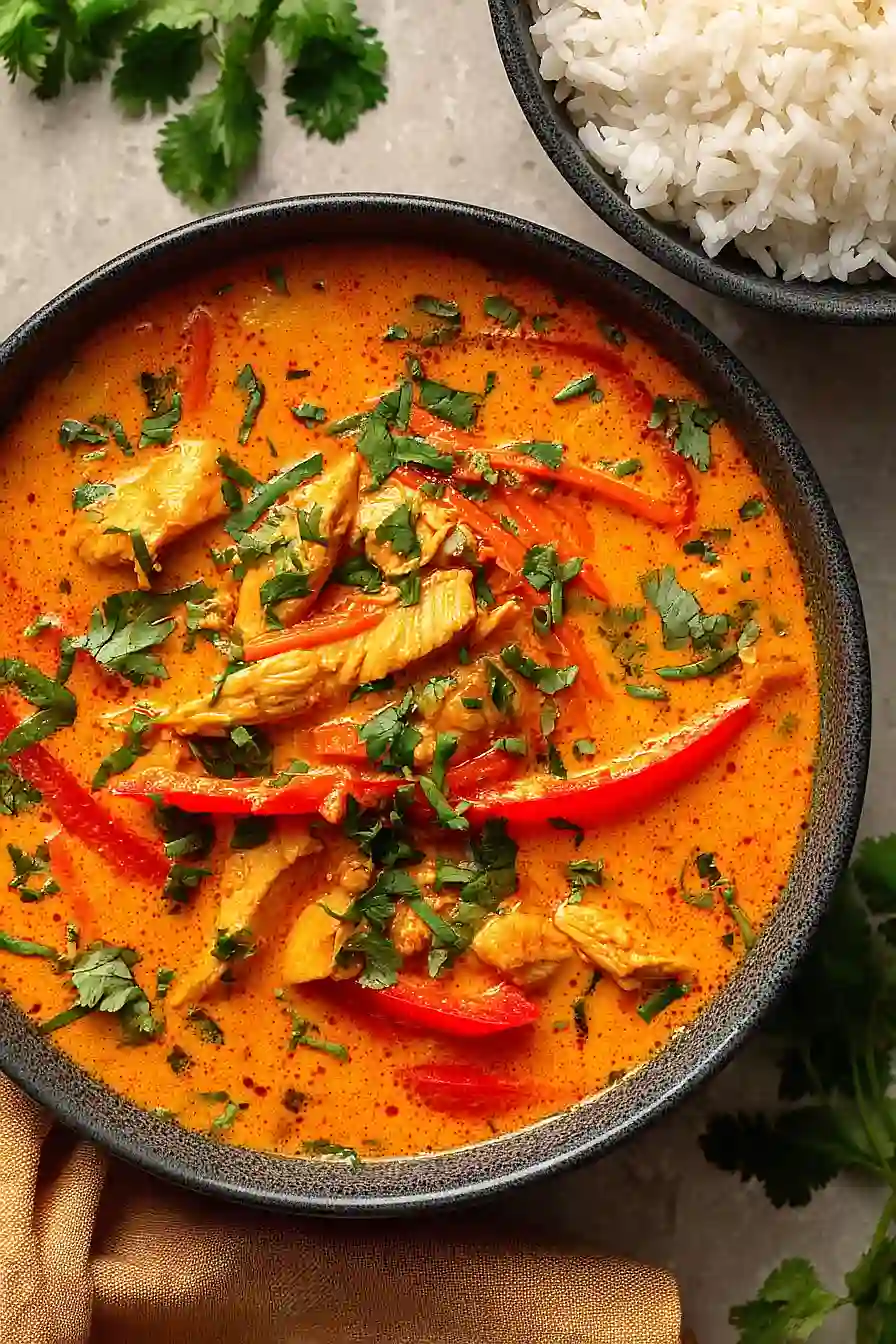
Why You’ll Love This Thai Red Curry Chicken
- Quick 30-minute meal – This dish comes together in just half an hour, making it perfect for busy weeknights when you want something flavorful without spending hours in the kitchen.
- One pot wonder – Everything cooks in a single pot, which means less cleanup and more time to relax after dinner.
- Restaurant-quality flavor at home – The creamy coconut milk and Thai red curry paste create that authentic takeout taste you crave, but for a fraction of the cost.
- Packed with protein and veggies – With tender chicken breast, colorful bell peppers, and carrots, you’re getting a balanced meal that’s both satisfying and nutritious.
- Customizable spice level – You can easily adjust the amount of curry paste to match your heat preference, making it family-friendly or as spicy as you like.
What Kind of Chicken Should I Use?
Boneless, skinless chicken breasts are the easiest option for this recipe since they cook quickly and absorb all those curry flavors beautifully. If you prefer dark meat, chicken thighs work just as well and actually stay a bit more tender during cooking – just make sure they’re boneless and skinless to keep prep time minimal. You can also use a mix of both breast and thigh meat if that’s what you have on hand. When you’re at the store, look for chicken that’s pinkish in color without any gray spots, and cut it into bite-sized pieces before cooking so everything cooks evenly in about the same amount of time.
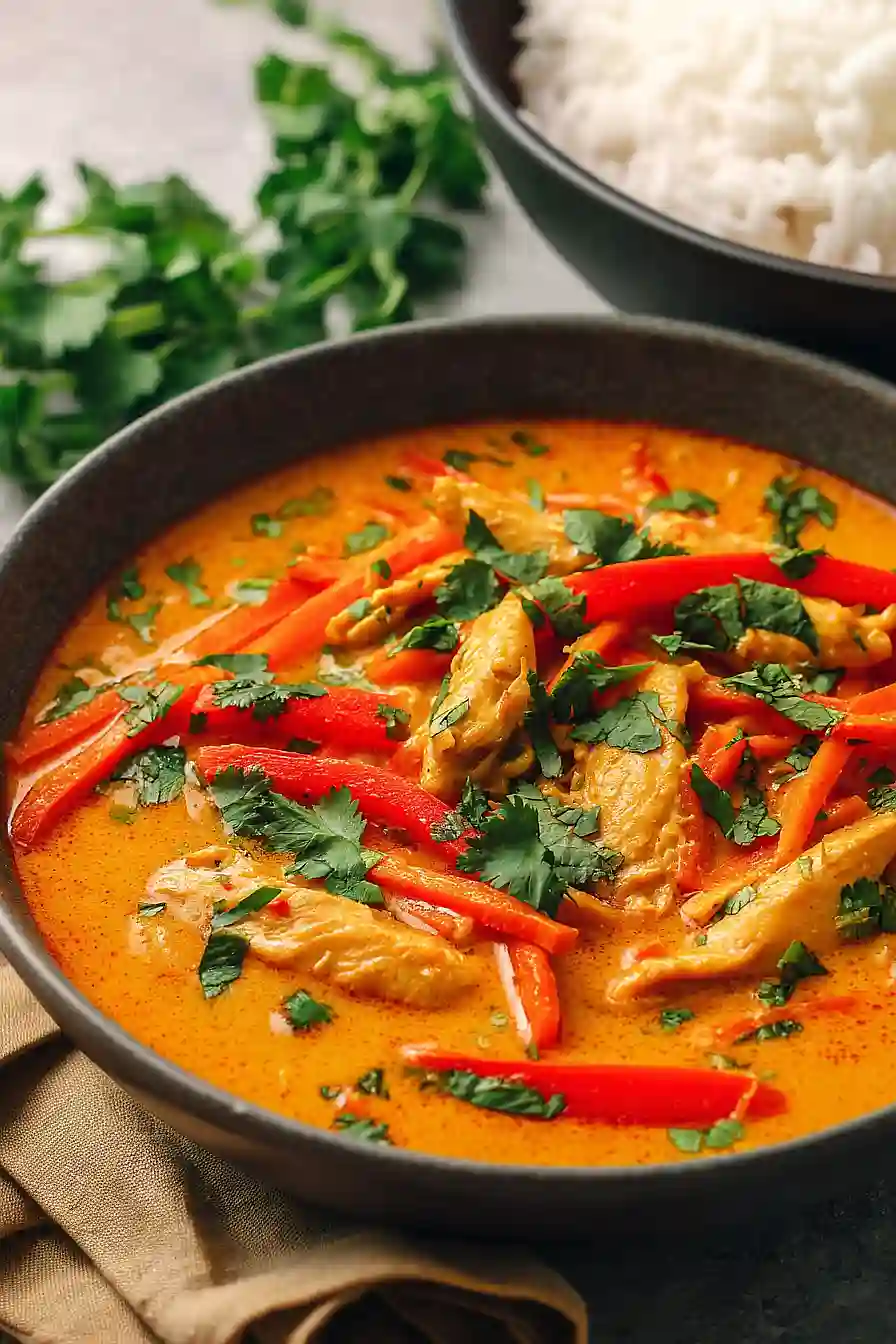
Options for Substitutions
This curry is pretty forgiving when it comes to swaps, so feel free to work with what you have:
- Coconut oil: Any neutral cooking oil works here – try vegetable oil, canola oil, or even olive oil if that’s what you’ve got in your pantry.
- Chicken breast: Chicken thighs are actually a great swap and stay more tender during cooking. You can also use shrimp, tofu, or even chickpeas for a vegetarian version. If using shrimp, add them in the last 5 minutes of cooking so they don’t get rubbery.
- Thai red curry paste: This is the star of the show, so try not to substitute it. However, if you only have green or yellow curry paste, you can use those instead – just know the flavor profile will be different.
- Fish sauce: Soy sauce or tamari can work in a pinch, though you’ll lose some of that authentic Thai flavor. Start with 2 teaspoons and add more to taste.
- Fresh ginger: The recipe calls for ground ginger, but if you have fresh ginger root, use about 1 tablespoon of grated fresh ginger instead for a brighter flavor.
- Vegetables: The carrots and bell pepper can be swapped with whatever vegetables you have – broccoli, snap peas, zucchini, or mushrooms all work great. Just adjust cooking times based on how tender you want them.
Watch Out for These Mistakes While Cooking
The biggest mistake when making Thai red curry is adding the vegetables at the same time as the chicken, which leads to mushy carrots and peppers – always add them later in the cooking process so they stay crisp-tender.
Another common error is not blooming the curry paste with the aromatics for that full minute, as this step releases the essential oils and deepens the flavor of your entire dish.
Be careful not to overcook the chicken by cutting it into evenly-sized pieces (about 1-inch cubes work great) so everything cooks at the same rate, and use a meat thermometer to check that it reaches 165°F without going over.
Finally, taste and adjust the seasoning at the end – Thai curry should have a balance of spicy, sweet, salty, and sour, so don’t skip adding that extra splash of fish sauce or squeeze of lime if something tastes off.
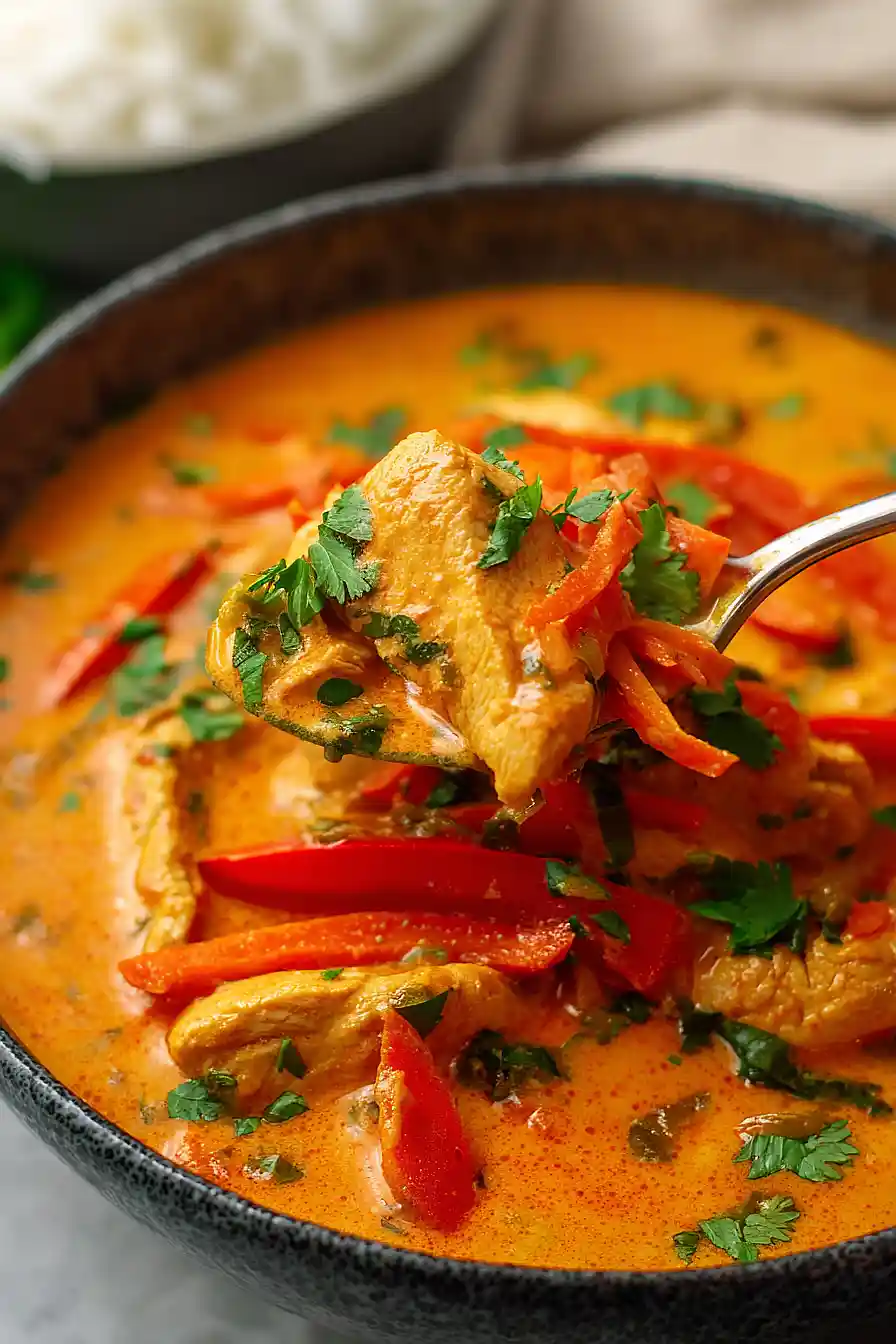
What to Serve With Thai Red Curry Chicken?
This curry is begging to be served over a big bowl of jasmine rice or basmati rice, which soaks up all that creamy, spicy sauce perfectly. If you want to mix things up, rice noodles or even cauliflower rice work great too. I like to add some steamed broccoli or snap peas on the side for extra veggies, and sometimes I’ll throw in a simple cucumber salad with rice vinegar to cool things down a bit. Don’t forget to have some extra lime wedges on hand for squeezing over everything at the table.
Storage Instructions
Store: This curry actually tastes even better the next day after all the flavors have had time to hang out together. Keep it in an airtight container in the fridge for up to 4 days. I love making a big batch on Sunday and eating it throughout the week over rice or cauliflower rice.
Freeze: Thai red curry freezes really well, which makes it perfect for meal prep. Let it cool completely, then portion it into freezer-safe containers or bags and freeze for up to 3 months. Just leave a little room at the top since the coconut milk will expand slightly when frozen.
Reheat: Warm it up gently on the stove over medium-low heat, stirring occasionally until heated through. You can also microwave it, but I’d use 50% power and stir every minute or so to keep the coconut milk from separating. Add a splash of coconut milk or water if it seems too thick after reheating.
| Preparation Time | 10-15 minutes |
| Cooking Time | 25-30 minutes |
| Total Time | 35-45 minutes |
| Level of Difficulty | Easy |
| Servings | 4 servings |
Estimated Nutrition
Estimated nutrition for the whole recipe (without optional ingredients):
- Calories: 1500-1700
- Protein: 100-115 g
- Fat: 90-100 g
- Carbohydrates: 75-90 g
Ingredients
- 2 tbsp coconut oil
- 1 cup yellow onion (diced into 1/2-inch pieces)
- 1/2 tsp salt
- 4 cloves garlic (minced)
- 1 tsp ground ginger
- 1 tsp ground coriander (freshly ground preferred for more flavor)
- 7 tbsp red curry paste (I use Thai Kitchen for consistent heat)
- 14 oz full-fat coconut milk (I prefer Thai Kitchen full-fat for a creamier sauce)
- 1.5 tbsp brown sugar
- 1.5 lb chicken breast (cut into 1-inch chunks)
- 1 tbsp fish sauce
- 1 cup carrots (sliced into 1/4-inch rounds)
- 1 cup red bell pepper (diced)
- 1 lime (zest and juice)
- 1/4 cup fresh cilantro (chopped)
- 1/4 cup fresh basil leaves (roughly chopped)
Step 1: Prep and Mise en Place
- 1 cup yellow onion
- 4 cloves garlic
- 1 cup carrots
- 1 cup red bell pepper
- 1.5 lb chicken breast
- 1 lime
- 1/4 cup fresh cilantro
- 1/4 cup fresh basil leaves
Dice the onion into 1/2-inch pieces, mince the garlic, slice the carrots into 1/4-inch rounds, dice the red bell pepper, cut the chicken breast into 1-inch chunks, zest and juice the lime, and roughly chop the cilantro and basil.
Having everything prepped and ready ensures smooth, efficient cooking once you start—this is especially important for a quick 30-minute meal where timing is tight.
Step 2: Build the Curry Flavor Base
- 2 tbsp coconut oil
- 1 cup yellow onion
- 1/2 tsp salt
- 4 cloves garlic
- 1 tsp ground ginger
- 1 tsp ground coriander
- 7 tbsp red curry paste
Heat the coconut oil in a large pot or Dutch oven over medium heat.
Add the diced onion and salt, cooking for about 3 minutes until the onion becomes translucent and fragrant.
Stir in the minced garlic, ground ginger, ground coriander, and red curry paste, cooking for 1 minute while stirring constantly.
This blooming of the aromatics and spices in oil is crucial for developing deep, authentic Thai flavors—rushing this step will result in a flat-tasting curry.
Step 3: Add Protein and Create the Sauce
- 14 oz full-fat coconut milk
- 1.5 tbsp brown sugar
- 1.5 lb chicken breast
- 1 tbsp fish sauce
- curry flavor base from Step 2
Pour in the coconut milk, then add the brown sugar, fish sauce, and chicken chunks.
Stir well to combine, making sure the chicken is evenly distributed and coated with the curry paste mixture.
Bring the mixture to a gentle simmer over medium heat and cook for 7 minutes, stirring occasionally.
The chicken will cook through during this time while absorbing the flavors of the sauce.
I like to use full-fat coconut milk because it creates a rich, creamy sauce that really coats the chicken beautifully.
Step 4: Add Vegetables and Finish Cooking
- 1 cup carrots
- 1 cup red bell pepper
- curry mixture from Step 3
Add the sliced carrots and diced red bell pepper to the curry.
Stir to distribute evenly and return to a gentle simmer for 5-7 minutes, until the vegetables are tender-crisp but still have a slight bite to them.
The carrots should be just fork-tender, not soft—this timing ensures they stay colorful and add textural contrast to the creamy sauce.
Check that the chicken is fully cooked through by cutting into the largest piece.
Step 5: Season and Finish with Bright Flavors
- 1 lime
- 1/4 cup fresh cilantro
- finished curry from Step 4
Remove the pot from heat and stir in the lime zest, lime juice, and fresh cilantro.
Taste the curry and adjust seasoning as needed—add more salt, brown sugar, or red curry paste to suit your preference.
I find the lime juice brightens everything beautifully and cuts through the richness of the coconut milk, so don’t skip it.
The cilantro adds a fresh, aromatic finish that completes the dish.
Step 6: Plate and Serve
- 1/4 cup fresh basil leaves
- finished curry from Step 5
Divide the curry among serving bowls and garnish with additional fresh cilantro and basil leaves.
Serve immediately over steamed jasmine rice or with warm naan bread for a complete Thai-inspired meal.
Juicy Thai Red Curry Chicken
Ingredients
- 2 tbsp coconut oil
- 1 cup yellow onion (diced into 1/2-inch pieces)
- 1/2 tsp salt
- 4 cloves garlic (minced)
- 1 tsp ground ginger
- 1 tsp ground coriander (freshly ground preferred for more flavor)
- 7 tbsp red curry paste (I use Thai Kitchen for consistent heat)
- 14 oz full-fat coconut milk (I prefer Thai Kitchen full-fat for a creamier sauce)
- 1.5 tbsp brown sugar
- 1.5 lb chicken breast (cut into 1-inch chunks)
- 1 tbsp fish sauce
- 1 cup carrots (sliced into 1/4-inch rounds)
- 1 cup red bell pepper (diced)
- 1 lime (zest and juice)
- 1/4 cup fresh cilantro (chopped)
- 1/4 cup fresh basil leaves (roughly chopped)
Instructions
- Dice the onion into 1/2-inch pieces, mince the garlic, slice the carrots into 1/4-inch rounds, dice the red bell pepper, cut the chicken breast into 1-inch chunks, zest and juice the lime, and roughly chop the cilantro and basil. Having everything prepped and ready ensures smooth, efficient cooking once you start—this is especially important for a quick 30-minute meal where timing is tight.
- Heat the coconut oil in a large pot or Dutch oven over medium heat. Add the diced onion and salt, cooking for about 3 minutes until the onion becomes translucent and fragrant. Stir in the minced garlic, ground ginger, ground coriander, and red curry paste, cooking for 1 minute while stirring constantly. This blooming of the aromatics and spices in oil is crucial for developing deep, authentic Thai flavors—rushing this step will result in a flat-tasting curry.
- Pour in the coconut milk, then add the brown sugar, fish sauce, and chicken chunks. Stir well to combine, making sure the chicken is evenly distributed and coated with the curry paste mixture. Bring the mixture to a gentle simmer over medium heat and cook for 7 minutes, stirring occasionally. The chicken will cook through during this time while absorbing the flavors of the sauce. I like to use full-fat coconut milk because it creates a rich, creamy sauce that really coats the chicken beautifully.
- Add the sliced carrots and diced red bell pepper to the curry. Stir to distribute evenly and return to a gentle simmer for 5-7 minutes, until the vegetables are tender-crisp but still have a slight bite to them. The carrots should be just fork-tender, not soft—this timing ensures they stay colorful and add textural contrast to the creamy sauce. Check that the chicken is fully cooked through by cutting into the largest piece.
- Remove the pot from heat and stir in the lime zest, lime juice, and fresh cilantro. Taste the curry and adjust seasoning as needed—add more salt, brown sugar, or red curry paste to suit your preference. I find the lime juice brightens everything beautifully and cuts through the richness of the coconut milk, so don't skip it. The cilantro adds a fresh, aromatic finish that completes the dish.
- Divide the curry among serving bowls and garnish with additional fresh cilantro and basil leaves. Serve immediately over steamed jasmine rice or with warm naan bread for a complete Thai-inspired meal.