I grew up thinking corned beef and cabbage was something only your Irish grandma made once a year on St. Patrick’s Day. Turns out, it’s actually one of the easiest one-pot meals you can make any day of the week, and my family requests it all the time now.
The secret is that corned beef does most of the work for you—it’s already brined and seasoned, so you’re really just letting it cook low and slow until it falls apart. Throw in some cabbage, carrots, and potatoes, and you’ve got a complete dinner that tastes like you spent all day in the kitchen. The best part? It’s nearly impossible to mess up, as long as you don’t rush it.
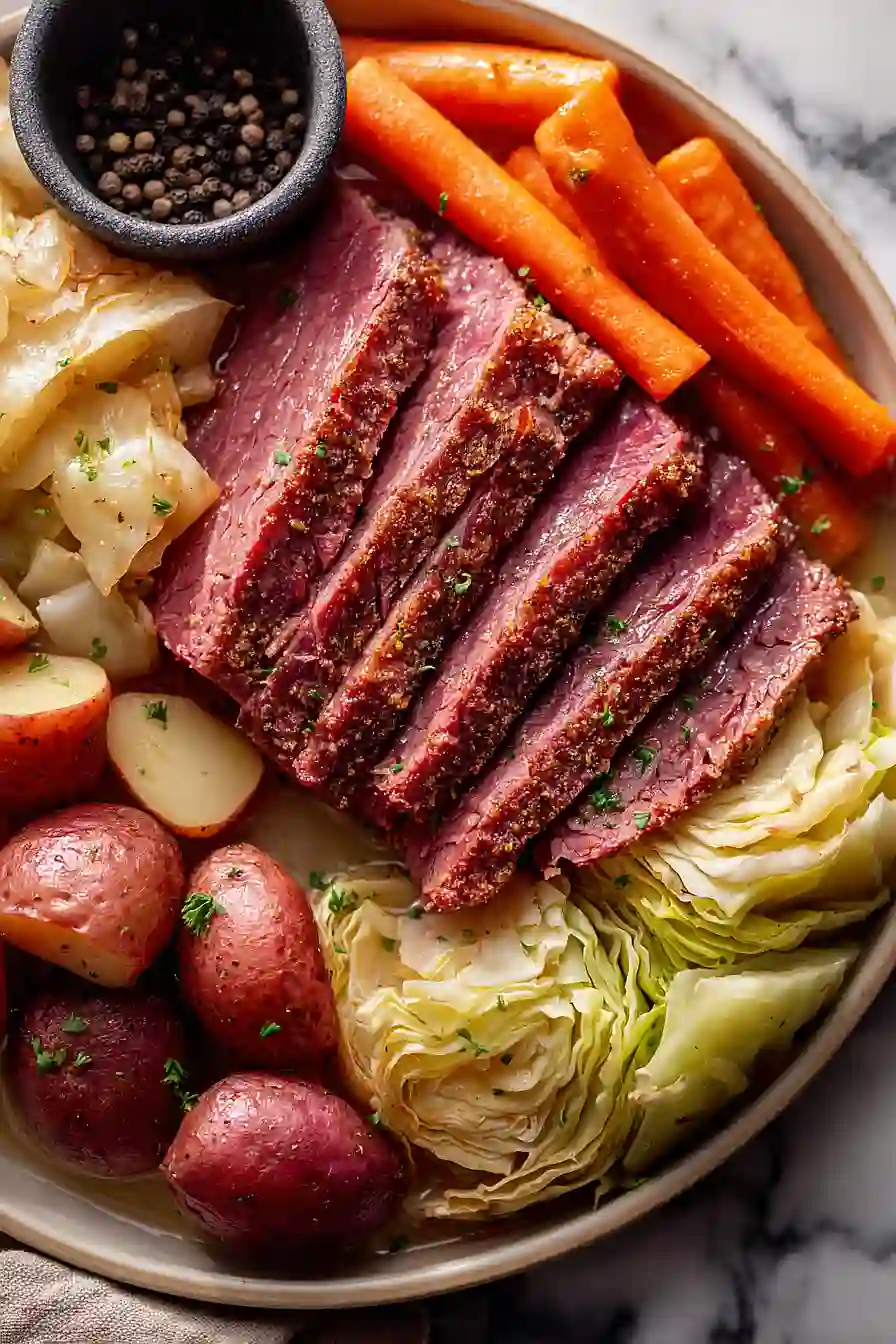
Why You’ll Love This Corned Beef and Cabbage
- Perfect for feeding a crowd – This recipe serves a large group easily, making it ideal for St. Patrick’s Day celebrations or Sunday family dinners without much fuss.
- Hands-off cooking – Once you get everything in the pot, the oven does all the work while you relax or prep other dishes.
- Complete one-pot meal – With tender corned beef, sweet carrots, and buttery cabbage all cooking together, you get a full dinner without juggling multiple pans.
- Simple ingredients – This recipe uses straightforward, easy-to-find ingredients that come together to create something really special.
- Great for leftovers – The corned beef tastes even better the next day, making it perfect for sandwiches or hash throughout the week.
What Kind of Corned Beef Should I Use?
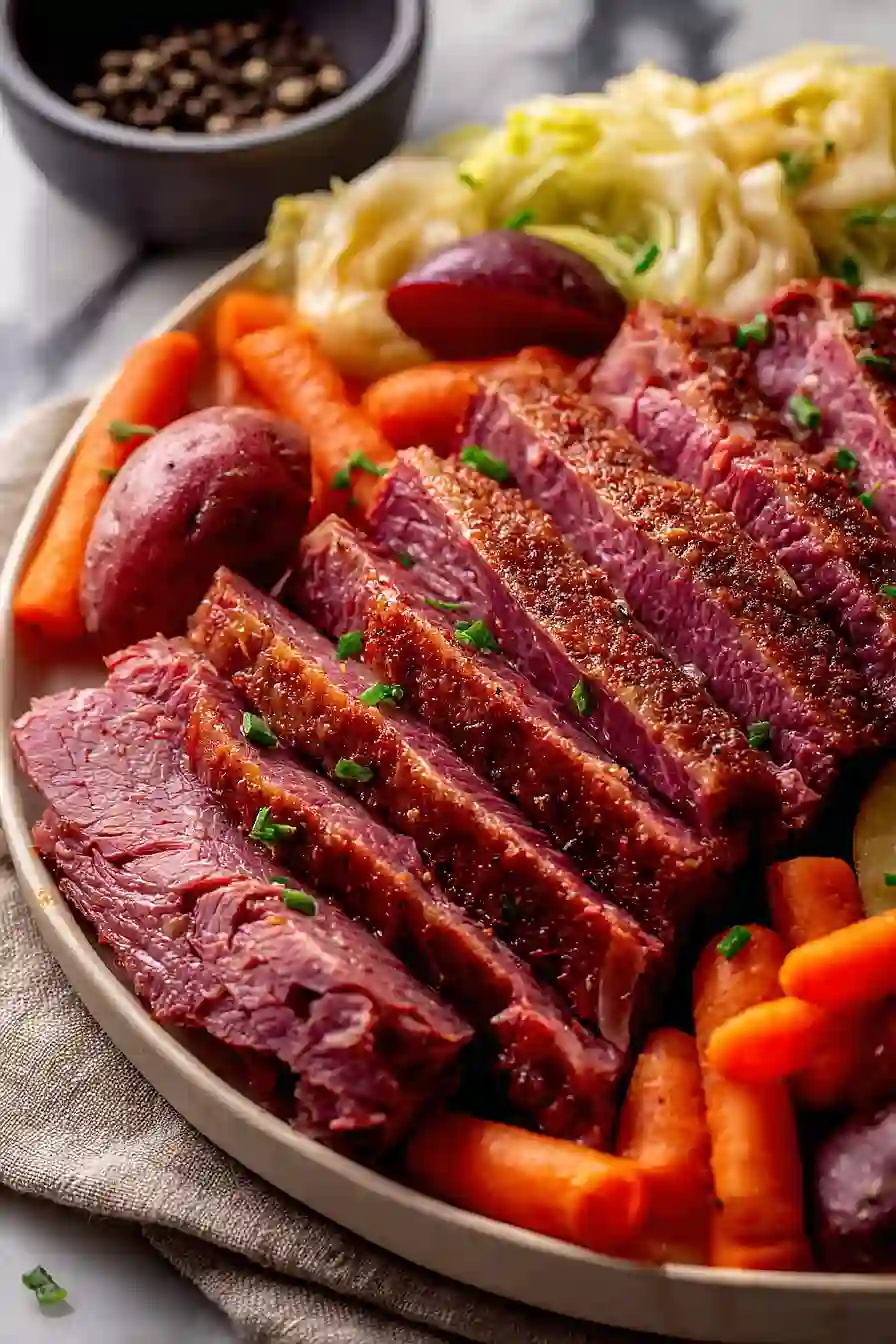
You’ll typically find two cuts of corned beef at the grocery store: the flat cut and the point cut. The flat cut is leaner and slices more neatly, making it the go-to choice if presentation matters to you. The point cut has more marbling and fat, which means it’s usually more tender and flavorful, though it can be a bit harder to slice evenly. Either cut will work great for this recipe, so just grab whichever one looks good at your store or fits your budget. Most corned beef comes pre-brined in a vacuum-sealed package with a spice packet included, but you can save that packet for another use since we’re building our own flavors here.
Options for Substitutions
This classic dish is pretty forgiving when it comes to swaps:
- Corned beef: This is the star of the show, so I wouldn’t recommend substituting it. However, if you can’t find a pre-brined corned beef, you can use beef brisket and add extra salt and pickling spices to the cooking liquid.
- Broth: Beef broth works best here, but chicken or vegetable broth will do in a pinch. You can also use water with an extra bouillon cube or two.
- Mustard: Any mustard works – yellow, Dijon, whole grain, or spicy brown. Pick whatever you like or have in your fridge.
- Carrots: You can swap regular carrots for parsnips, turnips, or a mix of both for a slightly different flavor profile.
- Cabbage: Green cabbage is traditional, but savoy cabbage or even Brussels sprouts (halved) make great alternatives. Just adjust cooking time for Brussels sprouts as they cook faster.
- Fresh thyme: If you don’t have fresh thyme, use 1 tablespoon of dried thyme instead. Add it at the beginning of cooking.
Watch Out for These Mistakes While Cooking
The biggest mistake you can make with corned beef is slicing it with the grain instead of against it, which results in tough, chewy meat – look for the lines running through the meat and cut perpendicular to them for tender slices.
Skipping the searing step might seem like a time-saver, but those few minutes of browning add serious depth of flavor that you’ll miss in the final dish.
Adding the carrots too early is another common error since they’ll turn mushy after hours in the slow cooker, so wait until the last 1-2 hours to keep them tender but not falling apart.
Finally, don’t forget to let the meat rest for a full 10 minutes after cooking – cutting into it right away causes all those juices to run out, leaving you with drier meat.
What to Serve With Corned Beef and Cabbage?
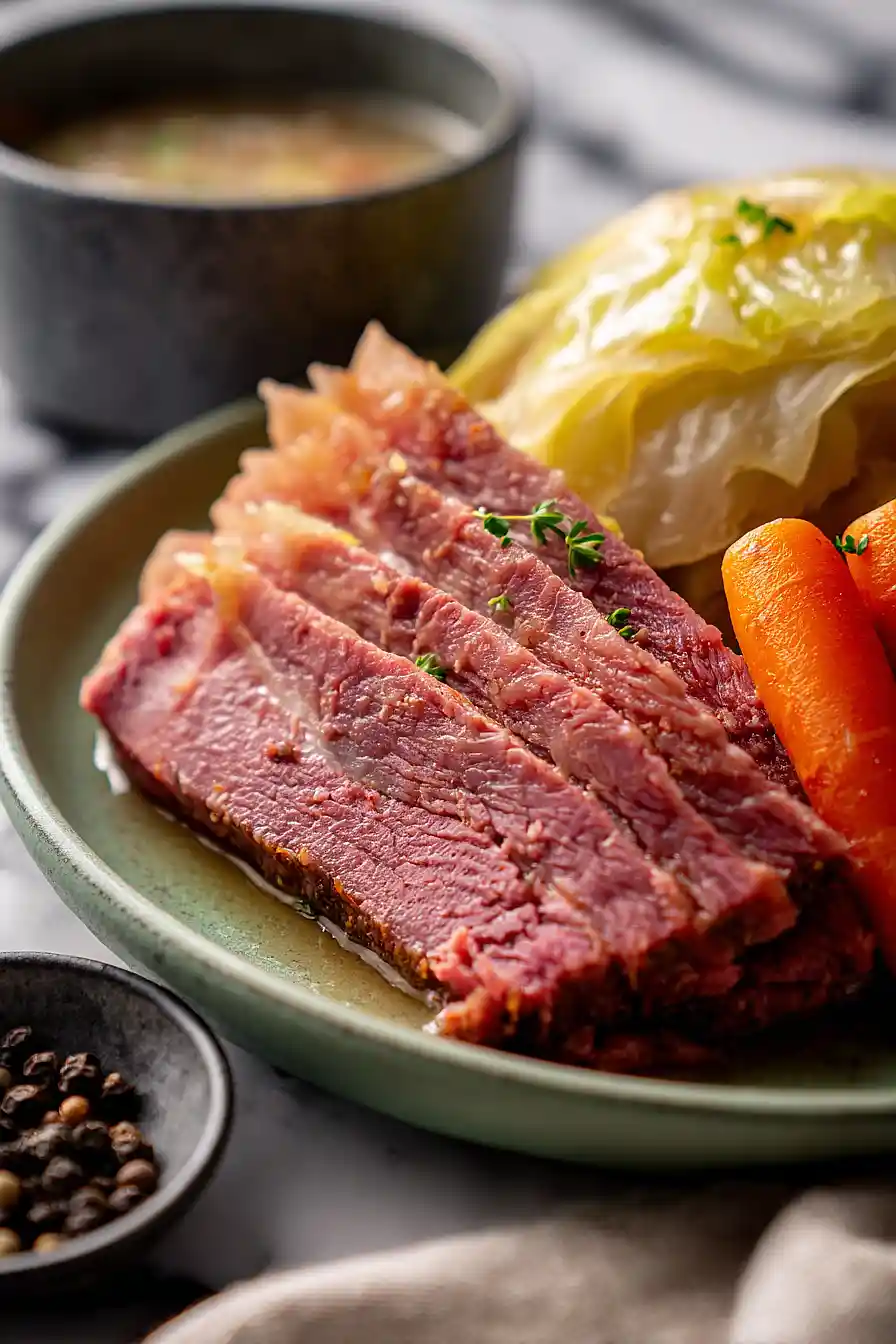
This dish is pretty much a complete meal on its own since it already comes with carrots, cabbage, and roasted potatoes, but a good crusty rye bread or Irish soda bread on the side is always a great addition for soaking up all those flavorful juices. A simple green salad with a light vinaigrette can help balance out the richness of the meat and butter, or you could serve some pickled vegetables like beets or cucumbers for a tangy contrast. Don’t forget to put out extra horseradish sauce and grainy mustard on the table so everyone can add as much as they want. If you’re feeding a crowd, consider adding some roasted root vegetables like parsnips or turnips to round out the plate.
Storage Instructions
Store: Keep your leftover corned beef and cabbage in separate airtight containers in the fridge for up to 4 days. The corned beef actually tastes even better the next day after the flavors have had time to settle in. Store the vegetables separately so they don’t get too mushy.
Freeze: The corned beef freezes really well for up to 3 months. I like to slice it first and wrap portions in plastic wrap, then put them in a freezer bag. The cabbage and carrots don’t freeze as nicely since they can get watery, so I’d skip freezing those.
Reheat: Warm up the corned beef slices in a covered dish with a splash of broth in the oven at 300°F for about 20 minutes. For the veggies, a quick zap in the microwave works fine, or you can warm them in a skillet with a little butter.
| Preparation Time | 30-40 minutes |
| Cooking Time | 240-300 minutes |
| Total Time | 270-340 minutes |
| Level of Difficulty | Medium |
| Servings | 8 servings |
Estimated Nutrition
Estimated nutrition for the whole recipe (without optional ingredients):
- Calories: 5300-5900
- Protein: 250-280 g
- Fat: 340-390 g
- Carbohydrates: 270-320 g
Ingredients
For the beef and braise:
- 4 lb corned beef (I use Snake River Farms wagyu for better fat marbling)
- 2 tbsp oil
- 1.75 cups broth (I prefer Swanson unsalted beef broth to control the saltiness)
- 3.5 tbsp mustard
- 6 garlic cloves (freshly smashed to release natural oils)
- 1 onion
- 20 peppercorns
- 10 sprigs fresh thyme
- 2 bay leaves
- 1/4 tsp celery seed
For the vegetables:
- 2 lb carrots (peeled and cut into 3-inch diagonal chunks)
- 1 head cabbage (sliced into 8 thick wedges with the core intact)
- 1/2 cup butter (I like Kerrygold unsalted butter for its high fat content)
- 1.5 tsp salt
For serving:
- 1 batch roasted potatoes
- 1 batch horseradish sauce
- parsley (finely chopped for a fresh, bright garnish)
- fresh chives (for added savory garnish)
Step 1: Sear the Corned Beef and Build the Braising Base
- 4 lb corned beef
- 2 tbsp oil
- 1.75 cups broth
- 3.5 tbsp mustard
Pat the corned beef dry with paper towels to ensure good browning.
Heat the oil in a large skillet over medium-high heat until shimmering, then sear the meat for 2-4 minutes per side until deeply browned on the exterior.
This creates a flavorful crust that adds depth to the final dish.
Transfer the seared meat to a slow cooker.
Pour the broth into the same skillet and add the mustard, scraping up all the browned bits from the bottom—these caramelized pieces are liquid gold for flavor.
Once the mixture is boiling, pour it over the meat in the slow cooker.
Step 2: Add Aromatics and Start the Long Braise
- 6 garlic cloves, smashed
- 1 onion
- 20 peppercorns
- 10 sprigs fresh thyme
- 2 bay leaves
- 1/4 tsp celery seed
Add the smashed garlic cloves, onion (cut in half), peppercorns, fresh thyme sprigs, bay leaves, and celery seed directly to the slow cooker with the meat and braising liquid.
These aromatic ingredients will infuse the cooking liquid with complex flavors throughout the long braise.
Cover the slow cooker and cook on low for 6-7 hours until the meat is very tender and easily pulls apart with a fork.
I like to use freshly smashed garlic because it releases more natural oils compared to minced, giving a deeper, more robust flavor to the broth.
Step 3: Add Carrots and Continue Braising
- 2 lb carrots, peeled and cut into 3-inch diagonal chunks
After the meat has cooked for 6-7 hours, carefully add the carrot chunks to the slow cooker around the meat, nestling them into the braising liquid.
Continue cooking on low for another 1-2 hours until the carrots are fork-tender but still hold their shape.
The vegetables will absorb the rich flavors from the broth while the meat continues to soften.
Step 4: Sauté the Cabbage in Butter
- 1/2 cup butter
- 1 head cabbage, sliced into 8 thick wedges
- 1.5 tsp salt
While the carrots are finishing in the slow cooker, melt the butter in a large skillet over medium heat.
Add the cabbage wedges (keeping the core intact so they hold together) and season with salt.
Sauté for about 10 minutes, stirring occasionally, until the cabbage begins to soften and develop light golden color on the edges.
This preliminary cooking gives the cabbage a slight caramelization that adds sweetness and depth—it won’t overcook when added to the slow cooker.
Step 5: Finish Cooking and Prepare for Serving
- sautéed cabbage from Step 4
- 1 batch roasted potatoes
- 1 batch horseradish sauce
Transfer the sautéed cabbage wedges from Step 4 to the slow cooker, nestling them among the meat and carrots.
Cook on low for 30-60 minutes more until the cabbage is tender and has absorbed the braising liquid’s flavor.
While this final braise happens, prepare or reheat your roasted potatoes and horseradish sauce according to their recipes.
Once the cabbage is done, carefully remove the meat from the slow cooker and let it rest on a cutting board for 10 minutes—this allows the juices to redistribute through the meat, keeping it moist and tender when sliced.
Step 6: Slice and Plate the Corned Beef and Cabbage
- sliced corned beef from rest
- braised carrots from Step 3
- braised cabbage from Step 5
- roasted potatoes from Step 5
- horseradish sauce from Step 5
- parsley, finely chopped
- fresh chives
Slice the rested meat against the grain into thick, even pieces—slicing against the grain breaks up the muscle fibers, making the meat more tender to bite.
Arrange the sliced corned beef on a large platter or individual plates, then distribute the braised carrots, cabbage wedges, and roasted potatoes around it.
Ladle some of the braising liquid from the slow cooker over the meat and vegetables.
Garnish generously with finely chopped fresh parsley and fresh chives for a bright, fresh contrast to the rich, savory meat and vegetables.
Serve with the horseradish sauce on the side.
Homemade Corned Beef and Cabbage
Ingredients
For the beef and braise::
- 4 lb corned beef (I use Snake River Farms wagyu for better fat marbling)
- 2 tbsp oil
- 1.75 cups broth (I prefer Swanson unsalted beef broth to control the saltiness)
- 3.5 tbsp mustard
- 6 garlic cloves (freshly smashed to release natural oils)
- 1 onion
- 20 peppercorns
- 10 sprigs fresh thyme
- 2 bay leaves
- 1/4 tsp celery seed
For the vegetables::
- 2 lb carrots (peeled and cut into 3-inch diagonal chunks)
- 1 head cabbage (sliced into 8 thick wedges with the core intact)
- 1/2 cup butter (I like Kerrygold unsalted butter for its high fat content)
- 1.5 tsp salt
For serving::
- 1 batch roasted potatoes
- 1 batch horseradish sauce
- parsley (finely chopped for a fresh, bright garnish)
- fresh chives (for added savory garnish)
Instructions
- Pat the corned beef dry with paper towels to ensure good browning. Heat the oil in a large skillet over medium-high heat until shimmering, then sear the meat for 2-4 minutes per side until deeply browned on the exterior. This creates a flavorful crust that adds depth to the final dish. Transfer the seared meat to a slow cooker. Pour the broth into the same skillet and add the mustard, scraping up all the browned bits from the bottom—these caramelized pieces are liquid gold for flavor. Once the mixture is boiling, pour it over the meat in the slow cooker.
- Add the smashed garlic cloves, onion (cut in half), peppercorns, fresh thyme sprigs, bay leaves, and celery seed directly to the slow cooker with the meat and braising liquid. These aromatic ingredients will infuse the cooking liquid with complex flavors throughout the long braise. Cover the slow cooker and cook on low for 6-7 hours until the meat is very tender and easily pulls apart with a fork. I like to use freshly smashed garlic because it releases more natural oils compared to minced, giving a deeper, more robust flavor to the broth.
- After the meat has cooked for 6-7 hours, carefully add the carrot chunks to the slow cooker around the meat, nestling them into the braising liquid. Continue cooking on low for another 1-2 hours until the carrots are fork-tender but still hold their shape. The vegetables will absorb the rich flavors from the broth while the meat continues to soften.
- While the carrots are finishing in the slow cooker, melt the butter in a large skillet over medium heat. Add the cabbage wedges (keeping the core intact so they hold together) and season with salt. Sauté for about 10 minutes, stirring occasionally, until the cabbage begins to soften and develop light golden color on the edges. This preliminary cooking gives the cabbage a slight caramelization that adds sweetness and depth—it won't overcook when added to the slow cooker.
- Transfer the sautéed cabbage wedges from Step 4 to the slow cooker, nestling them among the meat and carrots. Cook on low for 30-60 minutes more until the cabbage is tender and has absorbed the braising liquid's flavor. While this final braise happens, prepare or reheat your roasted potatoes and horseradish sauce according to their recipes. Once the cabbage is done, carefully remove the meat from the slow cooker and let it rest on a cutting board for 10 minutes—this allows the juices to redistribute through the meat, keeping it moist and tender when sliced.
- Slice the rested meat against the grain into thick, even pieces—slicing against the grain breaks up the muscle fibers, making the meat more tender to bite. Arrange the sliced corned beef on a large platter or individual plates, then distribute the braised carrots, cabbage wedges, and roasted potatoes around it. Ladle some of the braising liquid from the slow cooker over the meat and vegetables. Garnish generously with finely chopped fresh parsley and fresh chives for a bright, fresh contrast to the rich, savory meat and vegetables. Serve with the horseradish sauce on the side.


I’ve made corned beef and cabbage for over 50 years. We called it New England Boiled Dinner. It was boiled. 😀 This is the first time I’ve made it in a crock pot. I can’t recommend enough the addition of mustard in beef broth. WOW! I added the cabbage an hour before the rest was done. I love to add vinegar to cooked cabbage ( just my serving—my love of vinegar isn’t shared). This time I added Alessi Pear-infused Balsamic vinegar. It was the absolute best cooked cabbage I’ve had in all my years of eating this meal. I’ve even ordered another corned beef to freeze for a repeat meal later this spring.