I didn’t cook my first prime rib until I was in my thirties. Before that, it seemed like one of those fancy dishes that only restaurant chefs could pull off. My mom certainly never made it—it was always ham or turkey for our holiday dinners.
Turns out, I was making it way more complicated in my head than it actually is. The secret to prime rib isn’t some fancy culinary skill. It’s mostly about knowing the right temperature and not messing with it too much while it cooks. Once you understand that, it’s actually pretty hard to mess up.
Why You’ll Love This Prime Rib
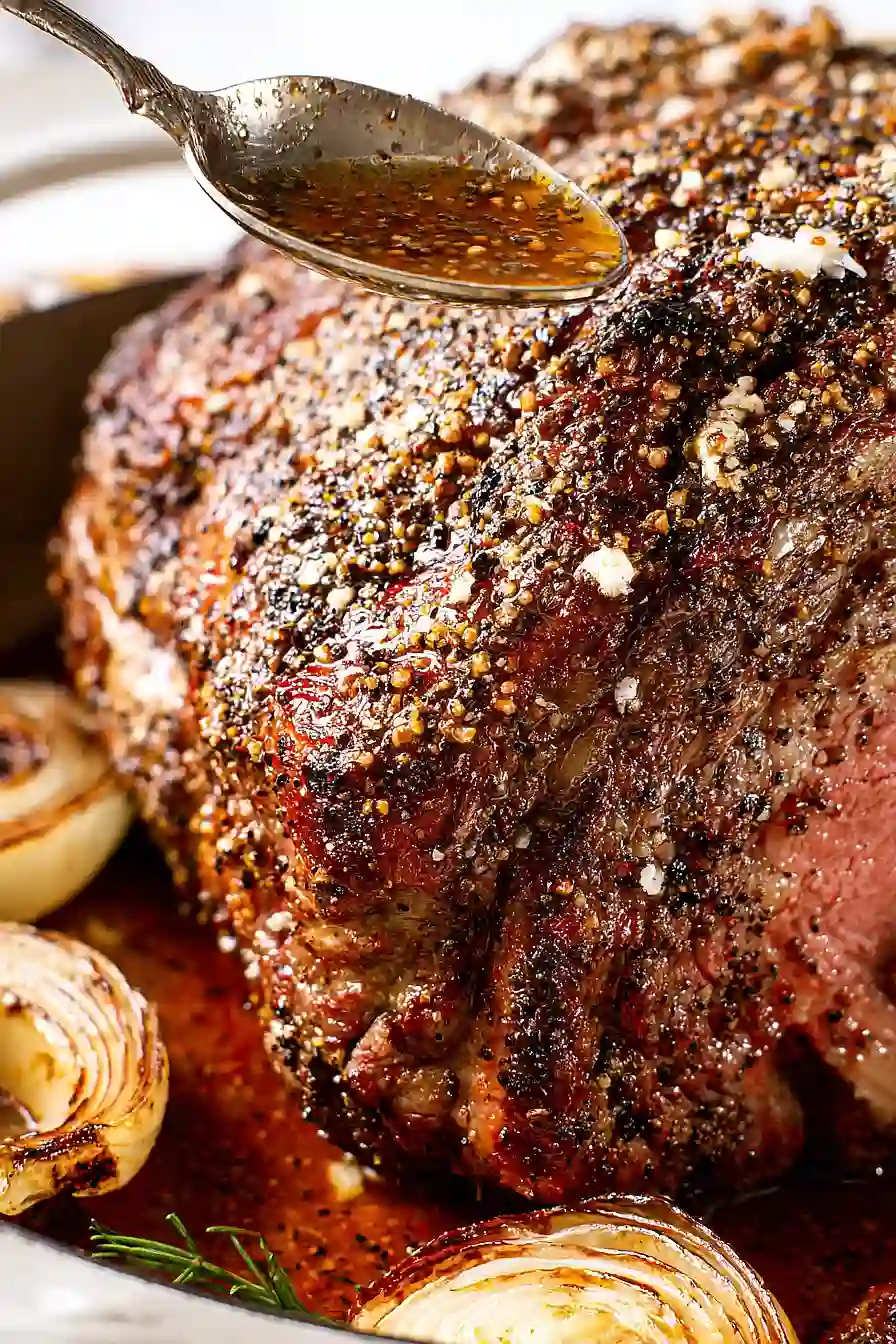
- Restaurant-quality results at home – This recipe walks you through creating a perfectly cooked, tender prime rib with a beautiful crust that rivals any steakhouse, and you’ll save a ton of money making it yourself.
- Impressive presentation – Prime rib always looks fancy on the table, making it perfect for holidays, special occasions, or when you want to wow your dinner guests.
- Flavorful herb crust – The combination of fresh herbs, garlic, and peppercorns creates an aromatic, savory coating that takes this roast to the next level.
- Feeds a crowd – A 10-pound roast serves plenty of people, making it ideal for family gatherings and celebrations without having to cook multiple dishes.
- Flexible timing – You can prep this ahead of time and let it rest before cooking, giving you more control over your schedule on the big day.
What Kind of Prime Rib Should I Use?
When shopping for prime rib, you’ll want to ask your butcher for a “roast-ready” cut, which means the ribs have been cut off and tied back to the roast. This makes carving much easier after cooking while still giving you all the flavor benefits of cooking the meat on the bone. You can choose between a first cut (sometimes called the small end) or a second cut (the large end) – the first cut is a bit more tender and uniform, while the second cut has more marbling and fat cap. If you’re feeding a smaller crowd, you can absolutely use a smaller roast, just figure about one pound per person if you want leftovers. Make sure to let your butcher know you need it a few days in advance, especially around the holidays, since prime rib is a popular special occasion roast.
Options for Substitutions
While prime rib is a special-occasion roast, here are some swaps you can make if needed:
- Prime rib roast: This is one ingredient you really can’t substitute – prime rib is prime rib! However, if you’re looking for a smaller or more budget-friendly option, you can use a standing rib roast (which is essentially the same cut) or ask your butcher for a 3-4 rib section instead of the full roast.
- Multicolor peppercorns: If you don’t have a peppercorn blend, regular black peppercorns work perfectly fine. You can also mix black and white peppercorns if you have both on hand.
- Fresh herbs: Fresh rosemary and thyme really make a difference here, but in a pinch you can use dried herbs. Use about 1/2 teaspoon dried rosemary and 1/3 teaspoon dried thyme as substitutes, since dried herbs are more concentrated.
- Unsalted butter: Salted butter works too – just reduce the added kosher salt by about 1 teaspoon to account for the extra salt in the butter.
- Olive oil: Any neutral cooking oil like avocado oil or vegetable oil will work just as well for this recipe.
- Ground spices: The onion powder, paprika, coriander, and mustard add nice flavor, but if you’re missing one or two, you can leave them out or substitute with garlic powder or other spices you have on hand.
Watch Out for These Mistakes While Cooking
The biggest mistake when cooking prime rib is not bringing it to room temperature before roasting – take it out of the fridge at least 2-3 hours beforehand so it cooks evenly from edge to center.
Skipping the resting period after cooking is another fatal error that leads to all those delicious juices running out onto your cutting board instead of staying in the meat, so let it rest for at least 20-30 minutes tented with foil before slicing.
Many home cooks also make the mistake of cooking prime rib at a constant high temperature, but using a reverse sear method (low and slow until it reaches 120°F internally, then a quick high-heat blast) gives you that perfect pink center with a crispy crust.
Finally, invest in a reliable meat thermometer and pull the roast when it hits 120-125°F for medium-rare – it will continue cooking as it rests and reach the perfect 130-135°F.

What to Serve With Prime Rib?
Prime rib is a showstopper main course, so I like to keep the sides classic and simple to let the beef shine. Creamy mashed potatoes or a loaded baked potato are always crowd-pleasers, and they’re perfect for soaking up any pan juices or horseradish sauce. For vegetables, roasted Brussels sprouts, green beans almondine, or glazed carrots add some color to the plate without competing with the star of the show. Don’t forget a fresh garden salad with a tangy vinaigrette to cut through the richness of the meat, and of course, Yorkshire pudding is a traditional favorite that’s worth the extra effort if you’re feeling ambitious.
Storage Instructions
Store: Leftover prime rib is a gift that keeps on giving! Wrap it tightly in aluminum foil or store in an airtight container in the fridge for up to 4 days. I like to slice what I need and keep the rest of the roast whole to prevent it from drying out.
Freeze: You can freeze prime rib for up to 3 months, though I find it’s best enjoyed fresh. If you do freeze it, wrap individual portions tightly in plastic wrap, then again in foil before placing in a freezer bag. This helps prevent freezer burn and makes it easy to thaw just what you need.
Reheat: The key to reheating prime rib is going low and slow so it doesn’t dry out. Place slices in a baking dish with a splash of beef broth, cover with foil, and warm in a 250°F oven for about 20 minutes. You can also enjoy it cold in sandwiches with some of that horseradish sauce!
| Preparation Time | 180-2880 minutes |
| Cooking Time | 120-180 minutes |
| Total Time | 300-3060 minutes |
| Level of Difficulty | Medium |
Estimated Nutrition
Estimated nutrition for the whole recipe (without optional ingredients):
- Calories: 8100-8700
- Protein: 700-760 g
- Fat: 590-640 g
- Carbohydrates: 35-45 g
Ingredients
For the prime rib roast:
- 1 prime rib roast, about 10 lb (ribs separated but tied alongside)
- 2 tbsp kosher salt (morton’s) or 3 1/2 tbsp if using diamond crystal
- 4 tbsp unsalted butter, cut into 9 pieces
For the spice rub:
- 1/4 cup mixed whole peppercorns
- 1/4 cup olive oil
- 1 1/2 tsp finely chopped fresh rosemary
- 1 tsp minced fresh thyme
- 1/4 cup garlic, chopped (do not press)
- 1 tsp onion powder
- 1 tsp paprika
- 1/2 tsp ground coriander
- 1/2 tsp dry mustard
For the roasting bed:
- 1 yellow onion, unpeeled and quartered
- 1 head garlic, unpeeled and sliced in half horizontally
- 5 sprigs thyme
- 3 sprigs rosemary
For serving:
- 1 batch horseradish sauce (see separate recipe)
Step 1: Dry Brine the Prime Rib
- 1 prime rib roast, about 10 lb (ribs separated but tied alongside)
- 2 tbsp kosher salt (Morton’s) or 3 1/2 tbsp if using Diamond Crystal
Pat the prime rib roast dry with paper towels.
Sprinkle all sides evenly with kosher salt and press the salt gently into the meat.
Cover the roast loosely with foil and refrigerate to dry brine.
Allow it to brine as long as possible, up to 48 hours, but even a few hours is beneficial.
If short on time, salt the meat and let it dry brine while coming to room temperature in the next step.
Step 2: Bring Prime Rib to Room Temperature & Prepare Roasting Bed
- dry-brined prime rib roast from Step 1
- 1 yellow onion, unpeeled and quartered
- 1 head garlic, unpeeled and sliced in half horizontally
- 5 sprigs thyme
- 3 sprigs rosemary
Remove the dry-brined prime rib from the refrigerator and let it sit at room temperature for 4-5 hours (for a 10 lb roast), or 3 hours for a smaller one.
Meanwhile, preheat your oven to 500°F and ensure the rack is in the lower third.
As the roast rests, arrange the quartered onion, halved garlic head, 5 sprigs of thyme, and 3 sprigs of rosemary in the bottom of a nonstick roasting pan to create a flavorful roasting bed.
Step 3: Make Garlic Herb Pepper Spice Rub
- 1/4 cup mixed whole peppercorns
- 1/4 cup olive oil
- 1 1/2 tsp finely chopped fresh rosemary
- 1 tsp minced fresh thyme
- 1/4 cup garlic, chopped (do not press)
- 1 tsp onion powder
- 1 tsp paprika
- 1/2 tsp ground coriander
- 1/2 tsp dry mustard
Crush the mixed whole peppercorns by placing them in a plastic bag and using a rolling pin.
Transfer the crushed peppercorns to a medium bowl.
Add olive oil, finely chopped fresh rosemary, minced fresh thyme, chopped garlic, onion powder, paprika, ground coriander, and dry mustard.
Stir thoroughly to combine into a fragrant, coarse paste.
Step 4: Season and Oven-Sear the Prime Rib
- room temperature prime rib roast from Step 2
- garlic herb pepper spice rub from Step 3
Lightly pat the room-temperature prime rib dry with paper towels.
Rub the entire surface of the roast with the prepared garlic herb pepper spice rub from Step 3, making sure all sides are evenly coated.
Place the roast bone-side down and fat-side up on top of the vegetable and herb roasting bed in the roasting pan.
Insert a digital meat thermometer into the center thickest part of the meat.
Roast, uncovered, at 500°F for 20 minutes to sear the exterior.
Step 5: Slow Roast the Prime Rib with Butter
- 4 tbsp unsalted butter, cut into 9 pieces
After searing, take the roasting pan out of the oven and lower the oven temperature to 250°F.
Dot the top of the roast with cubed unsalted butter, spacing the pieces evenly across the surface.
Return the roast to the oven and continue roasting, uncovered, at 250°F until the thermometer registers 122°F for medium-rare (the temperature will rise to around 129°F as it rests).
This takes about 15 minutes per pound, but I always trust my digital thermometer over the timing for perfect results.
Step 6: Baste, Rest, and Carve the Prime Rib
Remove the roast from the oven and generously baste it with the pan juices.
Transfer the prime rib to a cutting board, cover loosely with foil, and let it rest for at least 20 minutes.
This allows the juices to redistribute and the temperature to reach your desired doneness.
Remove the string, unwrap the roast, and separate the bones.
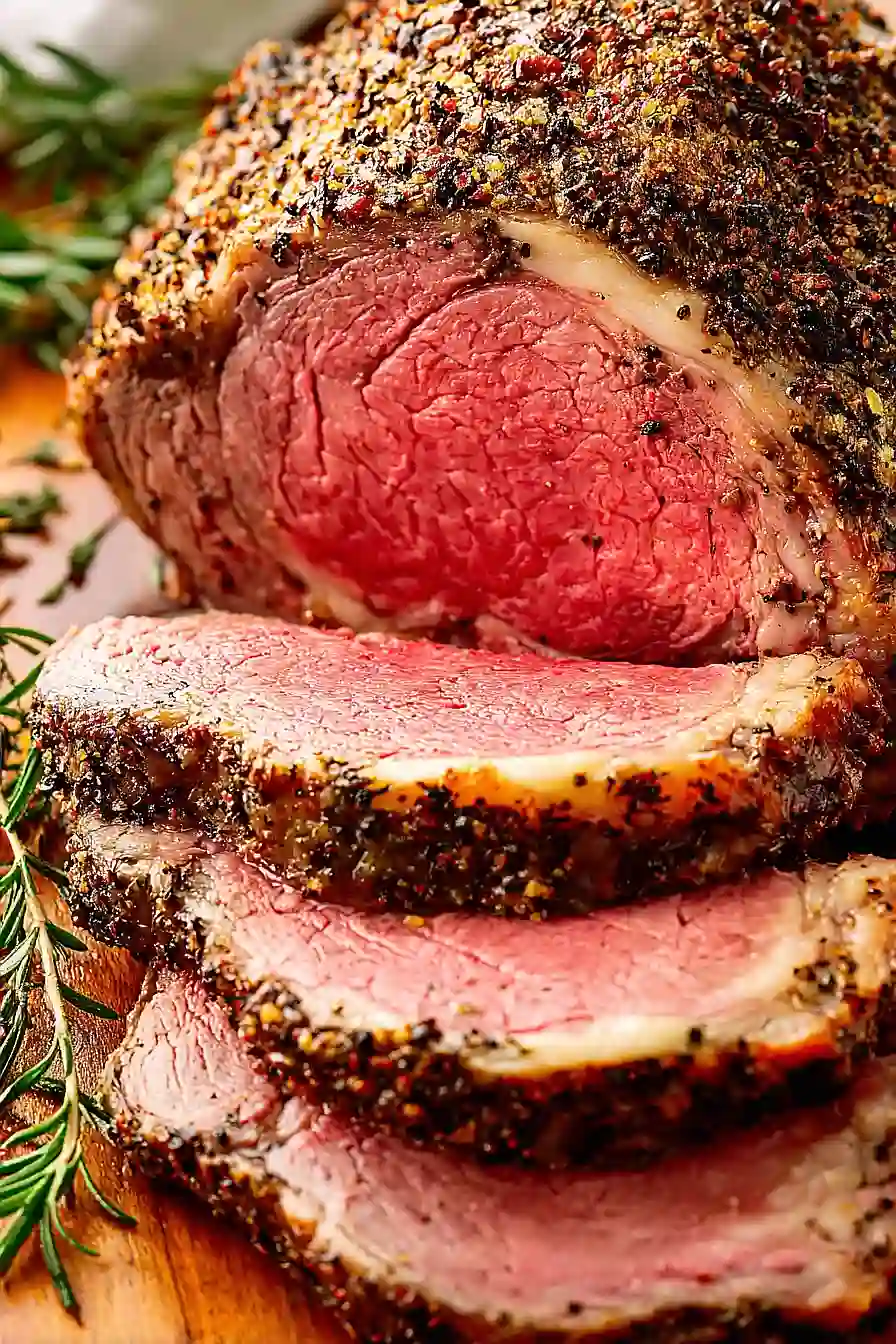
Lay the roast flat and carve into 1/2-inch thick slices, or to your preference.
I always let my prime rib rest because it keeps each slice so juicy.
Step 7: Serve with Horseradish Sauce
- 1 batch horseradish sauce (see separate recipe)
Arrange the carved prime rib on a serving platter and serve alongside horseradish sauce or your preferred accompaniments such as au jus or red wine sauce.
For an extra kick, I love offering homemade horseradish sauce—it’s a classic pairing!
Herb-Crusted Prime Rib
Ingredients
For the prime rib roast:
- 1 prime rib roast, about 10 lb (ribs separated but tied alongside)
- 2 tbsp kosher salt (Morton's) or 3 1/2 tbsp if using Diamond Crystal
- 4 tbsp unsalted butter, cut into 9 pieces
For the spice rub:
- 1/4 cup mixed whole peppercorns
- 1/4 cup olive oil
- 1 1/2 tsp finely chopped fresh rosemary
- 1 tsp minced fresh thyme
- 1/4 cup garlic, chopped (do not press)
- 1 tsp onion powder
- 1 tsp paprika
- 1/2 tsp ground coriander
- 1/2 tsp dry mustard
For the roasting bed:
- 1 yellow onion, unpeeled and quartered
- 1 head garlic, unpeeled and sliced in half horizontally
- 5 sprigs thyme
- 3 sprigs rosemary
For serving:
- 1 batch horseradish sauce (see separate recipe)
Instructions
- Pat the prime rib roast dry with paper towels. Sprinkle all sides evenly with kosher salt and press the salt gently into the meat. Cover the roast loosely with foil and refrigerate to dry brine. Allow it to brine as long as possible, up to 48 hours, but even a few hours is beneficial. If short on time, salt the meat and let it dry brine while coming to room temperature in the next step.
- Remove the dry-brined prime rib from the refrigerator and let it sit at room temperature for 4-5 hours (for a 10 lb roast), or 3 hours for a smaller one. Meanwhile, preheat your oven to 500°F and ensure the rack is in the lower third. As the roast rests, arrange the quartered onion, halved garlic head, 5 sprigs of thyme, and 3 sprigs of rosemary in the bottom of a nonstick roasting pan to create a flavorful roasting bed.
- Crush the mixed whole peppercorns by placing them in a plastic bag and using a rolling pin. Transfer the crushed peppercorns to a medium bowl. Add olive oil, finely chopped fresh rosemary, minced fresh thyme, chopped garlic, onion powder, paprika, ground coriander, and dry mustard. Stir thoroughly to combine into a fragrant, coarse paste.
- Lightly pat the room-temperature prime rib dry with paper towels. Rub the entire surface of the roast with the prepared garlic herb pepper spice rub from Step 3, making sure all sides are evenly coated. Place the roast bone-side down and fat-side up on top of the vegetable and herb roasting bed in the roasting pan. Insert a digital meat thermometer into the center thickest part of the meat. Roast, uncovered, at 500°F for 20 minutes to sear the exterior.
- After searing, take the roasting pan out of the oven and lower the oven temperature to 250°F. Dot the top of the roast with cubed unsalted butter, spacing the pieces evenly across the surface. Return the roast to the oven and continue roasting, uncovered, at 250°F until the thermometer registers 122°F for medium-rare (the temperature will rise to around 129°F as it rests). This takes about 15 minutes per pound, but I always trust my digital thermometer over the timing for perfect results.
- Remove the roast from the oven and generously baste it with the pan juices. Transfer the prime rib to a cutting board, cover loosely with foil, and let it rest for at least 20 minutes. This allows the juices to redistribute and the temperature to reach your desired doneness. Remove the string, unwrap the roast, and separate the bones. Lay the roast flat and carve into 1/2-inch thick slices, or to your preference. I always let my prime rib rest because it keeps each slice so juicy.
- Arrange the carved prime rib on a serving platter and serve alongside horseradish sauce or your preferred accompaniments such as au jus or red wine sauce. For an extra kick, I love offering homemade horseradish sauce—it’s a classic pairing!