I thought good biscuits only came from a restaurant kitchen until I was well into my thirties. My mom always used the canned kind that popped open with a loud bang, and honestly, we were all pretty happy with them.
But then I tried making biscuits from scratch one weekend morning, and I couldn’t believe how simple it actually was. The secret isn’t some fancy technique—it’s just keeping your butter cold and not overworking the dough. Once you get those two things right, you’ll have fluffy, buttery biscuits that put the canned ones to shame.
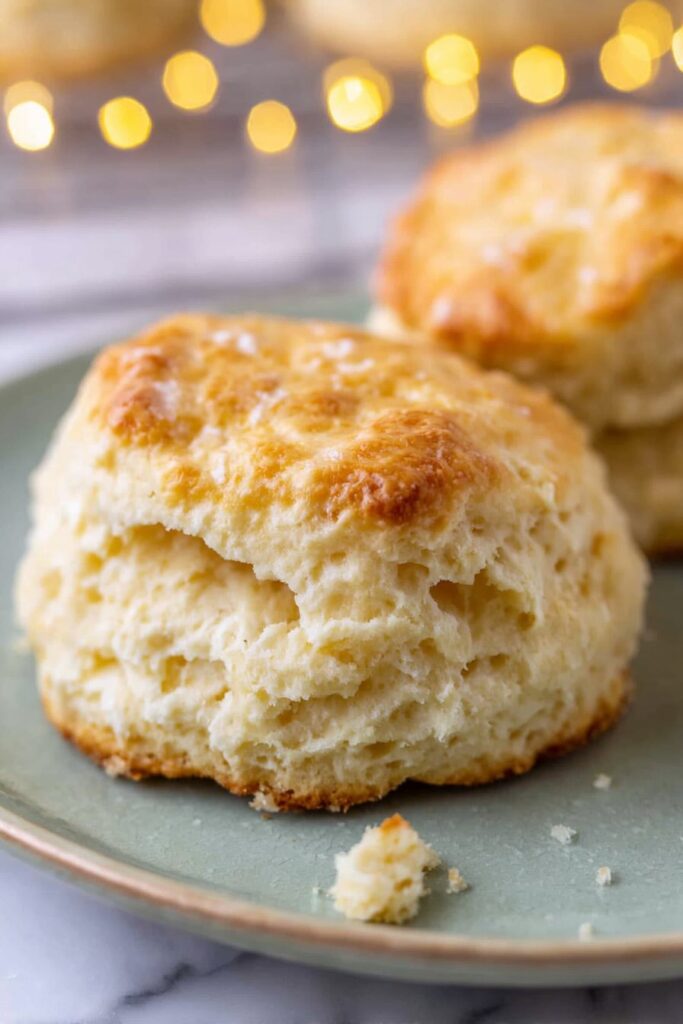
Why You’ll Love These Biscuits
- Quick and easy – These homemade biscuits come together in under 35 minutes, making them perfect for busy mornings or last-minute dinner additions.
- Simple pantry ingredients – You probably already have everything you need in your kitchen – just basic baking staples that create something truly special.
- Fluffy, buttery texture – The cold butter and half-and-half work together to create those perfect flaky layers that make store-bought biscuits seem like a distant memory.
- Fresh from scratch taste – Nothing beats the smell and taste of warm, homemade biscuits straight from your oven – they’re so much better than anything you can buy.
- Perfect for any meal – Whether you’re serving them with breakfast, dinner, or just want a warm snack with honey or jam, these biscuits fit right in.
What Kind of Flour Should I Use?
All-purpose flour is your best bet for making tender, fluffy biscuits that rise properly. You’ll want to stick with regular all-purpose flour rather than bread flour, which has too much protein and will make your biscuits tough and chewy. If you only have self-rising flour on hand, you can use it but skip the baking powder and reduce the salt to about 1/4 teaspoon since self-rising flour already contains both. For the fluffiest results, make sure to measure your flour correctly by spooning it into your measuring cup and leveling it off rather than scooping directly from the bag, which can pack the flour down and throw off your ratios.
Options for Substitutions
This biscuit recipe is pretty forgiving, but there are a few key swaps you can make:
- All-purpose flour: You can substitute with self-rising flour, but if you do, skip the baking powder and reduce the salt to just a pinch since self-rising flour already contains both.
- Half and half: Whole milk works great as a substitute, or you can use buttermilk for tangier biscuits with a bit more rise. Heavy cream will make them extra rich if that’s what you have on hand.
- Unsalted butter: Cold salted butter can work – just reduce the added salt by half. You can also use cold shortening or lard for a more traditional Southern-style biscuit, though the flavor will be a bit different.
- Baking powder: Regular baking powder is fine if you don’t have aluminum-free on hand. The aluminum-free version just helps avoid any metallic aftertaste some people notice.
- Granulated sugar: You can leave out the sugar entirely for savory biscuits, or swap it with brown sugar for a slightly deeper flavor.
Watch Out for These Mistakes While Baking
The biggest mistake when making biscuits is overworking the dough, which develops too much gluten and results in tough, dense biscuits instead of light and flaky ones – mix just until the ingredients come together and the dough looks shaggy.
Your butter temperature is crucial here: if it’s too warm, it will melt into the flour instead of creating those pockets of steam that give biscuits their layers, so keep it cold and cut it into small cubes before mixing.
When cutting your biscuits, press straight down with your cutter and avoid twisting, as twisting seals the edges and prevents the biscuits from rising properly.
For extra height, place your cut biscuits touching each other on the baking sheet – they’ll support each other as they rise and give you those tall, fluffy sides everyone loves.
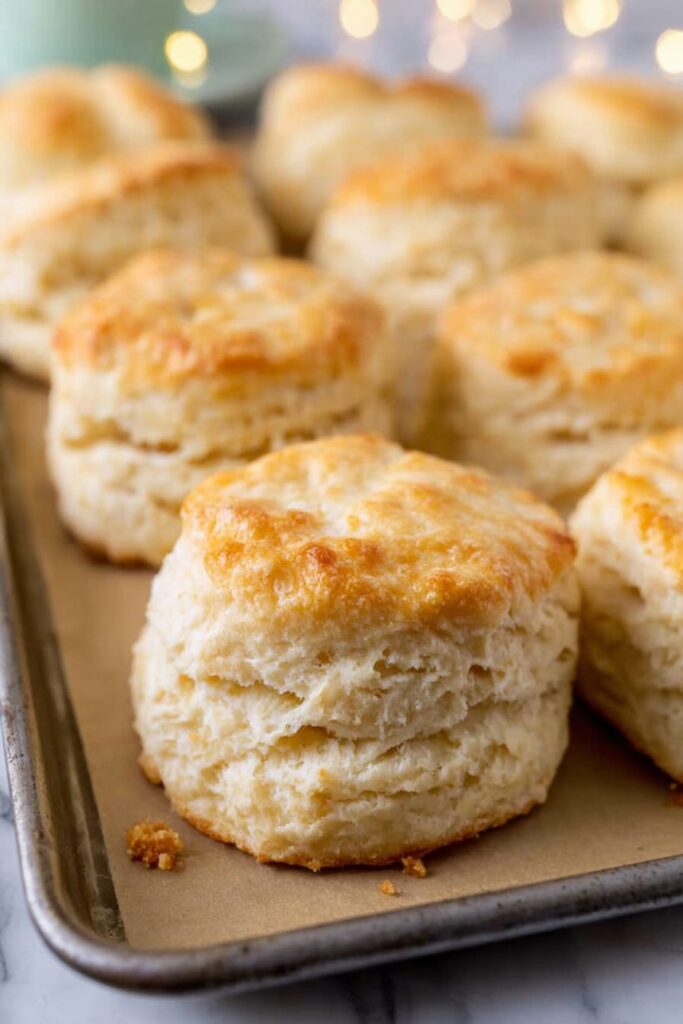
What to Serve With Biscuits?
These fluffy homemade biscuits are perfect for soaking up everything from sausage gravy to honey butter – honestly, they’re good with just about anything! I love serving them alongside scrambled eggs and crispy bacon for a classic Southern breakfast, or you can split them open and pile on some jam or preserves for a sweet treat. They also make a great side for hearty soups and stews since they’re perfect for mopping up all those good flavors. For dinner, try them with fried chicken, roasted vegetables, or even as the base for strawberry shortcake when you want something special for dessert.
Storage Instructions
Keep Fresh: Fresh biscuits are best enjoyed warm, but you can store leftovers in an airtight container at room temperature for up to 2 days. They’ll stay soft and fluffy if you wrap them in a clean kitchen towel first, then place them in the container.
Freeze: These biscuits freeze really well for up to 3 months! Let them cool completely, then wrap each one individually in plastic wrap before putting them in a freezer bag. You can also freeze the unbaked biscuits on a baking sheet, then transfer to a bag once frozen solid.
Warm Up: To bring back that fresh-from-the-oven taste, wrap refrigerated biscuits in foil and warm them in a 350°F oven for about 10 minutes. Frozen biscuits can go straight from freezer to oven – just add a few extra minutes to the baking time if they’re unbaked, or warm the baked ones for 15-20 minutes.
| Preparation Time | 15-20 minutes |
| Cooking Time | 12-15 minutes |
| Total Time | 27-35 minutes |
| Level of Difficulty | Easy |
Estimated Nutrition
Estimated nutrition for the whole recipe (without optional ingredients):
- Calories: 1750-1950
- Protein: 23-26 g
- Fat: 85-95 g
- Carbohydrates: 225-245 g
Ingredients
- 2 cups all-purpose flour
- 1 1/2 tbsp baking powder (aluminum free)
- 1 tsp white sugar
- 3/4 tsp fine sea salt
- 1/2 cup unsalted butter, cold (cut in cubes)
- 1 cup minus 2 tbsp half-and-half
- 1/2 tbsp unsalted butter, melted (for brushing)
Step 1: Prepare the Butter
- 1/2 cup unsalted butter, cold (cut in cubes)
Dice the cold unsalted butter into 1/2 inch cubes and refrigerate until needed.
Keeping the butter cold helps create flaky layers in your biscuits.
Step 2: Combine Dry Ingredients
- 2 cups all-purpose flour
- 1 1/2 tbsp baking powder (aluminum free)
- 1 tsp white sugar
- 3/4 tsp fine sea salt
In a large mixing bowl, thoroughly whisk together the all-purpose flour, baking powder, white sugar, and fine sea salt.
This step ensures even distribution of your leavening and salt for properly risen, flavorful biscuits.
Step 3: Cut the Butter into the Dry Ingredients
- 1/2 cup unsalted butter, cold (cut in cubes) from Step 1
- Dry ingredient mixture from Step 2
Add the chilled, cubed butter (from Step 1) to the dry mixture (from Step 2).
Using a pastry blender, two knives, or a fork, cut the butter into the flour mixture until the largest pieces are about the size of peas.
This technique will help to create tender, flaky biscuits.
Step 4: Add Half-and-Half and Form the Dough
- 1 cup minus 2 tbsp half-and-half
Pour the half-and-half all at once into the bowl and gently stir until the dough mostly comes together and is just moistened.
Do not over-mix, as overworking the dough can lead to tougher biscuits.
Step 5: Shape and Cut the Biscuits
- Dough from Step 4
- Additional flour for dusting (from step 2’s reserved flour)
Turn the dough out onto a floured surface.
If the dough is sticky, lightly sprinkle flour over the top.
Pat the dough into a rectangle, then fold it in half.
Pat it out again into a rectangle and repeat the fold one more time.
Finally, pat the dough into a 5×10-inch rectangle or about 3/4-inch thick.
Dip a 2 1/2-inch round biscuit cutter in flour and cut out 8 biscuits.
Gather the scraps, form them into a rectangle, and cut out up to 2 additional biscuits.
I always try to work quickly here to keep the butter cold for maximum flakiness.
Step 6: Bake the Biscuits
- Biscuits formed in Step 5
Place the cut biscuits onto a parchment-lined baking sheet about 1 inch apart.
Bake in a preheated oven at 450˚F for 12-15 minutes, or until the tops are golden and the biscuits are cooked through.
For a rich, golden finish, I like to rotate the baking sheet halfway through baking for even browning.
Step 7: Finish and Serve
- 1/2 tbsp unsalted butter, melted (for brushing)
While the biscuits are still hot, brush the tops with melted unsalted butter.
Transfer biscuits to a wire rack to cool for about 10 minutes before serving.
For extra indulgence, I sometimes sprinkle a pinch of flaky sea salt on the buttery tops.
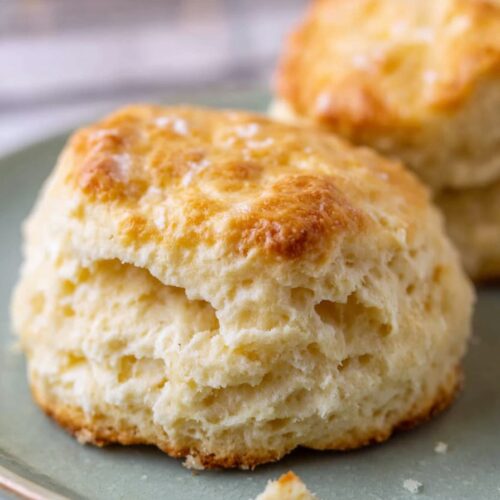
Golden Homemade Biscuits
Ingredients
- 2 cups all-purpose flour
- 1 1/2 tbsp baking powder (aluminum free)
- 1 tsp white sugar
- 3/4 tsp fine sea salt
- 1/2 cup unsalted butter, cold (cut in cubes)
- 1 cup minus 2 tbsp half-and-half
- 1/2 tbsp unsalted butter, melted (for brushing)
Instructions
- Dice the cold unsalted butter into 1/2 inch cubes and refrigerate until needed. Keeping the butter cold helps create flaky layers in your biscuits.
- In a large mixing bowl, thoroughly whisk together the all-purpose flour, baking powder, white sugar, and fine sea salt. This step ensures even distribution of your leavening and salt for properly risen, flavorful biscuits.
- Add the chilled, cubed butter (from Step 1) to the dry mixture (from Step 2). Using a pastry blender, two knives, or a fork, cut the butter into the flour mixture until the largest pieces are about the size of peas. This technique will help to create tender, flaky biscuits.
- Pour the half-and-half all at once into the bowl and gently stir until the dough mostly comes together and is just moistened. Do not over-mix, as overworking the dough can lead to tougher biscuits.
- Turn the dough out onto a floured surface. If the dough is sticky, lightly sprinkle flour over the top. Pat the dough into a rectangle, then fold it in half. Pat it out again into a rectangle and repeat the fold one more time. Finally, pat the dough into a 5×10-inch rectangle or about 3/4-inch thick. Dip a 2 1/2-inch round biscuit cutter in flour and cut out 8 biscuits. Gather the scraps, form them into a rectangle, and cut out up to 2 additional biscuits. I always try to work quickly here to keep the butter cold for maximum flakiness.
- Place the cut biscuits onto a parchment-lined baking sheet about 1 inch apart. Bake in a preheated oven at 450˚F for 12-15 minutes, or until the tops are golden and the biscuits are cooked through. For a rich, golden finish, I like to rotate the baking sheet halfway through baking for even browning.
- While the biscuits are still hot, brush the tops with melted unsalted butter. Transfer biscuits to a wire rack to cool for about 10 minutes before serving. For extra indulgence, I sometimes sprinkle a pinch of flaky sea salt on the buttery tops.