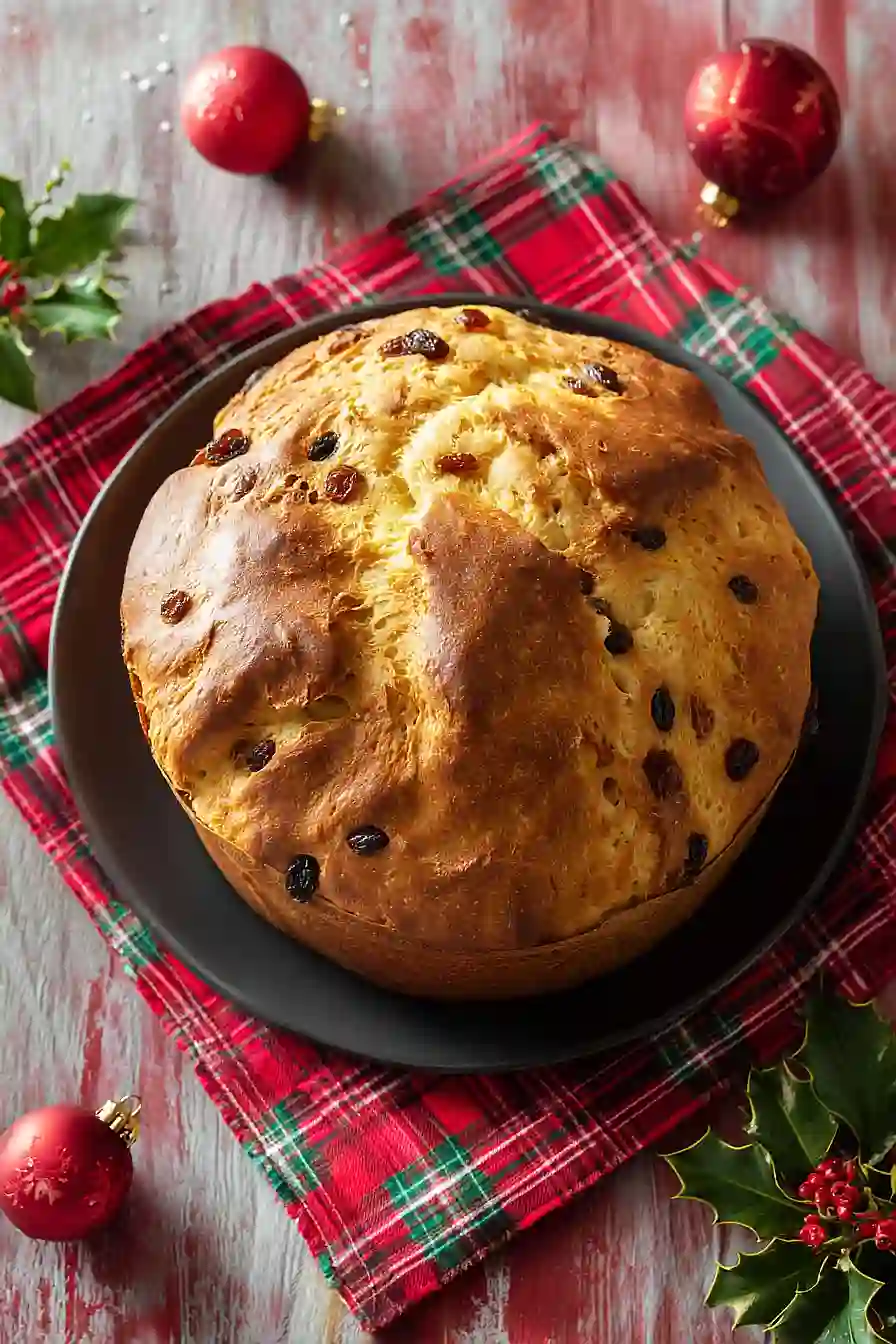
Finding an authentic panettone recipe that actually works at home can feel impossible. Most recipes require special equipment, days of preparation, or ingredients that are nearly impossible to track down at your local grocery store, and the whole process seems way too complicated for anyone who isn’t a professional baker.
Luckily, this Italian Christmas bread delivers that sweet, fluffy texture and citrusy flavor without all the fuss. It uses straightforward ingredients, breaks down the process into manageable steps, and gives you that bakery-quality panettone right from your own kitchen.
Why You’ll Love This Panettone
- Impressive homemade gift – Making this traditional Italian Christmas bread from scratch shows real effort and care, making it a thoughtful present for friends and family during the holidays.
- Bakery-quality results at home – You’ll get that light, fluffy texture and rich flavor that usually costs a fortune at specialty shops, all from your own kitchen.
- Customizable dried fruits – Feel free to swap out the raisins, apricots, or cranberries for your favorite dried fruits to make this recipe your own.
- Perfect holiday tradition – This festive bread filled with citrus and dried fruits brings authentic Italian Christmas spirit to your table and makes your home smell amazing.
- Worth the time investment – While it does take patience, most of the time is hands-off rising, and the final result is so much better than store-bought versions.
What Kind of Flour Should I Use?
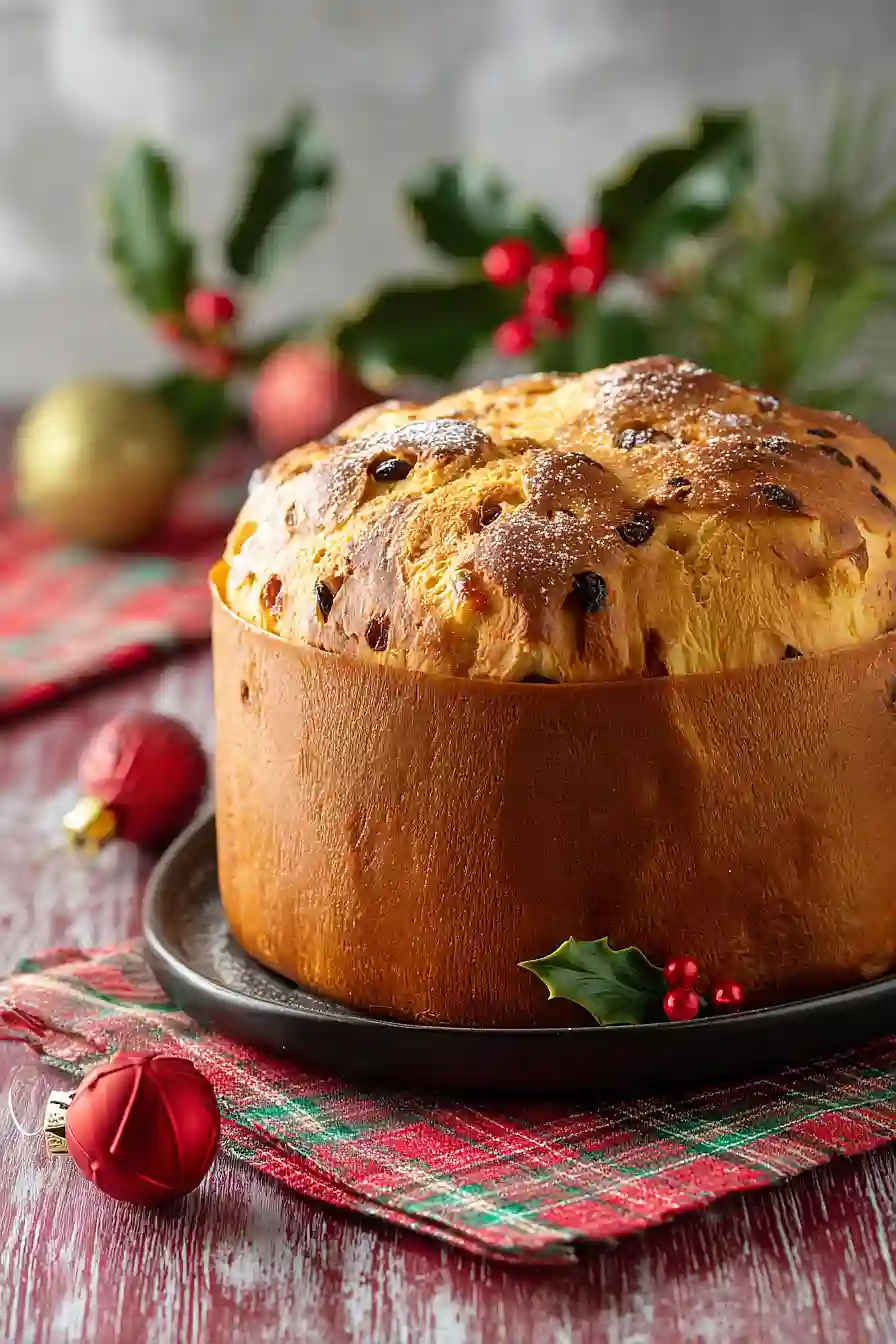
For panettone, regular all-purpose flour is what you’ll want to reach for, and it’s really the best choice for getting that soft, airy texture this bread is known for. You don’t need to hunt down any special Italian flour or bread flour – just use what you probably already have in your pantry. Make sure your flour is fresh and hasn’t been sitting around for years, as older flour can affect how well your dough rises. If you want to be precise, weighing your flour is always better than measuring by volume since it gives you more consistent results, but scooping and leveling your measuring cup will work just fine too.
Options for Substitutions
While panettone is a traditional recipe, there’s some room to make it your own with these swaps:
- Fiori di Sicilia flavoring: This special Italian flavoring can be hard to find, so you can substitute it with 1 teaspoon vanilla extract plus ¼ teaspoon almond extract. It won’t be exactly the same, but it’ll give you a nice flavor profile.
- Dried fruits: Feel free to mix and match your dried fruits based on what you have. Dried cherries, figs, or chopped dates work well. Just keep the total amount at about 2 cups of mixed fruit.
- Candied peel: If you’re not a fan of candied peel, you can replace it with more dried fruit or even chocolate chips for a modern twist. Some people use candied ginger for a spicier note.
- All-purpose flour: Don’t substitute the all-purpose flour with bread flour or whole wheat – panettone needs the specific protein content of all-purpose flour to get that light, airy texture that makes it special.
- Instant yeast: If you only have active dry yeast, you can use it but increase the amount by about 25% and dissolve it in the lukewarm water first before adding to the dough.
Watch Out for These Mistakes While Baking
The biggest mistake when making panettone is rushing the rise times, which can leave you with a dense, heavy bread instead of the light, airy texture you’re after – this dough needs patience, so give it the full time it needs even if it seems like it’s taking forever.
Another common error is adding the dried fruits too early in the mixing process, which can weigh down the dough and prevent proper gluten development – fold them in gently at the very end when the dough is already well-developed.
Temperature matters more than you might think, so make sure your eggs and butter are truly at room temperature before mixing, as cold ingredients can shock the yeast and slow down fermentation.
Finally, don’t skip the step of soaking your raisins, apricots, and cranberries in warm water for 10-15 minutes before adding them to the dough, as this keeps them plump and prevents them from stealing moisture from your bread during baking.
What to Serve With Panettone?
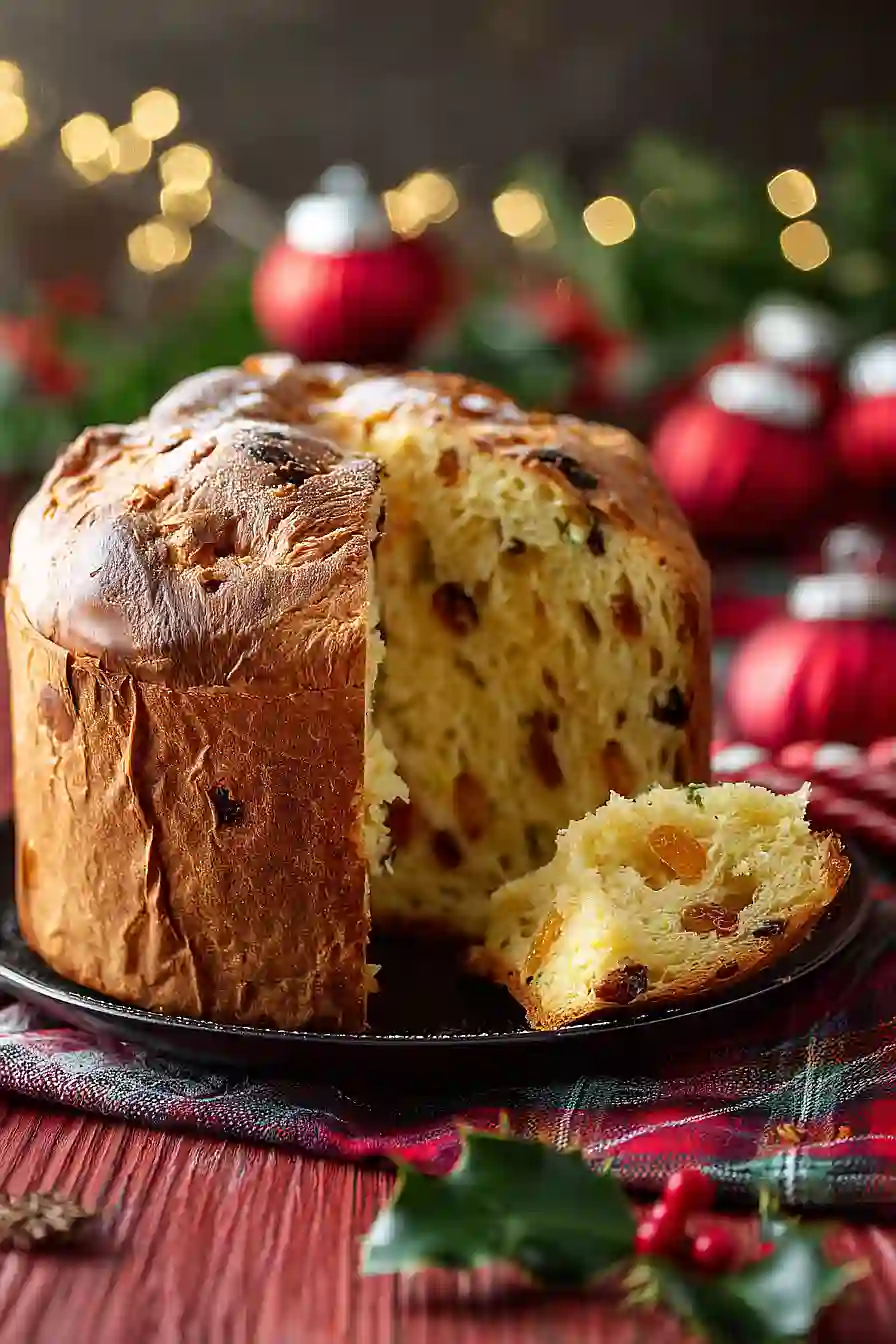
Panettone is traditionally enjoyed as a breakfast treat or afternoon snack with a cup of strong espresso or cappuccino, which balances out the sweetness of the bread perfectly. Many Italians like to serve it with a glass of sweet wine like Moscato d’Asti or even a creamy zabaglione sauce for dipping during the holidays. You can also toast slices of panettone and spread them with butter or mascarpone cheese for an extra indulgent treat. For a simple breakfast, pair it with fresh fruit like berries or sliced oranges to complement the citrus notes in the bread.
Storage Instructions
Store: Panettone stays moist and delicious when wrapped tightly in plastic wrap or stored in an airtight container at room temperature. It’ll keep for about 5-7 days on your counter, and honestly, some people say it tastes even better after a day or two once the flavors have had time to meld together.
Freeze: This bread freezes really well if you want to make it ahead for the holidays. Wrap it tightly in plastic wrap, then again in aluminum foil, and freeze for up to 3 months. Just thaw it overnight at room temperature while still wrapped to keep all that moisture locked in.
Serve: Panettone is traditionally served at room temperature, sliced into wedges. If you’ve stored it in the fridge or freezer, let it come back to room temperature for the best texture and flavor. You can also toast slices lightly if you prefer a bit of crunch on the outside.
| Preparation Time | 16-18 hours |
| Cooking Time | 35-40 minutes |
| Total Time | 16-18.5 hours |
| Level of Difficulty | Hard |
| Servings | 8 slices |
Estimated Nutrition
Estimated nutrition for the whole recipe (without optional ingredients):
- Calories: 2700-2950
- Protein: 45-55 g
- Fat: 40-50 g
- Carbohydrates: 540-570 g
Ingredients
For the starter:
- 3/4 cup all-purpose flour (I use King Arthur all-purpose flour)
- 1/3 cup lukewarm water (about 110°F for proper activation)
- 1/16 tsp instant yeast (active dry or instant works)
For the dough:
- 1 1/4 tsp salt
- 1/4 cup lukewarm water (about 110°F)
- 4 tbsp softened butter (room temperature, about 70°F)
- 1 tbsp instant yeast
- 1/3 cup sugar
- 2 large eggs (room temperature for better incorporation)
- 2 1/4 cups all-purpose flour
- 1/2 tsp Fiori di Sicilia flavoring (creates the authentic panettone flavor)
For the fruit mix:
- 1/2 cup dried apricots (chopped into small pieces)
- 1/2 cup candied peel (adds traditional sweetness and texture)
- 1 tbsp grated orange zest (freshly grated for best aroma)
- 1 tbsp grated lemon zest (freshly grated for brightness)
- 1/2 cup golden raisins (plump and moist)
- 1/2 cup dried cranberries
Step 1: Build and Ferment the Starter (Biga)
- 3/4 cup all-purpose flour
- 1/3 cup lukewarm water
- 1/16 tsp instant yeast
In a small bowl, combine the flour, lukewarm water, and instant yeast.
Stir until a thick, shaggy mixture forms.
Cover the bowl with plastic wrap and let it sit at room temperature for 12 hours (or up to 24 hours).
This starter, called a biga, develops complex flavors and helps create the light, airy crumb that panettone is known for.
I always make this the night before so it’s ready when I want to bake.
Step 2: Prepare the Dry Mix and Begin the Main Dough
- 2 1/4 cups all-purpose flour
- 1/3 cup sugar
- 1 1/4 tsp salt
- 1 tbsp instant yeast
In a stand mixer bowl, combine the flour, sugar, salt, and yeast.
Mix on low speed for about 1 minute until the dry ingredients are evenly distributed.
This ensures the yeast and salt are well-separated and incorporated throughout the flour before adding any liquid, which helps prevent the salt from inhibiting yeast activation.
Step 3: Create the Wet Mixture with Starter and Combine
- dry ingredient mixture from Step 2
- fermented biga from Step 1
- 2 large eggs
- 1/4 cup lukewarm water
- 1/2 tsp Fiori di Sicilia flavoring
- 4 tbsp softened butter
In a separate jug or bowl, whisk together the room-temperature eggs, the fermented biga from Step 1, lukewarm water, and Fiori di Sicilia flavoring until well combined.
Gradually add this wet mixture to the dry mix in the stand mixer, mixing on low speed until a shaggy dough forms.
Once combined, add the softened butter a bit at a time, allowing each addition to incorporate before adding more.
Mix on medium speed for 4-5 minutes until the dough becomes smooth, elastic, and slightly tacky.
The butter will initially make the dough look lumpy, but continued mixing will fully incorporate it and develop the gluten structure needed for panettone’s characteristic soft crumb.
Step 4: First Rise and Prepare Fruit Mixture
- 1/2 cup dried apricots
- 1/2 cup candied peel
- 1/2 cup golden raisins
- 1/2 cup dried cranberries
- 1 tbsp grated orange zest
- 1 tbsp grated lemon zest
Transfer the dough from Step 3 to a lightly oiled bowl, cover with plastic wrap, and let it rise at room temperature for 1.5 to 2 hours until doubled in size.
While the dough rises, prepare the fruit and zest mixture: combine the chopped dried apricots, candied peel, golden raisins, dried cranberries, freshly grated orange zest, and freshly grated lemon zest in a bowl and mix gently to distribute everything evenly.
I like to do this prep while the dough is rising so everything is ready when I need it—it keeps the workflow smooth and prevents the fruit from sitting around too long.
Step 5: Incorporate Fruit and Shape into Panettone Pan
- dough from Step 3
- fruit and zest mixture from Step 4
After the first rise, gently push air out of the dough with your hands (don’t deflate it completely—you want to keep some of the gas bubbles).
Add the fruit and zest mixture from Step 4 to the dough and gently knead it in with your hands for 2-3 minutes until the fruit is evenly distributed throughout.
The dough will be sticky, so work gently to avoid overworking it.
Shape the dough into a round ball and place it into a paper panettone mold or a round baking pan lined with parchment paper.
Cover with plastic wrap and let it rise for another 1.5 to 2 hours until the dough rises above the rim of the pan and feels airy when gently poked.
Step 6: Egg Wash and Graduated Baking
- shaped dough from Step 5
- 1 egg
- 1 tablespoon water
Preheat your oven to 400°F.
Once the dough has completed its second rise, brush the top generously with egg wash (beat 1 egg with 1 tablespoon water).
Bake at 400°F for 10 minutes until the top begins to set.
Reduce the oven temperature to 375°F and bake for another 10 minutes.
Finally, reduce the temperature to 350°F and bake for 15-20 minutes more until the panettone is deep golden brown and a toothpick inserted into the center comes out clean.
If the top browns too quickly, tent it loosely with foil.
This graduated temperature approach gives you a beautiful golden crust while keeping the inside moist and tender—the lower final temperature ensures the interior bakes through without the outside burning.
Step 7: Cool and Serve
Remove the panettone from the oven and let it cool in the pan for 10-15 minutes, then turn it out onto a wire rack to cool completely.
This helps prevent condensation from making the bottom soggy.
Once fully cooled, slice and serve at room temperature.
Panettone keeps well wrapped at room temperature for several days, or you can freeze it for later enjoyment.

Best Italian Christmas Bread
Ingredients
For the starter:
- 3/4 cup all-purpose flour (I use King Arthur all-purpose flour)
- 1/3 cup lukewarm water (about 110°F for proper activation)
- 1/16 tsp instant yeast (active dry or instant works)
For the dough:
- 1 1/4 tsp salt
- 1/4 cup lukewarm water (about 110°F)
- 4 tbsp softened butter (room temperature, about 70°F)
- 1 tbsp instant yeast
- 1/3 cup sugar
- 2 large eggs (room temperature for better incorporation)
- 2 1/4 cups all-purpose flour
- 1/2 tsp Fiori di Sicilia flavoring (creates the authentic panettone flavor)
For the fruit mix:
- 1/2 cup dried apricots (chopped into small pieces)
- 1/2 cup candied peel (adds traditional sweetness and texture)
- 1 tbsp grated orange zest (freshly grated for best aroma)
- 1 tbsp grated lemon zest (freshly grated for brightness)
- 1/2 cup golden raisins (plump and moist)
- 1/2 cup dried cranberries
Instructions
- In a small bowl, combine the flour, lukewarm water, and instant yeast. Stir until a thick, shaggy mixture forms. Cover the bowl with plastic wrap and let it sit at room temperature for 12 hours (or up to 24 hours). This starter, called a biga, develops complex flavors and helps create the light, airy crumb that panettone is known for. I always make this the night before so it's ready when I want to bake.
- In a stand mixer bowl, combine the flour, sugar, salt, and yeast. Mix on low speed for about 1 minute until the dry ingredients are evenly distributed. This ensures the yeast and salt are well-separated and incorporated throughout the flour before adding any liquid, which helps prevent the salt from inhibiting yeast activation.
- In a separate jug or bowl, whisk together the room-temperature eggs, the fermented biga from Step 1, lukewarm water, and Fiori di Sicilia flavoring until well combined. Gradually add this wet mixture to the dry mix in the stand mixer, mixing on low speed until a shaggy dough forms. Once combined, add the softened butter a bit at a time, allowing each addition to incorporate before adding more. Mix on medium speed for 4-5 minutes until the dough becomes smooth, elastic, and slightly tacky. The butter will initially make the dough look lumpy, but continued mixing will fully incorporate it and develop the gluten structure needed for panettone's characteristic soft crumb.
- Transfer the dough from Step 3 to a lightly oiled bowl, cover with plastic wrap, and let it rise at room temperature for 1.5 to 2 hours until doubled in size. While the dough rises, prepare the fruit and zest mixture: combine the chopped dried apricots, candied peel, golden raisins, dried cranberries, freshly grated orange zest, and freshly grated lemon zest in a bowl and mix gently to distribute everything evenly. I like to do this prep while the dough is rising so everything is ready when I need it—it keeps the workflow smooth and prevents the fruit from sitting around too long.
- After the first rise, gently push air out of the dough with your hands (don't deflate it completely—you want to keep some of the gas bubbles). Add the fruit and zest mixture from Step 4 to the dough and gently knead it in with your hands for 2-3 minutes until the fruit is evenly distributed throughout. The dough will be sticky, so work gently to avoid overworking it. Shape the dough into a round ball and place it into a paper panettone mold or a round baking pan lined with parchment paper. Cover with plastic wrap and let it rise for another 1.5 to 2 hours until the dough rises above the rim of the pan and feels airy when gently poked.
- Preheat your oven to 400°F. Once the dough has completed its second rise, brush the top generously with egg wash (beat 1 egg with 1 tablespoon water). Bake at 400°F for 10 minutes until the top begins to set. Reduce the oven temperature to 375°F and bake for another 10 minutes. Finally, reduce the temperature to 350°F and bake for 15-20 minutes more until the panettone is deep golden brown and a toothpick inserted into the center comes out clean. If the top browns too quickly, tent it loosely with foil. This graduated temperature approach gives you a beautiful golden crust while keeping the inside moist and tender—the lower final temperature ensures the interior bakes through without the outside burning.
- Remove the panettone from the oven and let it cool in the pan for 10-15 minutes, then turn it out onto a wire rack to cool completely. This helps prevent condensation from making the bottom soggy. Once fully cooled, slice and serve at room temperature. Panettone keeps well wrapped at room temperature for several days, or you can freeze it for later enjoyment.