I’ve always loved Chinese takeout, but there’s something about making it at home that just hits different. Maybe it’s knowing exactly what goes into my food, or maybe it’s the smell of ginger and garlic filling up the kitchen. Either way, this spare ribs and rice dish has become my go-to when I want that restaurant experience without leaving the house.
The best part? Everything cooks together in one pot. The rice soaks up all those flavors from the black bean sauce and the ribs while they’re steaming away. No need to make the protein in one pan and the rice in another. Just layer everything and let your pressure cooker do the work.
Want it spicy? Add more Thai chili. Prefer it mild? Skip it altogether. Either way, you’re getting tender pork ribs and perfectly cooked jasmine rice in about the same time it would take to drive to your nearest Chinese restaurant and back.

Why You’ll Love This Spare Ribs and Rice
- One-pot meal – Everything cooks together in one pot, which means less cleanup and more time to relax after dinner.
- Ready in under an hour – From start to finish, you’ll have tender spare ribs and perfectly cooked rice on the table in less than an hour.
- Restaurant-quality flavor at home – The black bean sauce, ginger, and garlic create those authentic Chinese takeout flavors you crave, but made fresh in your own kitchen.
- Complete meal in one dish – With protein and rice cooking together, you don’t need to worry about making side dishes—dinner is done when the pot is done.
What Kind of Spare Ribs Should I Use?
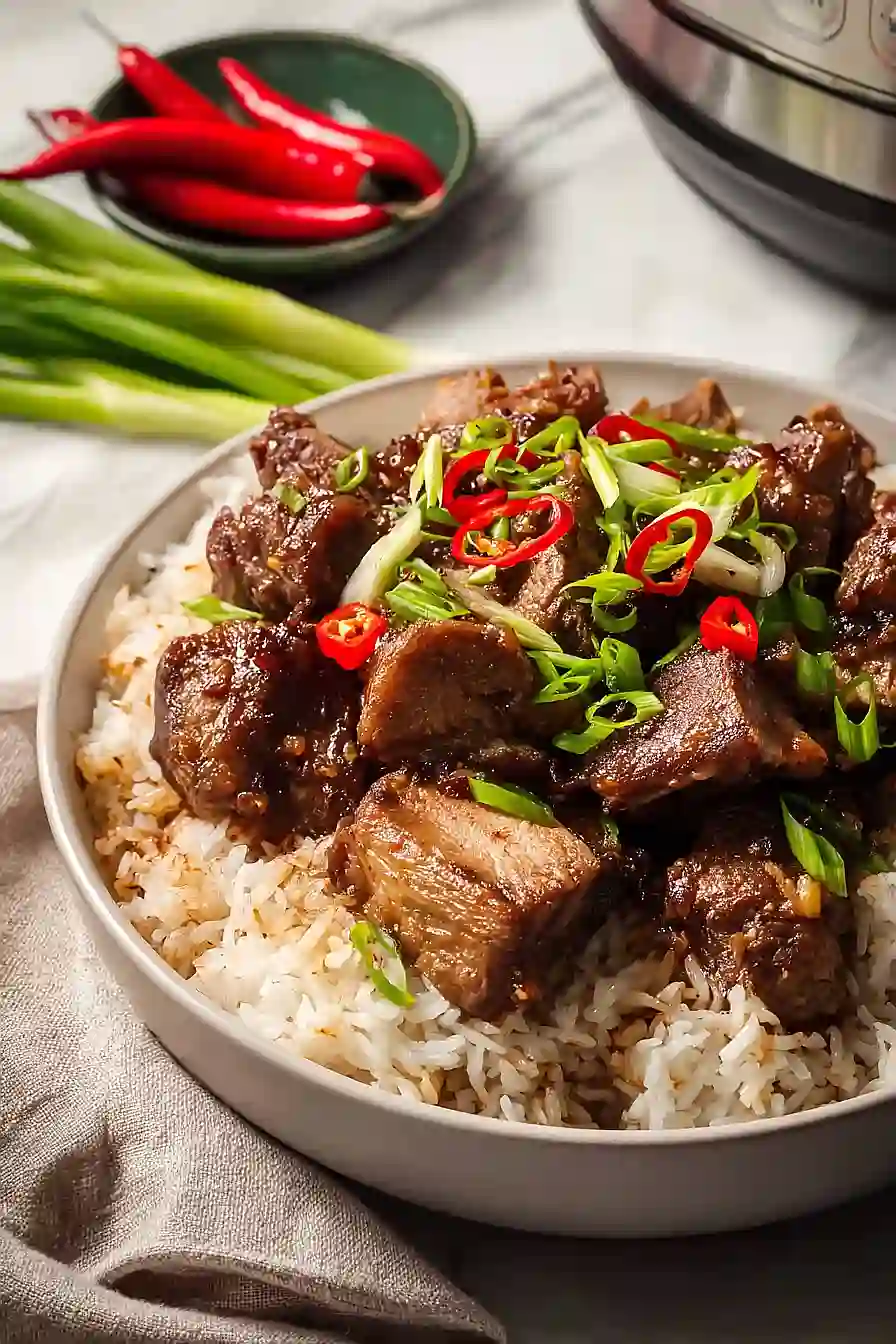
For this recipe, you’ll want to use pork spare ribs that have been cut into bite-sized pieces, which you can usually find pre-cut at Asian grocery stores or ask your butcher to do for you. If you can only find a full rack, you can cut them yourself into 1-2 inch pieces using a sharp knife or cleaver. Baby back ribs can work in a pinch, though they’re a bit leaner and may not be quite as tender as traditional spare ribs. Look for ribs with a good amount of meat on them and a bit of marbling for the best flavor and texture.
Options for Substitutions
This recipe is pretty adaptable, so here are some swaps you can make based on what you have:
- Pork spare ribs: You can use baby back ribs or even pork shoulder cut into chunks instead. Chicken thighs work too, though they’ll cook faster so keep an eye on them.
- Jasmine rice: Long-grain white rice or basmati can step in for jasmine rice. Just stick with the same water ratio and cooking time.
- Black bean sauce: If you don’t have black bean sauce, try using hoisin sauce or oyster sauce. The flavor will be a bit different but still tasty.
- Shaoxing wine: Dry sherry or even a splash of white wine works as a substitute. If you want to skip alcohol entirely, just use water or extra broth.
- Fish sauce: Since this is already optional, you can leave it out. But if you want that umami kick, try a bit of extra soy sauce instead.
- Thai chili: Any fresh hot pepper will work here – serrano, jalapeño, or even red pepper flakes if fresh chilies aren’t available. Adjust the amount based on your heat preference.
Watch Out for These Mistakes While Cooking
The biggest mistake when making spare ribs and rice is skipping the marinating time – those 30 minutes are essential for the black bean sauce and aromatics to penetrate the meat, so resist the urge to rush this step. Another common error is not arranging the ribs in a single layer at the bottom of the pot, which can lead to uneven cooking and some pieces turning out tough while others are tender. Make sure to push all the rice below the water line before cooking, as any grains left exposed will end up hard and crunchy instead of fluffy. Finally, don’t open the pressure cooker immediately after cooking – that 10-minute natural release is what keeps the ribs tender and allows the flavors to settle into the rice.

What to Serve With Spare Ribs and Rice?
Since spare ribs and rice is already a pretty hearty meal, I like to keep the sides simple and fresh to balance out the rich, savory flavors. A quick cucumber salad with rice vinegar and a touch of sugar is perfect for cutting through the richness of the pork, and it takes just a few minutes to throw together. Stir-fried bok choy or gai lan with garlic makes another great side that adds some greens without competing with the main dish. If you want something a bit more substantial, try some steamed or pan-fried dumplings on the side, or a simple egg drop soup to start the meal.
Storage Instructions
Store: Keep your leftover spare ribs and rice in an airtight container in the fridge for up to 3 days. The flavors actually get even better the next day as everything has time to soak in together.
Freeze: This dish freezes really well for up to 2 months. Let it cool completely first, then portion it out into freezer-safe containers. I like to freeze individual servings so I can grab just what I need for a quick meal.
Reheat: Warm it up in the microwave with a splash of water to keep the rice from drying out, or reheat it in a covered pan on the stove over medium-low heat. If it’s frozen, let it thaw in the fridge overnight before reheating for the best results.
| Preparation Time | 30-40 minutes |
| Cooking Time | 10-15 minutes |
| Total Time | 40-55 minutes |
| Level of Difficulty | Medium |
| Servings | 4 servings |
Estimated Nutrition
Estimated nutrition for the whole recipe (without optional ingredients):
- Calories: 1700-1850
- Protein: 70-80 g
- Fat: 75-85 g
- Carbohydrates: 170-190 g
Ingredients
For the marinade:
- 2 tbsp black bean sauce
- 1 tbsp soy sauce
- 1.5 tbsp rice wine
- 1.5 tbsp freshly minced ginger
- 4 garlic cloves (freshly minced)
- 1 tsp sesame oil
- 1 tsp sugar
- 1/4 tsp ground black pepper
- 1 tsp fish sauce
- 1 tsp cornstarch (to tenderize)
For the ribs and rice:
- 1 lb pork ribs (cut into 1-inch pieces)
- 1.5 cups jasmine rice
- 1.4 cups cold water (adjusted for optimal pressure cooking)
- 1 tbsp peanut or vegetable oil
- 2 scallions (finely sliced)
- 1 Thai chili (to taste)
- 1 tsp dark soy sauce (for richer rice color)
Step 1: Prepare the Marinade and Marinate the Ribs
- 2 tbsp black bean sauce
- 1 tbsp soy sauce
- 1.5 tbsp rice wine
- 1.5 tbsp freshly minced ginger
- 4 garlic cloves
- 1 tsp sesame oil
- 1 tsp sugar
- 1/4 tsp ground black pepper
- 1 tsp fish sauce
- 1 tsp cornstarch
- 1 lb pork ribs
In a bowl, whisk together the black bean sauce, soy sauce, rice wine, minced ginger, minced garlic, sesame oil, sugar, black pepper, fish sauce, and cornstarch until well combined.
Add the pork rib pieces and toss to coat evenly with the marinade.
Let sit for at least 30 minutes at room temperature—this allows the cornstarch to begin tenderizing the meat and lets the flavors penetrate.
I like to marinate while I prepare the rice, so nothing feels rushed.
Step 2: Prepare the Rice and Assemble the Pressure Cooker
- 1.5 cups jasmine rice
- 1.4 cups cold water
- 1 tbsp peanut or vegetable oil
- 1 tsp dark soy sauce
- marinated ribs from Step 1
Rinse the jasmine rice under cold water until the water runs clear, then drain well.
Heat the peanut oil in a pressure cooker over medium-high heat.
Once shimmering, add the marinated ribs from Step 1 in a single layer and let them sit undisturbed for 1-2 minutes to develop a light sear—this builds flavor through browning.
Distribute the rinsed rice evenly over the ribs, then pour in the cold water and dark soy sauce.
Using a spoon, gently push the rice beneath the liquid to ensure even cooking.
Step 3: Pressure Cook the Ribs and Rice
- pressure cooker with assembled ingredients from Step 2
Lock the pressure cooker lid in place and set to high pressure for 13 minutes.
Once the cooking time is complete, remove from heat and allow the pressure to release naturally for 10 minutes—this is crucial for keeping the ribs tender and allowing the rice to finish cooking gently.
After 10 minutes, carefully release any remaining pressure using the quick-release valve.
Open the lid and give the rice and ribs a gentle stir to combine, being careful with the hot steam.
Step 4: Finish and Serve
- cooked rice and ribs from Step 3
- 2 scallions
- 1 Thai chili
Taste the rice and ribs mixture and adjust seasoning as needed with additional salt, soy sauce, or fish sauce if desired.
Transfer to a serving dish and garnish with the finely sliced scallions and Thai chili to taste.
The combination of tender ribs infused with aromatic spices over fragrant jasmine rice creates a complete, balanced one-pot meal.
I recommend letting it rest for 2-3 minutes before serving so the scallions brighten the dish without wilting completely.
Juicy Spare Ribs and Rice
Ingredients
For the marinade
- 2 tbsp black bean sauce
- 1 tbsp soy sauce
- 1.5 tbsp rice wine
- 1.5 tbsp freshly minced ginger
- 4 garlic cloves (freshly minced)
- 1 tsp sesame oil
- 1 tsp sugar
- 1/4 tsp ground black pepper
- 1 tsp fish sauce
- 1 tsp cornstarch (to tenderize)
For the ribs and rice
- 1 lb pork ribs (cut into 1-inch pieces)
- 1.5 cups jasmine rice
- 1.4 cups cold water (adjusted for optimal pressure cooking)
- 1 tbsp peanut or vegetable oil
- 2 scallions (finely sliced)
- 1 Thai chili (to taste)
- 1 tsp dark soy sauce (for richer rice color)
Instructions
- In a bowl, whisk together the black bean sauce, soy sauce, rice wine, minced ginger, minced garlic, sesame oil, sugar, black pepper, fish sauce, and cornstarch until well combined. Add the pork rib pieces and toss to coat evenly with the marinade. Let sit for at least 30 minutes at room temperature—this allows the cornstarch to begin tenderizing the meat and lets the flavors penetrate. I like to marinate while I prepare the rice, so nothing feels rushed.
- Rinse the jasmine rice under cold water until the water runs clear, then drain well. Heat the peanut oil in a pressure cooker over medium-high heat. Once shimmering, add the marinated ribs from Step 1 in a single layer and let them sit undisturbed for 1-2 minutes to develop a light sear—this builds flavor through browning. Distribute the rinsed rice evenly over the ribs, then pour in the cold water and dark soy sauce. Using a spoon, gently push the rice beneath the liquid to ensure even cooking.
- Lock the pressure cooker lid in place and set to high pressure for 13 minutes. Once the cooking time is complete, remove from heat and allow the pressure to release naturally for 10 minutes—this is crucial for keeping the ribs tender and allowing the rice to finish cooking gently. After 10 minutes, carefully release any remaining pressure using the quick-release valve. Open the lid and give the rice and ribs a gentle stir to combine, being careful with the hot steam.
- Taste the rice and ribs mixture and adjust seasoning as needed with additional salt, soy sauce, or fish sauce if desired. Transfer to a serving dish and garnish with the finely sliced scallions and Thai chili to taste. The combination of tender ribs infused with aromatic spices over fragrant jasmine rice creates a complete, balanced one-pot meal. I recommend letting it rest for 2-3 minutes before serving so the scallions brighten the dish without wilting completely.