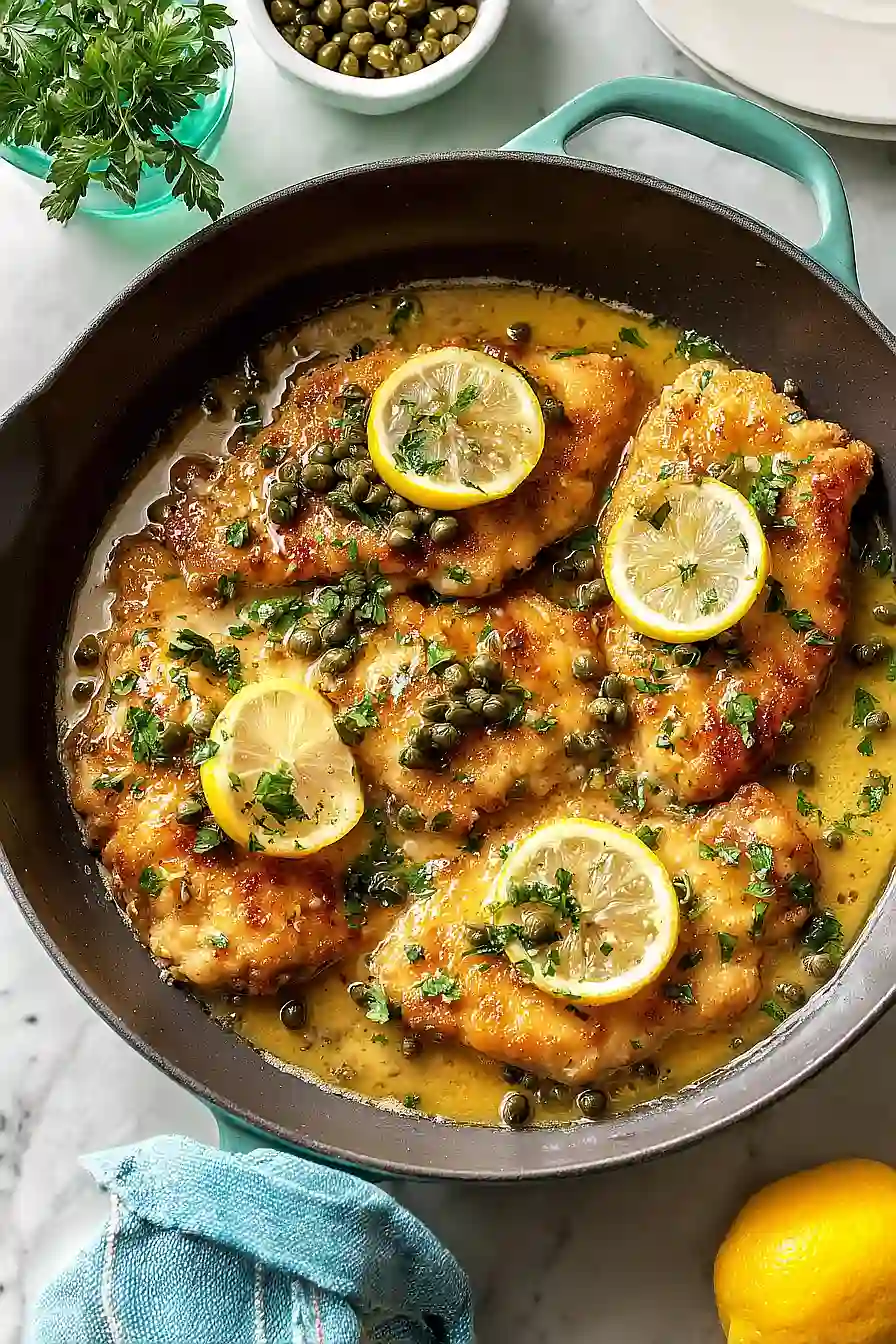
Here is my favorite chicken piccata recipe, with tender pounded chicken breasts in a crispy parmesan crust, and a buttery lemon caper sauce with white wine, garlic, and fresh parsley.
This chicken piccata is one of those weeknight dinners that feels fancy but comes together in about 30 minutes. I love making it when I want something special without spending hours in the kitchen.
Why You’ll Love This Chicken Piccata
- Restaurant-quality at home – This classic Italian dish tastes like something you’d order at a fancy restaurant, but you can make it right in your own kitchen for a fraction of the price.
- Ready in under an hour – From start to finish, you’ll have this elegant meal on the table in about 45 minutes, making it perfect for busy weeknights when you want something special.
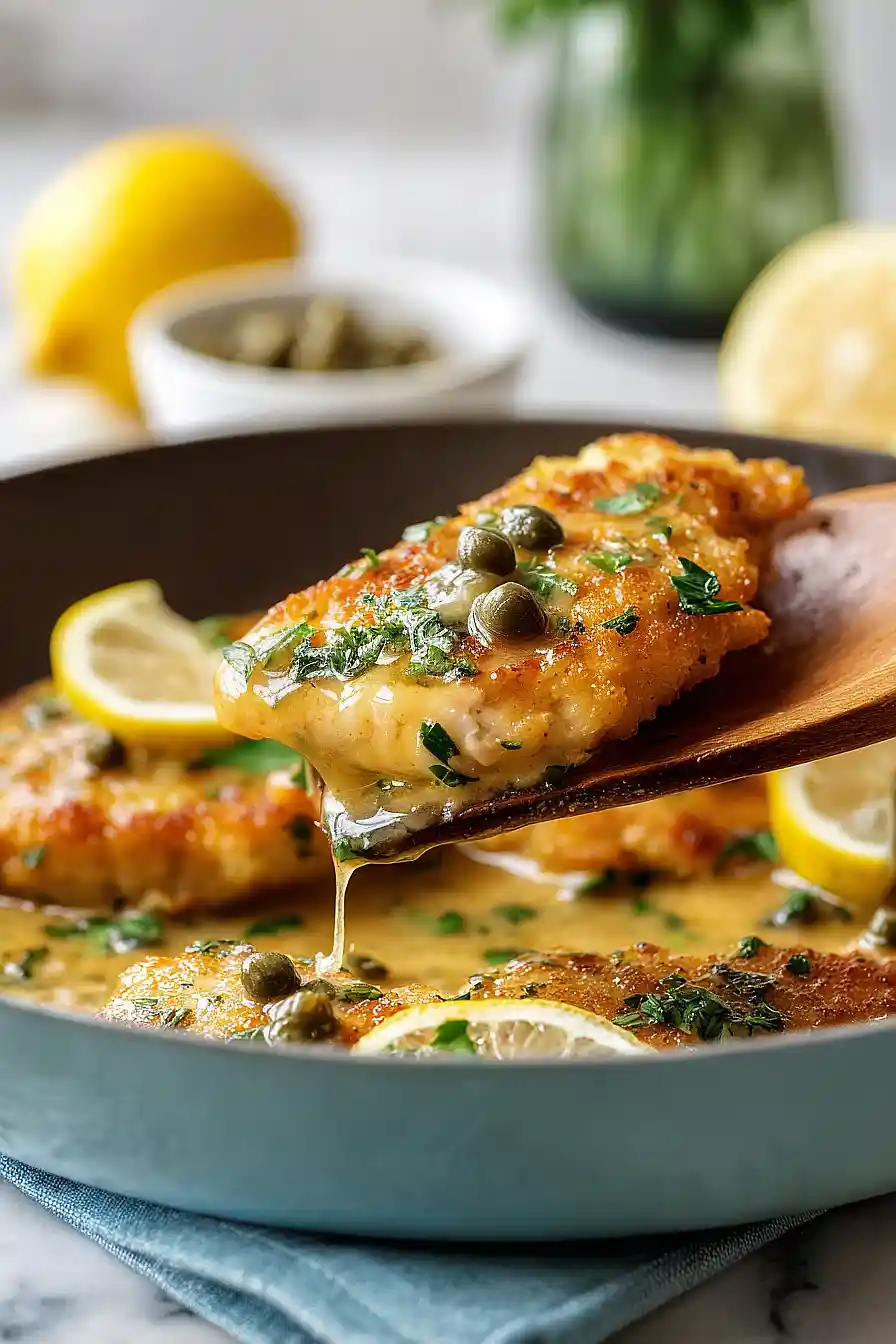
- Tangy, buttery sauce – The combination of lemon, capers, and white wine creates a bright, flavorful sauce that perfectly complements the crispy chicken without being too heavy.
- Simple ingredients – You probably already have most of these pantry staples on hand, and the fresh ingredients are easy to find at any grocery store.
- Impressive but easy – This dish looks and tastes fancy enough for date night or dinner guests, but the straightforward cooking technique makes it totally doable even if you’re not an experienced cook.
What Kind of Chicken Should I Use?
For chicken piccata, you’ll want to use boneless, skinless chicken breasts that are relatively even in thickness. If your chicken breasts are on the thicker side (more than about 3/4 inch), you can either pound them thinner with a meat mallet or slice them horizontally to create thinner cutlets. This helps them cook evenly and quickly, which is key for getting that nice golden crust without drying out the meat. You can also use chicken tenders if you prefer, though you may need to adjust the cooking time slightly since they’re naturally thinner.
Options for Substitutions
This classic Italian dish is pretty forgiving when it comes to swaps:
- Chicken breasts: You can use chicken thighs instead, which are a bit more forgiving and won’t dry out as easily. Just pound them to an even thickness like you would with breasts.
- White wine: If you’re out of white wine or prefer not to use it, replace it with extra chicken broth plus 1 tablespoon of white wine vinegar or lemon juice to keep that tangy flavor.
- Capers: Capers are really what make piccata special, so I’d recommend keeping them. But if you absolutely can’t find them, try chopped green olives for a similar briny punch.
- Parmesan: Pecorino Romano works great here too, though it’s a bit saltier so you might want to go easy on the added salt.
- Fresh parsley: Dried parsley can work in a pinch – use about 1 tablespoon instead of the 1/4 cup fresh. Or try fresh basil for a different but still tasty twist.
- Butter: You can use all olive oil instead of butter if needed, though the butter does add a nice richness to the sauce.
Watch Out for These Mistakes While Cooking
The biggest mistake when making chicken piccata is not pounding the chicken breasts to an even thickness – uneven pieces cook at different rates, leaving you with some parts dry and others undercooked, so aim for a consistent 1/4 inch throughout.
Another common error is skipping the step to properly dry your chicken before dredging it in flour, which prevents the coating from sticking and creates a less crispy exterior.
When deglazing the pan with white wine, make sure to let it reduce for the full 4-5 minutes so the alcohol cooks off and the sauce doesn’t taste harsh or overly acidic.
Finally, add the final 2 tablespoons of butter off the heat or on very low heat – if the pan is too hot, the butter will separate instead of creating that smooth, silky sauce that makes piccata so good.
What to Serve With Chicken Piccata?
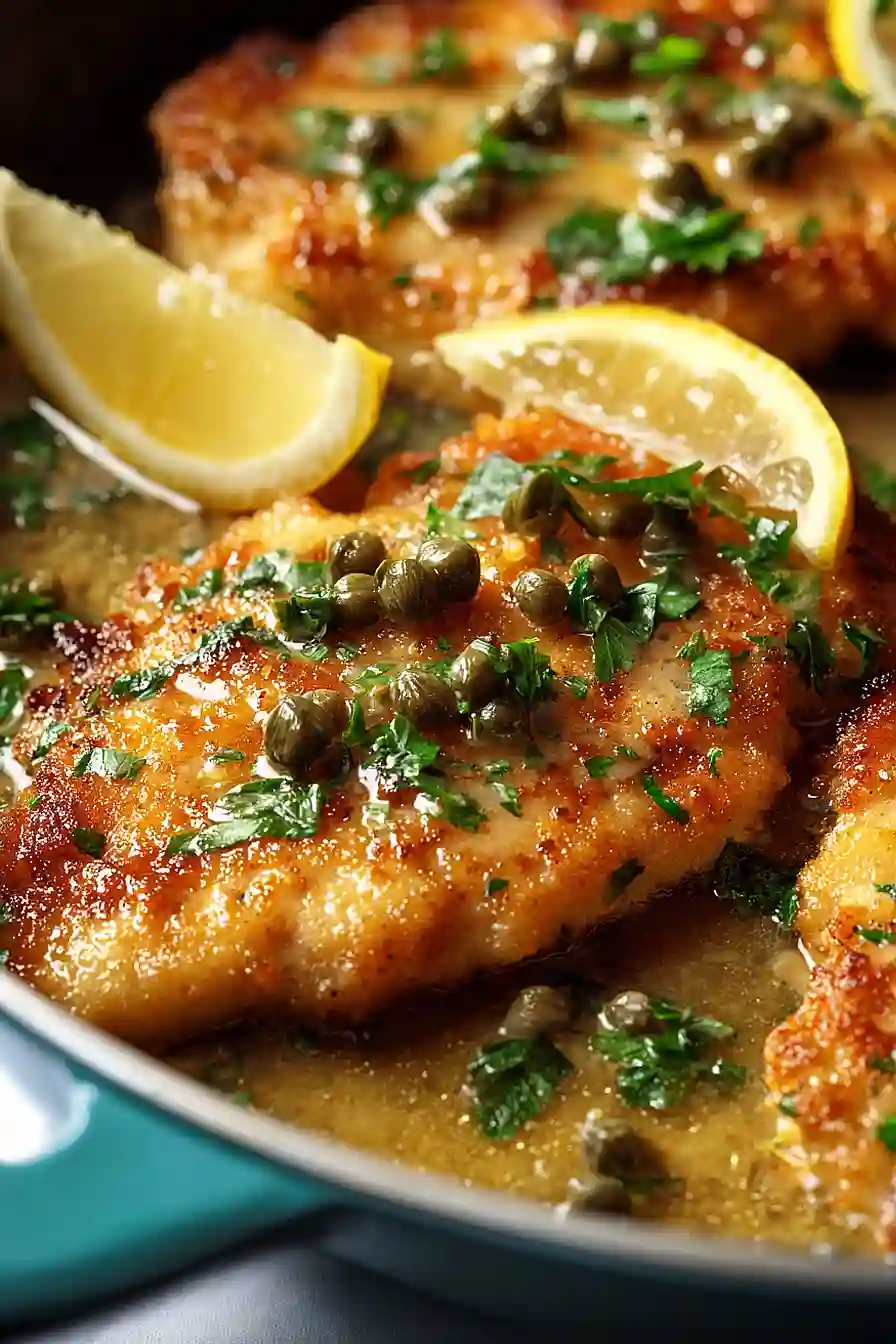
Chicken piccata is all about that tangy, lemony sauce, so you’ll want something that can soak it all up. I always serve mine over a bed of angel hair pasta or linguine, which catches all that buttery, caper-filled goodness perfectly. If you’re not in the mood for pasta, creamy mashed potatoes or garlic roasted potatoes work great too. A simple side of steamed green beans, roasted asparagus, or a crisp Caesar salad rounds out the meal nicely and keeps things from feeling too heavy.
Storage Instructions
Store: Keep your leftover chicken piccata in an airtight container in the fridge for up to 3 days. The sauce might thicken up a bit as it sits, but that’s totally normal and easy to fix when you reheat it.
Freeze: This dish freezes pretty well for up to 2 months. Let it cool completely first, then store it in a freezer-safe container. I like to freeze the chicken and sauce together so all the lemony, garlicky flavors stay locked in.
Reheat: Warm it up gently on the stovetop over medium-low heat, adding a splash of chicken broth or water to loosen the sauce. You can also use the microwave, but I’d go with 50% power and stir it halfway through so the chicken doesn’t get rubbery.
| Preparation Time | 20-30 minutes |
| Cooking Time | 25-35 minutes |
| Total Time | 45-65 minutes |
| Level of Difficulty | Medium |
| Servings | 2 servings |
Estimated Nutrition
Estimated nutrition for the whole recipe (without optional ingredients):
- Calories: 1000-1150
- Protein: 80-90 g
- Fat: 60-70 g
- Carbohydrates: 30-38 g
Ingredients
For the coating:
- 3/4 cup flour (I always use King Arthur all-purpose flour)
- 1/3 cup parmesan (finely grated for a more even crust)
- 1.5 tsp garlic powder
- 1 tsp salt
- 3/4 tsp pepper
For the chicken:
- 2 chicken breasts (sliced lengthwise and pounded to 1/4-inch thickness)
- 3 tbsp olive oil
- 1 tbsp butter
For the sauce and garnish:
- 1/2 cup white wine (use a dry variety like Pinot Grigio for best flavor)
- 4 garlic cloves
- 2 tbsp capers (drained and rinsed to control saltiness)
- 1 cup chicken broth
- 3 tbsp lemon juice
- 3 tbsp butter (I like Kerrygold unsalted butter for this)
- 1/4 cup parsley
Step 1: Prepare the Coating and Pound the Chicken
- 2 chicken breasts
- 3/4 cup flour
- 1/3 cup parmesan
- 1.5 tsp garlic powder
- 1 tsp salt
- 3/4 tsp pepper
Slice the chicken breasts lengthwise to create two thin cutlets from each breast, then place between plastic wrap and pound to an even 1/4-inch thickness using a meat mallet.
This ensures uniform cooking.
While the chicken rests, combine the flour, finely grated parmesan, garlic powder, salt, and pepper on a shallow plate—I always use King Arthur all-purpose flour for a reliable, even crust.
Pat the pounded chicken dry with paper towels before coating, as this helps the flour mixture adhere properly and creates a better golden crust.
Step 2: Coat and Sear the Chicken
- 3 tbsp olive oil
- 1 tbsp butter
- coated chicken from Step 1
Heat the olive oil and 1 tablespoon butter in a large skillet over medium-high heat until the butter is foaming and the pan is hot.
Working with one chicken breast at a time, dredge both sides thoroughly in the flour mixture from Step 1, shaking off any excess.
Place the coated chicken in the hot pan and sear for 3-4 minutes per side until golden brown and cooked through, then transfer to a plate.
The high heat and butter create a flavorful fond (browned bits) on the pan that will build the sauce.
Step 3: Build the Sauce Base with Wine and Garlic
- 1/2 cup white wine
- 4 garlic cloves, minced
Without wiping the pan, reduce heat to medium and add the dry white wine (Pinot Grigio works beautifully here).
Mince the garlic cloves and add them to the pan, scraping up the flavorful browned bits with a wooden spoon to deglaze the pan.
Simmer for 4-5 minutes, allowing the wine to reduce slightly and the garlic to infuse the liquid.
This creates the aromatic foundation of the piccata sauce.
Step 4: Complete the Sauce and Simmer
- 2 tbsp capers, drained and rinsed
- 1 cup chicken broth
- 3 tbsp lemon juice
- seared chicken from Step 2
Drain and rinse the capers to control saltiness, then add them to the pan along with the chicken broth and lemon juice.
Stir to combine, then return the cooked chicken from Step 2 to the pan in a single layer.
The sauce will partially submerge the chicken.
Cover the skillet and simmer on medium-low heat for 3-5 minutes, which allows the flavors to meld while keeping the chicken tender and moist.
Step 5: Finish with Butter and Parsley
- 3 tbsp butter
- 1/4 cup parsley, chopped
Remove the pan from heat and reduce the temperature to low.
Cut the 3 tablespoons of butter (I prefer Kerrygold unsalted for its rich flavor) into small pieces and stir into the sauce until fully melted and incorporated.
I like to add the butter off-heat to prevent it from breaking and to create a silky, luxurious sauce.
Finely chop the fresh parsley and sprinkle generously over the chicken and sauce just before serving for brightness and freshness.
Best Chicken Piccata
Ingredients
For the coating::
- 3/4 cup flour (I always use King Arthur all-purpose flour)
- 1/3 cup parmesan (finely grated for a more even crust)
- 1.5 tsp garlic powder
- 1 tsp salt
- 3/4 tsp pepper
For the chicken::
- 2 chicken breasts (sliced lengthwise and pounded to 1/4-inch thickness)
- 3 tbsp olive oil
- 1 tbsp butter
For the sauce and garnish::
- 1/2 cup white wine (use a dry variety like Pinot Grigio for best flavor)
- 4 garlic cloves
- 2 tbsp capers (drained and rinsed to control saltiness)
- 1 cup chicken broth
- 3 tbsp lemon juice
- 3 tbsp butter (I like Kerrygold unsalted butter for this)
- 1/4 cup parsley
Instructions
- Slice the chicken breasts lengthwise to create two thin cutlets from each breast, then place between plastic wrap and pound to an even 1/4-inch thickness using a meat mallet. This ensures uniform cooking. While the chicken rests, combine the flour, finely grated parmesan, garlic powder, salt, and pepper on a shallow plate—I always use King Arthur all-purpose flour for a reliable, even crust. Pat the pounded chicken dry with paper towels before coating, as this helps the flour mixture adhere properly and creates a better golden crust.
- Heat the olive oil and 1 tablespoon butter in a large skillet over medium-high heat until the butter is foaming and the pan is hot. Working with one chicken breast at a time, dredge both sides thoroughly in the flour mixture from Step 1, shaking off any excess. Place the coated chicken in the hot pan and sear for 3-4 minutes per side until golden brown and cooked through, then transfer to a plate. The high heat and butter create a flavorful fond (browned bits) on the pan that will build the sauce.
- Without wiping the pan, reduce heat to medium and add the dry white wine (Pinot Grigio works beautifully here). Mince the garlic cloves and add them to the pan, scraping up the flavorful browned bits with a wooden spoon to deglaze the pan. Simmer for 4-5 minutes, allowing the wine to reduce slightly and the garlic to infuse the liquid. This creates the aromatic foundation of the piccata sauce.
- Drain and rinse the capers to control saltiness, then add them to the pan along with the chicken broth and lemon juice. Stir to combine, then return the cooked chicken from Step 2 to the pan in a single layer. The sauce will partially submerge the chicken. Cover the skillet and simmer on medium-low heat for 3-5 minutes, which allows the flavors to meld while keeping the chicken tender and moist.
- Remove the pan from heat and reduce the temperature to low. Cut the 3 tablespoons of butter (I prefer Kerrygold unsalted for its rich flavor) into small pieces and stir into the sauce until fully melted and incorporated. I like to add the butter off-heat to prevent it from breaking and to create a silky, luxurious sauce. Finely chop the fresh parsley and sprinkle generously over the chicken and sauce just before serving for brightness and freshness.

This was delicious but I did have to coat the chicken with egg to dredge it, not sure how anyone got the crust to stay without doing so! Highly recommend this recipe
Photo of the cooked recipe