Finding a comforting, crowd-pleasing side dish that doesn’t require constant attention can feel impossible, especially on those busy weeknights when you’re juggling dinner prep with everything else life throws at you. You want something that tastes like you spent hours in the kitchen, but realistically, you need it to practically cook itself.
That’s exactly why I love these creamy white beans with parmesan and lemon. They’re rich and satisfying without being heavy, they mostly simmer away on their own while you handle other tasks, and they pair beautifully with just about any main dish you’re serving—or honestly, they’re good enough to eat on their own with some crusty bread.

Why You’ll Love These Creamy White Beans
- Simple, pantry-friendly ingredients – You probably have most of these staples in your kitchen already, making this an easy recipe to whip up without a special grocery trip.
- Budget-friendly comfort food – White beans are incredibly affordable, and this recipe transforms them into something that tastes way more expensive than it actually is.
- Naturally creamy without heavy cream – The beans create their own silky, rich texture as they cook, so you get that comforting creaminess without any dairy (besides the parmesan).
- Great for meal prep – This dish keeps well in the fridge and actually tastes even better the next day after the flavors have had time to meld together.
- Flexible serving options – Serve it as a cozy main dish with crusty bread, or use it as a hearty side alongside roasted chicken or fish.
What Kind of White Beans Should I Use?
You’ve got a few good options when it comes to white beans for this recipe. Cannellini beans are probably the most popular choice – they’re creamy and hold their shape nicely during cooking. Great Northern beans work just as well and have a slightly milder flavor, while navy beans are smaller but equally delicious. If you’re short on time, canned beans are totally fine to use, just be sure to drain and rinse them first. For dried beans, you’ll want to soak them overnight and cook them until they’re tender but not mushy – this usually takes about an hour of simmering.

Options for Substitutions
This recipe is pretty forgiving, so here are some swaps you can make based on what’s in your pantry:
- White beans: Cannellini beans are classic here, but great northern beans or navy beans work just as well. You can use canned beans instead of dried – just drain and rinse them, then add them toward the end of cooking since they’re already soft.
- Shallots: If you don’t have shallots, use half a yellow onion or a few green onions instead. They’ll give you a similar mild onion flavor.
- Chicken stock: Vegetable stock makes this dish vegetarian-friendly and works perfectly. You can also use water with a couple extra bouillon cubes if that’s all you have.
- Parmesan rind: The rind adds great flavor, but if you don’t have one, just add extra grated parmesan at the end. You could also toss in a piece of pecorino romano rind for a similar effect.
- Fresh thyme: Dried thyme works fine – just use about 1 teaspoon instead of the fresh sprigs. You can also try rosemary or sage for a different herb profile.
- Parsley: Fresh basil or chives make nice alternatives if you’re out of parsley, or you can skip the fresh herbs entirely and just finish with extra lemon.
Watch Out for These Mistakes While Cooking
The biggest mistake when making this dish is rushing the simmer time – beans need that full 1 1/2 to 2 hours of gentle cooking to become truly creamy, so resist the urge to crank up the heat or you’ll end up with tough, unevenly cooked beans.
Another common error is forgetting to season the beans properly at the end, since the parmesan rind adds flavor but not much salt, so taste and add salt gradually until the beans really sing.
Don’t skip removing the parmesan rind and thyme stems before serving, as biting into a woody stem or hard cheese chunk can ruin an otherwise smooth, comforting bowl.
For even better results, let the dish rest for 5-10 minutes after cooking so the flavors can meld together, and if the broth seems too thin, mash a few beans against the side of the pot to naturally thicken it up.
What to Serve With Creamy White Beans?
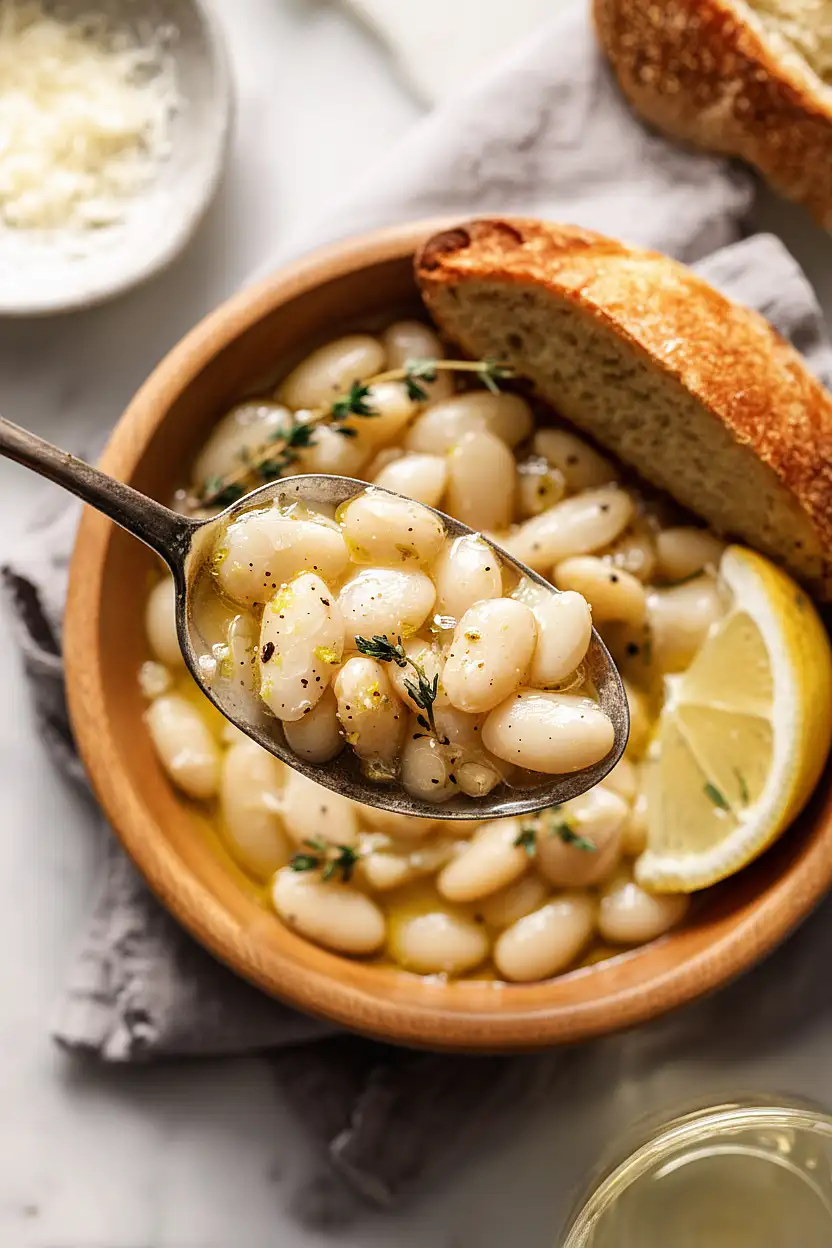
These creamy white beans are perfect alongside a simple roasted chicken or pan-seared pork chops, since the lemony broth complements roasted meats really well. I love serving them with the toasted bread from the recipe for dipping, but you could also add some crusty baguette slices on the side if you’re feeding a crowd. A light arugula salad with olive oil and lemon juice keeps things fresh and balances out the richness of the beans. For a heartier meal, you can serve the beans over pasta or alongside grilled Italian sausages for extra protein.
Storage Instructions
Store: Keep your white beans in an airtight container in the fridge for up to 4 days. The flavors actually get even better after a day or two as everything melds together. I like to store the bread separately so it doesn’t get soggy.
Freeze: This dish freezes really well for up to 3 months. Just leave out the parmesan and lemon, and add those fresh when you reheat. Let it cool completely before transferring to freezer-safe containers.
Reheat: Warm the beans gently on the stovetop over medium-low heat, stirring occasionally and adding a splash of chicken stock if they’ve thickened up too much. You can also microwave individual portions, but the stovetop gives you better control over the consistency.
| Preparation Time | 10-15 minutes |
| Cooking Time | 90-120 minutes |
| Total Time | 100-135 minutes |
| Level of Difficulty | Medium |
| Servings | 4 servings |
Estimated Nutrition
Estimated nutrition for the whole recipe (without optional ingredients):
- Calories: 950-1100
- Protein: 38-46 g
- Fat: 32-40 g
- Carbohydrates: 130-150 g
Ingredients
For the bean base:
- 4 tbsp olive oil (I prefer Filippio Berio for a smooth finish)
- 2 shallots (finely diced into 1/8-inch pieces)
- 4 garlic cloves
- 3 sprigs fresh thyme
- 1 cup dried white beans (soaked overnight for even cooking)
- 7 cups chicken stock (I always use Swanson for consistent salt levels)
- 1 parmesan rind (adds a deep, savory umami richness)
- 1/4 cup fresh parsley, chopped (adds a fresh, herbaceous note)
- salt
For serving:
- 4 slices bread (thick-cut and toasted until golden brown)
- parmesan cheese
- lemon slices
- black pepper
Step 1: Build the Aromatic Base
- 4 tbsp olive oil
- 2 shallots, finely diced
- 4 garlic cloves, minced
- 3 sprigs fresh thyme
Heat the olive oil in a large Dutch oven or heavy-bottomed pot over medium-low heat.
Add the finely diced shallots and cook gently for 3-4 minutes, stirring occasionally, until they become translucent and fragrant—you’re looking for sweetness, not browning.
Mince the garlic cloves and add them along with the fresh thyme sprigs, stirring constantly for about 1 minute until the garlic is fragrant but not colored.
This slow, gentle approach builds a flavorful foundation without harsh, burnt flavors that would compete with the delicate beans.
Step 2: Simmer Beans with Stock and Umami
- 1 cup dried white beans, soaked overnight and drained
- 7 cups chicken stock
- 1 parmesan rind
- aromatic base from Step 1
Add the soaked and drained white beans directly to the pot, stirring to coat them in the aromatic oil.
Pour in the chicken stock and add the parmesan rind, which will slowly dissolve and infuse the broth with deep, savory umami richness.
Bring the mixture to a gentle simmer, then reduce heat to low and cover the pot with a lid, leaving it slightly ajar.
Simmer for 1.5 to 2 hours, stirring occasionally, until the beans are completely tender and creamy—they should break apart easily when pressed against the side of the pot with a spoon.
I like to check the beans at the 1.5-hour mark because cooking time varies depending on bean age and size.
Step 3: Finish and Season the Soup
- bean and broth mixture from Step 2
- salt to taste
- black pepper to taste
- 1/4 cup fresh parsley, chopped
Remove the pot from heat and fish out the thyme sprigs and any remaining pieces of parmesan rind using tongs or a slotted spoon.
Taste the soup and season generously with salt and freshly cracked black pepper—the broth should taste flavorful and well-balanced.
Gently stir in the fresh chopped parsley, which adds a bright, herbaceous contrast to the rich, creamy beans.
I always reserve about a quarter of the fresh parsley to scatter on top just before serving for maximum freshness and visual appeal.
Step 4: Toast the Bread and Plate
- finished soup from Step 3
- 4 slices bread, thick-cut
- parmesan cheese for garnish
- lemon slices
- black pepper
- olive oil for drizzling
While the soup finishes, toast the thick-cut bread slices in a toaster or under the broiler until they’re golden brown and crispy on the outside but still slightly tender inside.
Ladle the creamy white bean soup into serving bowls, distributing the beans and broth evenly.
Grate fresh parmesan cheese generously over each bowl, add a light drizzle of high-quality olive oil, a few lemon slices for brightness, and a final crack of black pepper.
Step 5: Serve and Enjoy
Serve each bowl of soup immediately alongside the toasted bread.
The bread can be eaten on the side, torn into pieces and dipped into the broth, or placed directly in the bowl to soak up the creamy, flavorful broth.
The contrast between the crispy toast and the silky beans creates a wonderful textural experience.

Irresistible Creamy White Beans with Parmesan and Lemon
Ingredients
For the bean base::
- 4 tbsp olive oil (I prefer Filippio Berio for a smooth finish)
- 2 shallots (finely diced into 1/8-inch pieces)
- 4 garlic cloves
- 3 sprigs fresh thyme
- 1 cup dried white beans (soaked overnight for even cooking)
- 7 cups chicken stock (I always use Swanson for consistent salt levels)
- 1 parmesan rind (adds a deep, savory umami richness)
- 1/4 cup fresh parsley, chopped (adds a fresh, herbaceous note)
- salt
For serving::
- 4 slices bread (thick-cut and toasted until golden brown)
- parmesan cheese
- lemon slices
- black pepper
Instructions
- Heat the olive oil in a large Dutch oven or heavy-bottomed pot over medium-low heat. Add the finely diced shallots and cook gently for 3-4 minutes, stirring occasionally, until they become translucent and fragrant—you're looking for sweetness, not browning. Mince the garlic cloves and add them along with the fresh thyme sprigs, stirring constantly for about 1 minute until the garlic is fragrant but not colored. This slow, gentle approach builds a flavorful foundation without harsh, burnt flavors that would compete with the delicate beans.
- Add the soaked and drained white beans directly to the pot, stirring to coat them in the aromatic oil. Pour in the chicken stock and add the parmesan rind, which will slowly dissolve and infuse the broth with deep, savory umami richness. Bring the mixture to a gentle simmer, then reduce heat to low and cover the pot with a lid, leaving it slightly ajar. Simmer for 1.5 to 2 hours, stirring occasionally, until the beans are completely tender and creamy—they should break apart easily when pressed against the side of the pot with a spoon. I like to check the beans at the 1.5-hour mark because cooking time varies depending on bean age and size.
- Remove the pot from heat and fish out the thyme sprigs and any remaining pieces of parmesan rind using tongs or a slotted spoon. Taste the soup and season generously with salt and freshly cracked black pepper—the broth should taste flavorful and well-balanced. Gently stir in the fresh chopped parsley, which adds a bright, herbaceous contrast to the rich, creamy beans. I always reserve about a quarter of the fresh parsley to scatter on top just before serving for maximum freshness and visual appeal.
- While the soup finishes, toast the thick-cut bread slices in a toaster or under the broiler until they're golden brown and crispy on the outside but still slightly tender inside. Ladle the creamy white bean soup into serving bowls, distributing the beans and broth evenly. Grate fresh parmesan cheese generously over each bowl, add a light drizzle of high-quality olive oil, a few lemon slices for brightness, and a final crack of black pepper.
- Serve each bowl of soup immediately alongside the toasted bread. The bread can be eaten on the side, torn into pieces and dipped into the broth, or placed directly in the bowl to soak up the creamy, flavorful broth. The contrast between the crispy toast and the silky beans creates a wonderful textural experience.