If you ask me, Russian tea cakes are one of the best cookies to make during the holidays.
These buttery, melt-in-your-mouth cookies are completely vegan and gluten-free, but you’d never know it from tasting them. Ground almonds add a rich, nutty flavor that pairs perfectly with the sweet dusting of powdered sugar.
They’re made with plant-based butter and almond extract for that classic taste everyone loves. The dough comes together quickly, and the cookies bake up tender and crumbly.
They’re a crowd-pleasing treat that works for any occasion, whether you’re sharing with family or bringing them to a cookie exchange.
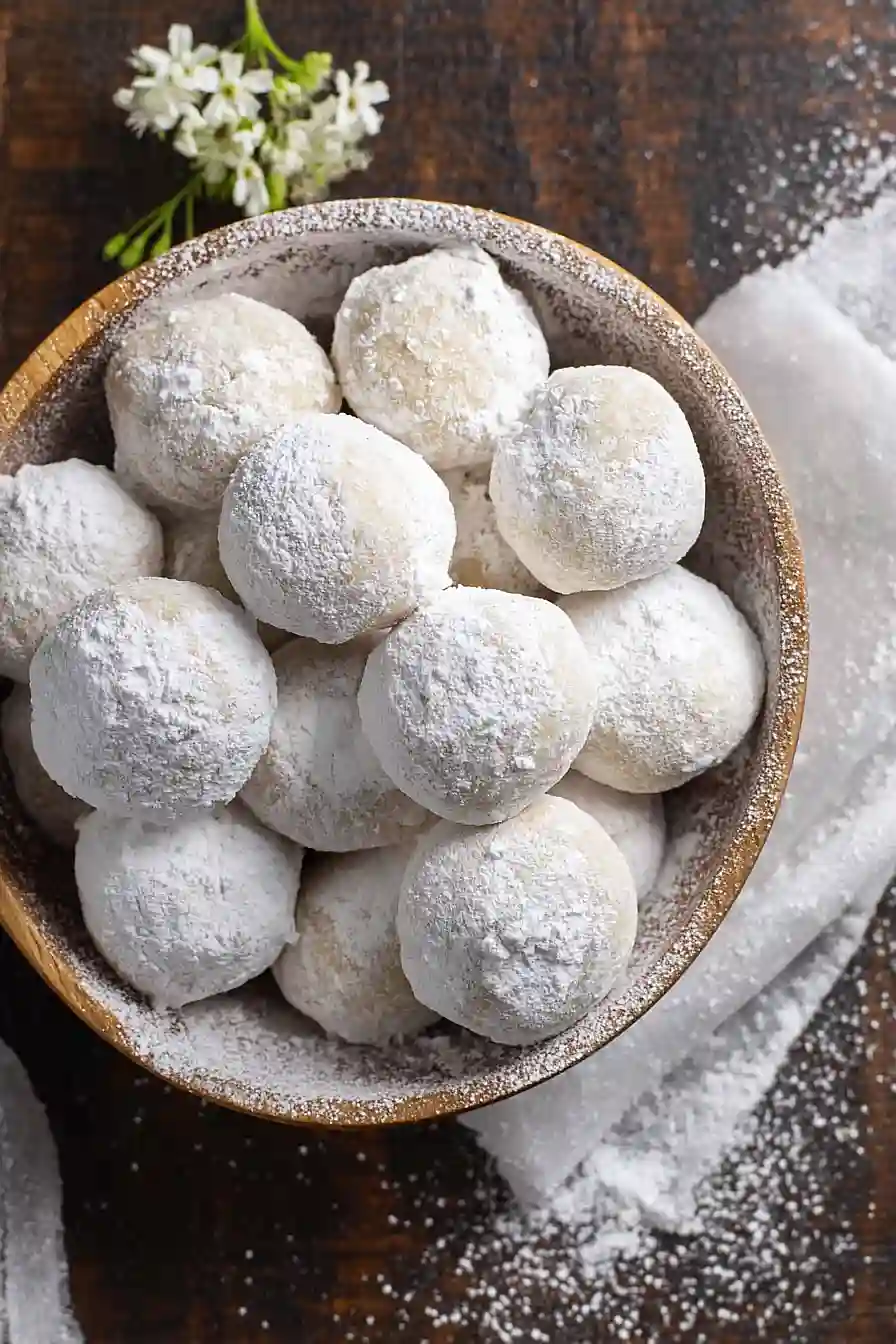
Why You’ll Love These Vegan Russian Tea Cakes
- Vegan and allergy-friendly – These cookies are completely plant-based and can easily be made gluten-free, so everyone at your gathering can enjoy them without worry.
- Quick and simple – Ready in under an hour, these cookies come together with just a few basic ingredients and minimal effort.
- Melt-in-your-mouth texture – The combination of ground almonds and butter creates a delicate, crumbly cookie that practically dissolves on your tongue.
- Perfect for any occasion – Whether you’re baking for the holidays, a tea party, or just because, these elegant little cookies always impress without being fussy.
What Kind of Plant-Based Butter Should I Use?
For these vegan Russian tea cakes, you’ll want to use a good quality plant-based butter that’s meant for baking, not just spreading. Stick-style vegan butters like Earth Balance or Miyoko’s work really well because they have a similar fat content to regular butter and hold their shape at room temperature. Avoid using margarine or oil-based spreads, as they tend to be too soft and can make your cookies spread too much or turn out greasy. If your plant-based butter seems really soft, you can pop it in the fridge for a few minutes before mixing it into your dough to help the cookies keep their shape while baking.

Options for Substitutions
These cookies are pretty forgiving when it comes to swaps, so here are some options:
- Plant-based butter: You can use coconut oil instead, but make sure it’s at room temperature and solid (not melted). The cookies might spread a bit more, so chill the dough for 30 minutes before baking.
- Ground almonds: Finely ground walnuts or pecans work great here and give a slightly different flavor. You can also use more flour if you have nut allergies, though the texture will be a bit different.
- Gluten-free flour: Regular all-purpose flour works perfectly fine if you’re not avoiding gluten. Use the same amount and follow the recipe as written.
- Almond extract: Vanilla extract is a good substitute if you don’t have almond extract on hand. Use the same amount, though the flavor will be milder.
- Powdered sugar: This is pretty essential for the classic look and sweet coating of Russian tea cakes, so I’d recommend keeping it. But if you need to, you can make your own by blending regular sugar with a bit of cornstarch in a blender.
Watch Out for These Mistakes While Baking
The biggest mistake when making vegan Russian tea cakes is overbaking them, which turns these delicate cookies into dry, crumbly pucks – pull them from the oven when they’re just barely golden on the bottom, not browned all over.
Another common error is rolling the cookies in powdered sugar while they’re still hot from the oven, which causes the sugar to melt and disappear instead of creating that signature snowy coating – let them cool for about 5 minutes first, then roll them again once they’re completely cool for the best coverage.
If you’re using gluten-free flour, be extra gentle when shaping the dough into balls since it can be more fragile than regular flour, and if the dough feels too crumbly to hold together, add a teaspoon of plant-based milk at a time until it comes together without being sticky.

What to Serve With Vegan Russian Tea Cakes?
These buttery cookies are perfect alongside a hot cup of tea or coffee, which is actually how they got their name in the first place. I love serving them at holiday gatherings on a pretty platter with other cookies like gingerbread or chocolate chip, creating a nice variety for guests to choose from. They also pair wonderfully with a glass of almond milk or oat milk if you want to keep things fully plant-based. For a cozy afternoon treat, try them with hot chocolate or chai tea, and the almond flavor in the cookies complements both drinks really nicely.
Storage Instructions
Store: These cookies stay fresh in an airtight container at room temperature for about a week. I like to add an extra dusting of powdered sugar right before serving since they can absorb the first coating over time.
Freeze: Russian tea cakes are perfect for freezing! Layer them between parchment paper in a freezer-safe container and they’ll keep for up to 3 months. You can freeze them before or after rolling in powdered sugar, whatever works best for you.
Thaw: Just let the cookies sit at room temperature for about 30 minutes before serving. If you froze them without the powdered sugar coating, give them a fresh roll in it once they’ve thawed for that classic snowy look.
| Preparation Time | 20-30 minutes |
| Cooking Time | 15-20 minutes |
| Total Time | 35-50 minutes |
| Level of Difficulty | Medium |
Estimated Nutrition
Estimated nutrition for the whole recipe (without optional ingredients):
- Calories: 2500-2700
- Protein: 22-26 g
- Fat: 185-195 g
- Carbohydrates: 240-260 g
Ingredients
For the dough:
- 1 cup plant-based butter (softened to room temperature)
- 1/2 tsp almond extract (for best flavor)
- 1/3 cup sugar
- 1 2/3 cups gluten-free flour (I use Bob’s Red Mill 1-to-1)
- 2/3 cup ground almonds (finely ground almond flour)
- 1/4 tsp salt
For the coating:
- 1/4 cup powdered sugar (for dusting after baking)
Step 1: Prepare Equipment and Make the Dough
- 1 cup plant-based butter
- 1/3 cup sugar
- 1/2 tsp almond extract
- 1 2/3 cups gluten-free flour
- 2/3 cup ground almonds
- 1/4 tsp salt
Line your baking sheets with parchment paper and set them aside.
In a large bowl, beat the softened plant-based butter and sugar together until the mixture is light and fluffy, about 2-3 minutes—this incorporates air and creates a tender cookie.
Add the almond extract, then mix in the gluten-free flour, ground almonds, and salt until a cohesive dough forms.
I find that using finely ground almond flour (rather than coarse) creates a more delicate, melt-in-your-mouth texture in these cookies.
Step 2: Chill the Dough and Preheat the Oven
- dough from Step 1
Wrap the dough tightly in plastic wrap or transfer it to a bowl and cover it, then refrigerate for 30 minutes.
This resting period allows the gluten-free flour to fully hydrate and helps the dough hold its shape better when rolling.
While the dough chills, preheat your oven to 170°C (340°F).
Step 3: Shape and Bake the Cookies
- dough from Step 1
Remove the chilled dough and divide it in half.
Working with one half at a time (keep the other half chilled), roll it into a log about 1½ inches in diameter.
Cut the log into 1-inch sections, then roll each section between your palms into a smooth ball.
Arrange the balls on your prepared baking sheets, spacing them about an inch apart.
Bake for 15 minutes until the cookies are light golden brown on the bottom—I like to check them at the 12-minute mark since oven temperatures can vary.
I find that these cookies are delicate, so handle them gently when removing them from the oven.
Step 4: Finish with Powdered Sugar Coating
- baked cookies from Step 3
- 1/4 cup powdered sugar
Remove the cookies from the oven and let them rest on the baking sheet for 2 minutes—this brief cooling window gives them just enough firmness to handle without breaking, but they’re still warm enough for the powdered sugar to adhere nicely.
Pour the powdered sugar into a shallow dish, then working quickly while the cookies are still warm, roll each cookie in the sugar until fully coated.
Transfer to a wire rack to cool completely.

Simple Vegan Russian Tea Cakes
Ingredients
For the dough:
- 1 cup plant-based butter (softened to room temperature)
- 1/2 tsp almond extract (for best flavor)
- 1/3 cup sugar
- 1 2/3 cups gluten-free flour (I use Bob's Red Mill 1-to-1)
- 2/3 cup ground almonds (finely ground almond flour)
- 1/4 tsp salt
For the coating:
- 1/4 cup powdered sugar (for dusting after baking)
Instructions
- Line your baking sheets with parchment paper and set them aside. In a large bowl, beat the softened plant-based butter and sugar together until the mixture is light and fluffy, about 2-3 minutes—this incorporates air and creates a tender cookie. Add the almond extract, then mix in the gluten-free flour, ground almonds, and salt until a cohesive dough forms. I find that using finely ground almond flour (rather than coarse) creates a more delicate, melt-in-your-mouth texture in these cookies.
- Wrap the dough tightly in plastic wrap or transfer it to a bowl and cover it, then refrigerate for 30 minutes. This resting period allows the gluten-free flour to fully hydrate and helps the dough hold its shape better when rolling. While the dough chills, preheat your oven to 170°C (340°F).
- Remove the chilled dough and divide it in half. Working with one half at a time (keep the other half chilled), roll it into a log about 1½ inches in diameter. Cut the log into 1-inch sections, then roll each section between your palms into a smooth ball. Arrange the balls on your prepared baking sheets, spacing them about an inch apart. Bake for 15 minutes until the cookies are light golden brown on the bottom—I like to check them at the 12-minute mark since oven temperatures can vary. I find that these cookies are delicate, so handle them gently when removing them from the oven.
- Remove the cookies from the oven and let them rest on the baking sheet for 2 minutes—this brief cooling window gives them just enough firmness to handle without breaking, but they're still warm enough for the powdered sugar to adhere nicely. Pour the powdered sugar into a shallow dish, then working quickly while the cookies are still warm, roll each cookie in the sugar until fully coated. Transfer to a wire rack to cool completely.