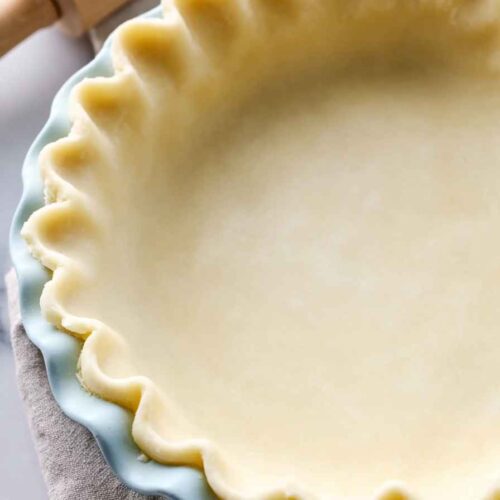
Best Butter Pie Crust
Delicious Best Butter Pie Crust recipe with step-by-step instructions.
Ingredients
- 1 cup unsalted butter, chilled and diced into 1/4-inch cubes
- 2 1/4 cups all-purpose flour
- 1 tsp salt
- 8 to 10 tbsp ice water
Instructions
- In a food processor, combine the chilled, diced butter, all-purpose flour, and salt. Pulse the mixture until it takes on the texture of coarse sand, ensuring some small pea-sized lumps of butter remain. This should take approximately 15 to 20 (1-second) pulses. The tiny lumps of butter help create a flaky crust later.
- Add the ice water to the flour mixture one tablespoon at a time through the feed tube, pulsing 4 to 5 times after each addition. Continue until the dough starts to form large clumps and pulls away from the sides of the bowl. Be careful not to add too much water; stop as soon as the dough starts coming together. I like to use the minimum amount of water needed for the dough to hold—this keeps the crust tender.
- Transfer the dough onto a work surface and use your hands to push it gently into one large lump. Divide the dough evenly in half, then quickly shape each portion into a ball. Flatten each ball into a 4-inch disk. Wrap each disk tightly in plastic wrap or place in a plastic baggie. Refrigerate for at least 1 hour (and up to 4 days) before using. Remove the dough from the fridge 3 to 4 minutes before rolling so it softens slightly, making it easier to work with.
- Lightly flour your work surface and rolling pin. Roll out one disk of dough (from Step 3), starting in the center and working outward. Rotate the dough a quarter turn after each roll to maintain an even circle. Roll until the dough is about 4 inches larger than your pie pan. If you see any cracks along the edge, pinch them together and continue. Let the rolled dough rest for about 5 minutes to relax the gluten and prevent shrinking in the oven. I sometimes run my hand gently along the surface to ensure it feels even.
- Carefully transfer the rolled pie crust to your pie pan. Gently flute or crimp the edges as desired, then proceed with your pie recipe. If you plan to prebake the crust, follow specific instructions for that process. Otherwise, your pie crust is now ready for filling and baking.