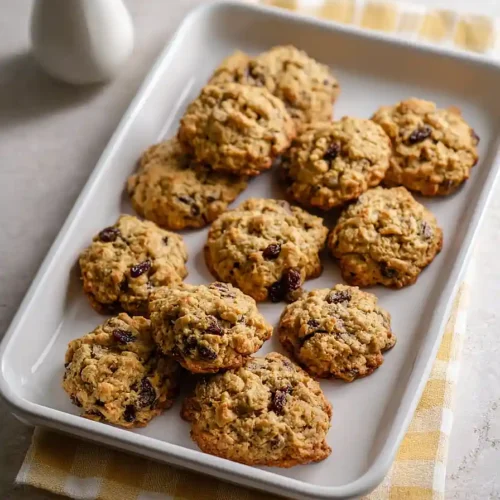
Soft Oatmeal Raisin Cookies
Delicious Soft Oatmeal Raisin Cookies recipe with step-by-step instructions.
Ingredients
- 1 cup raisins (plump them by soaking in warm water for 5 minutes before using, optional but recommended for moisture)
- 1.5 cups rolled oats (old-fashioned, not instant)
- 1/2 tsp baking soda
- 1/2 cup unsalted butter (softened, about 1 stick; I use Kerrygold)
- 1 tsp vanilla extract (pure vanilla preferred for best flavor)
- 1/2 cup white sugar
- 1 large egg (room temperature)
- 2/3 cup all-purpose flour (I use King Arthur)
- 1/4 cup brown sugar (packed)
Instructions
- Preheat your oven to 375°F (190°C) so it reaches temperature while you prepare the dough. If using raisins, place them in a small bowl and cover with warm water—let them soak for 5 minutes to plump up and add moisture to your cookies. I find this small step makes a noticeable difference in texture. While the raisins soak, measure out your oats and set them aside.
- In a large mixing bowl, combine the softened butter, white sugar, and brown sugar. Beat together for 2-3 minutes until the mixture is light and fluffy—this incorporates air into the dough, which helps the cookies rise and creates a tender crumb. The mixture should look pale and almost doubled in volume when ready.
- Add the room temperature egg and vanilla extract to your creamed butter mixture. Beat for about 1 minute until fully incorporated and the mixture looks smooth and uniform. Using room temperature eggs helps them blend more easily without cooling the butter mixture, which keeps your dough at an ideal temperature.
- In a separate bowl, whisk together the all-purpose flour and baking soda. This distributes the leavening agent evenly throughout the flour, ensuring your cookies rise uniformly. Set this dry mixture aside.
- Add the dry ingredient mixture from Step 4 to the wet ingredients from Step 3, and stir until just combined—don't overmix, as this can make the cookies tough. Now drain your plumped raisins from Step 1 and fold them in along with the oats. Mix gently until the oats and raisins are evenly distributed throughout the dough.
- Drop rounded tablespoons of dough onto an ungreased cookie sheet, spacing them about 2 inches apart to allow room for spreading. Bake for 8-10 minutes, or until the edges are just beginning to turn golden brown but the centers still look slightly soft—this is the key to chewy cookies. Don't wait for them to look completely set or they'll be too crispy.
- Remove the cookies from the oven and let them cool on the baking sheet for 2-3 minutes—this allows them to set slightly so they don't fall apart when you move them. Transfer them to a wire rack to cool completely. They'll continue to firm up as they cool.