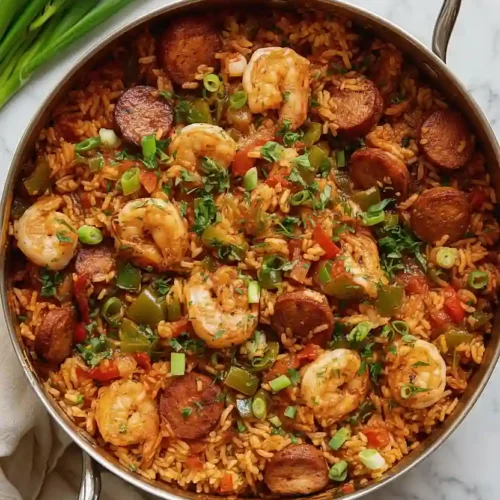
Simple Jambalaya Freezer Meal
Delicious Simple Jambalaya Freezer Meal recipe with step-by-step instructions.
Ingredients
For the meats
- 1.25 lbs chicken thighs (boneless and skinless, cut into 1-inch chunks)
- 12 oz andouille sausage (sliced into coins)
- 1 lb shrimp (peeled and deveined)
- 1 tbsp Cajun seasoning
For the rice and aromatics
- 3 tbsp olive oil
- 1 large yellow onion (diced into 1/2-inch pieces)
- 2 green bell peppers (diced)
- 3 celery ribs (finely chopped)
- 5 garlic cloves (freshly minced)
- 1 tbsp Cajun seasoning
- 3/4 tsp red pepper flakes
- 1 3/4 cups long-grain white rice
- 1 bay leaf
- 1 tsp Worcestershire sauce
- 15 oz crushed tomatoes
- 2 3/4 cups chicken broth
- 1/2 cup clam juice or seafood stock
For the garnish
- 1/2 cup sliced green onions
- 1/4 cup chopped fresh parsley
Instructions
- Dice the onion into 1/2-inch pieces, dice the bell peppers, finely chop the celery, and mince the garlic cloves—set all the prepared vegetables aside. Slice the andouille sausage into coins and peel and devein the shrimp if not already done. Cut the chicken thighs into 1-inch chunks and season them evenly with 1 tablespoon of Cajun seasoning, making sure every piece is well coated. I like to season proteins ahead of time because it allows the seasoning to penetrate the meat rather than just sitting on the surface.
- Heat 3 tablespoons of olive oil in a large pot or Dutch oven over medium-high heat. Once hot, add the seasoned chicken chunks in a single layer and let them cook undisturbed for 3-4 minutes until golden brown on one side, then stir and cook another 2-3 minutes until lightly browned all over. Remove the chicken and set aside. In the same pot, add the sausage coins and cook for about 2 minutes, stirring occasionally, until they develop some color and release their oils. Remove the sausage and set aside with the chicken. This browning step builds deep, savory flavor through the Maillard reaction, which is the foundation of great jambalaya.
- In the same pot with the rendered meat oils, add the diced onion, bell pepper, and celery (this combination is called the holy trinity in Creole cooking). Sauté for 4-5 minutes, stirring occasionally, until the vegetables soften and become fragrant. Add the minced garlic, remaining 1 tablespoon of Cajun seasoning, and red pepper flakes, stirring constantly for about 30 seconds until the garlic becomes aromatic and blooms in the oil. This brief cooking of the garlic and spices releases their volatile oils and prevents them from tasting raw or bitter.
- Add the rice to the pot and stir constantly for about 1 minute, allowing each grain to get coated in the oils and aromatics—this toasting step prevents the rice from becoming mushy. Pour in the crushed tomatoes, chicken broth, clam juice, Worcestershire sauce, and bay leaf, stirring well to combine and ensure the rice is submerged. Bring the mixture to a simmer over medium heat, then reduce to low heat, cover with a lid, and let it cook gently for 7-8 minutes. The rice should absorb most of the liquid but still have a bit of moisture remaining when you check it.
- Remove the bay leaf from the pot and stir the rice mixture to distribute the liquid evenly. Add the cooked chicken and sausage from Step 2 along with the raw shrimp, stirring gently to combine. Cover the pot again and let everything sit off heat for 4-5 minutes—the residual heat will finish cooking the shrimp and allow the flavors to meld together. The shrimp cooks gently in this carryover heat, staying tender rather than becoming rubbery from direct heat. Taste and adjust seasoning if needed.
- Transfer the jambalaya to a serving dish or divide into freezer-safe containers. Top with the sliced green onions and fresh parsley just before serving for brightness and freshness. If freezing, allow the jambalaya to cool to room temperature first, then cover tightly and freeze for up to 3 months. To reheat from frozen, thaw overnight in the refrigerator and warm gently on the stovetop with a splash of chicken broth to restore moisture.