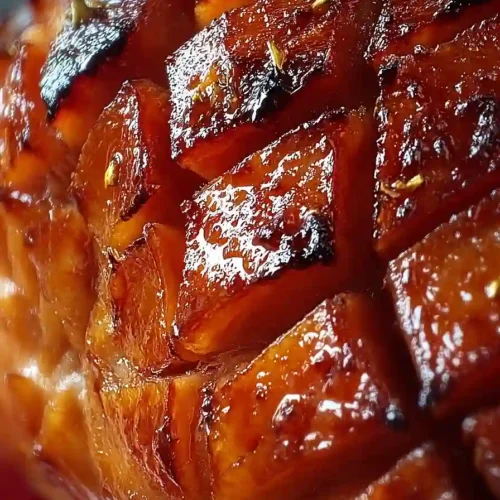
Juicy Negroni Glazed Ham
Delicious Juicy Negroni Glazed Ham recipe with step-by-step instructions.
Ingredients
For the ham:
- 20 cloves (whole cloves for studding)
- 4.5 kg smoked ham leg (about 10 lbs, bone-in preferred)
For the negroni glaze:
- 1.75 oz honey (raw honey adds deeper caramel notes)
- 1/2 cup brown sugar (packed for deeper molasses flavor)
- 10.5 oz orange marmalade (coarse-cut gives best texture)
- 1.5 fl oz sweet vermouth (I use Carpano Antica Formula)
- 1.5 fl oz gin (London Dry style preferred)
- 1.5 fl oz Campari (bitter Italian aperitif, essential for authentic flavor)
Instructions
- Start by preheating your oven to 160°C (320°F). While the oven heats, prepare the ham: remove the skin carefully with a sharp knife, leaving the fat layer intact underneath. Score the fat in a crosshatch diamond pattern, cutting about ¼ inch deep—this helps the glaze penetrate and creates an attractive presentation. Next, make your Negroni glaze by combining the Campari, sweet vermouth, gin, orange marmalade, honey, and brown sugar in a saucepan over medium heat. Stir constantly until the mixture is fully combined and smooth, about 2-3 minutes. The glaze should be glossy and cohesive. I like to taste the glaze at this point and adjust the sweetness if needed—if it's too bitter from the Campari, a touch more honey balances it beautifully.
- Place the prepared ham cut-side down on a roasting tray. Using a small knife or clove holder, insert the 20 whole cloves into the scored diamond pattern across the ham's surface, spacing them evenly—they'll add aromatic spice and visual appeal. Pour about ½ cup of water into the bottom of the roasting tray (this creates steam and prevents the drippings from burning). Brush the ham generously with half of the Negroni glaze from Step 1, using a pastry brush to coat all the scored fat. Make sure the glaze settles into those diamond cuts for maximum flavor penetration.
- Place the ham in the preheated 160°C oven and bake for 40 minutes. This initial long bake begins rendering the fat and allows the glaze to caramelize slightly. After 40 minutes, remove the ham from the oven and brush it with another generous coat of the remaining glaze from Step 1. Return it to the oven and bake for 20 minutes, then repeat this 20-minute bake-and-glaze cycle two more times (for a total of three additional 20-minute bakes). Each application creates more layers of caramelized flavor and a beautiful mahogany finish. I find that this gradual approach prevents the glaze from burning while allowing it to build depth.
- When the final 20-minute bake is complete, remove the ham from the oven and let it rest in the pan for 30 minutes. During the first few minutes while it's still warm, spoon the pan juices (the mixture of glaze, ham fat, and water) over the top repeatedly—this final basting locks in moisture and creates a glossy, jewel-like finish. The resting period allows the meat to relax and reabsorb its juices, ensuring tender, succulent slices when carved.
- After the 30-minute rest, transfer the ham to a cutting board. Using a sharp carving knife, slice the ham into ¼-inch thick slices, cutting against the grain. The cloves will naturally come loose as you slice—remove and discard them or save them as garnish if desired. Arrange the slices on a serving platter and spoon any remaining pan juices over the top for added richness. The deep mahogany glaze, hints of bitter Campari balanced with sweet marmalade, and aromatic cloves create a sophisticated presentation that looks restaurant-quality.