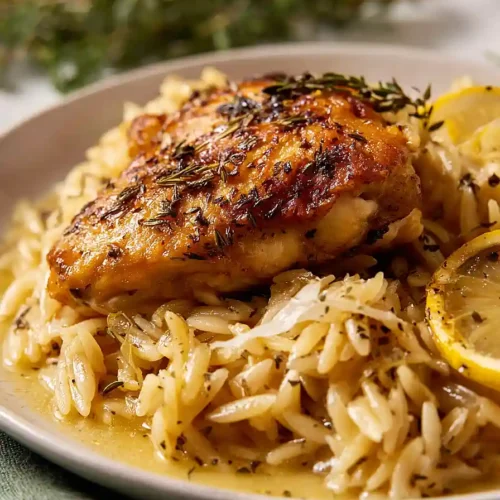
Juicy Lemon Chicken Orzo Bake
Delicious Juicy Lemon Chicken Orzo Bake recipe with step-by-step instructions.
Ingredients
For the chicken
- 4 lb chicken (cut into 1-inch chunks)
- 1/2 cup extra virgin olive oil
- 1 large lemon (zested and juiced)
- 2 1/2 tsp dried thyme
- 2 1/2 tsp dried oregano
- 1 1/2 tsp garlic powder
- 1/2 tsp red pepper flakes
For the bake
- 10.5 oz orzo
- 4 1/2 cups high-quality chicken stock
- 8 garlic cloves (smashed and roughly chopped)
- 2 bay leaves
- 1/4 cup water
For serving
- 1/2 cup freshly grated parmesan cheese
- freshly ground black pepper
- 1/4 cup fresh parsley (chopped)
Instructions
- In a large bowl, combine the extra virgin olive oil, lemon juice, lemon zest, dried thyme, dried oregano, garlic powder, red pepper flakes, and a generous pinch of salt and black pepper. Add the chicken chunks and toss thoroughly to coat evenly in the marinade. Let the chicken sit at room temperature for 30 minutes—this allows the flavors to penetrate the meat and begin breaking down the proteins for more tender chicken. I find this resting period is crucial for developing deeper flavor, especially with dried herbs.
- Preheat your oven to 170°C (340°F). Choose a large baking dish or Dutch oven (at least 9x13 inches or a 4-5 quart capacity) that can accommodate the chicken, liquid, and orzo. Lightly oil the dish if needed. Have parchment paper and foil ready for covering the dish during the initial bake.
- Transfer the marinated chicken and all its juices into the prepared baking dish. Scatter the smashed and roughly chopped garlic cloves around the chicken, then add the bay leaves. Pour the 1/4 cup water into the dish. Cover the dish first with parchment paper (this prevents sticking and allows gentle steam circulation), then cover tightly with foil. Bake at 170°C for 1 hour—the low temperature and covered cooking method ensures the chicken stays moist while gently poaching in its own flavorful juices.
- After 1 hour, carefully remove the baking dish from the oven and lift away the foil and parchment paper—watch out for the hot steam. Distribute the uncooked orzo evenly around the chicken pieces throughout the dish. Pour the hot chicken stock evenly over the orzo, making sure all of it is submerged or mostly covered with liquid. Gently shake the pan side to side to settle the orzo and distribute it evenly. The high-quality stock is essential here—it will become the pasta's cooking liquid and the base of the final sauce.
- Return the baking dish to the oven uncovered and bake for 30 minutes at 170°C. The orzo will absorb the stock and become tender while the chicken continues to cook gently. Check around the 25-minute mark to ensure the liquid isn't evaporating too quickly—if the dish looks very dry, you can add a splash more stock or water. The orzo should be creamy and tender, with just enough liquid to create a risotto-like consistency.
- Remove the baking dish from the oven and let it sit in the open oven with the door cracked for 20 minutes. This resting period allows the dish to set slightly and the flavors to marry. Just before serving, stir in the freshly grated Parmesan cheese and most of the fresh chopped parsley, reserving a little parsley for garnish. I like to add the parmesan and fresh herbs right at the end rather than during cooking—it keeps the cheese from becoming grainy and the herbs stay bright and vibrant.
- Divide the lemon chicken orzo bake into serving bowls or plates, making sure each portion has a good mix of chicken, orzo, and sauce. Grind fresh black pepper over each serving and garnish with the reserved fresh parsley. Serve immediately while the dish is still warm.