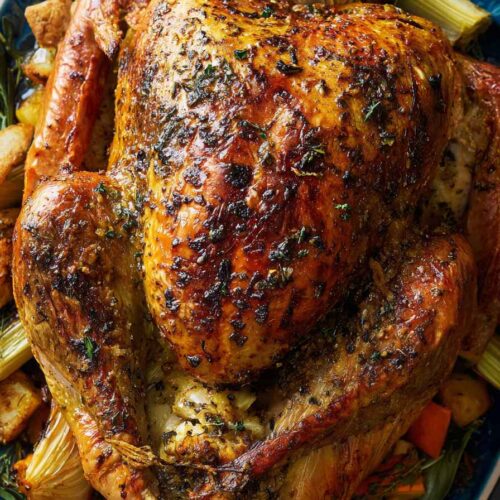
Garlic Thanksgiving Turkey
Delicious Garlic Thanksgiving Turkey recipe with step-by-step instructions.
Ingredients
Turkey and stuffing
- 1 turkey (12 to 18 lb, fully thawed)
- 1 onion, peeled and cut into quarters
- 1 lemon, cut into quarters
- 1 to 2 sprigs fresh rosemary
- 1 to 2 sprigs fresh thyme
- 1 to 2 sprigs fresh sage
- Kosher salt, as needed
- Fresh ground black pepper, as needed
Herb butter
- 3/4 cup unsalted butter, softened
- 6 garlic cloves, minced
- 1 tsp kosher salt
- 1/2 tsp black pepper
- 1 tbsp chopped fresh rosemary
- 1 tbsp chopped fresh thyme
Roasting vegetables
- 1 onion, peeled and quartered
- 3 ribs celery, roughly chopped
- 2 carrots, roughly chopped
Instructions
- Allow the turkey to come to room temperature by removing it from the fridge and letting it sit for 1 hour before roasting. Remove the giblets from the cavity. Meanwhile, preheat the oven to 325°F (160°C). Pat the turkey dry with paper towels, then generously season the cavity with kosher salt and fresh ground black pepper. Stuff the cavity with the quartered onion, quartered lemon, and the sprigs of fresh rosemary, thyme, and sage. Don’t overfill the cavity, especially if the turkey is on the smaller side, to allow proper airflow.
- In a small bowl, combine the softened unsalted butter, minced garlic, 1 teaspoon kosher salt, 1/2 teaspoon black pepper, chopped fresh rosemary, and chopped fresh thyme. Stir until the ingredients are well incorporated, forming a flavorful herb butter.
- Gently loosen the skin of the turkey by sliding your fingers under it, being careful not to tear it. Rub about one-third of the prepared herb butter (from Step 2) between the skin and the turkey breasts for extra flavor and moisture. Then, use the remaining herb butter and rub it all over the outside of the turkey, making sure to cover as much surface as possible for a beautiful, golden finish. I always take a moment here to massage the butter in—this helps the flavor really sink in!
- Place the quartered onion, chopped celery, and chopped carrots in the bottom of a large roasting pan to create a flavorful bed for the turkey. If you don’t have a roasting rack, these vegetables will also help elevate the turkey and add flavor to the drippings. Position the stuffed and buttered turkey (from Step 3) on top of the vegetables, breast side up, and tuck the wing tips underneath to prevent them from burning.
- Place the roasting pan with the turkey in the preheated oven. Roast for about 15 minutes per pound, or until the internal temperature in the thickest part of the thigh or breast reaches 158°-160°F. Keep an eye on the turkey after it’s about 75% done; if the skin is browning too quickly, tent it loosely with aluminum foil. The turkey will continue to cook after you remove it from the oven and will reach a final temperature of 165°F as it rests.
- Allow the turkey to rest for 30 minutes after roasting. This helps the juices redistribute throughout the meat, resulting in moist and flavorful slices. Cover the turkey with aluminum foil to keep it warm during the resting period. Carve and serve the turkey, making sure to save the pan juices for a delicious turkey gravy. Personally, I find this resting step essential—it really makes the turkey juicier and easier to carve!