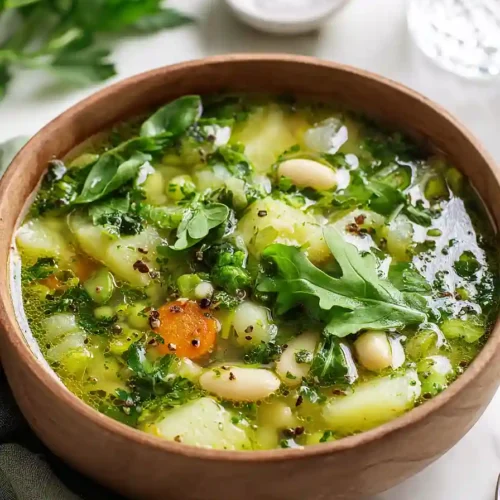
Comforting Italian Green Minestrone di Verdure
Delicious Comforting Italian Green Minestrone di Verdure recipe with step-by-step instructions.
Ingredients
For the soup::
- 1 large onion (finely diced into 1/4-inch pieces)
- 5 garlic cloves
- 2 large carrots
- 2 celery stalks
- 2.5 cups cabbage (shredded into thin ribbons for better texture)
- 1 sprig fresh rosemary
- 10 sprigs fresh thyme
- 4 tbsp olive oil (I recommend Lucini Extra Virgin)
- 48 oz vegetable stock
- 2 cups potatoes (peeled and cut into 1/2-inch cubes)
- 2 tsp salt
- 15 oz borlotti beans
- 1 cup arugula
- 1.5 tsp black peppercorns
- 4 inches parmesan rind (adds a deep savory umami hit)
- 1/4 cup fresh parsley, chopped
For the pesto::
- 1 large bunch basil
- 1/3 cup pine nuts (toasted in a dry pan until golden brown)
- 1/2 cup olive oil
- 1 large lemon (zested and juiced for brightness)
- 1/3 cup parmesan (I always use Parmigiano Reggiano)
- 2 garlic cloves
- 1/2 tsp salt
Instructions
- Finely dice the onion into 1/4-inch pieces, peel and cut carrots into 1/2-inch rounds, chop celery stalks into 1/2-inch pieces, shred cabbage into thin ribbons, mince 5 garlic cloves, and chop 2 garlic cloves for the pesto (keep separate). Peel and cut potatoes into 1/2-inch cubes. Chop fresh parsley and measure out the basil leaves. In a dry pan over medium heat, toast the pine nuts until golden brown, about 3-4 minutes, stirring frequently—this brings out their nutty flavor and prevents them from becoming bitter in the pesto.
- Heat 4 tablespoons of olive oil in a large pot over medium heat. Once shimmering, add the diced onion, carrots, celery, and 2 teaspoons of salt. Cook for 10 minutes, stirring occasionally, until the vegetables are softened and the onions become translucent—this creates the soffritto, the flavorful foundation of Italian soups. I like to cook this gently so the vegetables release their sweetness without browning.
- Add the 5 minced garlic cloves, fresh rosemary sprig, thyme sprigs, and black peppercorns to the softened vegetables. Stir constantly for about 1 minute until fragrant—the heat will bloom these aromatics and release their essential oils into the oil, building layers of flavor throughout the soup.
- Stir in the shredded cabbage and cook for 5-10 minutes until it begins to soften and wilt. Then add the vegetable stock and parmesan rind (which adds a deep savory umami hit), followed by the potato cubes. Bring the mixture to a simmer, then reduce heat to maintain a gentle simmer for about 10 minutes until the potatoes are completely tender and beginning to break apart slightly—this thickens the broth naturally.
- Add the borlotti beans (drained and rinsed from their can) and the arugula to the pot, stirring gently to combine. Simmer for another 2-3 minutes just until the arugula wilts and the beans warm through. Taste the soup and adjust seasoning with additional salt if needed. Remove the rosemary sprig and discard it (the thyme sprigs will disperse throughout and are fine to leave).
- While the soup finishes simmering, combine the basil leaves, 2 minced garlic cloves, toasted pine nuts from Step 1, 1/2 cup olive oil, lemon juice, lemon zest, 1/3 cup Parmigiano Reggiano, and 1/2 teaspoon salt in a food processor or blender. Pulse until you reach a chunky-yet-cohesive consistency—I prefer to not over-blend pesto because the texture matters; you want flecks of basil and pine nuts visible, not a smooth paste.
- Ladle the hot minestrone into serving bowls. Top each bowl with a generous spoonful of fresh basil pesto and a sprinkle of the fresh chopped parsley. The warm soup will slightly soften the pesto while keeping its vibrant color and fresh flavor intact.