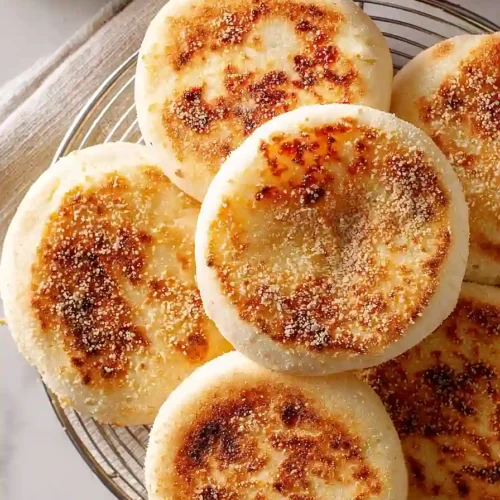
Buttery English Muffins
Delicious Buttery English Muffins recipe with step-by-step instructions.
Ingredients
- 2.5 cups all-purpose flour
- 1/2 teaspoon salt
- 1 cup + 2 tablespoons buttermilk (room temperature, about 70°F)
- 1 tablespoon butter (Kerrygold unsalted butter recommended)
- 1.5 teaspoons sugar
- 2/3 tablespoon active dry yeast
- 1/2 cup cornmeal (for coating to prevent sticking and add a classic crunch)
Instructions
- Combine the buttermilk and butter in a microwave-safe cup and heat for 55 seconds until the temperature reaches 100-110°F (this is the ideal range for yeast activation without killing it). Add the sugar and yeast to the warm liquid and stir gently to combine. Cover the cup loosely and let it sit for 5 minutes—you'll see it become foamy and smell fragrant, which confirms the yeast is alive and active.
- While the yeast activates, combine the flour and salt in a stand mixer bowl. Once the yeast mixture is foamy, pour it into the flour mixture and mix on medium speed for 5 minutes until the dough comes together. The dough should be slightly sticky but cohesive—if it's too dry, it won't rise properly, and if it's too wet, the muffins will be dense. I prefer to use a stand mixer here because it develops the gluten structure evenly without over-working the dough by hand.
- Transfer the dough from Step 2 to a lightly greased bowl and cover it with plastic wrap or a damp towel. Let it rise in a warm spot (around 70-75°F room temperature works fine, or use a proofing box set to 170°F if you have one) for 1 hour until the dough roughly doubles in size. This slow fermentation develops flavor and gives the dough its characteristic open crumb structure.
- Dust a work surface lightly with flour and turn out the risen dough. Using a rolling pin, gently roll the dough to about 1/2 inch thickness—don't compress it too much or you'll deflate all the air bubbles you just developed. Using a cup or 3-inch round cutter, cut the dough into circles and place them on a baking sheet that you've dusted generously with cornmeal (this prevents sticking and gives the muffins their characteristic textured bottom). Sprinkle the tops of the muffins with a light coating of cornmeal as well.
- Cover the shaped muffins loosely with plastic wrap and let them rise for another hour in a warm spot until they're puffy and light. They should increase in height noticeably but not double completely—this second rise gives them that characteristic pillowy texture and ensures they'll cook through properly when you griddle them.
- Heat a skillet or griddle over medium heat (around 350°F if using an electric griddle). Once hot, carefully transfer the risen muffins to the skillet and cook for 5-6 minutes on the first side until they develop a light golden-brown crust. Flip them carefully and cook the other side for another 5-6 minutes until both sides are evenly golden and the muffins sound hollow when tapped. I like to keep the heat at medium rather than high because this allows the insides to cook through gently without burning the outsides.
- Transfer the cooked muffins to a wire rack to cool for a few minutes. Once they're cool enough to handle, gently poke the edges all around with a fork to create openings—this is the signature English muffin finish and makes them easier to pull apart and toast later. Serve warm with butter and your favorite jam or topping.