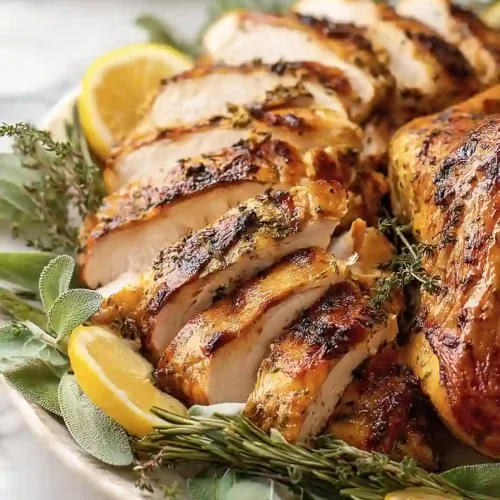
Best Roast Turkey
Delicious Best Roast Turkey recipe with step-by-step instructions.
Ingredients
For the turkey:
- 1 whole turkey (14 to 16 lb)
- salt and pepper, as needed
For the herb butter:
- 1 cup unsalted butter (softened)
- 1 tbsp finely chopped fresh sage
- 1 tbsp finely chopped fresh thyme
- 1 tbsp finely chopped fresh rosemary
- 4 garlic cloves, minced
- 1 tsp salt
- 1/2 tsp black pepper
For the cavity:
- 1 lemon, halved
- several sprigs fresh sage, thyme, and rosemary
- 1 head garlic (cloves separated and peeled)
Instructions
- Remove the turkey from the fridge and let it sit at room temperature for about an hour before roasting to take the chill off. Place it on a baking sheet to catch any liquid or spills, especially when removing the packaging later. Meanwhile, also take the butter out of the fridge to let it soften.
- In a medium bowl, combine the softened butter, 1 tablespoon finely chopped fresh sage, 1 tablespoon finely chopped fresh thyme, 1 tablespoon finely chopped fresh rosemary, 4 minced garlic cloves, 1 teaspoon salt, and 1/2 teaspoon black pepper. Mash everything together with a fork until well blended. I prefer mixing the herb butter thoroughly to ensure the fresh flavors are evenly distributed—don't be afraid to be vigorous here!
- Preheat your oven to 450°F and adjust an oven rack to the bottom third, removing other racks if necessary for space. Take the turkey out of its packaging and remove the giblets and neck from the cavity, draining out as much excess liquid as possible. Pat the turkey dry with paper towels. Sprinkle salt and pepper all over the turkey, including a teaspoon of salt in the cavity. Stuff the turkey cavity with the lemon halves, several sprigs of fresh sage, thyme, and rosemary, and the separated garlic cloves. Rub the outside of the turkey (except the very bottom) thoroughly with the prepared herb butter from Step 2. Tuck the wings underneath the turkey and tie the legs together with kitchen twine if desired for neater presentation.
- Place the prepared turkey, breast side up, on the rack of a roasting pan. Put the pan in the oven and immediately reduce the oven temperature to 350°F. Roast the turkey for approximately 13 minutes per pound (about 3 hours for a 14-pound turkey) until an instant-read thermometer inserted into the thickest part of the thigh reads 165°F. Begin checking for doneness about 30 minutes before the expected finish to avoid overcooking. The skin may brown before the turkey is cooked through; if this happens, tent the bird loosely with non-stick foil to prevent the breast from burning. Remember, each time you open the oven, heat escapes and may slightly extend the cooking time. Personally, I like to add fresh herb sprigs to the roasting pan for extra aroma in the kitchen!
- When the turkey is done roasting, carefully tilt the roasting rack so the juices inside the turkey pour into the bottom of the pan—these drippings are perfect for making homemade gravy! Lift the turkey (still on the rack) and set it on a large cutting board or serving platter. Let the turkey rest for at least 20 minutes before carving to allow the juices to redistribute, ensuring your meat stays moist and tender. I really recommend resting the turkey; it’s worth the wait for juicier slices.